

Gun scare disrupts Court of Appeals visit to Fort Lupton High School
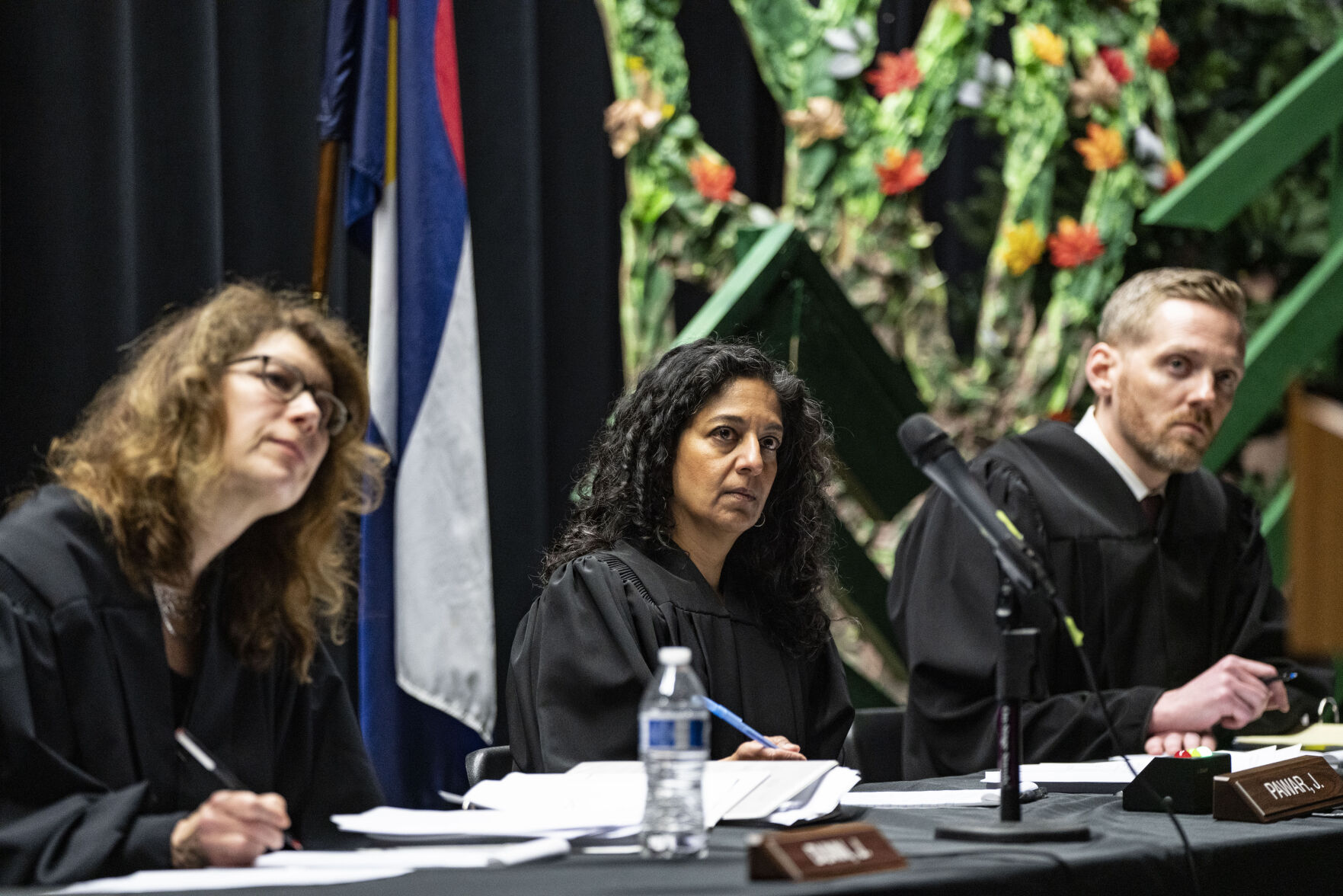
A planned visit by Colorado’s second-highest court to Fort Lupton High School went awry on Tuesday after the sighting of two students with a firearm triggered a lockout that, in the judicial branch’s telling, could have been avoided if school administrators had temporarily suspended a game being played with toy guns.
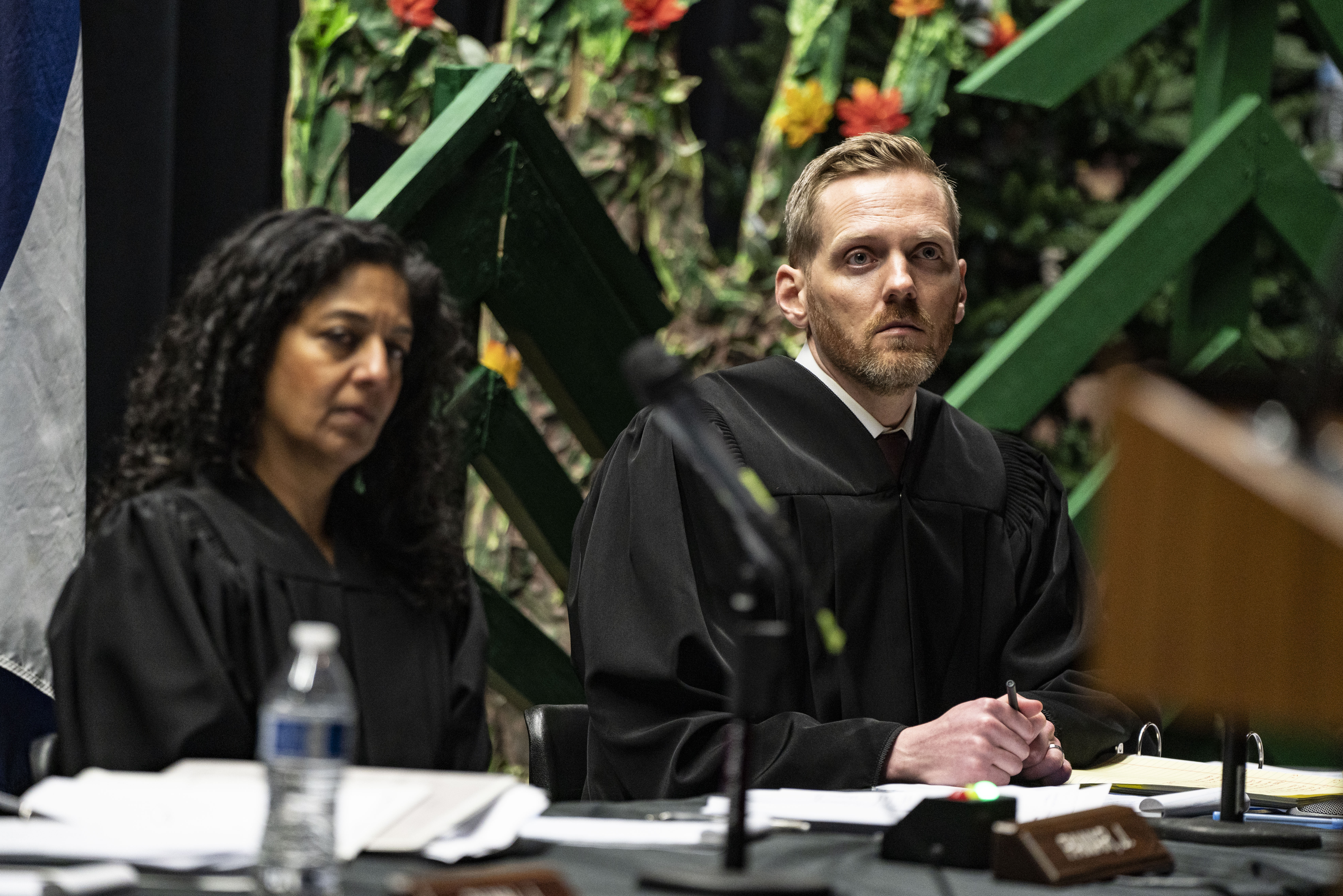
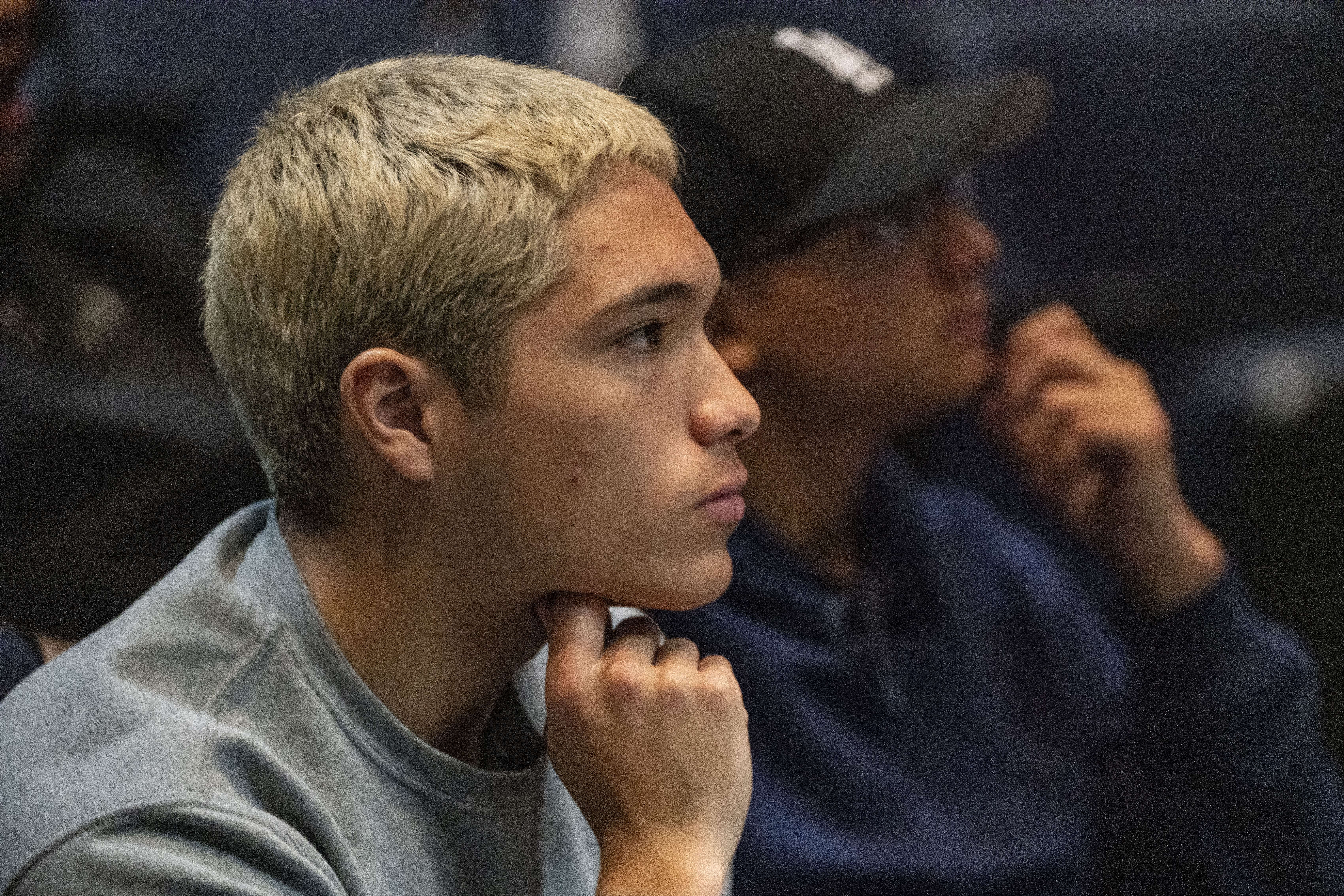
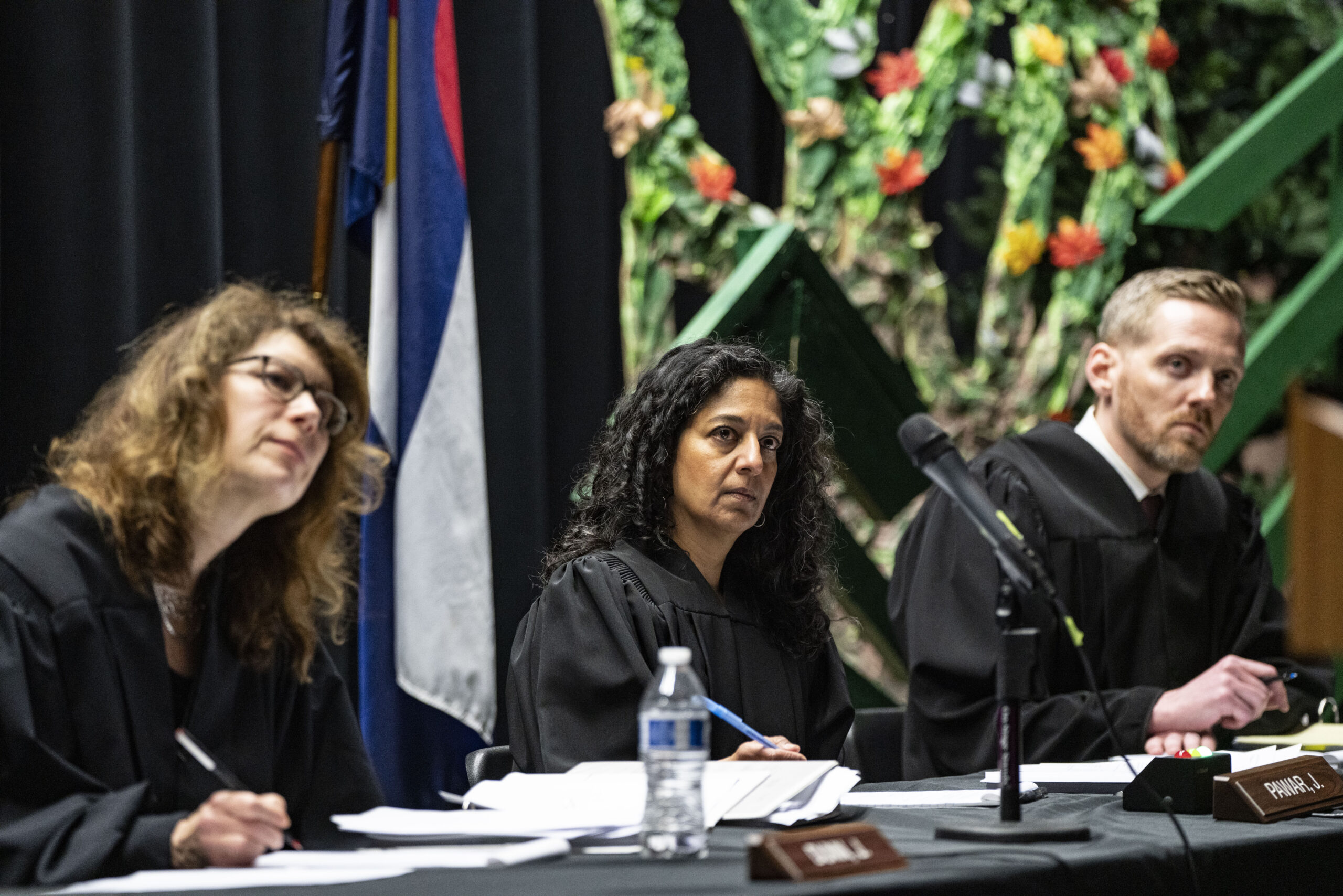
The state Supreme Court and Court of Appeals travel outside their courthouse in downtown Denver in the spring and fall as part of the long-running “Courts in the Community” program. A three-judge appellate panel’s visit to Fort Lupton was for the purpose of holding oral arguments in two real cases in front of an audience of students, then taking questions from attendees.
Rob McCallum, the Judicial Department’s public information officer who was onsite, said he was unaware the Court of Appeals had arrived in the middle of a game of “Assassin,” in which students try to eliminate each other and become the last surviving player using toy guns that squirt liquid.
McCallum was the one who noticed two students sitting in the parking lot with what appeared to be a long gun. He told a Colorado state trooper, who in turn alerted the school resource officer and resulted in a response by Fort Lupton police. McCallum was critical of the school administration, who he said knew about the ongoing game.
“It was an unfortunate situation that could have been prevented with some pre-planning. They could have told their students today wasn’t the day to play the game,” he told Colorado Politics.
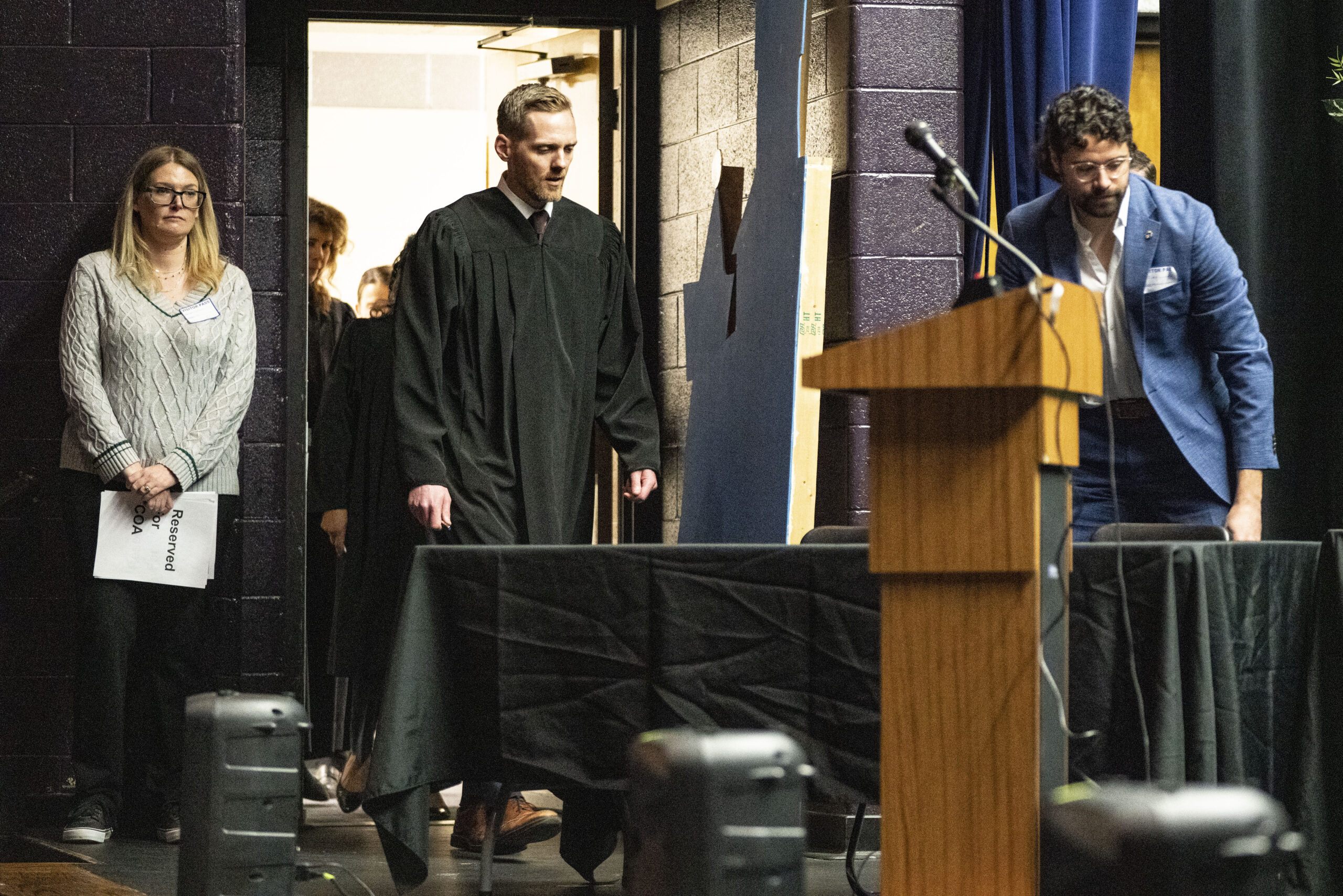

The lockout announcement came over the school’s loudspeakers immediately after the appellate panel heard its first of two oral arguments. A staff member told students in the auditorium it was “not a drill.” McCallum said Chief Justice Brian D. Boatright was also notified. The lockout lasted approximately 15 minutes.
Although the Court of Appeals members were slated to have lunch with a group of students afterwards, McCallum said the judges instead returned to Denver.
“Given the events that transpired, we felt that was the safest thing,” he said. “Even with fake guns around … it is too much of a vulnerability.”
A records employee with Fort Lupton police confirmed the incident occurred but said a report would not be available for five to 10 business days, if it can be released at all. McCallum added that the parents of the two students with the toy gun were contacted and the mother consented to a search of the vehicle. Law enforcement found nothing threatening.
Alan J. Kaylor, the superintendent of Weld County School District Re-8, did not respond to an email asking about his own knowledge of the Assassin game and whether the district informed the judicial branch about the potential for toy weapons.
The Supreme Court will travel to Pueblo next month for its own Courts in the Community event. McCallum said security personnel will be discussing future precautions in light of the Fort Lupton lockout.

‘There is no less-stressful judge’
Prior to the oral arguments, two members of the district court bench in Weld County spoke about the difference between their trial courtrooms, which are frequently represented in television and movies, and an appellate courtroom.
“This is a new experience for us, too, as district court judges,” said Chief Judge Julie Hoskins. “We usually don’t see what happens to our cases afterwards.”
Judge Vincente G. Vigil observed that someone like him, “a young Chicano from LaSalle,” was not always welcome in the judiciary.
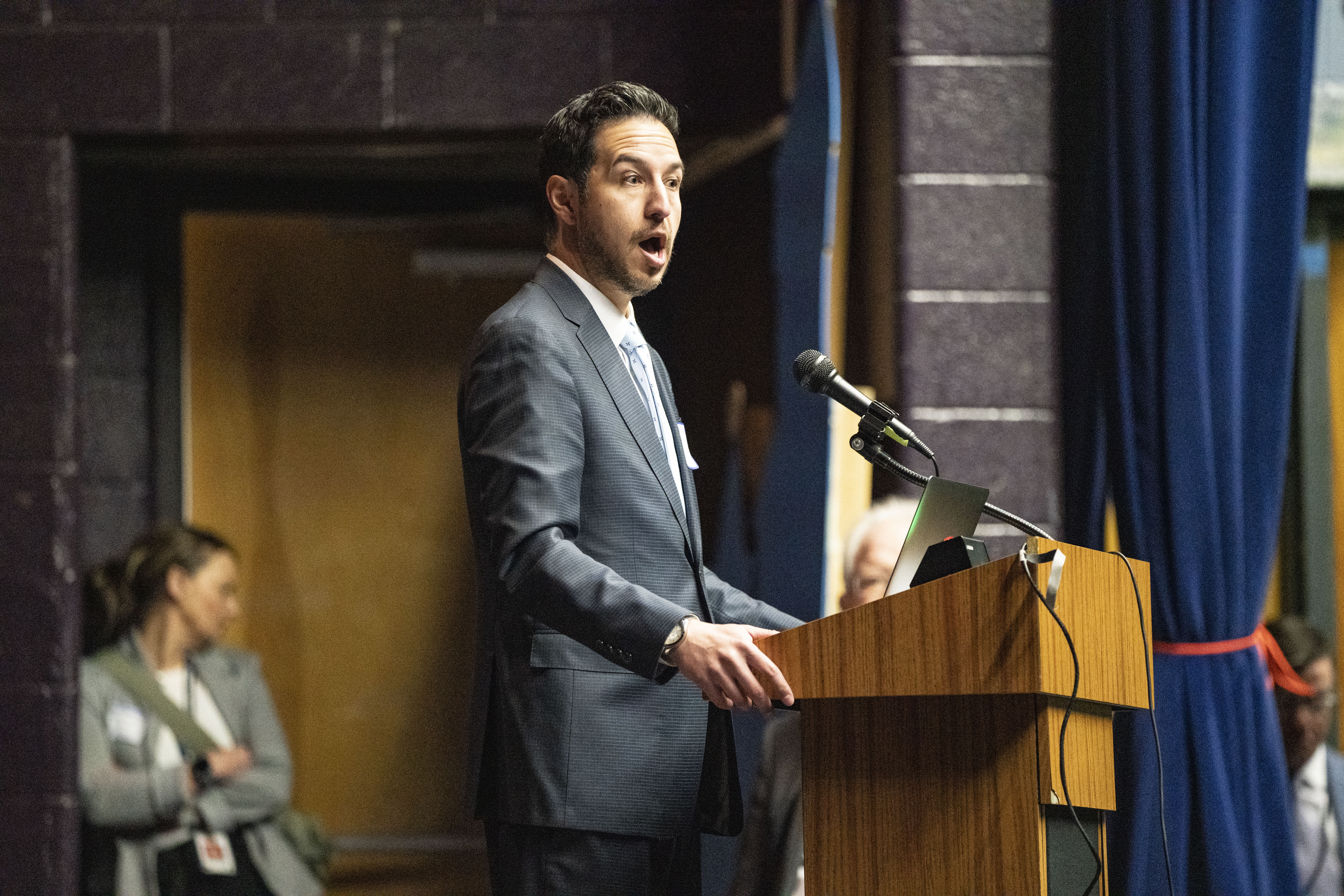
“They really are your courts. We come to Fort Lupton as your workers. As the people that ensure that you receive justice and that you receive fairness,” he said. “We want to do right by the community because this is our community. This is where we live. This is the community where our kids go to school with you guys.”

Responding to questions from the audience, Judge Neeti V. Pawar, who presided over the appellate panel’s arguments, spoke about each judge’s need to think about their own biases as informed by their experiences.
“The fact that we work in three-judge panels is a brilliant process. By having this collegiality and camaraderie in the working relationship, we can help each other put some bumpers in place,” she said. “‘What is it that’s making us head in this direction and why?’ When you have that deliberative process, it helps ensure the decision we’re ultimately reaching is informed, but not driven by, improper considerations.”
One student wondered what is the “less-stressful” type of judge.
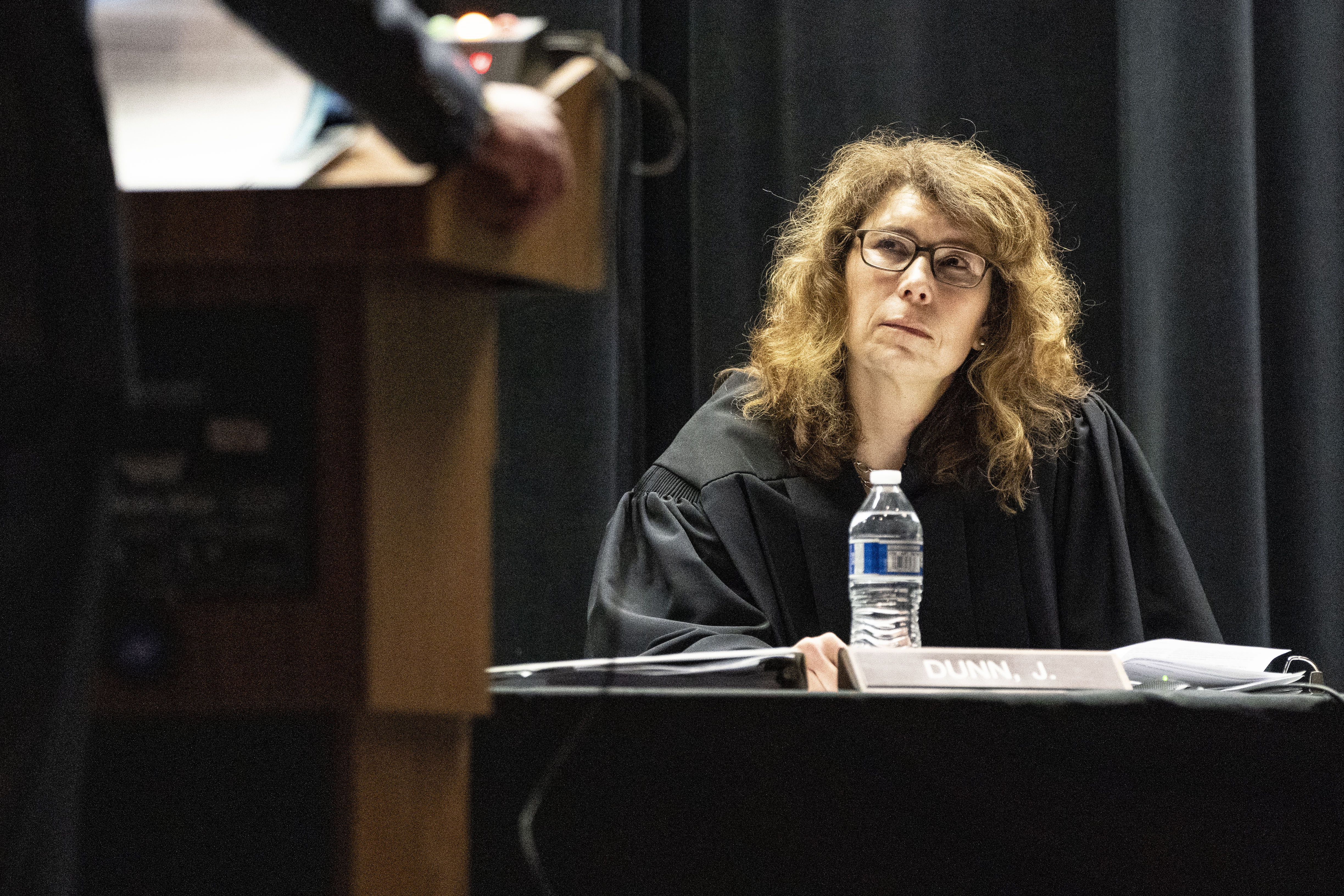
“There is no less-stressful judge,” responded Judge Stephanie Dunn. “We have a high-volume court. For any given case, you have about 40 pages for each brief. Then you have the entire trial record. Then you do your independent research. So, for each case, it’s thousands of pages of reading.”
Judge Grant T. Sullivan, one of the newest members of the 22-person Court of Appeals who joined in January, said some cases are harder than others, but “we dig in, we do our homework and we reach what we think is the right decision.”
Life as a lawyer
Students also directed questions to the two sets of lawyers who argued the cases. The first appeal involved a worker injured on the job who received a favorable jury verdict and a $140,000 award. The second case featured a woman convicted of stalking who represented herself at trial under circumstances that even the prosecution acknowledged were defective.

Public defender Leah Scaduto, who represented Shari Dooley in the appeal of her criminal conviction, said she never had a client who she did not want to advocate for.
“When you go into court and see a system that, in my opinion, treats people like they’re not people and erases them and flattens them and reduces them to one bad day in their life,” Scaduto said, “the importance of being the one person in the courtroom to say, ‘Look, this is not an android. This is a person. They have feelings, they have a background, they have a family – even if they did something terrible,’ I think, is really important and meaningful for me.”
Cameron O. Hunter, the attorney who represented plaintiff Adam Strange in his work-related personal injury lawsuit, acknowledged that civil cases may appear to be less exciting than their criminal counterparts on the surface.
“Some of the most important cases I’ve litigated, to me, involved wrongful death cases where someone was killed by the negligent discharge of a gun or run over by a drunk driver in a crosswalk,” he said. “These are the sorts of cases that mean a lot.”
One of the social studies teachers who helped coordinate the Court of Appeals’ visit, Megan Finlay, said she would likely survey students in the next couple of weeks to see who they thought should prevail. Finlay said the students’ response did not entirely align with her expectations beforehand.
“Yes, in the sense that they really enjoyed it. But no, in the sense that it seemed like they were more enthusiastic about it than I was predicting,” she said.

Pueblo board violates Open Meetings Law | Dennis Maes
Dennis Maes
dennis-maes@coloradopolitics.com
Updated 6 hours ago
By Dennis Maes I recently witnessed two serious violations of the Colorado Open Meetings Law by the Pueblo Urban Renewal Authority (PURA) board. Both were brought to the attention of the board in an open meeting and entered on the...

Legislation would undermine educational opportunity | OPINION
Colorado Politics
colorado-politics@coloradopolitics.com
Updated 6 hours ago
By Norton Rainey and Weston Kurz New legislation under consideration by Colorado lawmakers could have far-reaching consequences for Colorado students and families looking for new educational options. HB26-1292, currently under consideration by the Colorado General Assembly, would severely limit the...

Medicaid cuts for critical care hurts providers, reduces access to the best care for patients | OPINION
Colorado Politics
colorado-politics@coloradopolitics.com
Updated 6 hours ago
By Gurdev Rai This year, the legislative session started with one thing on everyone’s minds: the state budget, and the major hole created by Congress’ HR 1 law. Costs, including for health care, have ballooned across the board, and we...

U.S. House probes reports of fraud, waste in Colorado’s Medicaid program
Marianne Goodland
marianne.goodland@coloradopolitics.com
Updated 6 hours ago
A congressional committee is probing reports of waste, fraud and abuse in Colorado’s Medicaid program, citing recent stories outlining over-billing in transportation spending and alleged improper payments in autism services. The U.S. House Committee on Energy and Commerce has sent...
Colorado lawmakers’ speeches on immigration, Iran draw worries about decorum, grandstanding
Marianne Goodland
marianne.goodland@coloradopolitics.com
Updated 13 hours ago
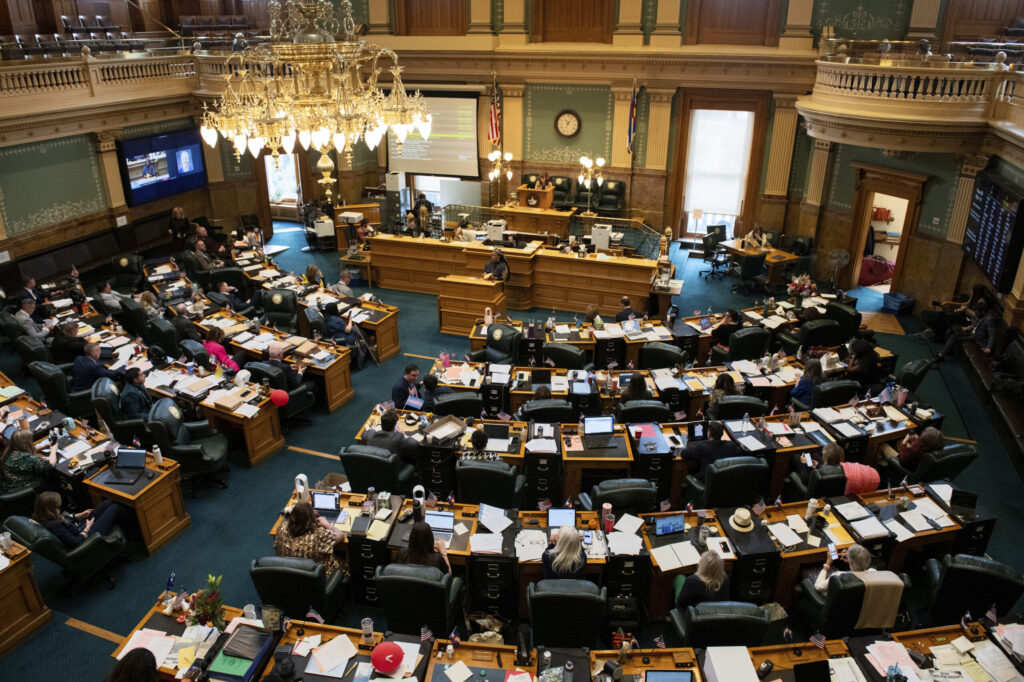
Several speeches from Colorado legislators this week have raised new worries about decorum and grandstanding in the state House after two members talked about immigration and Iran using what’s called a “point of personal privilege.” Under the rules of the...

Colorado legislators eye changes to credit card ‘swipe fees’
Marianne Goodland
marianne.goodland@coloradopolitics.com
Updated 14 hours ago
Colorado legislators are proposing to eliminate “swipe fees” on sales taxes, a move that proponents say would save businesses tens of thousands of dollars a year but which will likely revive counter-arguments that those fees help create a stable and...
Not-so-public comment in Douglas County | Paula Noonan
Paula Noonan
paula-noonan@coloradopolitics.com
Updated 15 hours ago
Let’s do some high and low history. First, the high history. England’s King George III didn’t like the complaining he heard from the American colonies, so he went to war to shut the people up. President Donald Trump doesn’t like...

Why Colorado should stop charging swipe fees on sales taxes | OPINION
Colorado Politics
colorado-politics@coloradopolitics.com
Updated 1 day ago
By William Lindstedt, Iman Jodeh, Julie McCluskie and Monica Duran Small businesses across Colorado are working harder than ever right now to keep their doors open, hire local workers and serve their communities. But every day, they are forced to...

Colorado can be a gamechanger in regulating GLP-1 weight loss drugs | OPINION
Colorado Politics
colorado-politics@coloradopolitics.com
Updated 1 day ago
By Nancy Glick “As goes California, so goes the nation” is a phrase reflecting California’s reputation as a bellwether in setting regulations that often become a precedent for national policy. Now, Colorado can play this role, setting new safety standards...
Colorado can be a gamechanger in regulating GLP-1 weight loss drugs | OPINION
Colorado Politics
colorado-politics@coloradopolitics.com
Updated 1 day ago
By Nancy Glick “As goes California, so goes the nation” is a phrase reflecting California’s reputation as a bellwether in setting regulations that often become a precedent for national policy. Now, Colorado can play this role, setting new safety standards...
PREV
PREVIOUS

Colorado lawmakers kill bill mandating 'nonlethal' methods to get compensation for livestock killed by wolves
A panel of legislators struck down a bill that would have required livestock owners to use “nonlethal” deterrent tactics in order to get compensated for livestock killed by gray wolves. The House Agriculture, Water and Natural Resources Committee decided the bill conflicted with stakeholder decisions following the 2020 passage of a ballot measure that reintroduced […]
Gun scare disrupts Court of Appeals visit to Fort Lupton High School
A planned visit by Colorado’s second-highest court to Fort Lupton High School went awry on Tuesday after the sighting of two students with a firearm triggered a lockout that, in the judicial branch’s telling, could have been avoided if school administrators had temporarily suspended a game being played with toy guns. The state Supreme Court […]