

Hysteria captures Colorado charter schools | NOONAN
The charter school world is experiencing a pique of hysteria. Their model of spending Colorado taxpayers’ hard-earned money on schools run by unelected, private boards is being challenged by HB24-1363, Charter School Accountability.
So far Americans for Prosperity, the mouthpiece entity funded by the right-wing Koch brothers, has hired 11 lobbyists to oppose the bill at $500 to $1,500 per-month per lobbyist. That’s a lot of lobbying volume from one entity on one bill.
The Colorado League of Charter Schools, Ready Colorado, Stand for Children, and Transform Education Now are pushing many more thousands of dollars into lobbying to defeat the bill. When legislation gets that much attention from entities that spend public money but do not exercise public transparency and accountability, it must be hitting a soft spot and the right marks.
Stay up to speed: Sign up for daily opinion in your inbox Monday-Friday
“Charter School Accountability” addresses charter law over-reach. Originally, Colorado’s charter law was developed to bring innovation into public education. Charter schools would fill niches that public schools, based primarily on neighborhood elementary schools feeding into comprehensive middle schools and high schools, could not do.
Over time, the boundaries on charter school administration, financing, real estate development, marketing and raisons d’être have eroded. Public school districts with locally-elected boards accountable to their residents and taxpayers have been undermined in their capacity to manage their school populations, buildings, facilities, budgets, staffing, special education funds and discipline. The current situation is not sustainable.
Over the years, charter schools have gained access to billions of dollars of public money not monitored by public officials. Their unelected boards have full authority over these state funds. Too many boards do not reflect the communities in which their charter schools are located. It’s impossible to determine whether these board members have conflicts of interest over multi-million-dollar budgets.
Their board meeting records are not prominently displayed and their meetings are not adequately advertised to enable their parent communities or the general public to attend and comment as with publicly elected boards. The most recent demonstration of this lack of transparency occurred when Wyatt Academy’s board in Denver voted to FOB Wyatt Academy off to Rocky Mountain Prep, along with its checking account, without first notifying its community.
Charter schools solicit funds from foundations, philanthropists and others to pad their budgets. In some cases, the donations involve millions of dollars on top of state funds. These dollars are not currently reported by charters. This lack of transparency creates two problems. First, parents of students don’t know what strings may be attached to the dollars. Second, charters claim their schools are excellent. If they’re excellent because of extra tax-deductible dollars from foundations, the rest of us need to know that. Those extra excellent dollars will tell the rest of us how much money public schools really need to create excellence.
If tax-deductible dollars are used to increase per-student funding by $1,000 or $2,000 per child, or they’re used to build facilities, that’s a huge boost, given how low and challenging our public school funding is. Money transparency is what we citizens always ask from public entities. Charters proudly proclaim their “public” status. This bill makes sure they live up to their public nomenclature.
Real estate comprises a big chunk of school budgets and operations. Taxpayers take on bonds to pay for their school buildings. They give their publicly-elected school boards authority to manage these facilities. Yet current charter law requires districts to allow independent charter schools to take over “surplus” buildings at no more than $12 per year. District charters get access to school facilities at no charge. These rules remove choice, flexibility and control from publicly-elected school boards that, as part of their fiduciary responsibility to their taxpayers, should strive to get the best return on these facilities. An obligatory $12 per year of rent from independent charter schools and free access from other charters doesn’t cut it.
Charter schools have been granted automatic waivers from state-mandated requirements especially around employment practices. These waivers are not currently disclosed in their entirety. HB24-1363 will require full disclosure to parents and during re-authorization when charter contracts must be renewed by districts. Waivers will also be prominently posted on school websites. Why wouldn’t individual charters and their associations support such transparency? It makes sense parents understand how teachers are hired, licensed (or not), evaluated and fired. A teacher’s environment is their child’s environment.
To remind the charter world of the state’s constitution, Colorado is a local control state meaning publicly-elected school boards have public responsibilities for every aspect of their public schools. That responsibility includes closing schools in times of declining enrollment. Currently districts face difficult decisions regarding enrollment levels at their neighborhood schools, while low enrollment charters catch a pass. The bill gives districts authority to examine all authorized schools in their jurisdictions for closure decisions.
“Charter School Accountability” also gives local districts final authority over accepting charter applications. Charters may apply to the state board of education if their applications are turned down, but ultimately, these decisions should stay with local districts who must manage their own school populations and facilities.
The Charter League and other charter supporters repeatedly assert their schools exceed public schools in their excellence. A deep dive into 2023 charter performance rankings and their student populations reveals an alternative narrative. Some charters rank high by the state’s ranking system. These schools recruit from non-minority populations that come from higher incomes and English fluency than state averages. Other charters recruit mostly from minority populations with great need for English Language Learning. Most, not all, of these schools score at the lowest end of state performance rankings.
Between the two recruitment models, our charter schools are much more segregated than state and district averages. This segregation produces predictable results with high minority/FRL/ELL populations in so-called low performance schools and low minority/FRL/ELL populations in so-called high performance schools. School choice shows race and income matters and that segregating schools more than ever should never be considered a successful education “innovation” concept for 21st century society. These data points deserve reflection and conversation, not outrage and umbrage.
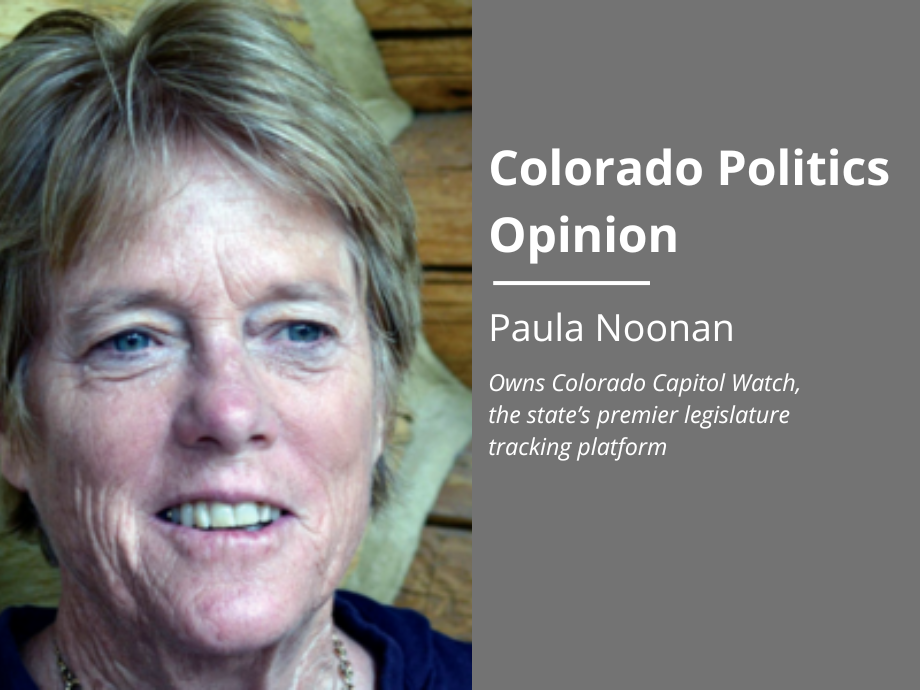
Paula Noonan owns Colorado Capitol Watch, the state’s premier legislature tracking platform.

Will one unqualified AG replace another? | George Brauchler
George Brauchler
george-brauchler@gazette.com
Updated 1 day ago
Colorado Democrats are poised to nominate another attorney general candidate with de minimis relevant credentials or experience. Far from disqualifying, Colorado’s recent voting history mirrors that of America in favoring biography over experience, partisanship over policy, and emphasizing what divides...
Pueblo’s mayor keeps stirring the pot | Dennis Maes
Dennis Maes
dennis-maes@coloradopolitics.com
Updated 1 day ago
Pueblo Mayor, Heather Graham, has clearly proven to be a disciple of the Donald Trump school of governance. And, like her mentor, she is experiencing the same catastrophic results. The format is to ignore what the electorate approved and expects...
The perils of Colorado’s unregulated abortions | GUEST COLUMN
Colorado Politics
colorado-politics@coloradopolitics.com
Updated 24 hours ago
By Tom Perille How did the movement which grew out of a genuine concern for the health and safety of women become the same movement that undermines women’s health and safety today? Despite good intentions, it was a long route...
Sans seniors, what does Colorado’s uninterested early turnout say about our disengaged electorate? | Paula Noonan
Paula Noonan
paula-noonan@coloradopolitics.com
Updated 2 days ago
This primary election is poorly attended. Evidence is in the numbers. About 10% of active registered voters are deciding this year’s primaries with seven days to go. If that number triples by June 30, only 30% of voters will decide...
Who gets to decide Colorado’s economic future? | GUEST COLUMN
Colorado Politics
colorado-politics@coloradopolitics.com
Updated 2 days ago
By Sarah Blackhurst Colorado’s prosperity depends on industries that grow our food, build our future and power our homes. But today, these sectors face an invisible threat from 5,000 miles away: the European Union’s Corporate Sustainability Due Diligence Directive (CS3D)....

We have the chance to change Colorado’s cancer outcomes | PODIUM
Colorado Politics
colorado-politics@coloradopolitics.com
Updated 2 days ago
By Erika Hanson Brown Colorado ranks among the healthiest states in the nation by nearly every measure. Yet even here — amid the Rocky Mountains and our deeply rooted culture of health and activity — cancer casts a long and...

Colorado has a playbook for youth mental health — our next governor must use it | GUEST COLUMN
Colorado Politics
colorado-politics@coloradopolitics.com
Updated 4 days ago
By Karen Ron-Li Liaw From the rural communities on the western slope to the eastern plains, to the major urban regions on the Front Range, Colorado families are navigating an all-too-familiar crisis: kids are struggling, and Colorado’s mental health system...

Pigs engineered to fight alpha-gal syndrome | Rachel Gabel
Rachel Gabel
rachel-gabel@coloradopolitics.com
Updated 4 days ago
If I were an evil genius trying to hamstring animal agriculture, I would create a fly that eats livestock alive and a tick whose bite and spit causes some people to have an allergic reaction to meat. (Insert evil laugh...
Registered voters on the eve of the 2026 primaries | Cronin & Loevy
Tom Cronin Bob Loevy
tom-cronin-bob-loevy@coloradopolitics.com
Updated 6 days ago
The Colorado Secretary of State’s Office has published the latest voter registration figures for the state and its counties as of June. Colorado ranks among the highest states for independent, or unaffiliated, voters. Only Alaska and Massachusetts have more. New Hampshire, New Jersey, Maine and Oregon also rank highly. So here...

A room for Sundance, a reality check for big-government Boulder | Jon Caldara
Jon Caldara
jon-caldara@coloradopolitics.com
Updated 1 week ago
There are few things more satisfying to watch than socialists getting mugged by reality. The Sundance Film Festival is invading my hometown of Boulder early next year. Sundance drew 85,000 attendees last year in Park City, Utah. Boulder’s hotel room...