

Proposed sweeping changes to Colorado charter schools could divide Democrats
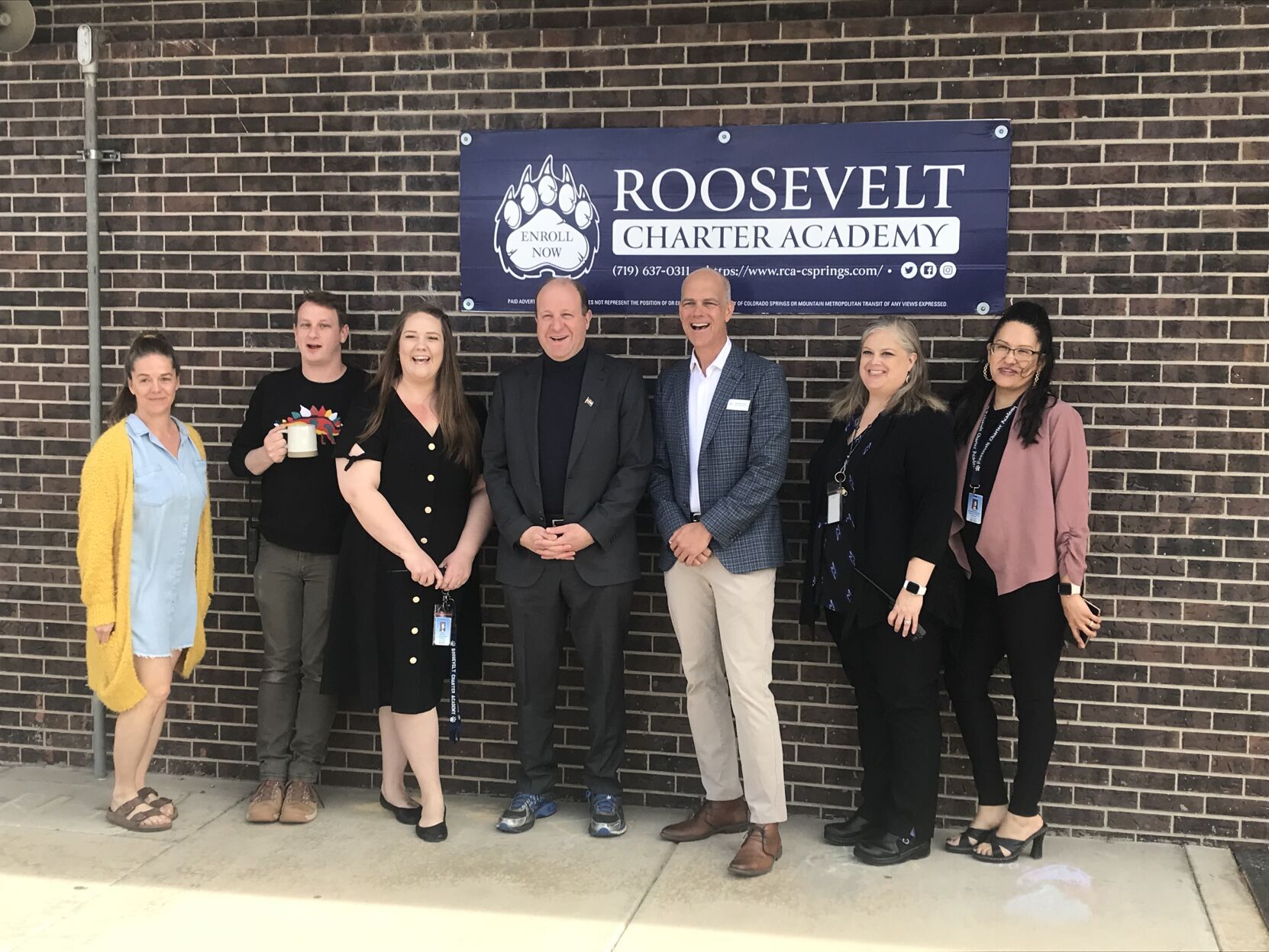
A trio of state Democratic lawmakers is pushing a sweeping proposal to boost what they describe as accountability but which critics say flies in the face of local control and unfairly targets charter schools.
Notably, the biggest pushback is likely to come from members of their own caucuses and Gov. Jared Polis.
Reps. Tammy Story of Evergreen and Lorena Garcia of Adams County, along with Sen. Lisa Cutter of Littleton, introduced House Bill 1363, a 55-page bill that seeks major changes in how charter schools operate.
Among them:
-
At least one-third of a charter school board must be made up of parents or guardians of students attending the school, as well as reflect the community demographics;
-
Prohibits automatic waivers (granted by the state board of education) from being included in charter contracts executed or renewed on or after July 1, 2024. Those automatic waivers were created as a paperwork reduction exercise tied to replacement plans;
-
Prohibits charter contracts from waiving educator personnel performance evaluation system requirements;
-
Repeals the requirement that a school district provide a list of vacant or underused buildings and land to district charter schools, and prohibits district charter schools from using those vacant facilities;
-
Repeals the ability of charter school applicants to seek a second decision from the state board when a local board rejects a charter school application a second time.
-
Grants district accountability committees the ability to review charter school renewals; currently, they only review initial applications.
In defeat of a charter school bill, a first-year lawmaker's passion project comes to an end
Dan Schaller, president of the Colorado League of Charter Schools, said the bill also allows a single community member to appeal the decision of a school board on a charter school application. That flies of face in the local control, Schaller said.
In addition, the provisions unfairly target and inequitably target charter schools, Schaller told Colorado Politics. It would undermine systems with a proven track record of success, he said, such as the state board of education’s determinations when it comes to charter school appeals. Half the time, the state board of education has ruled for charters; the other half they ruled for the school board.
“Why would we undermine a system that has proven to be fair and effective over time?” he asked.
Schaller also noted charter schools are subject to the same financial transparency provisions as other public schools and districts, as well as the same conflict of interest rules.
Advance Colorado, in a statement Thursday, said the measure “would undo numerous legal protections for charter schools that have earned bipartisan support, including access to existing and underutilized public school facilities (and) varying legal routes for charter approval. The bill also would provide ways for charter schools to be revoked without due process, the statement added.
Kristi Burton Brown, a former chair of the state Republican party, said the measure would “kill charter schools in Colorado and take the right to educational opportunity away from parents and kids.”
Last night, @coloradodems introduced HB24-1363. This bill would kill charter schools in Colorado and take the right to educational opportunity away from parents and kids.We must defeat this bill and put the right to school choice in our state constitution. #copolitics #coleg pic.twitter.com/ShIp8HNeS2
— Kristi Burton Brown (@KBBColorado) March 7, 2024
In addition to the challenge of securing support at the state Capitol, supporters will likely contend with charter school backers with money to spend on advocacy efforts.
Democrats for Education Reform, a New York-based group that promotes “school choice,” including charter school expansion, and “reform” policies that often clash with the priorities of teacher unions, has poured more than $15 million into the pockets of Democratic candidates and causes in Colorado since 2010. More than half of that has been since Polis announced his bid for governor.
Almost all of that money is routed through its fundraising arms, Education Reform Now or Education Reform Now Advocacy. That money then goes into the bank accounts of independent expenditure committees in Colorado, including one that backed Polis in 2018 with $350,000 from Education Reform Now.
Democrats for Education Reform, which was started by Wall Street hedge fund managers, and its fundraising arm are known as “dark money” groups because they don’t disclose their donors, although various reports say Education Reform Now has taken in millions from Rupert Murdoch and the Walton Family Foundation.
The group’s dollars have found their way into the campaign coffers of at least 14 current Colorado Demcratic lawmakers, including the chairs of the House and Senate education committees.
The bigger amounts, however, have flowed through the independent expenditure committees. For example, in 2022, All Together Colorado, an IEC that backed Democratic Senate candidates in 2022, spent almost $500,000 to oppose Cutter’s Republican challenger. Education Reform Now contributed $750,000 to that committee in the 2022 election cycle.
Independent expenditure groups are prohibited by law from coordinating with a candidate they support.
The biggest hurdle for the bill may come from the governor’s office.
Polis is not only a supporter of charter schools; he’s the founder of the New America charter and a co-founder of the Academy of Urban Learning. The governor has also been vocal in opposition to changes proposed by the Biden administration’s Department of Education to charter school funding.
Cutter, Garcia and Story did not respond to a request for comment.


Denver murder conviction reversed for incomplete self-defense instruction
Michael Karlik
michael.karlik@coloradopolitics.com
Updated 31 minutes ago
Colorado’s second-highest court reversed a defendant’s murder conviction last week because a Denver judge gave an incomplete instruction to the jury about the man’s right to self-defense. Donald R. Gonzales and Gary McLaughlin met up in a Capitol Hill parking...
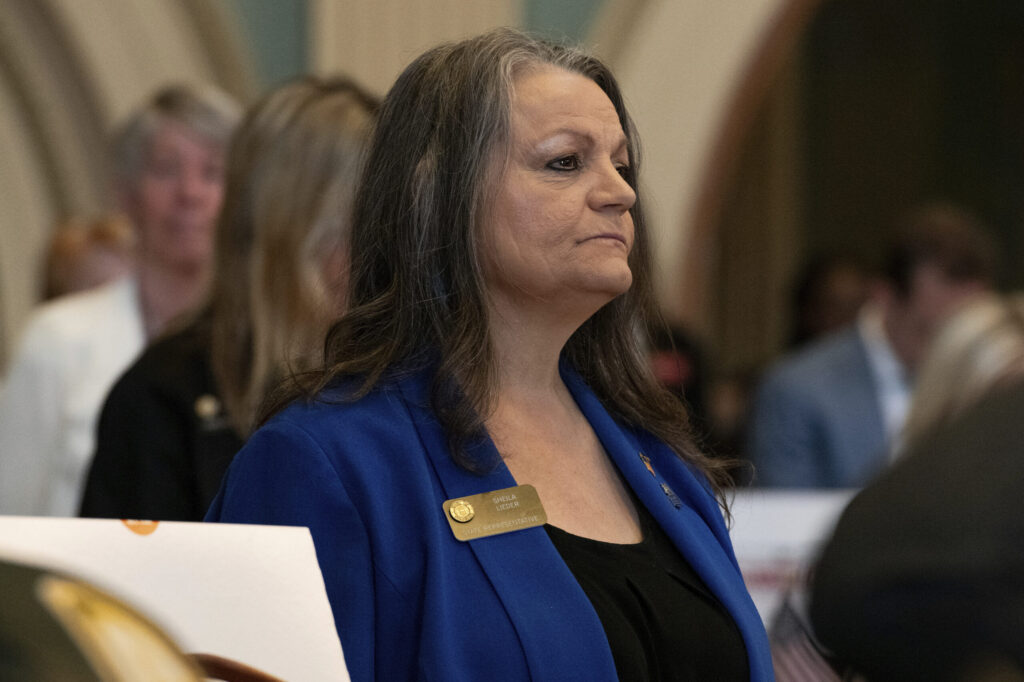
Colorado lawmaker, House leaders named in workplace-retaliation lawsuit
Marianne Goodland
marianne.goodland@coloradopolitics.com
Updated 35 minutes ago
A former legislative aide has filed a lawsuit alleging she was mistreated, illegally directed to perform campaign work and harmed by a House leadership structure she says was fragmented, politicized and ineffective at protecting employees. The lawsuit, filed by Jennifer...

Secret Service confirms awareness of Iranian state media video threatening Barron Trump’s life
The Associated Press
the-associated-press@coloradopolitics.com
Updated 2 hours ago
WASHINGTON (AP) — The U.S. Secret Service has confirmed it is aware that Iranian state media has aired a video that appears to threaten the life of Barron Trump, President Donald Trump’s youngest son. “The U.S. Secret Service is aware...

Federal judge hears arguments about Colorado’s 3-day gun purchase waiting period
Michael Karlik
michael.karlik@coloradopolitics.com
Updated 2 hours ago
A federal judge heard arguments on Monday about the constitutionality of a 2023 Colorado law that generally imposes a three-day waiting period on firearm purchases after the initiation of a background check. The test that the U.S. Supreme Court created...

US set for largest mass visa revocation in history targeting up to 200,000 foreigners, officials say
The Associated Press
the-associated-press@coloradopolitics.com
Updated 2 hours ago
WASHINGTON (AP) — The Trump administration is preparing to revoke the business and tourism visas of up to 200,000 foreigners who have applied for or are currently seeking asylum status in the United States. If it happens, the move would...

U.S. Supreme Court clears way for Trump mail voting order in advance of midterms
Wire Services
wire-services@coloradopolitics.com
Updated 17 hours ago
WASHINGTON • The U.S. Supreme Court on Monday cleared the way for President Donald Trump to move ahead with an executive order that seeks to restrict the mailing of ballots to American citizens in an eligible voters list. The executive...
Colorado Supreme Court intervenes in Weld County prosecution dismissed due to Missy Woods misconduct
Michael Karlik
michael.karlik@coloradopolitics.com
Updated 17 hours ago
The Colorado Supreme Court ordered a Weld County trial judge last week to respond to the district attorney’s claim that he improperly dismissed a criminal case because of “outrageous” conduct by the Colorado Bureau of Investigation. Daniel Lee Eatinger stood...

Trump opens ‘economic D-Day’ offensive against Iran as war nears six-month mark
Christian Datoc
christian-datoc@coloradopolitics.com
Updated 22 hours ago
President Donald Trump is seeking to increase the financial pressure on Iran with new secondary sanctions on nations and foreign actors propping up the regime’s economy as the war between the United States and Tehran nears the six-month mark. Treasury...

Trump announces 50% tariffs on Canadian cars, auto parts, and steel
Naomi Lim
naomi-lim@coloradopolitics.com
Updated 22 hours ago
President Donald Trump escalated the trade war with Canada after talks collapsed last week, announcing Monday that the United States would impose 50% tariffs on cars, trucks, automotive components, and steel starting Jan. 1, 2027. “Canada has been ripping off...

Iran puts out propaganda video tracking Barron Trump’s location, offering $10 million for his assassination
Timothy Nerozzi
timothy-nerozzi@coloradopolitics.com
Updated 24 hours ago
The Islamic Revolutionary Guard Corps is putting a hit out on President Donald Trump’s son, Barron Trump, with an inflammatory video claiming to track his location. State-run television in Iran is broadcasting a propaganda video claiming to show the locations...