

‘Mutual Aid Monday’ serves ‘symbolic’ protest in front of Denver city hall amid homelessness, immigration crises

As the City Council comes together for its weekly 3:30 p.m. Monday meeting, another weekly gathering transpires right outside of the doors of the City and County of Denver building.
No matter the weather, “Mutual Aid Monday” volunteers show up every week to serve food and offer resources to homeless people and immigrants.
They provide food, water, tents, power stations, propane and personal hygiene products.
And a hair cut.
Mutual Aid Monday said the act serves a dual purpose — help people and highlight the city’s top issues right in front of city hall.
“Our reason to be here is to have a visible presence in front of the city government,” said organizer Kimberly Miller. “Issues often arise in City Council that affect the unhoused and we want them to have easy access to go in and testify.”
Amy Beck, a local advocate, said Mutual Aid Monday is a “symbolic protest,” minus the signs and disruptions.
“There is a reason it takes place in front of the City and County Building, in front of the mayor’s office and the City Council members every Monday during City Council,” she said. “That’s not by accident.”
Denver is grappling with the twin crises of homelessness and illegal immigration — at staggering costs. The city spent $45 million last year on Johnston’s campaign to move 1,000 homeless people indoors, which translates to roughly $45,000 per homeless person. Denver plans to earmark another $50 million to house 1,000 more homeless people this year.
All told, the city allocated roughly $250 million year in 2023 and 2024 to homelessness and housing initiatives.
And, over the past 15 months, the city has welcomed nearly 40,000 immigrants — mostly from South and Central America who arrived in Denver after crossing the southern border illegally — at a cost of $51 million, the bulk of which is borne by Denver taxpayers. Johnston estimated that the crisis might cost the city $120 million this year.
Approximately 300 to 400 homeless people and immigrants come to Mutual Aid Monday each week, according to Kelsang Viyra, a Buddhist nun who typically comes to provide cigarettes, water and fuel and who is present at almost every homeless encampment clearing.
Viyra, who founded Mutual Aid Monday, said the food and resource drive has never missed a week in three years.
Mutual Aid Monday began with the intent to get “whatever the unhoused need to live through the night,” Viyra said.
The event is also meant to “have a place for the unhoused to meet, have community, and empower the unhoused to be able to go into City Council and talk to them about what their life is like.”
John Hughes — a homeless man who claims to have once been a millionaire, prisoner, homeowner and being pronounced dead after an attack — was scraping for resources during this week’s Mutual Aid Monday.
Hughes said he sees Mutual Aid Monday as a stark reminder of the crisis.
“All we want is a little bit of what we’re supposed to be given, which is freedom,” he said. “We live in a free country. Let us have the freedom.”
Hughes, one the 1,300 homeless people who were moved indoors under Johnston’s initiative, resides in the former Best Western hotel, which has been turned into temporary housing.

“They leave me alone,” said Hughes. “You can’t say anything more than that because that’s what a lot of these homeless people want. They just want to have some shelter and be left alone.”
Ashley Garrett, a homeless woman who recently found housing because of her child, said Denver is “not safe” and is a “biohazard” for homeless people scattered across the city.
“We need to come together and make change,” she said. “Because working for money is not going to make it.”
A group of Creighton University students who drove from Omaha, Nebraska served homeless people food on Monday.
“It makes me feel good to be able to help out, but, I also got to acknowledge that this isn’t enough,” said volunteer Hridya Nair.
“We need to make more systemic changes to ensure people are off the streets. And if they’re addicts, we need to make sure they get to go to rehab,” the college student said. “We need to reduce the judgment around homeless people, and lower rent in places like this.”

10th Circuit upholds finding of no misconduct against Colorado federal judge
Michael Karlik
michael.karlik@coloradopolitics.com
Updated 6 hours ago
A judicial committee for the Denver-based federal appeals court upheld the chief judge’s finding last week that a federal judge in Colorado did not engage in misconduct by handling a civil case involving other attorneys and judges in the state....
Denver mayor says city police will detain ICE officers using ‘excessive force’
Deborah Grigsby
deborah.smith@denvergazette.com
Updated 5 hours ago
Denver Mayor Mike Johnston on Thursday outlined his city’s response to immigration enforcement operations, including intervening to stop federal officers when local police observe them using “excessive” force. Johnston also said the city will not allow federal authorities to “stand...
SCOTUS whisperer? Justice Carlos Samour may get second opportunity to turn state dissent into national precedent
Michael Karlik
michael.karlik@coloradopolitics.com
Updated 10 hours ago
For the second time in two years, Justice Carlos A. Samour Jr. occupies an unusual position: Having his dissent in a Colorado Supreme Court case potentially forming the basis of U.S. Supreme Court precedent. Earlier this week, the nation’s highest...
Republicans roll out first ad pinning Democrats for not standing during State of the Union
Emily Hallas, Washington Examiner
emily.hallas.washington.examiner@gazetteedit.wpenginepowered.com
Updated 11 hours ago
A conservative group is launching a sweeping ad campaign on Thursday, seeking to capitalize on Democrats‘ refusal to stand during a portion of President Donald Trump’s State of the Union address centered on illegal immigration. American Sovereignty created a message...
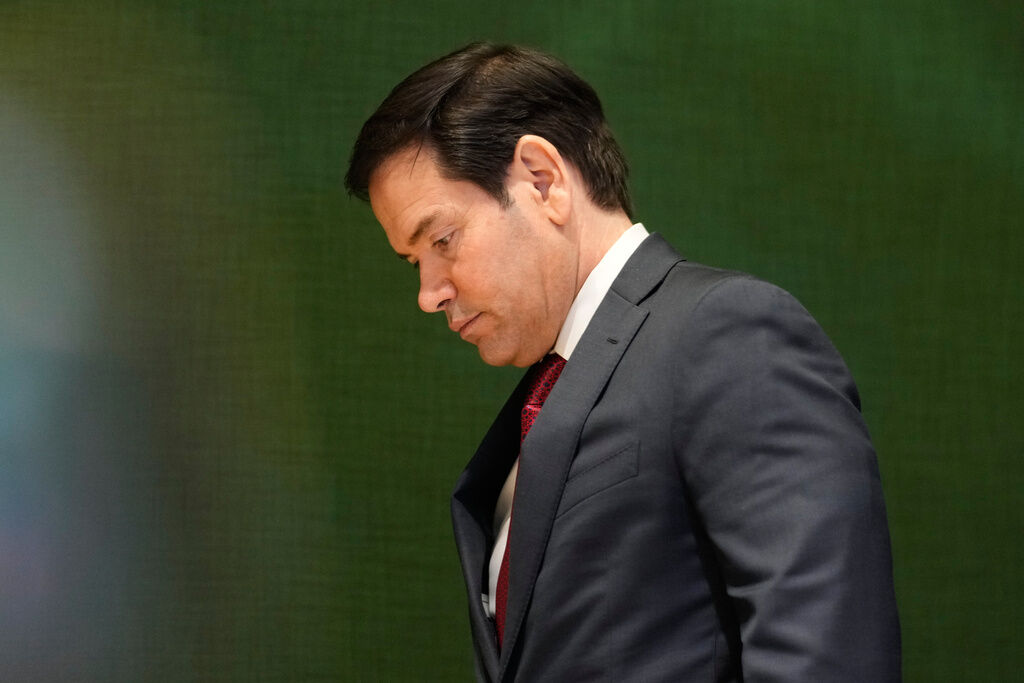
Rubio says any future nuclear proliferation deals have ‘to involve’ China and Russia
Washington Examiner Staff, Washington Examiner
washington.examiner.staff.washington.examiner@gazetteedit.wpenginepowered.com
Updated 11 hours ago
During a visit to the Caribbean on Wednesday, Secretary of State Marco Rubio was asked about recent talks in Geneva regarding weapons of mass destruction and the prospect of future nuclear weapons agreements. He responded that any such deal would...
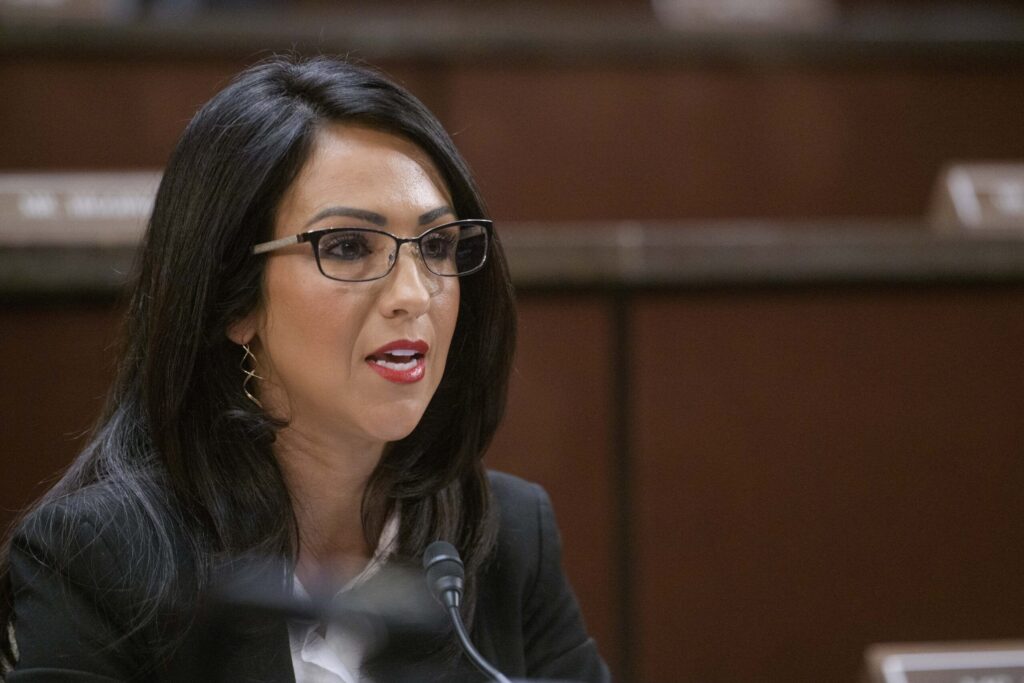
Hillary Clinton deposition paused after Lauren Boebert allegedly leaks photo from inside hearing
Molly Parks, Washington Examiner
molly.parks.washington.examiner@gazetteedit.wpenginepowered.com
Updated 11 hours ago
The House Oversight Committee has paused the deposition of former first lady and Secretary of State Hillary Clinton on Thursday after political commentator Benny Johnson shared a photo on social media of the closed-door hearing. Rep. Lauren Boebert (R-CO), who...

Colorado district attorneys oppose bipartisan bill limiting government access to bought data
Marissa Ventrelli
marissa.ventrelli@coloradopolitics.com
Updated 12 hours ago
A bipartisan coalition of Colorado lawmakers is advancing a bill that would prohibit police from purchasing personal consumer data without a warrant, setting up a clash with prosecutors who warn the measure could hamper criminal investigations. House Bill 1037, sponsored...

Lawmakers propose raising excise taxes on alcohol, marijuana to fund mental health spending
Marissa Ventrelli
marissa.ventrelli@coloradopolitics.com
Updated 12 hours ago
Colorado lawmakers hope to refer a measure to the November ballot that would increase excise taxes on alcohol and marijuana, with the revenue going toward mental health and civil commitment facilities around the state. House Bill 1301, sponsored by Rep....
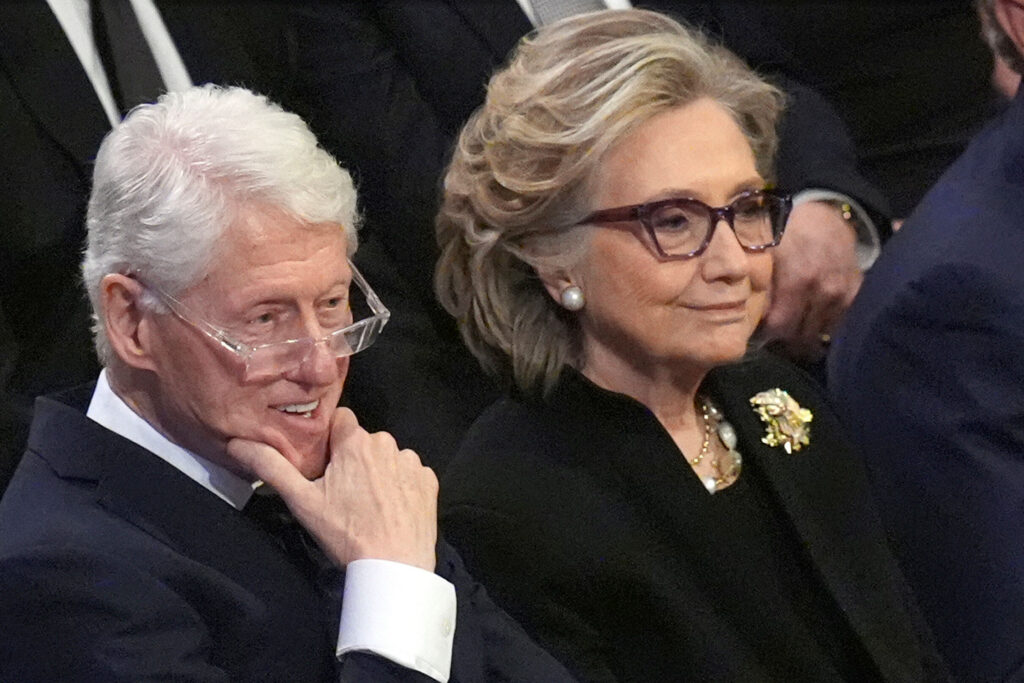
Hillary Clinton testifies she has no information on Epstein’s crimes and doesn’t recall meeting him
Stephen Groves
stephen.groves@associatedpress.com
Updated 13 hours ago
WASHINGTON (AP) — Former Secretary of State Hillary Clinton told U.S. House lawmakers on Thursday that she had no knowledge of Jeffrey Epstein’s or Ghislaine Maxwell’s crimes at the start of two days of depositions that will also include former...

10th Circuit appoints ex-Colorado solicitor general to argue issue after federal government declines
Michael Karlik
michael.karlik@coloradopolitics.com
Updated 1 day ago
The Denver-based federal appeals court took the unusual step earlier this month of appointing an attorney to independently argue a key issue in a criminal sentencing appeal after the government indicated it would not contest the defendant’s view of the...