

Judges warn about bias in courtrooms, legal profession

During his career as a lawyer, Denver District Court Judge Jon J. Olafson, who is gay, would get singled out as “the party planner.”
Karen Steinhauser, a lawyer and Aurora Municipal Court relief judge, was once called up to a judge’s bench by herself, only to be told, “You look really lovely today.”
“When we talk about bias, the way we often react when we’re told ‘that’s a bias’ is to become defensive,” Olafson told a group of lawyers and judges on Feb. 23.
“When we say things like, ‘I didn’t mean that’ or ‘don’t be so sensitive’ or whatever it is, we’re invalidating that person’s feelings,” Steinhauser added. “We just need to be able to say, ‘Thank you for telling me. I’m really sorry.’ And make sure it doesn’t happen again.”
'AI won': Judges caution lawyers to educate themselves about artificial intelligence in the law
The presentation on “de-biasing” courtrooms, sponsored by the Colorado Bar Association’s Judicial Liaison Section, occurred the same day the Colorado Supreme Court’s criminal jury instructions committee released an update to the template instructions judges give to jurors. Included for the first time was an implicit bias instruction, cautioning jurors to be mindful of “stereotypes, perceptions, attitudes, or preferences that people may hold without being aware of them.”

Olafson noted he has a directive on civility and inclusivity for his courtroom, prohibiting anyone from engaging in biased conduct, intentionally or not, based on race, religion, sexual orientation and other characteristics. Olafson’s order also requires the use of gender-neutral titles whenever possible.
“If you want to respectfully address someone, ask, ‘How may I respectfully address you?'” he said. “And when someone says, ‘This is how I want to be called,’ believe them.”
“I can tell you in law school now, there are so many students who don’t use ‘he’ or ‘she’ pronouns,” added Steinhauser, an instructor at the University of Denver. “So, really try to get used to saying, ‘members of the jury’ or referring to jurors as ‘Juror Smith, Juror Jones,’ as opposed to automatically assuming Ms., Mrs.”
'Political with a small "p"': Federal, state and local pathways to the bench
The presenters clarified that biases are not inherently bad, as they amount to shortcuts in the brain’s decision-making. However, recognizing the existence of the bias and its effect on lawyers’ actions is important.
For example, law firms might operate on “affinity bias,” Steinhauser said, putting candidates’ resumes on the top of the pile if they went to the same college as someone on the hiring committee.
“The idea that ‘birds of a feather flock together.’ We’re more comfortable with people who relate to us,” she said. “While it may be good for people who are like us, it’s not good for people who are not like us.”
Pulling back the curtain: Justice William Hood talks about appeals behind the scenes
When Steinhauser first began as a municipal court judge, she recalled having the belief that parties must dress a certain way when they appeared in court.
“What I had to learn and understand,” she said, “in Aurora we have a huge homeless population. We have a lot of people who don’t have anything. … I had to kind of really change how I thought about things and understand that when someone comes in dressed differently from how I grew up thinking people should come into a courtroom, that doesn’t mean they were disrespecting the court.”

Federal judge dismisses developer’s challenge to Denver affordable housing ordinances
Michael Karlik
michael.karlik@coloradopolitics.com
Updated 19 hours ago
A federal judge dismissed a homebuilder’s constitutional challenge on Tuesday to a pair of Denver ordinances that impose obligations on developers related to the affordable housing demands created by new construction. Two related companies, redT Homes and redT Capital Partners,...
10th Circuit distances itself from prior decision making it easier to toss prisoner lawsuits
Michael Karlik
michael.karlik@coloradopolitics.com
Updated 1 day ago
The Denver-based federal appeals court distanced itself on Wednesday from its own recent decision that made it easier for prison officials to end civil lawsuits by transferring incarcerated plaintiffs between facilities. A three-judge panel of the U.S. Court of Appeals...

Appeals court overturns Douglas County vehicular homicide conviction due to faulty jury instructions
Michael Karlik
michael.karlik@coloradopolitics.com
Updated 2 days ago
Colorado’s second-highest court overturned a defendant’s vehicular homicide conviction and 12-year prison sentence on Thursday after determining a Douglas County judge omitted key language from the jury instructions that could have resulted in a different outcome. James Paul McDonald was...
Federal judge dismisses malicious prosecution claim against former Denver prosecutor
Michael Karlik
michael.karlik@coloradopolitics.com
Updated 23 hours ago
A federal judge concluded on Monday that a former Denver prosecutor could not be sued for allegedly causing the arrests of two plaintiffs after they failed to appear for trial on the scheduled date, even though the trial had been...
Judicial discipline commission reports increased transparency, increased submissions
Michael Karlik
michael.karlik@coloradopolitics.com
Updated 2 hours ago
The Colorado Commission on Judicial Discipline received 473 misconduct complaints about judges in 2025, which was nearly 29% higher than in 2024 and substantially greater than any time in the past decade. However, only 31 complaints were referred to the commission...
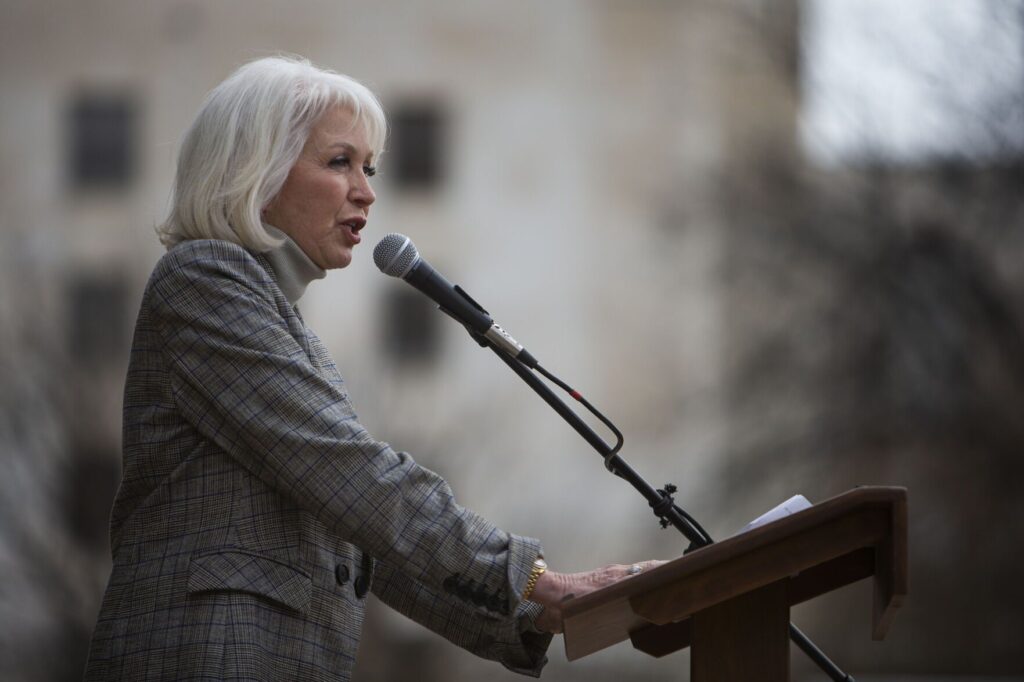
Colorado Gov. Jared Polis ignites fierce debate after raising clemency questions in Tina Peters case
Marianne Goodland
marianne.goodland@coloradopolitics.com
Updated 3 days ago
Gov. Jared Polis ignited a political firestorm Tuesday night after weighing in on the prison sentences of two former Colorado officials — a Democrat and a Republican — convicted of attempting to influence a public servant. The comments quickly fueled...

Colorado Supreme Court signals intervention in dispute over treatment for trans children
Michael Karlik
michael.karlik@coloradopolitics.com
Updated 4 days ago
The Colorado Supreme Court ordered Children’s Hospital Colorado on Tuesday to explain why it should not direct the organization to resume providing certain types of services to transgender children in compliance with the state’s non-discrimination law. Last month, a Denver...
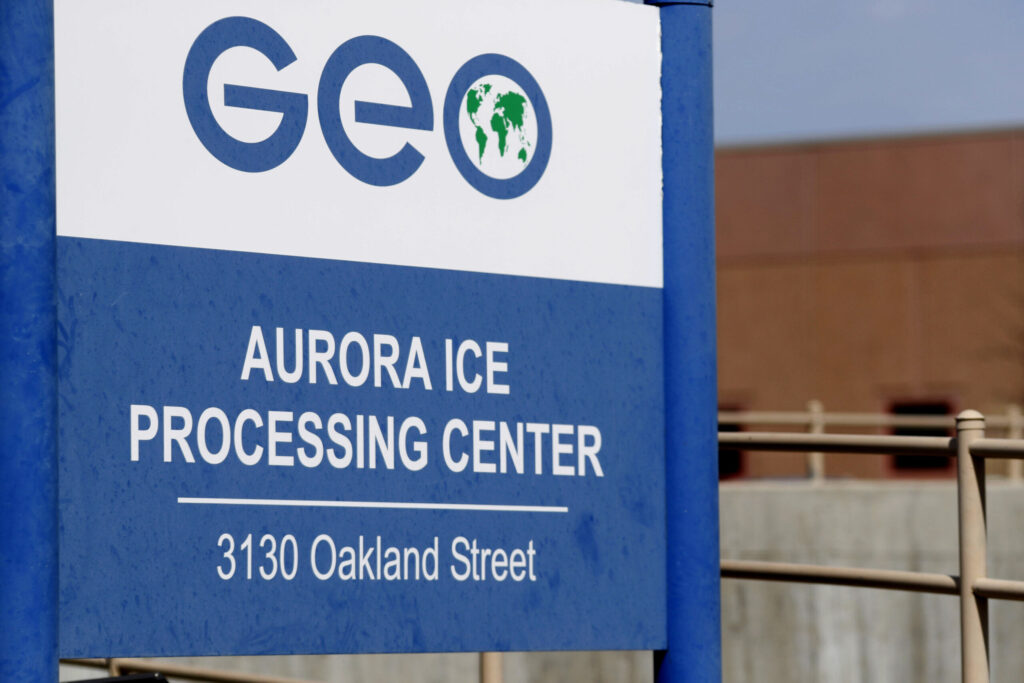
Judge nixes latest policy requiring 7 days’ notice for Congress members to visit ICE facilities
Michael Kunzelman
michael.kunzelman@associatedpress.com
Updated 4 days ago
WASHINGTON (AP) — A federal judge agreed on Monday to temporarily suspend the latest version of a Trump administration policy that requires members of Congress to provide a week’s notice before they can visit immigration detention facilities. U.S. District Judge...
Judge nixes latest policy requiring 7 days’ notice for Congress members to visit ICE facilities
Michael Kunzelman
michael.kunzelman@associatedpress.com
Updated 4 days ago
WASHINGTON • A federal judge agreed on Monday to temporarily suspend the latest version of a Trump administration policy that requires members of Congress to provide a week’s notice before they can visit immigration detention facilities. U.S. District Judge Jia...
Colorado Supreme Court clarifies restraining order violations can always support burglary charge
Michael Karlik
michael.karlik@coloradopolitics.com
Updated 3 days ago
The Colorado Supreme Court’s majority ruled on Monday that a violation of a restraining order can also serve as a basis for finding a defendant guilty of burglary. Under state law, a person commits second-degree burglary by unlawfully entering or...
PREV
PREVIOUS

'AI won': Judges caution lawyers to educate themselves about artificial intelligence in the law
A panel of federal and state judges last week told a group of attorneys, in explicit terms, artificial intelligence is here to stay and they must educate themselves about how to use it responsibly. “Here’s how I’ve been trying to think about this: Most of us drive cars. I have a car that has a […]

Pulling back the curtain: Justice William Hood talks about appeals behind the scenes
The Colorado Supreme Court is increasingly taking up appeals directly from the trial courts, said Justice William W. Hood III at a legal event in February, but lawyers still need to understand how to make a compelling argument for intervention. “You’d be surprised how often it’s just sort of hard to figure out what the […]