

‘AI won’: Judges caution lawyers to educate themselves about artificial intelligence in the law
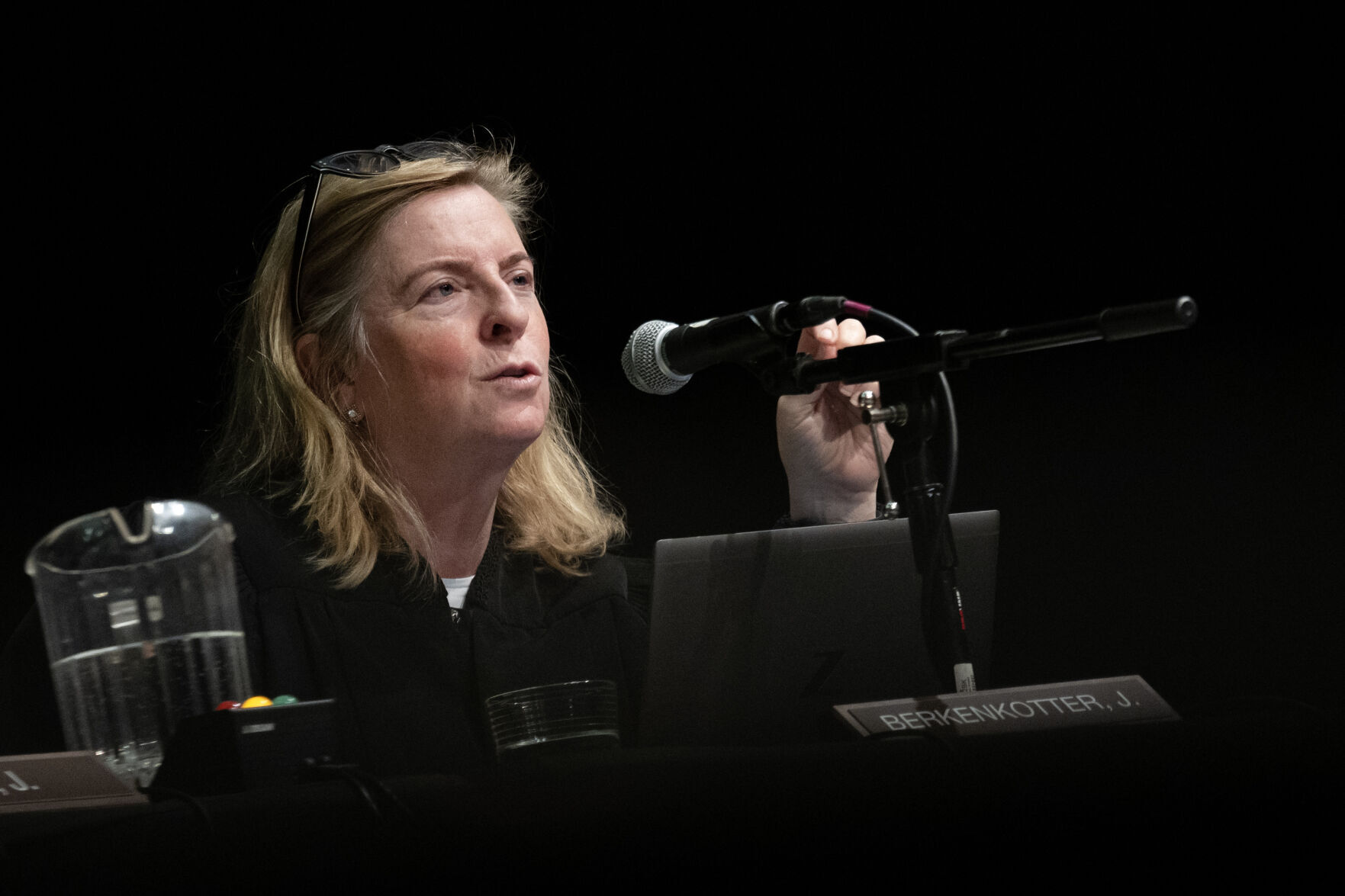
A panel of federal and state judges last week told a group of attorneys, in explicit terms, artificial intelligence is here to stay and they must educate themselves about how to use it responsibly.
“Here’s how I’ve been trying to think about this: Most of us drive cars. I have a car that has a combustion engine and I have a car that’s electric,” said Justice Maria E. Berkenkotter. “I have to understand how to be safe — change the tires, change the oil, check the brakes. I don’t have to understand the combustion engine. I don’t have to understand regenerative braking.”
Similarly, she continued, attorneys do not have to know everything about how AI models operate, “but you do have to understand enough to be careful.”
The Feb. 23 discussion on AI, sponsored by the Colorado Bar Association’s Judicial Liaison Section, emphasized the double-edged sword presented by new forms of artificial intelligence.
Judges warn about bias in courtrooms, legal profession
On the one hand, AI legal tools can improve access to justice for self-represented litigants. For years, Utah has maintained the “Sandbox,” where providers may offer unconventional legal services under relaxed regulations, with an eye toward gathering data and assessing consumer complaints. To date, 24,000 individual customers have used tools that include legal chatbots and document generators.
On the other hand, AI generators that pull from a vast catalogue of legal writings may end up replicating systemic biases.
“There’s concern that lawyers are gonna end up with fancy AI and fancy products,” added Berkenkotter, “and self-represented folks at the end of the day — because there’s no money in it — are going to end up with products that are lesser.”
Pulling back the curtain: Justice William Hood talks about appeals behind the scenes
“There isn’t a lot of regulation in this space,” said U.S. Magistrate Judge Maritza Dominguez Braswell. “That is because there is this desire to promote competition. And also, because our Congress doesn’t move very fast, we’re not gonna see a lot of regulation and laws constraining it.”
Currently, Colorado lawmakers are considering regulations on the use of AI in elections, with one proposed bill requiring disclosure of any “deepfakes” — AI-generated images, voices or videos of candidates — in elections communications. In addition, one federal judge in Colorado has enacted his own disclosure requirement for the use of AI.

FILE - The OpenAI logo is seen on a mobile phone in front of a computer screen which displays output from ChatGPT, March 21, 2023, in Boston. Campaigns will be required to clearly state that political advertisements airing in Michigan were created with the use of artificial intelligence under legislation expected to be signed in the coming days by the Democratic Gov. Gretchen Whitmer. The use of AI-generated deepfakes within 90 days of an election will be prohibited without a disclosure identifying the media as manipulated. (AP Photo/Michael Dwyer, File)
Luige Del Puerto luige.delpuerto@coloradopolitics.com

U.S. District Court Judge S. Kato Crews, who President Joe Biden appointed in January, has an order for parties in civil cases to certify they have not used generative AI in preparing their filings. If they do use AI, even if a human later reviews the work, they must attest to that, as well.
Through the court’s clerk, Crews told Colorado Politics it is too early to assess the directive’s impact. However, his goal is to promote the “thoughtful use” of AI by having lawyers confirm they checked the output of their AI generator before turning in their work.
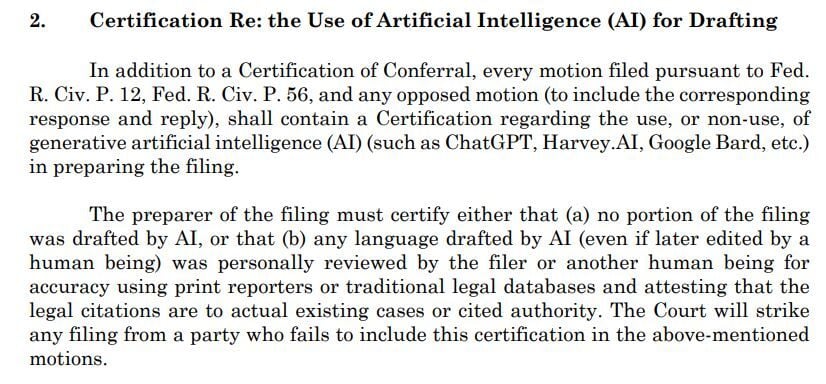
U.S. District Court Judge S. Kato Crews requires parties to attest to the use or non-use of generative AI in their legal filings.

Judge Lino S. Lipinsky de Orlov of the Court of Appeals, who also spoke on the AI panel, recalled that when he first began discussing AI in the spring of 2023, lawyers were getting in trouble for using ChatGPT and unwittingly including fake legal citations generated by the model in their filings.
“I asked ChatGPT recently, ‘Why are lawyers obtaining these hallucinations in the text?'” he said. “ChatGPT took no responsibility and said, ‘Well, lawyers should be checking the citations.'”
Lipinsky added that he recently attended a demonstration for a generative AI model that responded to a prompt by producing genuine legal citations.
“The current AI revolution is over in many ways. AI won,” he said. “We all need to learn how to use it effectively. How to avoid the pitfalls.”
'Political with a small "p"': Federal, state and local pathways to the bench
Dominguez Braswell said AI models can be a “black box,” with little transparency for how they draw on information and make connections to generate their output. She suggested the way to think about AI’s potential is: “AI’s not going to replace me, but someone who’s really good at using AI might.”
“I don’t love the blanket initiatives you’ve seen some companies take, which is AI: not allowed. Because people are gonna use it, especially the younger generations,” said Dominguez Braswell. “So, it’s better to talk about it and adopt responsible use policies.”
That sentiment echoed an acknowledgement by Justice Melissa Hart last fall that the Colorado Supreme Court must be mindful of emerging AI issues, even in the absence of a court case specifically implicating artificial intelligence.
“I have an obligation to understand and to educate myself regularly and keep up to date, both because, as the state Supreme Court, we are responsible for regulating the legal system … and there are huge numbers of legal-ethical issues that come with AI,” Hart said at a University of Denver-sponsored event.
Berkenkotter emphasized that lawyers are already using AI in their personal lives, whether by unlocking their phones through facial recognition technology or using music streaming services to recommend playlists. One audience member responded that AI, in reality, “is using us.”
“I think that’s going to be a recurring theme,” Berkenkotter said.

Colorado’s Western Slope magistrate judges describe unique role in federal judiciary
Michael Karlik
michael.karlik@coloradopolitics.com
Updated 2 hours ago
Two of Colorado’s federal judges stationed on the Western Slope spoke to lawyers on Wednesday about their unique roles, the ways their workloads differ, and the need for more criminal defense lawyers to take cases outside the Front Range. “Here...
Federal judge rules that request for bond hearing not necessary to challenge immigration detention
Michael Karlik
michael.karlik@coloradopolitics.com
Updated 2 hours ago
A federal judge in Colorado ruled last week that it is not mandatory for a person to seek a bond hearing with an immigration judge before they challenge the lawfulness of their detention in federal court. For the past year,...

Boulder Valley School District introduces new policies following antisemitism lawsuit
Marissa Ventrelli
marissa.ventrelli@coloradopolitics.com
Updated 4 hours ago
The chief of Boulder Valley School unveiled new policies for the 2026-2027 school year following a lawsuit filed on behalf of a student alleging antisemitic harassment. In June, the Anti-Defamation League filed a federal civil rights complaint against the school...

Colorado NRA chapter seeks injunction against new gun‑training requirement
Marissa Ventrelli
marissa.ventrelli@coloradopolitics.com
Updated 3 hours ago
The Colorado chapter of the National Rifle Association is seeking an injunction to stop the state from enforcing a new law that took effect earlier this month. The new law requires anyone buying or selling certain firearms to first complete...
Denver moves to dismiss Trump challenge to ‘assault-style’ weapons ban
Deborah Grigsby
deborah.smith@denvergazette.com
Updated 3 hours ago
Denver has filed a motion to dismiss a lawsuit brought by the Trump administration challenging the city’s ban on “assault-style” weapons and magazines exceeding a 15-round capacity. The U.S. Department of Justice filed a suit in federal court in May,...
Federal judge dismisses ex-Colorado judicial discipline director’s conspiracy lawsuit
Michael Karlik
michael.karlik@coloradopolitics.com
Updated 1 day ago
A federal judge dismissed a lawsuit from Colorado’s former judicial discipline director on Tuesday, finding that he failed to adequately state claims for conspiracy or constitutional violations. Christopher S.P. Gregory, who served as the executive director of the Colorado Commission on Judicial...
Federal judge allows retaliation claims to proceed against prison officials
Michael Karlik
michael.karlik@coloradopolitics.com
Updated 3 hours ago
A federal judge agreed last week that a man incarcerated at Sterling Correctional Facility had credibly alleged that employees retaliated against him for filing grievances, including by taking away his disability accommodations and turning off his electricity. Louis Peoples Jr.,...

U.S. Rep. Lauren Boebert’s son arrested, faces charges of sexual exploitation of minor
Matt Kyle
matt.kyle@denvergazette.com
Updated 2 days ago
U.S. Rep. Lauren Boebert’s son Tyler Jay Boebert has been arrested and accused of recording and sharing a video depicting himself having intercourse with a minor, according to court records. The case originated in Garfield County in Western Colorado and...
Adams County water district may proceed with cost-recovery lawsuit against Denver for contamination
Michael Karlik
michael.karlik@coloradopolitics.com
Updated 2 days ago
A federal judge rejected Denver’s arguments last week for pausing or dismissing a lawsuit brought by an Adams County special district seeking to recover its costs for addressing water contamination as a result of Denver firefighting activities. In January, the...
Federal judge declines to dismiss First Amendment retaliation claim against prison official
Michael Karlik
michael.karlik@coloradopolitics.com
Updated 2 days ago
A federal judge agreed last month that an incarcerated Native American woman may pursue her claim of First Amendment retaliation against a prison official who allegedly interfered with her religious exercise. Yvonne Peterson resided at Buena Vista Correctional Facility for...
PREV
PREVIOUS
Federal judge finds no bias in CU-Denver student's expulsion
A federal judge last week sided with the University of Colorado Denver, concluding a student failed to provide evidence his expulsion was the product of bias that infringed on his constitutional right to due process. Chadwick Jordan, representing himself, alleged CU-Denver denied him an impartial decision-maker in various disciplinary proceedings. Specifically, he believed David Steward, […]

Judges warn about bias in courtrooms, legal profession
During his career as a lawyer, Denver District Court Judge Jon J. Olafson, who is gay, would get singled out as “the party planner.” Karen Steinhauser, a lawyer and Aurora Municipal Court relief judge, was once called up to a judge’s bench by herself, only to be told, “You look really lovely today.” “When we […]