

Federal judge tosses excessive force case against Adams County deputies

Even though a man re-injured his shoulder after Adams County deputies placed him in handcuffs, a federal judge last month decided no constitutional violation took place during the “lawful, normal arrest.”
During a late-night domestic dispute with his wife in June 2021, Gabriel Armijo destroyed his home garden and drove into a fence. Other people joined the altercation, and Armijo later admitted it was his “own fault police were called.”
When Deputies Matthew Tran and Scott Strole arrived, Armijo was calm and compliant. He notified the deputies he had shoulder surgery earlier in the month and that he could not put his hands behind his back to be handcuffed. The deputies still proceeded to handcuff him, linking two sets of cuffs to accommodate Armijo’s shoulder.
Armijo did not complain about shoulder pain and declined an offer of medical attention. The deputies transported Armijo to a police substation and then to jail, still with the double-cuff accommodation. Court records show he eventually pleaded guilty to a misdemeanor criminal mischief charge.
After his arrest, Armijo underwent imaging for his recovering shoulder. The images revealed a re-tear of his rotator cuff, necessitating further surgery.
Armijo sued the arresting deputies and then-Sheriff Richard Reigenborn, alleging excessive force and deliberate indifference to his serious medical needs. Armijo did not argue his arrest, restraint or even the use of handcuffs amounted to a constitutional violation. Instead, the duration of the handcuffing and the way the deputies used the cuffs led to his re-injury, Armijo contended.
Adams County responded that deputies were conscious of his recovering shoulder and did what they could to accommodate him, while keeping in mind that he was the apparent perpetrator of a domestic dispute who was capable of becoming violent.
In a Dec. 13 order, U.S. Magistrate Judge S. Kato Crews sided with the deputies. Armijo experienced a “normal, lawful arrest,” Crews wrote. Further, it was not a clear constitutional violation for the deputies to accommodate Armijo’s shoulder through double-cuffing, rather than some other method.
“It is notable that Plaintiff did not complain to Defendants about any pain in his shoulder or the need for medical attention the entire time he was handcuffed and transported,” Crews elaborated. “And since Plaintiff refused medical attention when getting handcuffed and never complained about shoulder pain when wearing the handcuffs or while being transported, the Deputies had no reason to believe Plaintiff needed medical attention.”
Armijo also brought a claim under Colorado’s 2020 police accountability law, which holds officers liable for violations of rights under the state constitution. Because Crews found no federal constitutional violation, he declined to proceed with Armijo’s state law claim.
The case is Armijo v. Reigenborn et al.


Trump’s 10th Circuit nominee recuses from cases against federal government without explanation
Michael Karlik
michael.karlik@coloradopolitics.com
Updated 1 day ago
President Donald Trump’s nominee to fill a vacancy on the Denver-based federal appeals court recused himself without a clear explanation from nine cases against the executive branch while he was undergoing vetting by the White House this spring. U.S. District...
Adams County murder conviction reversed due to faulty jury instruction
Michael Karlik
michael.karlik@coloradopolitics.com
Updated 1 day ago
Colorado’s second-highest court overturned an Adams County defendant’s murder conviction last month because the instruction provided to the jury about a trespasser’s right to use self-defense did not accurately reflect Colorado law. A person is justified in using force to...
Colorado court upholds murder conviction despite jury disobeying instructions
Michael Karlik
michael.karlik@coloradopolitics.com
Updated 7 hours ago
Colorado’s second-highest court upheld an Arapahoe County defendant’s murder conviction last month, even though jurors found he was not the one who shot the victim and the evidence suggested he was not present for the shooting. A three-judge Court of...
Divided appeals court reverses conviction after judge declined to define ‘bludgeon’
Michael Karlik
michael.karlik@coloradopolitics.com
Updated 7 hours ago
Colorado’s second-highest court reversed a Jefferson County defendant’s felony menacing conviction on Thursday, concluding that the trial judge’s failure to define “bludgeon” for jurors may have affected the outcome. A three-judge Court of Appeals panel divided in unusual ways in...
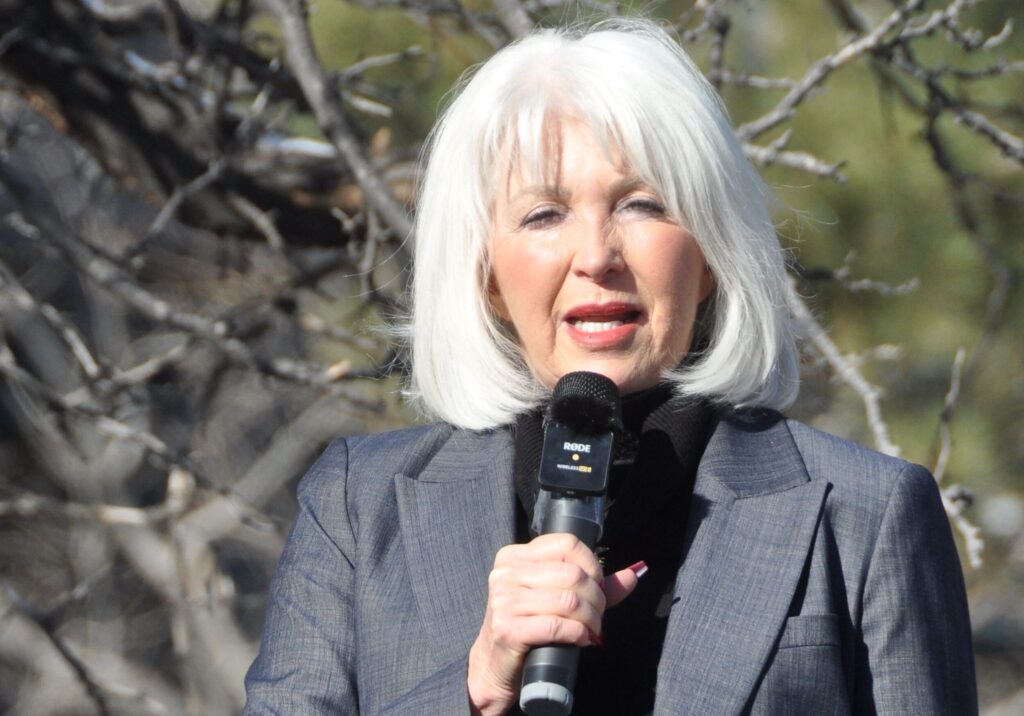
10th Circuit dismisses Tina Peters’ challenge to confinement as moot
Michael Karlik
michael.karlik@coloradopolitics.com
Updated 2 days ago
The Denver-based federal appeals court granted the state’s unopposed request on Wednesday to dismiss former Mesa County clerk Tina Peters’ challenge to her confinement as moot. Although Peters received a commutation of her prison sentence last month from Gov. Jared...
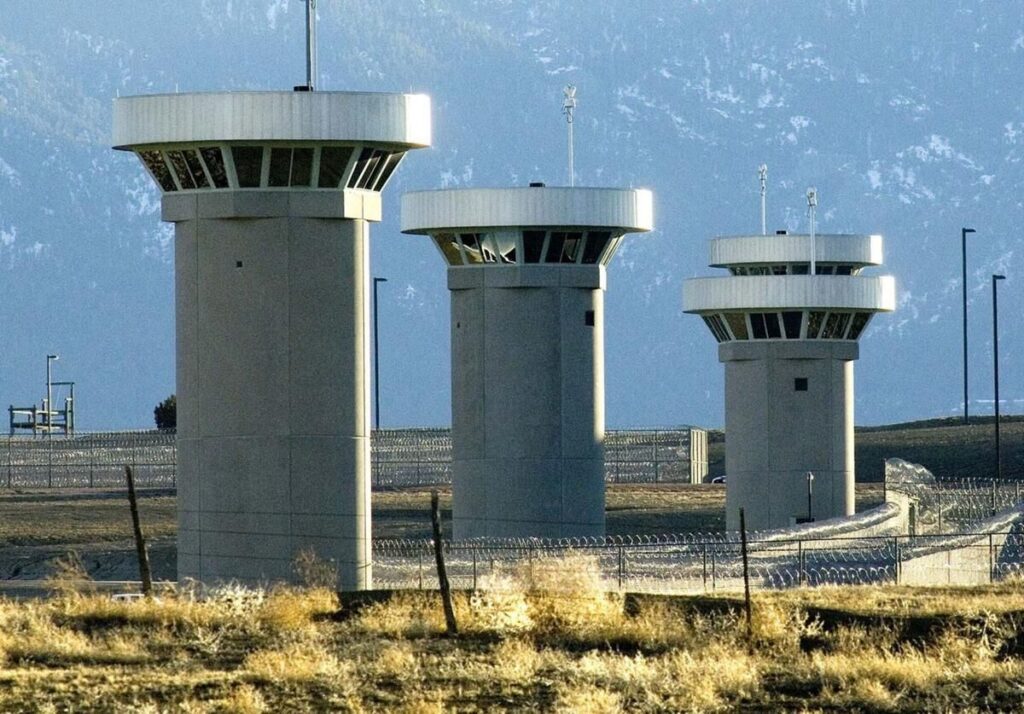
Federal judge declines to recuse from death penalty case after Supermax visit
Michael Karlik
michael.karlik@coloradopolitics.com
Updated 2 days ago
A federal judge declined to recuse herself last month from a death penalty case arising out of Colorado’s “Supermax” prison, finding that her tour of the facility earlier this year did not bias her decision-making. U.S. District Court Judge Charlotte...
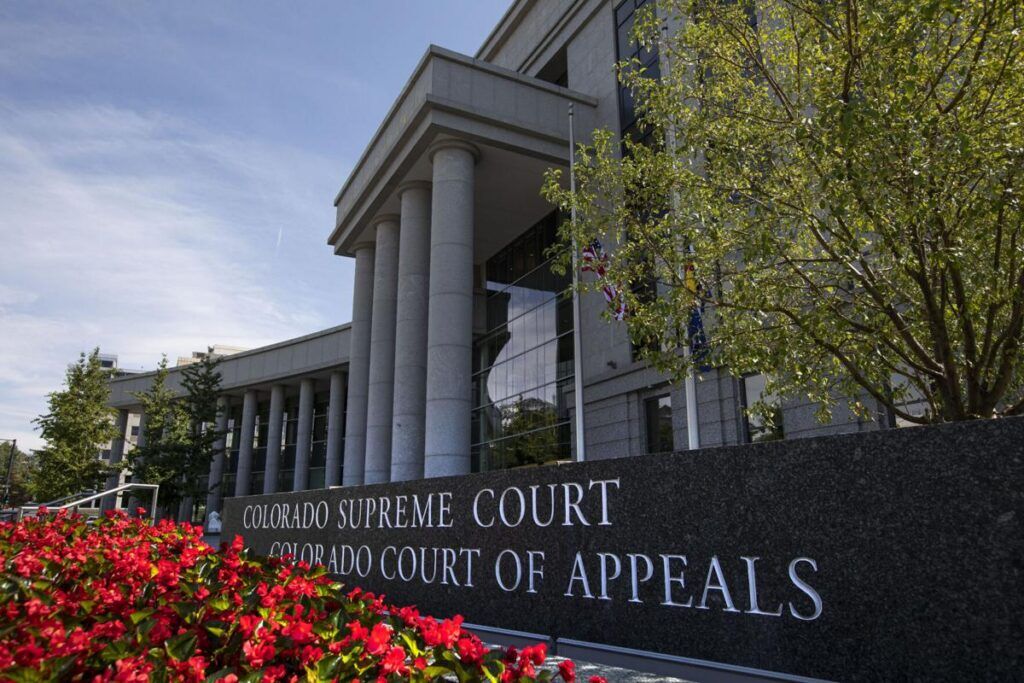
Appeals court clarifies offense of impersonating a peace officer
Michael Karlik
michael.karlik@coloradopolitics.com
Updated 32 minutes ago
Colorado’s second-highest court clarified this month that a person commits the offense of impersonating a peace officer if they engage in “any conduct” while pretending to be law enforcement. In a case out of El Paso County, Richard James Coulier...
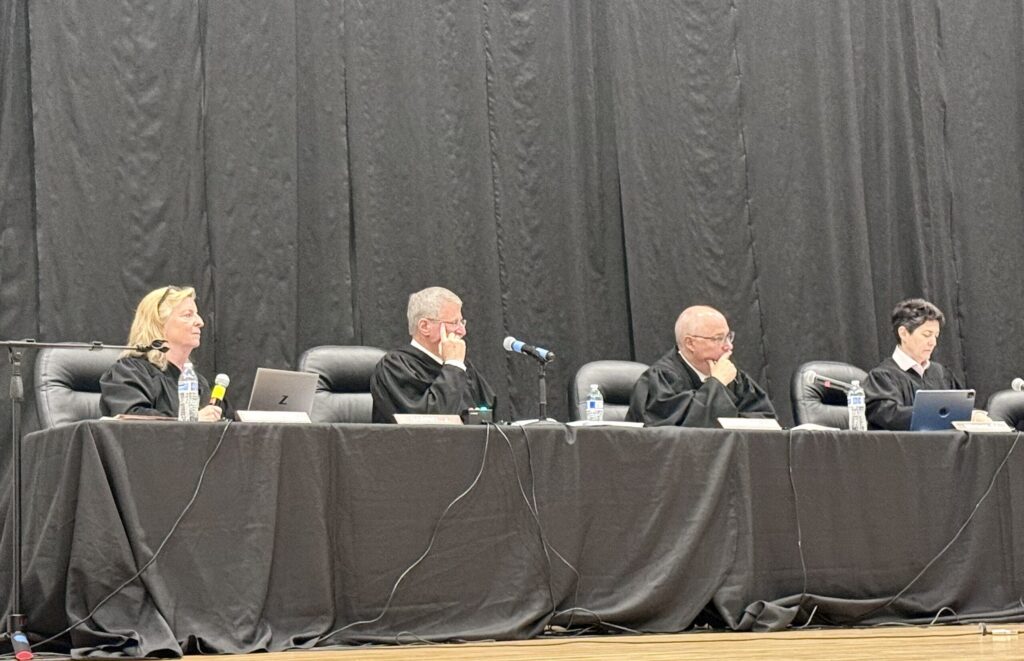
Colorado Supreme Court reverses 2 Chaffee County judges for imposing fee on habeas petitioner
Michael Karlik
michael.karlik@coloradopolitics.com
Updated 4 days ago
The Colorado Supreme Court rejected two separate appeals earlier this month from an incarcerated defendant seeking immediate release from prison, but concluded that two Chaffee County judges incorrectly required him to prepay filing fees for his cases. David J. Gottorff...
Weld County judge wrongly denied bail to murder defendant in gap between law change
Michael Karlik
michael.karlik@coloradopolitics.com
Updated 4 days ago
Colorado’s second-highest court ruled this month that a Weld County judge was wrong to deny bail to a murder defendant in the window between the state Supreme Court’s recognition of the right to bail and the voters’ subsequent overruling of...
Defendants acquitted by insanity are eligible for records-sealing, appeals court says
Michael Karlik
michael.karlik@coloradopolitics.com
Updated 3 days ago
Colorado’s second-highest court clarified last month that defendants who are found not guilty by reason of insanity are eligible to have their criminal records sealed from public view. Judges must seal criminal records if, among other things, a defendant is...
PREV
PREVIOUS

Auon'tai Anderson drops out of state House race for 'preservation of Black political power'
Auon’tai Anderson, one of six Democrats running for the House District 8 seat held by term-limited Rep. Leslie Herod of Denver, announced Tuesday he’s dropping out of the race in order to “(preserve) Black political power in the state Capitol.” Anderson said he is launching a nonprofit, instead. Anderson said the district has been a symbol […]

Colorado justices show interest in validity of email notification for contempt proceedings
The Colorado Supreme Court has ordered a Larimer County magistrate to explain why she could authorize a party to be notified solely by email about upcoming contempt proceedings. Under the procedural rules for civil cases, when a person is subject to contempt of court, notice must be served “directly” upon them. Andrew Conners, who is […]