

Colorado justices show interest in validity of email notification for contempt proceedings

The Colorado Supreme Court has ordered a Larimer County magistrate to explain why she could authorize a party to be notified solely by email about upcoming contempt proceedings.
Under the procedural rules for civil cases, when a person is subject to contempt of court, notice must be served “directly” upon them. Andrew Conners, who is facing the possibility of jail time for allegedly withholding payments to his ex-wife for child expenses, argued a contempt notice sent to his Gmail account did not satisfy that requirement.
“The notion of using email to deliver a contempt citation – the basis for a bench warrant if the intended recipient fails to appear – is unacceptable,” wrote his attorneys. The Supreme Court “should not deem ‘you’ve got mail’ to be fair warning that ‘you’ve got jail.'”
A process server attempted to deliver notification of the contempt proceeding to Conners at his known address in California, but could not locate him. His ex-wife’s attorney accused Conners of “playing games” in an “attempt to avoid accountability” for his financial obligations to his children.
In response to a request from Conners’ ex-wife, Magistrate Kandace B. Majoros authorized Conners to be served with the contempt of court paperwork through his personal email address.
Conners then appealed directly to the Supreme Court, asking the justices to interpret for the first time whether the requirement to “directly” serve someone with a contempt notice includes email as an option. He noted the judicial branch’s own paperwork appears to rule out the possibility of electronic service.
The goal of direct service, his lawyers argued, is to ensure the person facing contempt of court lays eyes on the notice.
In contrast, “sending an email does not guarantee that the message will ever actually be downloaded by the intended recipient,” Conners’ attorneys wrote. “Furthermore, internet users are inundated with voluminous email messages, and an email containing important legal notices can easily be overlooked, mistaken for junk mail, filtered out by an automated spam filter, or be sent to an email account the recipient no longer uses.”
If Majoros improperly authorized email service, they concluded, she would have no jurisdiction to punish Conners by finding him in contempt.
The Supreme Court on Jan. 3 ordered Majoros and Conners’ ex-wife to explain why it should not overturn the order allowing for email notification.
The case is In re the Marriage of Conners.



A new day? Colorado’s troubled guardianship office pursues ‘cultural reset’
Marianne Goodland
marianne.goodland@coloradopolitics.com
Updated 3 days ago
Colorado’s guardianship program, long criticized for mismanagement and high staff attrition, is undergoing a “cultural reset,” as its new director works to repair partnerships and prepare for a major expansion under recent legislation. Created by lawmakers in 2017, the Office...
Local party leaders, incoming judge among members of judicial performance commission that violated law
Michael Karlik
michael.karlik@coloradopolitics.com
Updated 20 hours ago
A local Democratic leader and 2024 presidential elector. A legislative aide and leader in the Young Republicans. An incoming county court judge freshly appointed by the governor. They are among the eight members of the northeastern Colorado judicial performance commission...

Judge dismisses lawsuit seeking records from Colorado Democratic group
Marianne Goodland
marianne.goodland@coloradopolitics.com
Updated 2 days ago
A lawsuit seeking to obtain records from Democratic lawmakers affiliated with a caucus has been thrown out by a Denver District Court judge. On July 17, Judge Ericka Englert dismissed the April lawsuit filed by progressive activist Derrick Blanton, who...
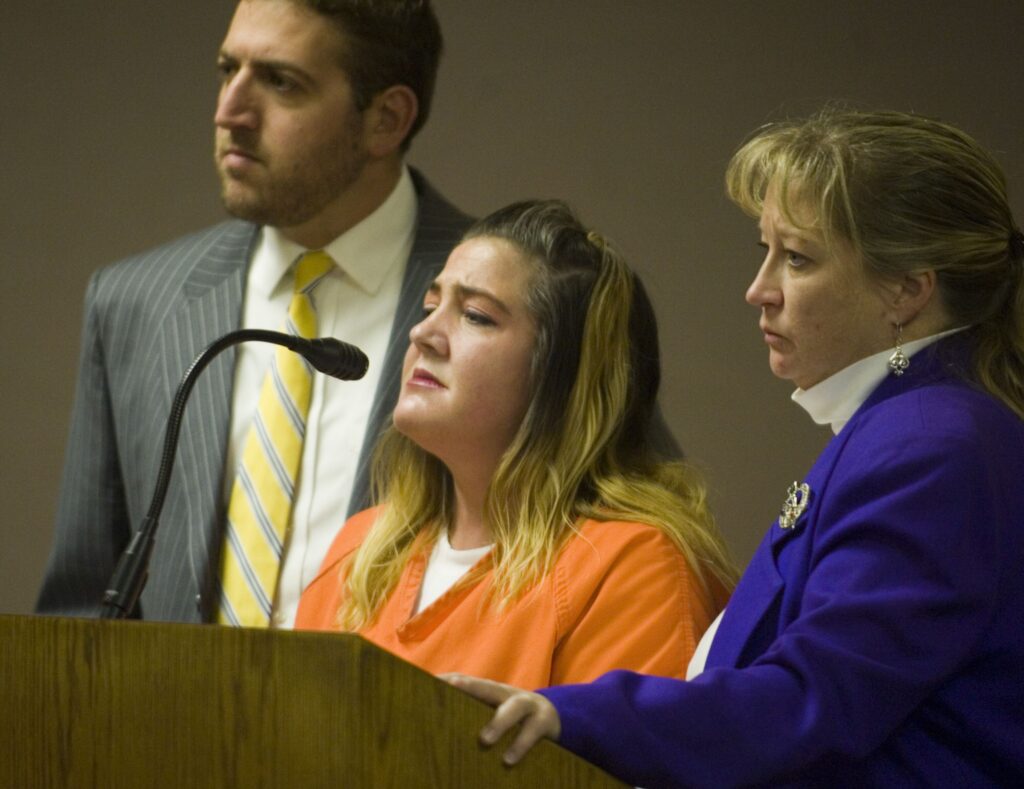
Colorado Springs mother Deborah Nicholls’ murder conviction overturned
Nick Smith
nick-smith@coloradopolitics.com
Updated 3 days ago
A Colorado Springs mother convicted in 2008 of murdering her three children in a house fire might get a new trial after a judge ruled that prosecutors withheld key evidence that could have impacted the jury’s verdict. Deborah Nicholls, whose...
Colorado court overturns illegal $7,000 restitution order
Michael Karlik
michael.karlik@coloradopolitics.com
Updated 2 days ago
Colorado’s second-highest court overturned a Weld County defendant’s obligation to pay more than $7,000 in crime victim restitution on Thursday because a trial judge failed to issue a legally compliant restitution order at the time of sentencing. In Colorado, as...

Appeals court rejects former DougCo commissioner’s legal fee claim
Nicholas Fogleman
nicholas.fogleman@denvergazette.com
Updated 2 days ago
The Colorado Court of Appeals rejected a former Douglas County commissioner’s bid for reimbursement of attorney fees she incurred while responding to multiple investigations into her conduct. The dispute stemmed from a 2019 anonymous letter sent to county officials alleging...
Appeals court orders second look at Denver Water’s immunity for cyclist’s injury
Michael Karlik
michael.karlik@coloradopolitics.com
Updated 3 days ago
Colorado’s second-highest court ordered another look at a bicyclist’s negligence lawsuit against Denver Water on Thursday, concluding that a trial judge needed to evaluate the utility’s potential immunity using the state Supreme Court’s new guidance. Joseph A. “Joey” Scott alleged...
Labels, duration not definitive proof of ‘intimate relationship,’ Colorado court rules in domestic violence case
Michael Karlik
michael.karlik@coloradopolitics.com
Updated 2 days ago
Colorado’s second-highest court clarified on Thursday that the length of a couple’s relationship and the labels they attach to it are not conclusive evidence of whether it is an “intimate relationship” that can give rise to a domestic violence prosecution....

Colorado AG urges Supreme Court to let Boulder climate lawsuit proceed
Marissa Ventrelli
marissa.ventrelli@coloradopolitics.com
Updated 3 days ago
Colorado Attorney General Phil Weiser has filed a court brief with the U.S. Supreme Court in a lawsuit brought by Boulder city officials seeking to hold oil companies liable for their environmental impact. The case began in 2018, when the...
10th Circuit says landowner cannot sue ex-Routt County judge for statements in decision
Michael Karlik
michael.karlik@coloradopolitics.com
Updated 4 days ago
A Routt County landowner cannot sue a former judge for his allegedly inaccurate statements in a case where the landowner was not a party, the Denver-based federal appeals court decided on Wednesday. Anne Fitzsimmons, who lives in Germany, owns a...
PREV
PREVIOUS

Federal judge tosses excessive force case against Adams County deputies
Even though a man re-injured his shoulder after Adams County deputies placed him in handcuffs, a federal judge last month decided no constitutional violation took place during the “lawful, normal arrest.” During a late-night domestic dispute with his wife in June 2021, Gabriel Armijo destroyed his home garden and drove into a fence. Other people […]

House Speaker Julie McCluskie reprimands Rep. Elisabeth Epps for behavior during November session
House Speaker Julie McCluskie reprimanded Rep. Elisabeth Epps, the Denver Democrat who joined pro-Palestinian protesters in the gallery and at one point called fellow lawmakers “fascist,” issuing a a sternly-worded warning that such actions in the future could lead to more serious consequences. Epps won’t face a censure. In her letter, McCluskie identified six violations […]