

Federal judge finds no constitutional violation in requiring illegal pot growers to forfeit house
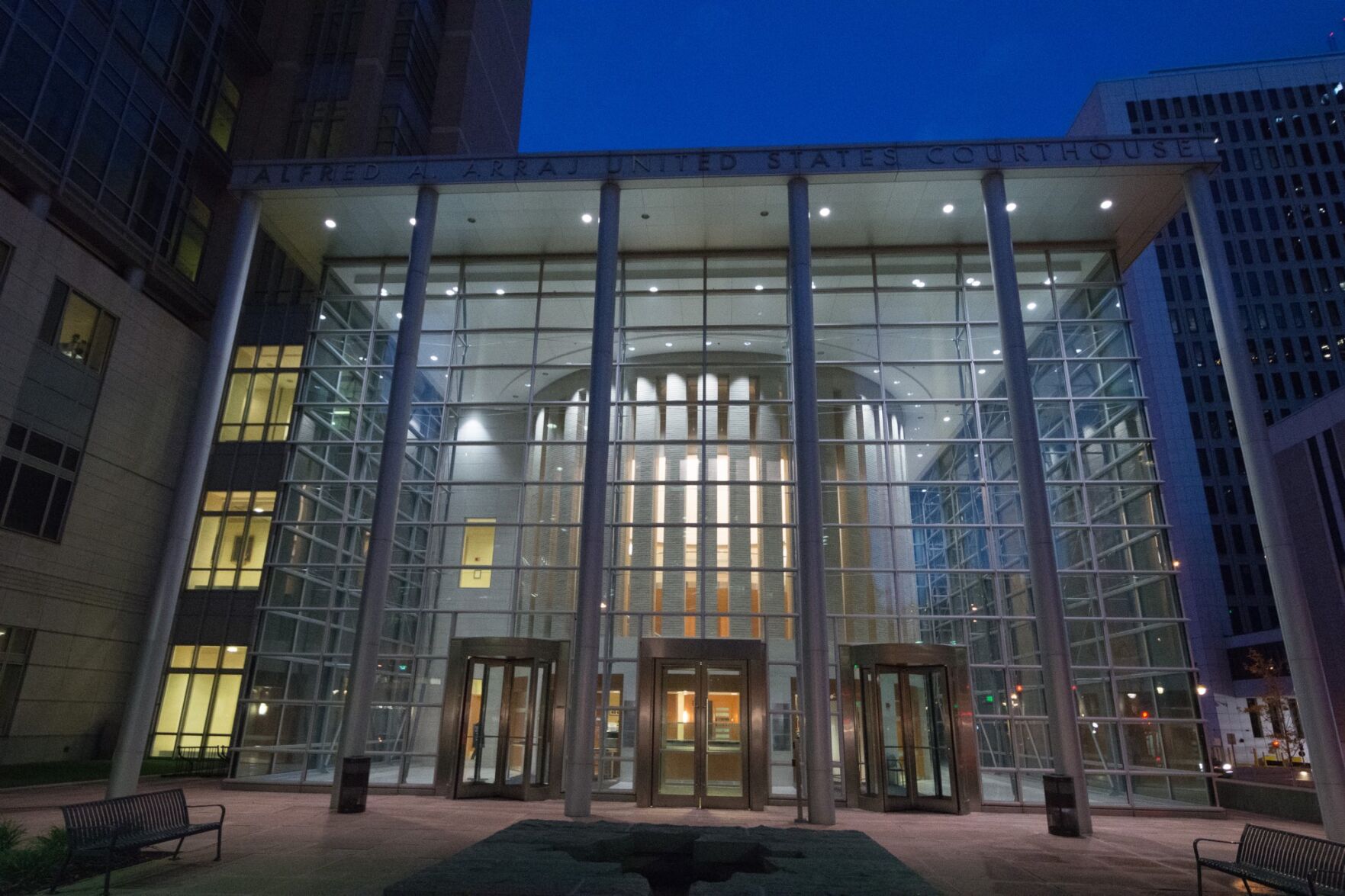
Requiring an Aurora couple to forfeit their home to the government after using it to illegally grow marijuana does not violate the constitutional prohibition against excessive fines, a federal judge ruled last month.
In 2019, the U.S. Department of Justice petitioned to take possession of a home in the 23000 block of East Wagontrail Avenue in Aurora. The previous year, law enforcement searched the home and discovered 828 marijuana plants being grown and electricity being illegally diverted.
Jia Bao Yao was responsible for the illegal grow operation and pleaded guilty in state court. His girlfriend, Amy Chen, also lived at the house with their children.
When the government initiated its civil forfeiture case for the couple’s home, Yao and Chen claimed a violation of the Eighth Amendment’s prohibition on excessive fines. The couple argued the value of the home to the government, just under $500,000, was far above the maximum fine for the nature of the criminal conduct.
“The substance is not fentanyl or methamphetamine which are drugs that are manufacturable in a lab and in the case of methamphetamine can cause health risks to the neighborhood,” wrote attorney Sean M. McDermott for Yao. Further, marijuana “is legal under state law. It is even promoted as a state attraction, similar to the way Colorado’s craft beer market is.”
In September, U.S. Magistrate Judge Scott T. Varholak recommended approving the government’s request for forfeiture. He noted the government had shown a connection between the house and criminal activity, and Yao’s reference to state law was irrelevant because he was growing far in excess of Colorado’s legal limit.
Varholak added that the maximum fine possible for a federal criminal conviction given the extent of the grow operation was $5 million.
“Thus, based upon the maximum statutory and Guideline penalty, a fine of $489,205.09 – $492,284.095 (value of Property) would not be considered grossly disproportionate to the crime,” he wrote.
Yao and Chen objected to Varholak’s conclusions, but U.S. District Court Senior Judge William J. Martínez upheld the decision in a Dec. 21 order, finding forfeiture of the home was a penalty “far less” than the maximum possible fine. The forfeiture was valid even in the absence of federal charges against the couple, he clarified.
In fiscal year 2022, the federal government reported depositing $1.7 billion into the Asset Forfeiture Fund, of which $28.4 million came from Colorado. Scholars have warned that asset forfeiture changes the focus of policing from responding to public safety issues to generating revenue through enforcement.
The case is United States v. Real Property.


10th Circuit says landowner cannot sue ex-Routt County judge for statements in decision
Michael Karlik
michael.karlik@coloradopolitics.com
Updated 2 hours ago
A Routt County landowner cannot sue a former judge for his allegedly inaccurate statements in a case where the landowner was not a party, the Denver-based federal appeals court decided on Wednesday. Anne Fitzsimmons, who lives in Germany, owns a...
Parole, appeals deadlines and restitution: Colorado justices accept cases
Michael Karlik
michael.karlik@coloradopolitics.com
Updated 24 hours ago
The Colorado Supreme Court announced on Monday that it will determine how a defendant’s parole-eligibility date should be calculated in instances where a new trial results in a sentence being imposed retroactively to the date of the original, since-overturned sentence....

Federal judge rejects DOJ bid to force Colorado to hand over voter information
Marissa Ventrelli
marissa.ventrelli@coloradopolitics.com
Updated 27 minutes ago
A U.S. district court judge has dismissed a lawsuit filed by the U.S. Department of Justice against Colorado Secretary of State Jena Griswold for refusing to provide the agency with personal voter information. Last December, the DOJ’s Civil Rights Division asked...
3 Colorado judges receive unfavorable retention recommendation as one performance commission violates rules
Michael Karlik
michael.karlik@coloradopolitics.com
Updated 1 day ago
Of the 123 Colorado judges standing for retention on the November ballot, citizen-led performance commissions found that three did not meet the required performance standards. However, in an unprecedented move, the commission charged with evaluating Supreme Court and Court of...

10th Circuit weighs Gross Reservoir expansion, judge’s ‘punishment’ of Denver Water
Michael Karlik
michael.karlik@coloradopolitics.com
Updated 3 hours ago
Members of the Denver-based federal appeals court considered on Friday whether they could intervene in an ongoing infrastructure project to enlarge a Boulder County dam after a trial judge deemed the underlying permit unlawful nearly two years ago. Denver Water...
10th Circuit upholds federal prohibition on juvenile handgun possession
Michael Karlik
michael.karlik@coloradopolitics.com
Updated 1 day ago
The Denver-based federal appeals court concluded on Monday that Congress acted within its constitutional powers to make it a crime for juveniles to possess handguns in most instances. The decision from the U.S. Court of Appeals for the 10th Circuit...

Senate advances judicial nominee, Montezuma County judge agrees to discipline | COURT CRAWL
Michael Karlik
michael.karlik@coloradopolitics.com
Updated 2 days ago
Welcome to Court Crawl, Colorado Politics’ roundup of news from the third branch of government. A U.S. Senate committee advanced a judicial nominee from Colorado, plus a Montezuma County judge agreed to receive discipline for his misconduct that stops short...
Judge denies Calderon injunction case against Denver, Johnston
Deborah Grigsby
deborah.smith@denvergazette.com
Updated 2 days ago
A U.S. District Court judge has denied a preliminary injunction in the case of Jessica Calderon, the Denver city employee who won a temporary restraining order preventing the City and County of Denver from terminating her amid the 2025 citywide...

10th Circuit partially revives lawsuit over 2020 Denver protest injuries
Michael Karlik
michael.karlik@coloradopolitics.com
Updated 3 days ago
The Colorado-based federal appeals court revived a man’s claims against Denver on Friday after concluding a trial judge resolved the case in the city’s favor without analyzing two of the three instances of alleged excessive force and other constitutional violations....
Federal judges find Colorado immigration judge violated several orders
Michael Karlik
michael.karlik@coloradopolitics.com
Updated 4 days ago
Multiple federal judges in Colorado have freed people from immigration custody after determining that one immigration judge violated their directives for properly conducting bond hearings. For nearly a year, Colorado’s U.S. District Court has faced a flood of habeas corpus petitions...
PREV
PREVIOUS

Colorado's Medication Takeback program now available online
Coloradans can now more readily access state information about how to properly dispose of unused medication, such as opioids and other controlled drugs. Officials said the Department of Public Health and Environment’s Medication Takeback program online – which can be accessed via myColorado, an app that allows people to engage with state government services – can help Coloradans to […]

Lora Thomas eyes Bob Marshall's House seat, Tina Peters will stand trial and Jared Polis spells out priorities ahead of new session | WHAT YOU NEED TO KNOW
Today is Jan. 9, 2024, and here’s what you need to know: Douglas County Commissioner Lora Thomas, who will be term-limited on the county commission at the end of the year, has filed to run for House District 43, which includes Highlands Ranch. Thomas’ name had been mentioned as one of several Republicans interested in […]