

Aurora council delays decisions on funding homeless service providers to February
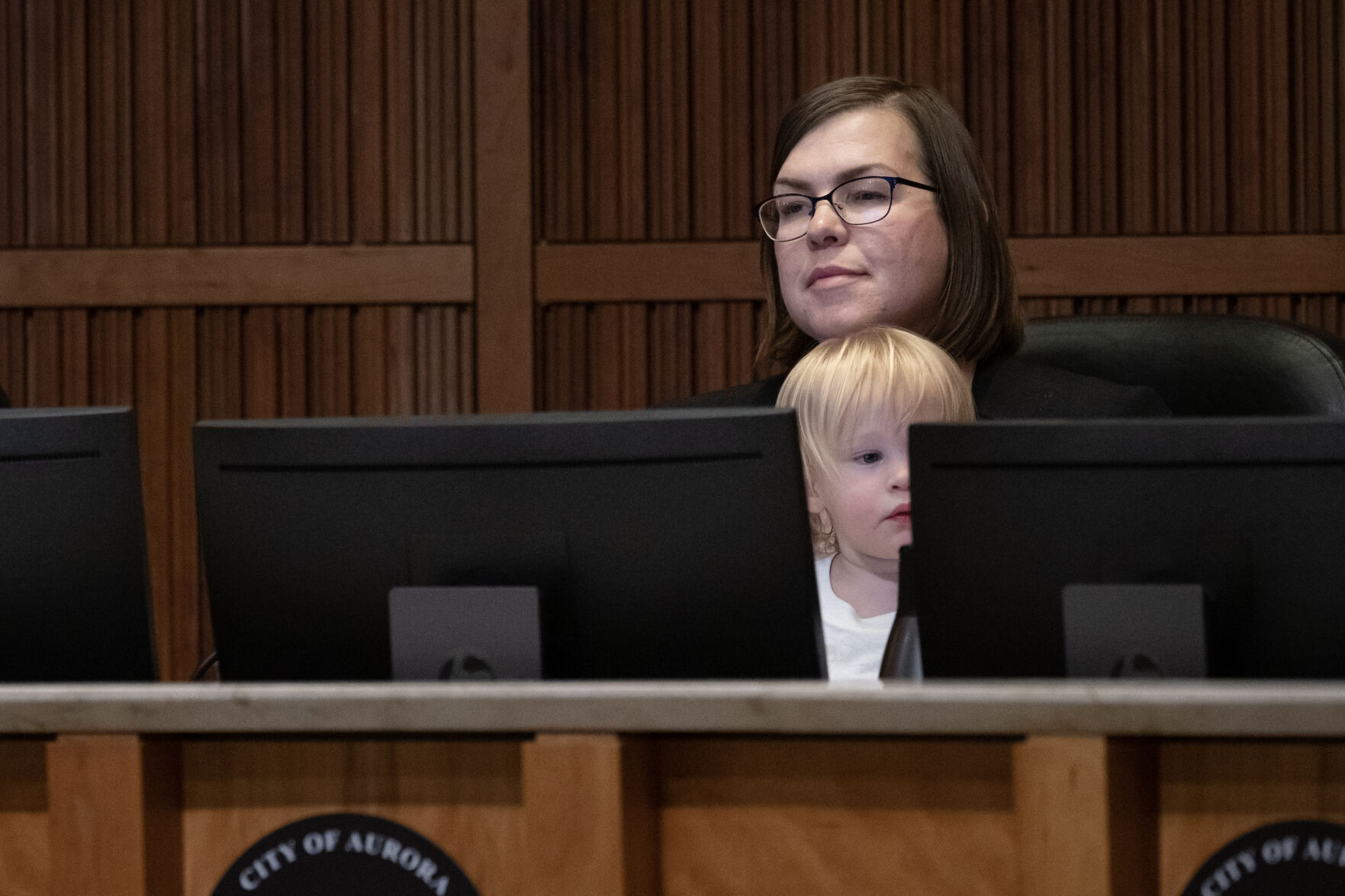
The Aurora City Council won’t immediately tackle two proposals that deal with homeless funding, which means that the nonprofits hoping to get the money won’t know until the New Year has begun.
Aurora is considering cutting funding for homelessness services, in some cases, completely zeroing out the dollars for a few nonprofits in what appears to be a shift in the city’s priorities.
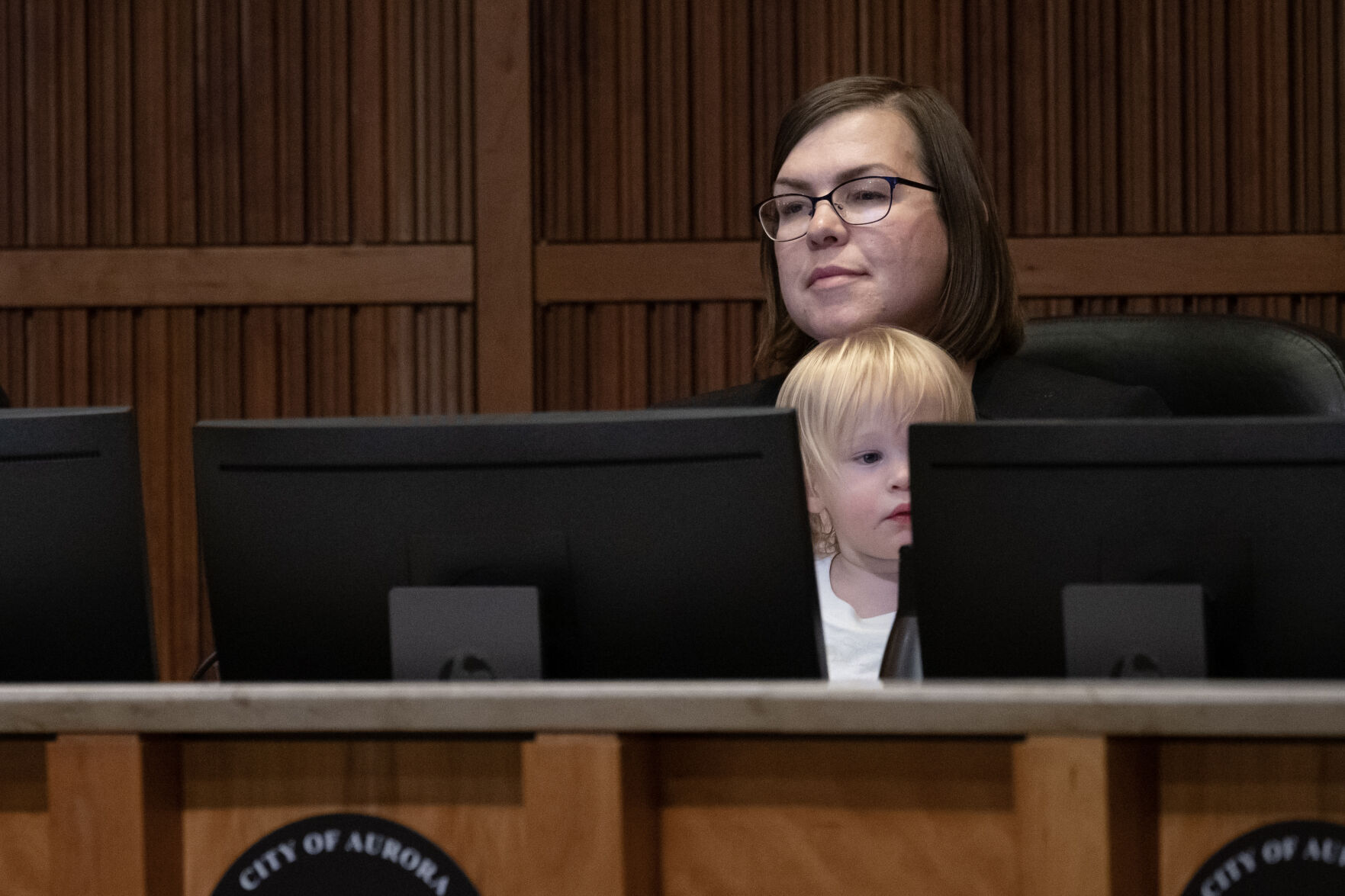
Aurora’s mayor and a councilmember brought up two proposals at Monday night’s council meeting, but the council voted to move tackling the proposals to a budget meeting in February.
The debate about city funding for homeless service providers has been going on since city staffers recommended that the council cut or limit funds to several organizations that provide services to homeless people in Aurora following a dip in the local government’s revenues.
Specifically, Aurora has seen a significant decrease in marijuana tax funds that support homeless service providers in the city.
At Monday night’s meeting, Councilmember Alison Coombs pushed for flat funding – meaning the city would provide the money, instead of redirecting it elsewhere – for the providers through the next year. She argued the organizations are providing necessary services to the city.
Aurora Mayor Mike Coffman also brought up a second proposal that would incrementally reduce funding to the organizations, rather than immediately implement the cuts, as the recommendations suggested.
Coffman’s proposal seeks to cut the funding down to two thirds of their full amount, then to one third by the next year.
The city can’t budget for multiple years, but Coffman said the expectation would be that the organizations would be on a “glide path down,” rather than “to a cliff.”
Other councilmembers countered they will tackle the proposals during a budget meeting in February. That would give the officials time to “look at this holistically” and make sure they’re prioritizing what’s most important, Councilmember Francoise Bergan said.
Coffman, who usually agrees with his fellow conservative councilmembers, asked the council to consider supporting either his or Coombs’ proposal.
Coombs unsuccessfully pushed for her proposal to be added to a previous budget workshop.
The recommendations from staff appear to reflect a shift in the city’s priorities. Some of the funding would instead go to behavioral and recovery programs, as well as domestic violence services.
A city official described the priority as essential “life-saving” services.
Homelessness division officials recommended the money go to the following:
- Over $900,000 to Mile High Behavioral Healthcare
- Almost $300,000 to Aurora Housing Authority
- $190,000 to Restoration Christian Ministries
- $180,000 to the Salvation Army
- $120,000 to Aurora Mental Health and Recovery
- $85,000 to Gateway Domestic Violence
- $75,000 to Colorado Safe Parking Initiative
- $17,000 to SungateKids
They did not recommend earmarking any funds for Bridge House, Family Tree or the Colorado Coalition for the Homeless.
“If we move this to February, these providers are going to cut programs as we’re entering the coldest part of the year,” Coombs said. “They don’t just sit and wait months and months and months for us to get our act together.”
The funding in question would go to providers that are operating programs that Aurora requires, not just operating for themselves, Coombs said. By moving the decision, the council is “making a choice to ignore” their obligation to care for their constituents and “make sure that people have food and that they, frankly, don’t die in the cold,” she said.
Coffman agreed, saying pushing the matter to February would mean there would not be funding for those programs in January.
Bergan said Coombs’ claim that “we are going to have people dying in the streets” is “quite the exaggeration.”
The city is funding providers, Bergan said, just not to the extent that they have in the past due to cuts in revenue.
Staff recommended cuts so the council could decide how to most responsibly spend the city’s money, given that the budget must also include other services beyond homelessness programs, she said.
The providers should have enough money to make it through mid-year at least, said Bergan, who asked that the council analyze the proposals at February’s budget workshop.
Coombs argued that the organizations asking the council for additional funding have “made it abundantly clear” that they’ll have to cut programs in proportion to budget cuts as of Jan. 1.
The majority of the council voted to move the proposals to the budget workshop on Feb. 3. Coffman, Coombs and Councilmember Ruben Medina voted “no.”




Colorado Politics Calendar July 27-Aug. 2
Rachael Wright, Special to Colorado Politics
rachael.wright@coloradopolitics.com
Updated 4 days ago
CoPo’s weekly political calendar will help you find political and public-policy events throughout Colorado. It includes candidate and issue campaign events, public policy meetings, court hearings, state and local party conventions, assemblies, debates, rallies, parades, speaking engagements, traveling dignitary appearances,...

The through line from Donald Trump to Victor Marx | SONDERMANN
By Eric Sondermann
by-eric-sondermann@coloradopolitics.com
Updated 4 days ago
Over 10 years ago, before Donald Trump could ever defeat Hillary Rodham Clinton, he had to first engineer a hostile takeover of the Republican Party. Prior to his descent of that golden escalator, the previous seven Republican presidential nominees had...

Colorado districts prepare for school year amid mental health cuts. But will less cellphone distractions help?
Marissa Ventrelli
marissa.ventrelli@coloradopolitics.com
Updated 2 days ago
The signs of a new school year are everywhere — buses in the shop, teachers unpacking boxes, families ticking through supply lists — but behind the familiar rituals, Colorado districts are preparing for a year defined less by routine than...

Armstrong staffer considers congressional bid, DeGette angers rural communities with wilderness act | A LOOK BACK
Rachael Wright, Special to Colorado Politics
rachael.wright@coloradopolitics.com
Updated 3 days ago
Forty-five years ago this week: If the lines were drawn just right, Republican Sen. Bill Armstrong stood the chance of losing his office manager, Ruth Fountain. Fountain admitted she was seriously thinking about running for Colorado’s new congressional seat in...
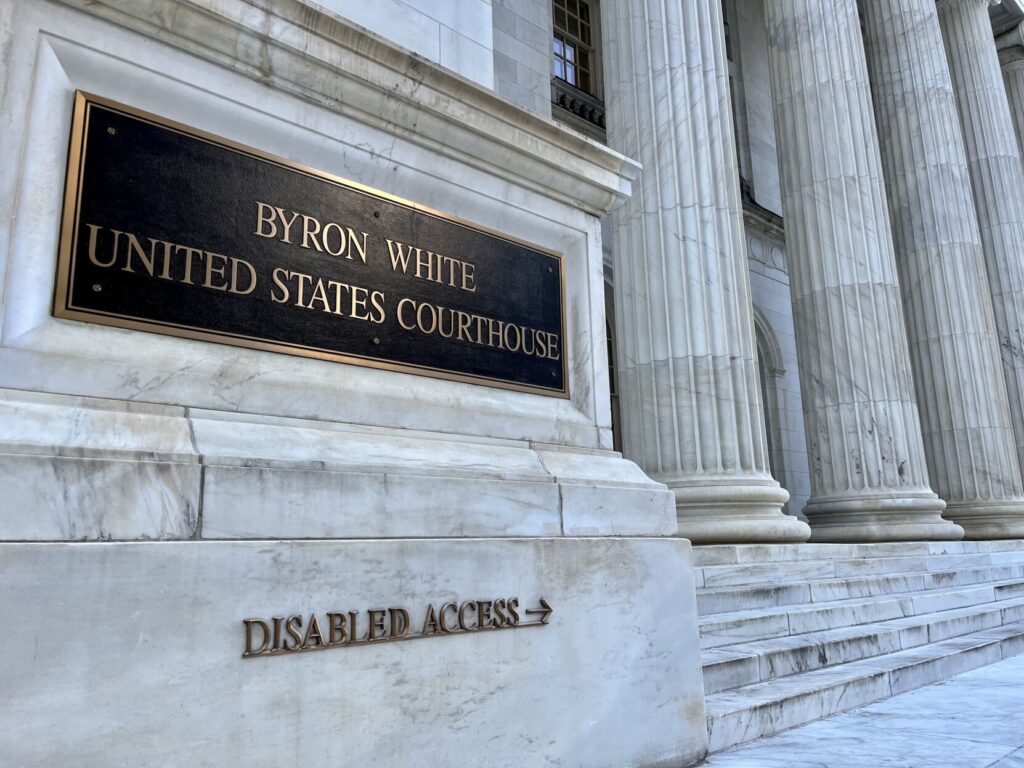
10th Circuit dismisses woman’s lawsuit following 10-year attempt to undo restraining order
Michael Karlik
michael.karlik@coloradopolitics.com
Updated 2 days ago
The Denver-based federal appeals court rejected a woman’s challenge on Friday to a restraining order imposed on her more than a decade ago, finding that she cannot credibly claim she will be prosecuted for violating the restraining order through her...
10th Circuit dismisses woman’s lawsuit following 10-year attempt to undo restraining order
Michael Karlik
michael.karlik@coloradopolitics.com
Updated 2 days ago
The Denver-based federal appeals court rejected a woman’s challenge on Friday to a restraining order imposed on her more than a decade ago, finding that she cannot credibly claim she will be prosecuted for violating the restraining order through her...
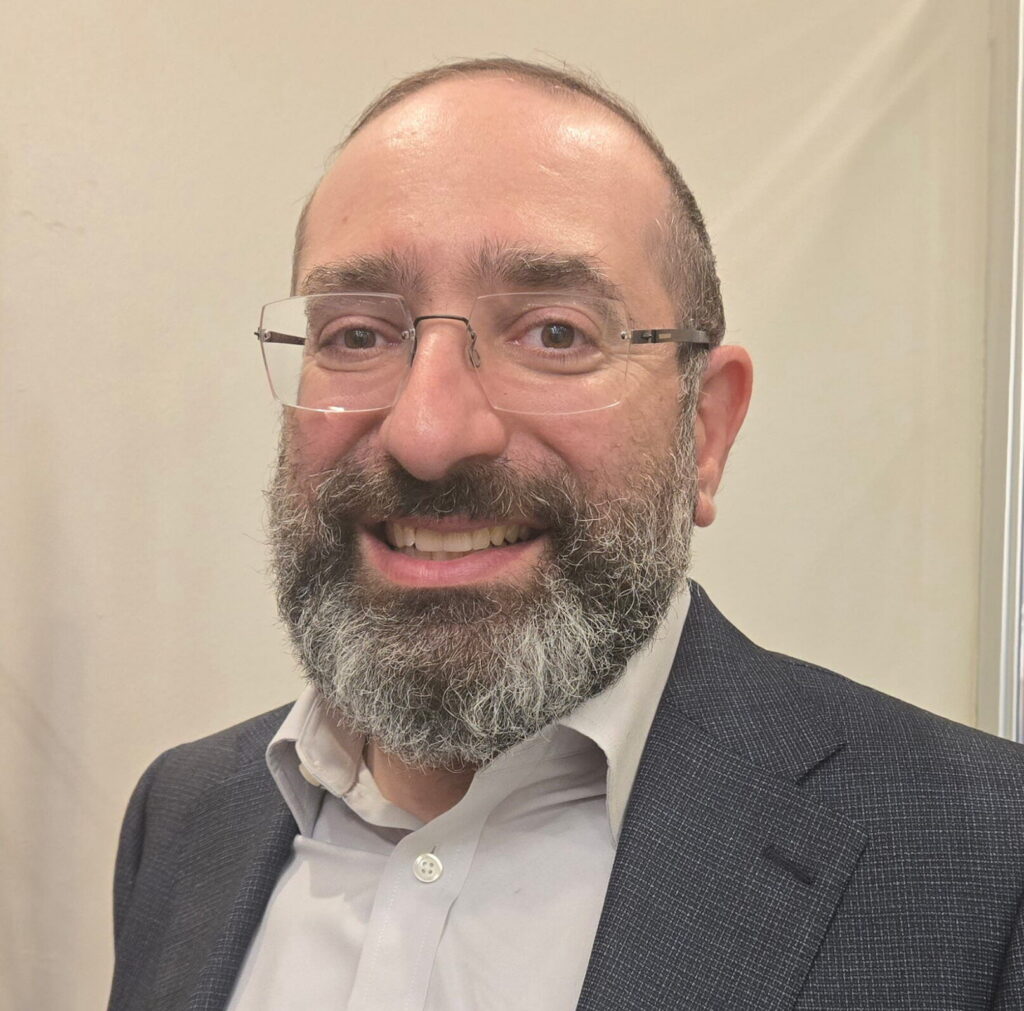
Surprise candidate Shimon Blau cleared to face off against Melat Kiros in November
Ernest Luning
ernest.luning@coloradopolitics.com
Updated 2 days ago
Unaffiliated congressional candidate Shimon Blau, a Denver doctor, has qualified by petition for the general election in Colorado’s 1st District, where Democrat Melat Kiros defeated 15-term U.S. Rep. Diana DeGette in last month’s primary, the Colorado Secretary of State’s Office...

Colorado produce not tied to nationwide cyclospora outbreak, agriculture officials say
Marissa Ventrelli
marissa.ventrelli@coloradopolitics.com
Updated 22 hours ago
There is no indication that the recent outbreak of cyclospora, a fecal parasite that has contaminated food and water across nearly every state, can be linked to produce grown in Colorado, according to the state’s Department of Agriculture. “Colorado growers...

UNC opens College of Osteopathic Medicine
Marissa Ventrelli
marissa.ventrelli@coloradopolitics.com
Updated 2 days ago
The University of Northern Colorado held a grand opening for its new College of Osteopathic Medicine on Friday, with Gov. Jared Polis in attendance to celebrate the culmination of a two-year, $127.5 million project. The project was funded through legislation...
Colorado equal pay law does not require plaintiffs to allege gender-based retaliation, appeals court finds
Michael Karlik
michael.karlik@coloradopolitics.com
Updated 17 hours ago
The 2019 Colorado law aimed at rooting out pay discrimination on the basis of sex does not require a plaintiff to allege their employer retaliated against them for sex- or gender-related reasons, the state’s second-highest court decided on Thursday. Lawmakers...
PREV
PREVIOUS
Seven 2024 Senate races that will determine Schumer's hold on power
The race for control of the U.S. Senate in 2024 is already in full swing as Republicans plot their strategy for flipping the chamber. There are a total of 34 Senate seats up for grabs in the 2024 election cycle. Of these, Democrats must defend 23, compared to just 11 for Republicans – and nearly […]

Five more wolves released in Colorado
Wildlife officials in Colorado have released an additional five gray wolves in the state, bringing the total so far under a voter-approved reintroduction program to 10. Colorado Parks and Wildlife in a statement Friday said its team had completed an agreement to capture 10 gray wolves in Oregon for release in Colorado as part of […]