

Veteran lawmaker leaves post dissatisfied as minority party member | A LOOK BACK

Forty Years Ago This Week: State Sen. Barbara Holme, D-Denver, a leader in the Democratic Party who had served nearly a decade in the Colorado General Assembly, announced by letter to her District 34 constituents that she would not seek reelection following a rough legislative session for the minority party lawmaker.
In her letter, Holme explained that she had reached her decision largely due to frustration with being a member of the minority party through a turbulent legislative session.
“When the legislature convened in January,” Holme wrote, “we found the 1982-83 budget was going to have a deficit. The Republicans raised taxes and slashed spending. After … we found that in spite of those actions, we would still have a deficit.”
Even after a two-day special session in August and another two-week one in September, taxes were again raised, and spending was cut. Holme wrote that all the decisions regarding which programs were cut were made by the Republican caucus.
“Democrats may not speak at Republican caucuses,” Holme continued. “And in fact, are discouraged from attending. During the two-week session, Democrats could easily have stayed home. Our votes made no difference.”
While Holme railed against the caucus system, she said frankly that even leaders in her own party were reluctant to point out how poorly the current caucus system functioned.
“We are embarrassed to admit how little influence we have,” Holme said. “I cringe as I write this.”
Former Sen. Paul Powers, R-Denver, who had lost his seat to Holme due to reapportionment, was expected to announce his candidacy for the seat along with Democrat Norma Edelman.
During her tenure, Holme, who had served as both caucus chairman and assistant floor leader in the state senate, left the door open for future political involvement when asked by reporters, but said that she had no immediate plans.
Thirty Years Ago: State. Sen. Peter Groff, D-Denver, took part in a historic first meeting between members of the National Black Caucus of State Legislators and the National Hispanic Caucus of State Legislators to outline a plan to improve access to and medical care for Blacks and Hispanics.
The 2003 NBCSL/NHCSL Health Care Disparities Conference was held in Phoenix, Arizona, and participants heard presentations from various medical professionals.
“It was a privilege to work with fellow legislators who share my sense of urgency and obligation to work together to better understand and address the impact of health disparities on underserved populations,” Groff said.
The Centers for Disease Control and Prevention published studies showing that death rates for African Americans versus whites due to cardio-vascular disease were 29% higher, 40% higher for strokes specifically.
At the end of the conference, both caucus group agreed to form a Health Disparities Consortium that would be devoted to address Black and Hispanic health disparities and the social, economic and environmental conditions that affected the disparities.
“I plan to participate actively in this consortium, to bring the broadest possible knowledge to bear on the disparities we fight in Colorado, and furthermore to share the remarkable experiences of our own communities,” Groff said.
Twenty Years Ago: Rumors abounded as to whether Gov. Roy Romer would leave office to take up a position in President Bill Clinton’s cabinet.
Cable TV magnate Bill Daniels told The Colorado Statesman that he was entirely convinced of the scenario.
“Roy Romer is a very ambitious man,” Daniels said. “Chances are high that he’ll end up in Washington.”
But National Democratic Party Chairman David Wilhelm, himself a Clinton administration insider, told curious Statesman reporters bluntly, “Roy Romer wants to be governor of Colorado.”
Rachael Wright is the author of the Captain Savva Mystery series, with degrees in Political Science and History from Colorado Mesa University, and is a contributing writer to Colorado Politics and The Gazette.

Would you hire Jena Griswold to handle your case? | SONDERMANN
By Eric Sondermann
by-eric-sondermann@coloradopolitics.com
Updated 4 days ago
If you were in a child custody dispute with a former spouse, would you hire an attorney with experience in family law or would you trust your case to an operative with virtually zero mastery? If you were getting ready...

Colorado Politics Calendar June 1-7
Rachael Wright, Special to Colorado Politics
rachael.wright@coloradopolitics.com
Updated 3 days ago
CoPo’s weekly political calendar will help you find political and public-policy events throughout Colorado. It includes candidate and issue campaign events, public policy meetings, court hearings, state and local party conventions, assemblies, debates, rallies, parades, speaking engagements, traveling dignitary appearances,...
Colorado General Assembly Dems kill early effort to protect children from online content | A LOOK BACK
Rachael Wright, Special to Colorado Politics
rachael.wright@coloradopolitics.com
Updated 3 days ago
Twenty-Five Years Ago This Week: Legislation sponsored by state Rep. Tim Fritz, R-Loveland, sought to use software to prevent children from violent, pornographic, or hateful materials. But after the Senate Judiciary Committee attached an “unfriendly” amendment, House Bill 01-1376 died...
Gov. Jared Polis vetoes bill requiring disclosure from administration lobbyists
Marianne Goodland
marianne.goodland@coloradopolitics.com
Updated 10 hours ago
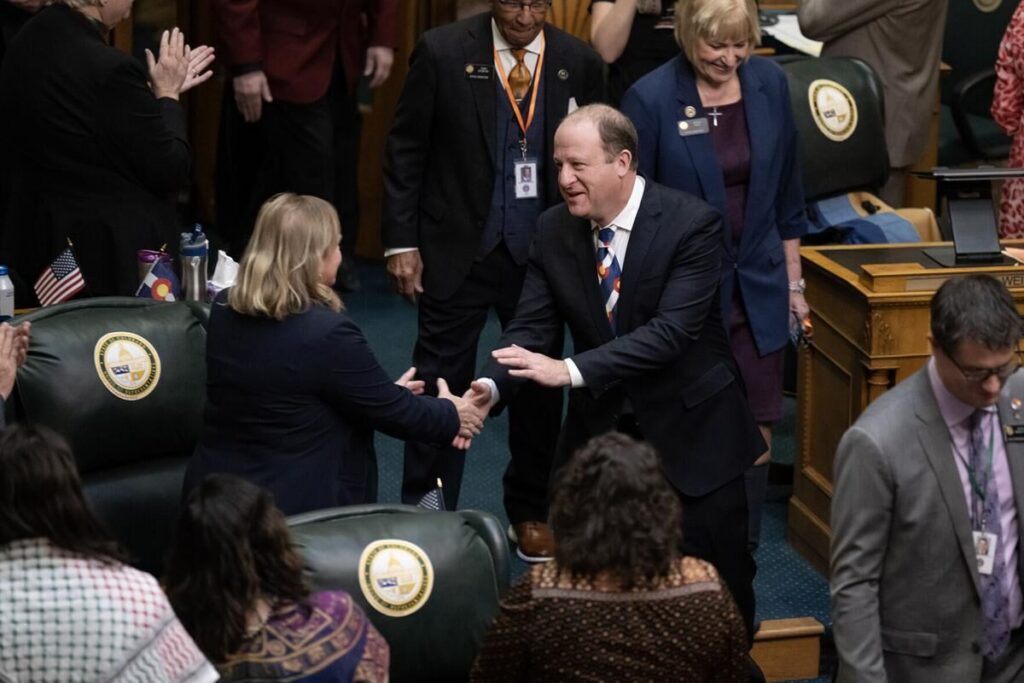
Gov. Jared Polis on Friday vetoed a bill that would have required executive branch lobbyists to follow much of the same disclosure rules that already govern other Capitol lobbyists. Lobbyists for organizations are required to state their clients’ position on...

Gov. Jared Polis blocks Colorado Lottery’s move to allow credit card sales
Marianne Goodland
marianne.goodland@coloradopolitics.com
Updated 10 hours ago
Gov. Jared Polis on Friday signed legislation to block the Colorado Lottery’s move to allow the purchase of tickets with credit cards, effectively reversing his earlier position. Last November, Polis had said that he supported the decision of the Colorado...
Colorado governor vetoes union dues bill — again
Colorado Politics
colorado-politics@coloradopolitics.com
Updated 11 hours ago
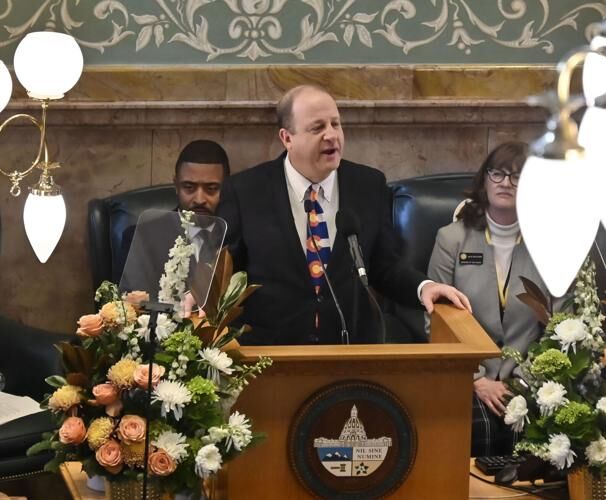
Gov. Jared Polis on Friday vetoed yet again legislation that would have made it easier for labor organizations to impose dues on non-union members, a decision long expected after the legislature approved the measure without securing the buy-in of businesses....

Colorado Democratic attorney general candidates clash over experience and Trump lawsuits
Marianne Goodland
marianne.goodland@coloradopolitics.com
Updated 10 hours ago
Colorado’s four Democratic candidates for attorney general clashed sharply Thursday night in a debate that repeatedly returned to one theme — whether the state’s top lawyer should be a courtroom veteran or a political fighter. The contenders additionally sparred over...
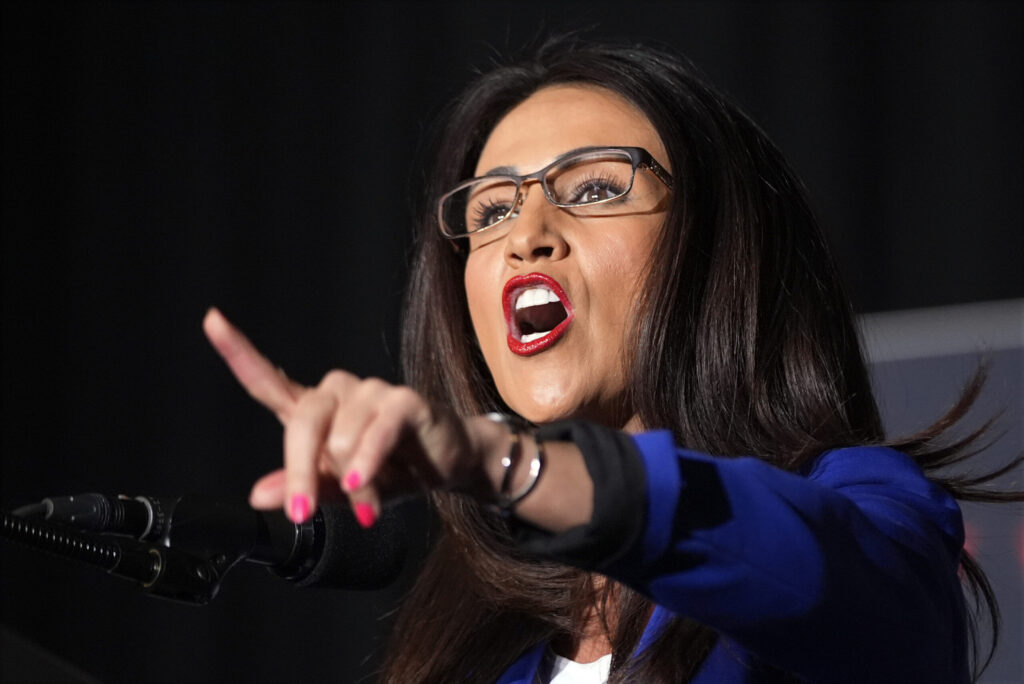
DOJ reviewing Boebert concerns about Washington Nationals discriminating against Christian pitcher
Emily Hallas, Washington Examiner
emily.hallas.washington.examiner@gazetteedit.wpenginepowered.com
Updated 16 hours ago
The Justice Department on Thursday promised to examine allegations that Washington, D.C.’s major league baseball team discriminated against one of its pitchers on religious grounds. Rep. Lauren Boebert (R-CO) sent a letter to the DOJ this week, requesting it probe...
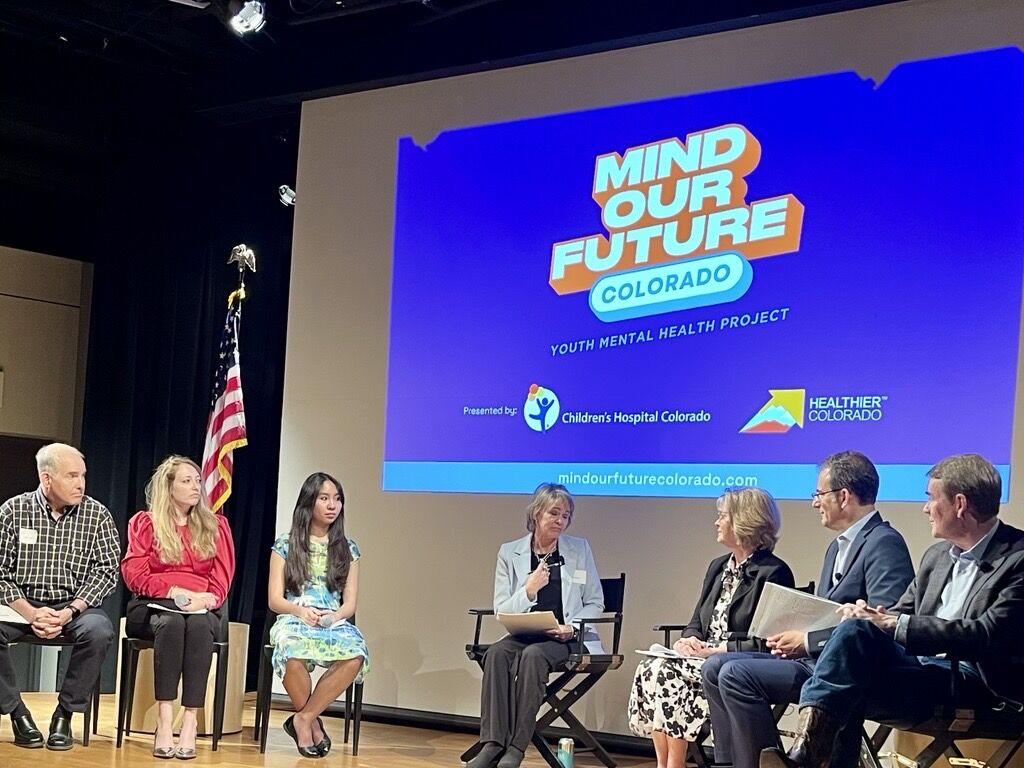
Colorado candidates for governor share plans to tackle youth mental health crisis
Marissa Ventrelli
marissa.ventrelli@coloradopolitics.com
Updated 8 hours ago
Three candidates for Colorado’s highest elected office laid out their plans to address the state’s youth mental health crisis during a forum on Thursday. Democratic Attorney General Phil Weiser, U.S. Sen. Michael Bennet, and Republican State Sen. Barbara Kirkmeyer fielded...

Colorado advocates unveil youth mental-health ‘playbook’ for next governor
Marissa Ventrelli
marissa.ventrelli@coloradopolitics.com
Updated 14 hours ago
Colorado youth‑mental‑health advocates have released a new “playbook,” urging the next governor to streamline the state’s sprawling system of services and appoint a single leader to oversee them. In addition to hosting a gubernatorial candidate forum on Thursday, Mind Our...
PREV
PREVIOUS

GOP congressional candidate Scott James unveils endorsements from more than 20 county commissioners
Republican congressional candidate Scott James, a Weld County commissioner, this week unveiled endorsements from 21 of his fellow county commissioners. “We recognize all very much the similar thing, that our constituents are the ones that matter, not the nonsense that goes on in Washington, D.C.,” James said in a campaign video, flanked by more than […]

Disciplinary judge approves lawyer's suspension for using ChatGPT to generate fake cases
A Colorado lawyer has received a suspension for using artificial intelligence to generate fake case citations in a legal brief and then lying about it. The presiding disciplinary judge’s imposition of punishment on Zachariah C. Crabill is apparently the first to implicate the improper use of AI. The head of Colorado’s attorney regulation office, Jessica […]