

Over in Oklahoma, a case study in representation, rights | BIDLACK
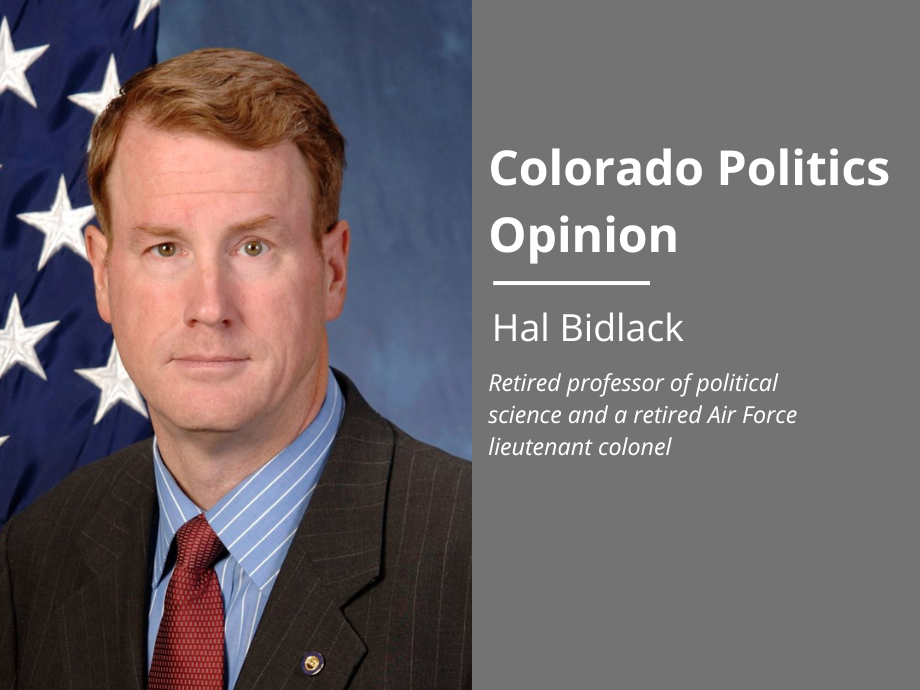
Did anyone miss me? I’ve been gone on a cruise that left Miami, visited a few countries before going through the Panama Canal, then a bit more visiting, on to Los Angeles and then home. I’ve been gone for three weeks; anyone wondering where I went? (Editor: well…)
One thing about a cruise is you are more out of touch in terms of the news of the day than most any other means of vacationing. Prop HH went down while I was gone (I voted by mail before I left, of course) and it looks like former President Donald Trump will be on the Colorado ballot, as I predicted, though the final nail isn’t in the coffin yet.
And, remarkably, the abortion question in Oklahoma was not settled while I was away.
As my regular reader (and cruise buddy) Jeff will recall, the Out West Roundup is one of my favorite sections of Colorado Politics. It does a great job of keeping us informed about what is going on in the region, and the current edition doesn’t disappoint. I’m sure you know we don’t actually live in a national democracy, but rather a republic. These days, the two terms are often interchanged and seen as being the same thing, but they are not.
A democracy is a place where the people vote directly on what the government should do. The typical example used of a democracy is the old-style New England town hall meeting tradition, wherein the people of small northeast communities gather in the town hall to debate and then vote on things like where local stop signs should be put, when the city parks should be watered, and such.
Stay up to speed: Sign-up for daily opinion in your inbox Monday-Friday
A republic is where the people elect representatives to look after their interests, and to vote on things in a congress or a legislature. In the United States, we are almost entirely a republic, and are completely so above the town level.
So, once people pick their representatives, what should those folks do? Yet another political science theory talks about the delegate vs. representative model. Simply put, should the people we elect act as direct representatives and do what we want, directly, regardless of their own opinions, or should they be delegates, who do what they see as being in our best interests, even if we don’t agree at the moment. The idea is when we elect representatives, they have the time and ability to study the issues in detail. They can become experts in, say, the tax code or immigration law, and can cast far more insightful votes than “regular” citizens would.
Cut to the Sooner State…
Oklahoma – the namesake of a musical that every high school in America has performed – is just about as red as red states get. But even in that hard-right state, support for abortion rights in general is supported by a majority of Oklahomans, albeit narrowly, at 51% to 45%. Nationally the support for abortion rights runs at 85%.
Recently, the Oklahoma Supreme Court reaffirmed an earlier decision that abortion is protected, narrowly, in the state Constitution, but only when necessary to save a woman’s life. It remains illegal in nearly every other situation. The Oklahoma state legislature had been busy, passing in 2021 no fewer than five separate anti-abortion laws in an effort to close any possible loophole. Those five laws are all on hold due to stays from federal courts, but the intention of the legislature is clear: ban all abortions all the time in any form.
So, let’s get back to the representative vs. delegate question: given that a majority of Oklahomans support abortion rights, shouldn’t the legislature act as representatives of people and support at least some abortion rights? Or should they act as delegates, doing what they, in their own view, see as the right thing?
There is not a single correct answer, of course. One’s view on the rep vs. delegate question will likely depend on how the issues you hold most dear are evaluated by your elected officials. Roll in religion and people acting from the dogmata of a faith they, in their hearts, know to be the “correct” faith, and it gets even more complicated.
In many ways, the question is moot, given that abortions in Oklahoma were severely restricted in 2022, going from more than 4,000 procedures in 2021 to 898 in 2022, with at least 66 of those being to save the life of the mother, in theory the least objected to type of abortion.
I find myself in agreement with Hillary Clinton, who once remarked that abortion should be “safe, legal and rare,” in that the decision should be between the doctor and the woman, and additional support should be available for birth control and other means of keeping the procedure, well, rare due to not being needed.
But today, we very often find middle-aged men sitting in legislatures who are quite comfortable with inserting themselves and their delegate views into what for decades had been between an actual medical professional and the patient, and that’s a pity. I’m pretty sure those legislators would object to doctors insisting on inserting themselves and their views in the daily lives of state legislators, but I digress.
Back in January 2018, I noted our politics today, especially around issues like abortion, reminds me of the 1850s, when radical divisions in beliefs caused many to believe that those who disagreed with them were also un-American and should be run out of the country. I recalled the 1856 attack on U.S. Sen. Charles Sumner by a southern congressman, with a metal cane. Sumner was badly beaten and took months to recover, and the southern gentleman campaigned by handing out replica canes.
I don’t think there is another issue that divides America as deeply and profoundly as abortion. But at least, I hoped we in our current deeply divided nation are not quite as badly off as we were as a nation on the eve of the Civil War.
But recently, during an actual Senate hearing, Oklahoma U.S. Sen. Markwayne Mullin got into a verbal fight with the head of the national teamsters union. Things escalated until Mullin demanded the two actually physically fight, right then and there, in a Senate hearing room. He stood up and, in a fit of machismo, removed his ring (as tough guys do in fist fights) until committee chair Sen. Bernie Sanders reached over and said “Sit down, sit down! You know you are a United States Senator!”
Back when I wrote of Sumner, I was sure we would not see our elected officials resort to physical violence in their formal roles, but perhaps I hoped for too much. Anyone think we are now revisiting 1856?
Stay tuned…
Hal Bidlack is a retired professor of political science and a retired Air Force lieutenant colonel who taught more than 17 years at the U.S. Air Force Academy in Colorado Springs.


A primary brings out primal instincts | SONDERMANN
Eric Sondermann
eric-sondermann@coloradopolitics.com
Updated 2 days ago
There are no Stanley Cup finals or NBA title showdowns involving local teams this June. In their place, we are inundated with primary election campaign ads. Coloradans can be excused for missing the diversion and alternate programming. But life can...

Colorado’s role in Spirit Airlines’ demise should not be ignored | GUEST COLUMN
Colorado Politics
colorado-politics@coloradopolitics.com
Updated 2 days ago
By Robin Rossenfeld At a time when Colorado families are already struggling with rising transportation costs, the collapse of Spirit Airlines could not come at a worse moment. According to the U.S. Bureau of Labor Statistics, prices in the Denver-Aurora-Lakewood...
How would Weiser, Bottoms, Bennet, Kirkmeyer address Colorado’s affordability problem? | Paula Noonan
Paula Noonan
paula-noonan@coloradopolitics.com
Updated 2 days ago
It’s decision time in Colorado as primary election ballots hit mailboxes this week. Democrats will pick their candidates in every statewide race, and Republicans select candidates for governor and Attorney General. GOP operatives wanted to exclude unaffiliated voters from their...

The new Trustees Report is a wake-up call for Congress | GUEST COLUMN
Colorado Politics
colorado-politics@coloradopolitics.com
Updated 2 days ago
By Sara Schueneman Every year, the Social Security Trustees Report provides an important snapshot of the long-term outlook for one of America’s most popular and important initiatives. This year’s report sends a clear message: Congress needs to act. The latest...

Colorado lupus patients can’t afford ‘most favored nation’ drug pricing | PODIUM
Colorado Politics
colorado-politics@coloradopolitics.com
Updated 2 days ago
By Kristy Kibler When you live with lupus, you learn quickly waiting is not an option. Lupus is unpredictable: flares can escalate overnight, organs can be damaged quickly, and access to the right treatment at the right time can determine...

Dustin Zvonek pinpoints Colorado’s housing-first homelessness failures | The OpEdge Podcast
Tony Olivero
tony.olivero@gazette.com
Updated 4 days ago
As homelessness continues to persist across Colorado, former Aurora City Councilman Dustin Zvonek paints a compelling picture of how the primary policy prescription may be enabling the root cause more than providing a permanent solution. In this OpEdge Podcast conversation...

Robert Rodriguez spoke softly and carried a big stick | GUEST COLUMN
Greg Fulton
greg-fulton@coloradopolitics.com
Updated 4 days ago
President Teddy Roosevelt was known to have said, “Speak softly and carry a big stick.” The phrase was a reference to his leadership style, in which one negotiates in a civil and peaceful manner while also making clear one can...

CPW has a weighty decision to make on a recent wolf kill | Rachel Gabel
Rachel Gabel
rachel-gabel@coloradopolitics.com
Updated 6 days ago
Gov. Jared Polis made three new appointments to the Colorado Parks and Wildlife Commission and reappointed both Richard Reading, at-large representative, and vice chair Gabriel Otero, sportspersons representative who resides west of the Continental Divide. Appointed as a production agriculture representative residing west of the Continental Divide, John LeCoq of...

Bennet wants to be Colorado’s next governor | Cronin and Loevy
Tom Cronin Bob Loevy
tom-cronin-bob-loevy@coloradopolitics.com
Updated 7 days ago
U.S. Sen. Michael Bennet is considered the front-runner in the Colorado Democratic Party primary contest for governor. His major opponent is current Colorado Attorney General Phil Weiser. The Democratic primary election is June 30. Registered Democrats and unaffiliated voters who choose to can vote in this election. Ballots are being mailed...

Is Jared Polis turning into Dick Lamm? | Jon Caldara
Jon Caldara
jon-caldara@coloradopolitics.com
Updated 1 week ago
By Jon Caldara Dick Lamm was Colorado’s longest-serving governor, at 12 years in office (a close second goes to Roy Romer). And during those three terms, he slowly drifted to the right. Not because he became a Republican or even...
PREV
PREVIOUS

Blame monopolies, not green energy | FEEDBACK
Colorado Politics published a recent Gazette editorial about the high cost of utility bills in Pueblo and implied President Joe Biden and renewable energy were to blame. The problem is not the cost of renewable energy (or President Biden’s infrastructure and investment policies). The problem is the structure of monopoly utilities like Black Hills, which […]

Colorado’s housing market at risk — again | Denver Gazette
The Legislature’s leftist fringe has been grabbing headlines with its extremist stands; most recently, against U.S. ally Israel. However, a subtler, more insidious shift to the left also is underway by ruling Democrats’ legislative leadership. And it could affect far more Coloradans. New Senate Majority Leader Robert Rodriguez, D-Denver, has reshuffled some committee structures and […]