

Colorado Supreme Court to review Denver murder case, open records lawsuit
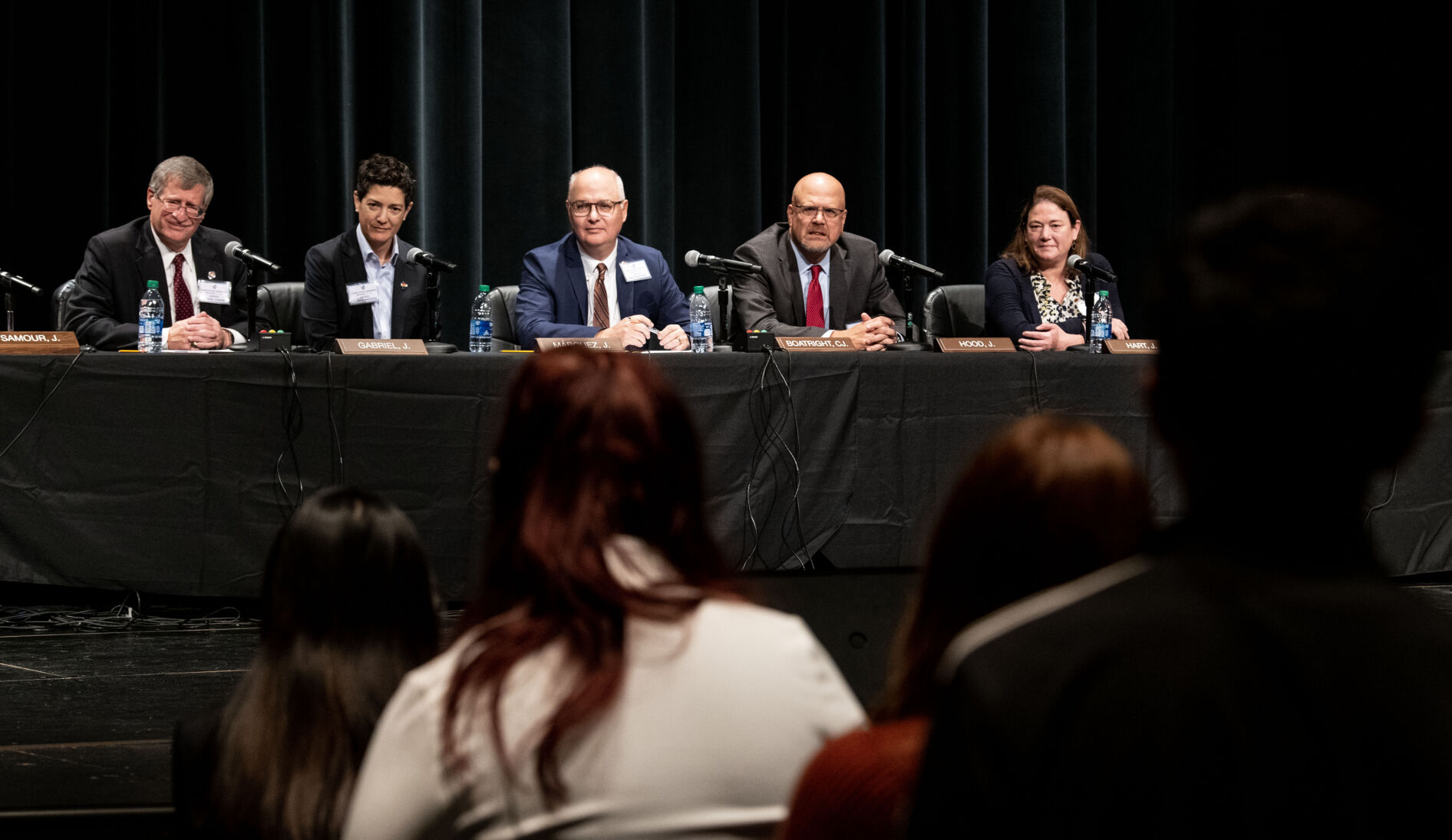
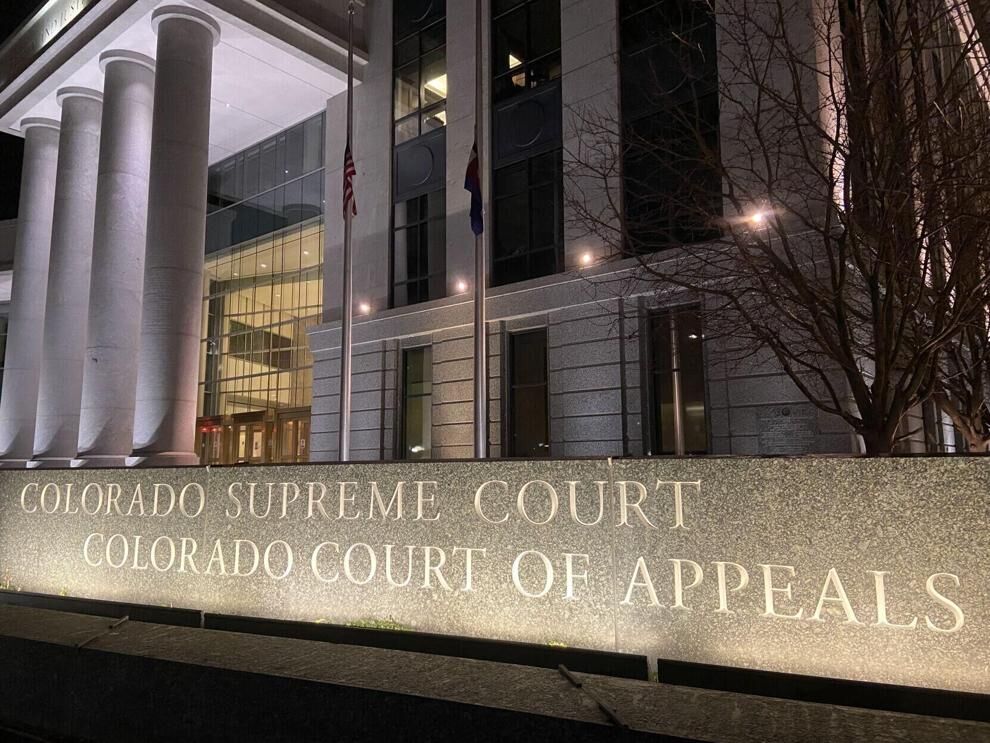
The Colorado Supreme Court announced last month that it will review two cases, one questioning whether a procedural misstep in a murder trial was sufficient to reverse a defendant’s conviction and the other examining what role Colorado’s open records law plays in legal claims against the government.
At least three of the court’s seven members must consent to hear a case on appeal. The justices narrowly turned down a third appeal questioning the legality of continuous electronic surveillance as part of a man’s sex offender sentence.
The court also signaled it may intervene in a pair of ongoing criminal proceedings. In one case, the district attorney’s office in Boulder County is asking the court to bar a defendant from calling the prosecutor on his case as a witness, and a defendant in Arapahoe County is seeking clarification on his ability to appeal a magistrate’s probable cause ruling.
The oversight in the murder trial
There was no dispute that the prosecution and the defense considered the psychologist who evaluated Pete Paul Martinez to be an expert. There was also no dispute that Denver prosecutors neglected to actually offer the psychologist as an expert at trial, and District Court Judge A. Bruce Jones never accepted him as one.
Earlier this year, a three-judge panel for the state’s Court of Appeals decided, by 2-1, the failure to formally deem Charles Harrison an expert was more than a technical oversight. Instead, it was a mistake that warranted the reversal of Martinez’s murder conviction.
Harrison evaluated Martinez and found him to be sane at the time he stabbed 77-year-old Lewis Easterday to death. Martinez did not contest the slaying, but insisted he was not guilty by reason of insanity. By convicting Martinez, jurors signaled they believed Harrison’s testimony that Martinez was sane.
Given the Supreme Court’s prior directive that trial judges must screen expert witnesses before they testify, wrote Judge Anthony J. Navarro for the appellate panel, “Dr. Harrison’s testimony was inadmissible because it was expert evidence and the trial court did not determine that he was an expert witness qualified to give expert testimony and did not make specific findings supporting such a determination.”
Judge Ted C. Tow III dissented, believing Martinez had waived his right to challenge the testimony and, in any event, it was clear Harrison was an expert all along.
The Supreme Court agreed to answer whether the procedural violation required a new trial for Martinez, as the Court of Appeals’ majority believed.
The case is People v. Martinez.
Using open records requests to sue the government
Last year, the Court of Appeals concluded nothing prohibited people who were suing the government from using Colorado’s open records law to obtain evidence, rather than following the procedures for civil lawsuits.
Matt Roane sued the Archuleta County Board of County Commissioners in 2020, alleging it violated the state’s open meetings requirements. After he filed suit, Roane used the Colorado Open Records Act (CORA) to request a recording of a board meeting and related documents. County clerk Kristy Archuleta denied the request, alluding to Roane’s pending lawsuit.
A trial judge decided Roane was permitted to use CORA to obtain materials that he could have otherwise sought through the rules of evidence in his case. A Court of Appeals panel agreed there was no bar on Roane’s tactic, as the county’s logic would require Roane to dismiss his lawsuit, request the records, then file his lawsuit again.
“If Archuleta is indeed concerned about the burden that CORA imposes on public entities, her remedy is a petition to the General Assembly to amend CORA,” observed Judge Lino S. Lipinsky de Orlov.
Archuleta appealed to the Supreme Court, with the backing of Colorado Counties, Inc., which represents 62 of the state’s 64 counties. It argued the Court of Appeals failed to address how common restrictions on the discovery of evidence would apply in civil cases if plaintiffs could use open records requests to circumvent judges’ orders.
The Supreme Court agreed to review the appellate panel’s conclusions.
The case is Archuleta v. Roane.

Prosecutor as a witness
According to the police report, Harold Lloyd Honstein punched a woman and threw a soda can at her late last year. Boulder County prosecutors responded by charging Honstein with misdemeanor assault and harassment.
In September, shortly before Honstein’s trial, prosecutor Patricia Mittelstadt spoke with the alleged victim by phone. The victim “spontaneously and unexpectedly” changed her story, Mittelstadt wrote, now denying Honstein ever punched her. Mittelstadt quickly informed the defense, and the district attorney’s investigator confirmed the victim had backed away from her initial allegation.
The defense then subpoenaed Mittelstadt to testify at trial about what the victim told her. The district attorney’s office argued it was unnecessary to call Mittelstadt as a witness, as the prosecution was willing to disclose the inconsistent statements to the jury.
However, there was no basis to force Honstein to “forego his constitutional right to present a defense by compelling the attendance, and presenting the testimony, of his own witnesses,” wrote County Court Judge Elizabeth Brodsky in rejecting the prosecution’s position. “Defendant must be able to explore each of the named victim’s inconsistent statements as each of the inconsistent statements impact her credibility.”
The Boulder County District Attorney’s Office appealed directly to the Supreme Court, arguing it would set a disturbing precedent to allow lawyers to be called as a witness in the same case they are prosecuting.
“It is common practice for prosecutors in Boulder and across the state to chat with victims and witnesses to build rapport and confirm logistics ahead of trial. Here, such a meeting led to the trial court allowing a prosecutor to be called as a witness,” wrote Adam D. Kendall of the district attorney’s office. “Allowing prosecutors to be called as witnesses under these circumstances will have a chilling effect on trial preparation in this county, not to mention statewide.”
The Supreme Court has ordered Brodsky and Honstein to respond.
The case is People v. Honstein.
The magistrate complication
Arapahoe County prosecutors charged Carlos Ray Maes with various theft-related charges earlier this year. In May, Maes appeared for a preliminary hearing, in which a judge reviews whether probable cause exists to bring a defendant to trial. Instead of a county court judge, Magistrate James Quinn conducted the hearing and decided probable cause existed for all of Maes’ alleged offenses.
Maes then petitioned for a review of Quinn’s ruling, leading to a hearing in September before District Court Judge Darren Vahle. Everyone agreed that if a county court judge had conducted the probable cause proceedings, Vahle could not hear the appeal. But because the decision maker was a magistrate – someone hired by the court directly, and not appointed by the governor as a judge – Maes’ lawyers believed there had to be an additional level of oversight.
Vahle called it an “interesting argument,” but he did not think he had the authority to review Quinn’s decision.
“What I think is significantly missing from that is any case in Colorado that says a district court should review a probable cause finding from a preliminary hearing when it’s a magistrate,” he said.
Maes appealed directly to the Supreme Court, arguing magistrates fall under the supervision of the district courts, yet it was unclear whether magistrates’ allegedly faulty probable cause rulings have any level of oversight. The Supreme Court has directed the government to respond to Maes’ appeal.
The case is People v. Maes.
Continuous electronic monitoring
Finally, the Supreme Court declined to review a divided Court of Appeals decision about the propriety of continuous electronic monitoring of a man on probation for a sex offense.
Justin Daniel Silvanic pleaded guilty to attempted sex assault on a child and he received 10 years of sex offender probation as a sentence. As part of the terms, Silvanic needed to share his online accounts and passwords with his probation officer, and to allow for his devices to be searched when there were “reasonable grounds.”
Silvanic’s probation officer then ordered him to enroll in a third-party service that would continuously monitor his electronic devices. Weld County District Court Judge Vincente G. Vigil upheld the directive.
A Court of Appeals panel found the continuous monitoring problematic, with Judge Timothy J. Schutz calling the breadth of the surveillance “remarkable.” Nothing, he wrote, suggested the probation department was acting on reasonable suspicion.
“Rather, the request for ongoing monitoring was grounded in matters of convenience, particularly to free the probation officer from the burdens of having to conduct periodic searches,” Schutz explained. “Constant, ongoing monitoring may be most administratively convenient to the probation department, but it does not equate to reasonable suspicion.”
The panel’s majority did not outright prohibit Vigil from reimposing the keystroke monitoring, but ordered him to consider whether any less intrusive options would allow probation officials to ensure Silvanic did not reoffend. Judge Matthew D. Grove, in dissent, believed the continuous surveillance was appropriate given the role electronic communications played in Silvanic’s sex offense.
The Colorado Attorney General’s Office appealed to the Supreme Court, arguing the Court of Appeals had given confusing instructions about whether and when trial judges may impose the type of monitoring Silvanic had challenged.
Justices Melissa Hart and Maria E. Berkenkotter indicated they would have granted the prosecution’s request for a review.
The case is People v. Silvanic.


Federal judge green-lights civil trial against ex-Fort Collins DUI officer
Michael Karlik
michael.karlik@coloradopolitics.com
Updated 1 day ago
A federal judge ruled on Thursday that Fort Collins’ former “DUI officer” will face a civil trial for allegedly investigating a motorist for impaired driving without any reasonable suspicion to do so. In recent years, several people arrested by Officer...

Colorado Supreme Court suspends Mesa County judge pending misconduct investigation
Michael Karlik
michael.karlik@coloradopolitics.com
Updated 3 hours ago
The Colorado Supreme Court suspended Mesa County Court Judge Michael J. Grattan on Thursday amid a misconduct investigation. The court’s Sept. 10 order gave Grattan 21 days to explain why his paid suspension should not continue through the end of...
Colorado Supreme Court changes course, dismisses case about special district bonds
Michael Karlik
michael.karlik@coloradopolitics.com
Updated 3 hours ago
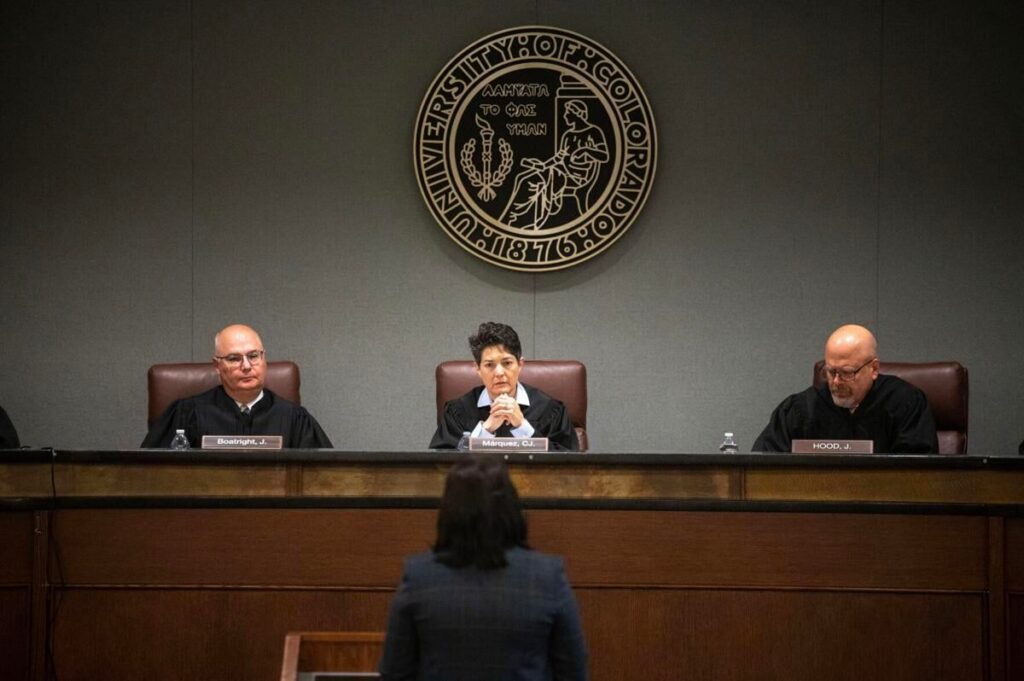
The Colorado Supreme Court declined on Friday to decide a dispute between a large-scale Commerce City development and the various districts financing it, after initially showing interest in the ongoing case. Colorado has roughly 2,800 special districts, which are local...
10th Circuit tosses GEO Group’s pretrial appeal in human trafficking lawsuit
Michael Karlik
michael.karlik@coloradopolitics.com
Updated 2 days ago
The Denver-based federal appeals court dismissed an attempt by The GEO Group on Wednesday to appeal a trial judge’s non-existent decision two months before the company is scheduled to face a civil trial over alleged trafficking violations at the Aurora...
Denver sues Trump to block armed ICE agents from polling sites
Deborah Grigsby
deborah.smith@denvergazette.com
Updated 2 days ago
The city of Denver, along with several groups, sued the Trump administration Thursday, seeking to block U.S. Immigration and Customs Enforcement officers who are armed from polling sites during the upcoming midterm elections. In fact, there are no official orders...
Federal judge takes no action against ICE in Colorado after hearing about mistakes, not ‘blatant violations’
Michael Karlik
michael.karlik@coloradopolitics.com
Updated 41 minutes ago
A federal judge declined to take action against U.S. Immigration and Customs Enforcement on Thursday after hearing that a pattern of alleged lawbreaking amounted to mistakes and a misunderstanding of the government’s position in court. For nearly a year, Colorado’s...
Colorado doctors, dentists challenge state law on gender‑transition services in new federal lawsuit
Marissa Ventrelli
marissa.ventrelli@coloradopolitics.com
Updated 20 hours ago
A group of Christian doctors and dentists has filed a federal lawsuit challenging a Colorado law they say requires them to provide gender‑transition services that conflict with their religious and ethical beliefs. The lawsuit, filed by the Christian Medical and...
Federal judge directs plaintiff to revise complaint alleging Denver officers’ constitutional violations
Michael Karlik
michael.karlik@coloradopolitics.com
Updated 27 minutes ago
A federal judge directed a plaintiff to revise his allegations on Wednesday to more precisely state what two Denver officers and the city itself allegedly did to violate his constitutional rights by facilitating his prosecution for murder until prosecutors dropped...
Lawsuit challenges Douglas County commissioners’ ballot actions
Nicholas Fogleman
nicholas.fogleman@denvergazette.com
Updated 2 days ago
A new lawsuit against Douglas County commissioners seeks to invalidate the board’s intervention in efforts to expand the commission from three members to five and restore the original ballot language approved by more than 20,000 petition signers. The suit marks...
Federal judge explores new sanctions against ex-Colorado judicial discipline director
Michael Karlik
michael.karlik@coloradopolitics.com
Updated 3 hours ago
A federal judge on Wednesday directed Colorado’s former judicial discipline director, for the third time this year, to explain why she should not sanction him for his latest conduct in his litigation against the state’s judiciary. Christopher S.P. Gregory, who served...
PREV
PREVIOUS

New Tribal Water Institute to advocate for Native American water rights
The Boulder-based Native American Rights Fund Monday announced the formation of a first-ever institute that will provide tribal nations with resources and training to advocate for their water rights. The Tribal Water Institute, to be located at the Native American Rights Fund, will receive initial start-up money – a three-year grant of $1.4 million – from the Walton […]

Federal judge denies gun group's preliminary injunction request versus Colorado's 3-day waiting period
A federal judge in Denver has denied a request to block a new Colorado law mandating a three-day wait to acquire a firearm after purchase. U.S. District Court Judge John Kane turned down the request for a preliminary injunction filed by Rocky Mountain Gun Owners and firearms instructor Alicia Garcia. The plaintiffs said they will […]