

New Tribal Water Institute to advocate for Native American water rights

The Boulder-based Native American Rights Fund Monday announced the formation of a first-ever institute that will provide tribal nations with resources and training to advocate for their water rights.
The Tribal Water Institute, to be located at the Native American Rights Fund, will receive initial start-up money – a three-year grant of $1.4 million – from the Walton Family Foundation.
In a statement, Native American Rights Fund Staff Attorney David Gover said the institute will help fill a critical gap.
“It will provide legal support, train water attorneys, develop policy ideas, and educate state and federal decision makers. By increasing law and policy expertise within Tribal Nations, we can help Indian Country ensure water is available for generations to come,” he said.
The Native American Rights Fund started off as a pilot project in the late 1960s under the California Indian Legal Services in Berkeley. The nonprofit entity moved to Boulder in 1971, where it was run by David Getches, who later became the dean of University of Colorado’s law school. John Echohawk, who was recently recognized for lifetime achievement by the American Bar Association, became its executive director in 1973, a position he has held ever since.
The group has represented tribes in nine of the 35 tribal water rights settlements approved by Congress since 1978.
The group said tribal needs are growing due to the effects of climate-related stresses on water supplies and the legal frameworks used to manage them. The group also noted tribal nations are underrepresented in management discussions and claimed federal and state policy proposals consistently ignore tribal needs and limitations.
Many tribal nations do not have the capacity to develop and bring forward water proposals, the group added.
The institute will double its water staffing, allowing it to take on more cases, the group said.
“Addressing the West’s significant water challenges requires an all-hands on deck approach. Tribal Nations must be included in water decision making,” said Moira Mcdonald, environment program director of the Walton Family Foundation. “Tribal Nations often have the most senior water rights in the Colorado River Basin and throughout the West. But they are under-represented in federal and state policy discussions.”
Mcdonald added: “That is unjust and unwise. We need to listen to their voices. More inclusive decision-making will lead to greater benefits for the environment and society as a whole.”
The issue of tribal water rights has grown in the wake of the Colorado River crisis, particularly in the conversations around renegotiation of the river’s interim guidelines, set to renew in 2026.
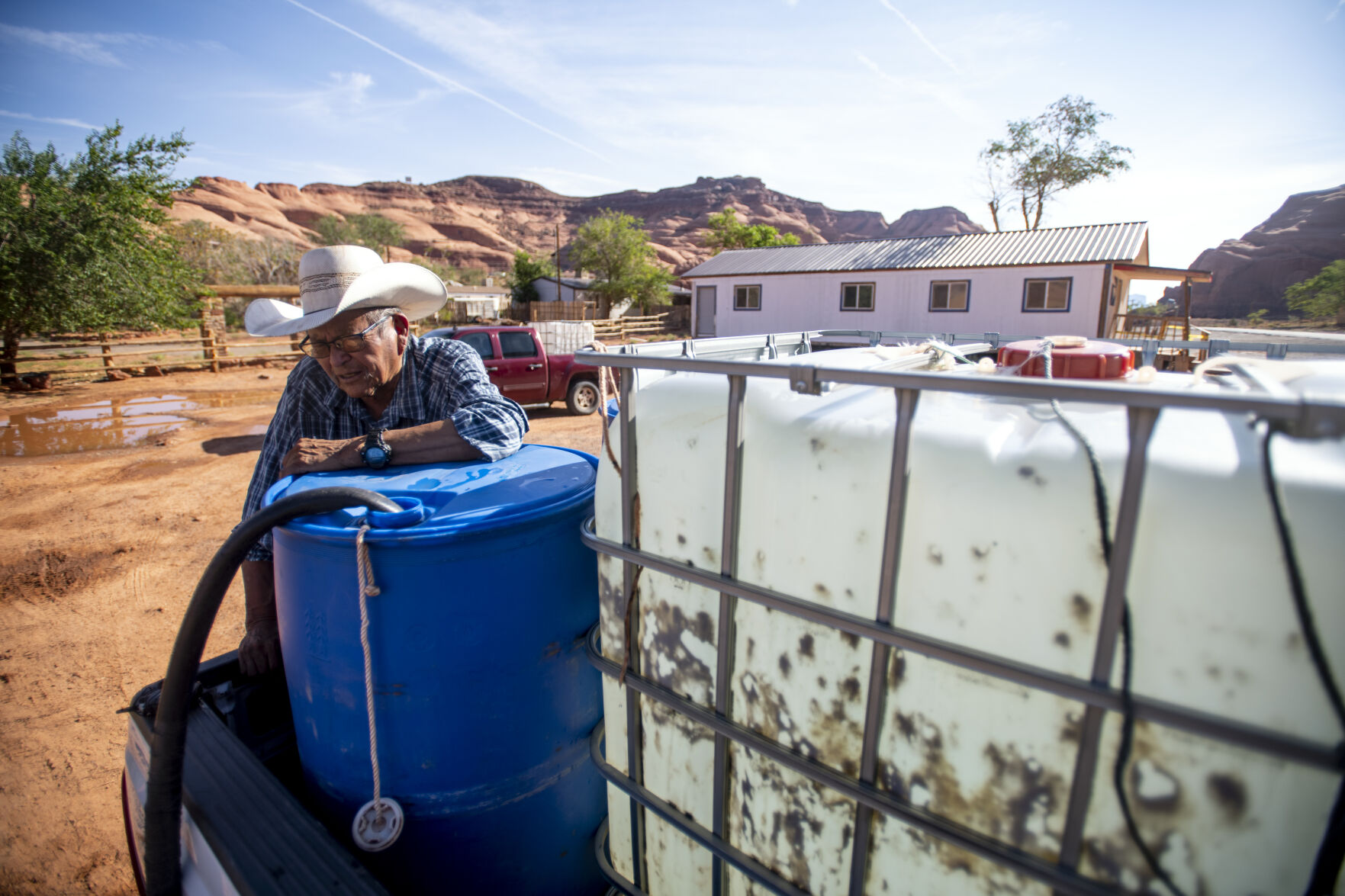
Thirty tribes rely on the Colorado River for water, and tribes are believed to hold about 25% of the water rights to the river. But the tribes were left out of the 1922 Colorado River compact because, at the time, Native Americans were not considered to be U.S. citizens. They were granted citizenship in 1924.
Troy Eid, the former U.S. attorney for Colorado and president of the Navajo Nation Bar Association and an expert on tribal water rights, has said tribes have relied on a 1908 U.S. Supreme Court decision that said they have the right to enough water to ensure their reservations can be permanent homelands. But even with that decision, reservations often lack the infrastructure to access that water, he said.
That’s changing. The bipartisan Infrastructure Investment and Jobs Act will devote nearly $327 million into fulfilling Indian water rights claims, according to an announcement last month from the Biden administration. The funding will support major water projects across the West to secure reliable water supplies for tribes.


Immigration reporting measure fuels debate over Colorado’s role with ICE
Marissa Ventrelli
marissa.ventrelli@coloradopolitics.com
Updated 6 hours ago
A coalition of advocacy groups and several district attorneys rallied outside the Colorado Capitol on Thursday to oppose a ballot measure that, if approved by voters in November, would require state and local law enforcement to cooperate with federal immigration...

Colorado Politics Calendar Sept. 14-20
Rachael Wright, Special to Colorado Politics
rachael.wright@coloradopolitics.com
Updated 3 days ago
CoPo’s weekly political calendar will help you find political and public-policy events throughout Colorado. It includes candidate and issue campaign events, public policy meetings, court hearings, state and local party conventions, assemblies, debates, rallies, parades, speaking engagements, traveling dignitary appearances,...
The African roots of three Colorado leaders | SONDERMANN
Eric Sondermann
eric-sondermann@coloradopolitics.com
Updated 2 days ago
Colorado’s political transformation is measured in many ways. A once reliably red state (with asterisks) became purple and is now a rather deep blue. For better or worse, probably the latter, power is ever more consolidated along the Front Range...
Federal judge green-lights civil trial against ex-Fort Collins DUI officer
Michael Karlik
michael.karlik@coloradopolitics.com
Updated 1 day ago
A federal judge ruled on Thursday that Fort Collins’ former “DUI officer” will face a civil trial for allegedly investigating a motorist for impaired driving without any reasonable suspicion to do so. In recent years, several people arrested by Officer...

Denver police reopen 13 sex assault cases after retesting Missy Woods’ CBI work
Jenny Deam
jenny.deam@gazette.com
Updated 22 hours ago
Thirteen previously closed Denver sexual assault cases have been reopened after the city’s crime lab retested DNA evidence once analyzed by former Colorado Bureau of Investigation forensic analyst Yvonne Woods. A police spokesperson told The Denver Gazette the once-closed cases...

Ballot measure aims to shift Colorado sporting goods tax revenue to land, water and wildfire projects
Marissa Ventrelli
marissa.ventrelli@coloradopolitics.com
Updated 1 hour ago
Colorado voters this November will decide whether to direct a share of sales tax revenue from sporting goods — including bicycles and skiing equipment — toward land and water conservation, wildfire prevention and expanding outdoor recreation. Supporters say the measure...

Colorado Supreme Court suspends Mesa County judge pending misconduct investigation
Michael Karlik
michael.karlik@coloradopolitics.com
Updated 2 hours ago
The Colorado Supreme Court suspended Mesa County Court Judge Michael J. Grattan on Thursday amid a misconduct investigation. The court’s Sept. 10 order gave Grattan 21 days to explain why his paid suspension should not continue through the end of...

Trump honors the fallen of the 9/11 terrorist attacks during Pentagon speech
Mabinty Quarshie
mabinty-quarshie@coloradopolitics.com
Updated 1 day ago
President Donald Trump and first lady Melania Trump honored the roughly 3,000 Americans killed during the Sept. 11, 2001, terrorist attacks during a ceremony at the Pentagon. The event marking the 25th anniversary of the deadliest attack on American soil...
Colorado Supreme Court changes course, dismisses case about special district bonds
Michael Karlik
michael.karlik@coloradopolitics.com
Updated 2 hours ago
The Colorado Supreme Court declined on Friday to decide a dispute between a large-scale Commerce City development and the various districts financing it, after initially showing interest in the ongoing case. Colorado has roughly 2,800 special districts, which are local...

Colorado leaders express outrage and pain following 9/11 attacks | A LOOK BACK
Rachael Wright, Special to Colorado Politics
rachael.wright@coloradopolitics.com
Updated 1 day ago
Twenty-Five Years Ago This Week: “Responding to the 9/11 terrorist attacks, Colorado Gov. Bill Owens told reporters in a statement, “I join all Coloradans in expressing outrage and horror at the senseless terrorist bombings in New York and Washington D.C....
PREV
PREVIOUS

Aurora's 'strong mayor' proposal faces uncertain future
Aurora’s “strong mayor” ballot initiative faces an uncertain future, even after Mayor Mike Coffman, one of the initiative’s proponents, easily defeated a challenge to his reelection bid. “At this point, we have not made a decision if we will be moving forward with this,” Natela Manuntseva, who speaks for the strong mayor campaign, told The Denver […]

Colorado Supreme Court to review Denver murder case, open records lawsuit
The Colorado Supreme Court announced last month that it will review two cases, one questioning whether a procedural misstep in a murder trial was sufficient to reverse a defendant’s conviction and the other examining what role Colorado’s open records law plays in legal claims against the government. At least three of the court’s seven members […]