

Colorado Supreme Court upholds search warrant in 2020 arson case

The Colorado Supreme Court has upheld the fruits of a Denver Police Department search warrant that detectives used three years ago to identify the teenagers accused of killing five members of a family with an intentionally set house fire.
Attorneys for 19-year-old Gavin Seymour, one of the teenagers charged with first-degree murder, sought to have the evidence from a warrant for Google searches of the destroyed home’s address, on North Truckee Street in Green Valley Ranch, excluded from his case. They argued the warrant violated his protections against unreasonable searches and seizures.
The justices found in a split decision released Monday the evidence uncovered will be admissible in court because police acted on a good-faith belief the warrant was constitutional.
But in an area the court acknowledges there is no well-established law anywhere to address, the court declined to make a broad rule about the constitutionality of reverse-keyword search warrants. The type of warrant uses the term “reverse” because they use potentially incriminating evidence to identify possible suspects, rather than the other way around, as in traditional warrants.
“If dystopian problems emerge, as some fear, the courts stand ready to hear argument regarding how we should rein in law enforcement’s use of rapidly advancing technology. Today, we proceed incrementally based on the facts before us,” wrote Justice William Hood in the majority opinion, joined by three other of the court’s seven justices.
But the decision prompted concerns from two justices, who argued in a dissenting opinion reverse keyword searches fly in the face of the Fourth Amendment’s protections against unreasonable searches.
“I think it’s very hard to be the first court to issue a decision, and then try to make it a broad pronouncement about ‘This is just the way things work now,'” said Christopher Jackson, an appellate attorney and partner at Holland & Hart.
“And so I think it’s always a judgment call about whether you want to find the narrowest way to dispose of the case, or whether you think it’s important to give a somewhat broader ruling or to consider more issues to get to the same place.”
It took the Denver Police Department writing three warrants for Google searches of the home’s address before Google agreed to cooperate because of the company’s privacy policies, according to the opinion. The department eventually wrote a warrant for anonymized IP addresses associated with searches for the address in the fifteen days before the fire. The results turned up eight separate accounts, five of which appeared to be based in Colorado.
Google then cooperated with an additional warrant for the names and other identifying information associated with the Colorado-based accounts. Police eventually eliminated two of those people as possible suspects, and their investigation led them to the three teenagers ultimately charged for the fire.
The break came after months of police following other leads and coming up empty handed.
Seymour and Kevin Bui, now also 19, face several first-degree murder charges each for the fire set in the early-morning hours of Aug. 5, 2020. The blaze killed five members of a Senegalese immigrant family, sparking fear in Denver’s West African community about whether the attack was a targeted hate crime. The teenagers, 16 at the time but charged as adults, intended the attack as revenge for a robbery in which Bui’s phone was stolen.
However, the teens targeted the wrong house.
The Supreme Court appeal in Seymour’s case also put Bui’s case on hold.
Denver District Attorney Beth McCann said in a statement Monday she’s pleased her office can move forward with prosecuting the cases.
“The Court recognized that police officers exercised good faith in obtaining the warrant that led to the identification of the suspects. We agree with that part of the court’s opinion and will now move forward with our cases,” McCann said.
A third boy involved, who was 14 at the time of the fire, pleaded guilty to second-degree murder and has received a 10-year detention sentence: Three years in the state’s Division of Youth Services, which handles juvenile detention, and seven years in the Department of Corrections’ Youthful Offender System.
Justices Monica Márquez and Carlos Samour dissented from the majority’s decision. In their separate opinion, they worry about the implications of potential broad use of keyword search warrants.
Justice Maria Berkenkotter agreed with upholding the evidence found from the search warrant because of the police’s reliance on it in good faith, but she wrote that she believes the search was unconstitutional and no probable cause existed for the search of Seymour’s records.
“By authorizing law enforcement to rummage through the private search histories of a billion individuals for potential evidence of criminal activity, reverse-keyword warrants permit exactly what the Fourth Amendment forbids,” Márquez wrote, also adding, “At the risk of sounding alarmist, I fear that by upholding this practice, the majority’s ruling today gives constitutional cover to law enforcement seeking unprecedented access to the private lives of individuals not just in Colorado, but across the globe.”
The Supreme Court actually “assumed without deciding” there was no legal basis for the warrant specific to Seymour. But the justices chose to jump over resolving whether a search of data, such as Google use history, requires probable cause for a specified user, finding that because the police relied on the warrant in good faith, the evidence turned up is admissible.
Jennifer Lynch, general counsel for the Electronic Frontier Foundation, compared the concept of reverse keyword searches to an Illinois case that went up to the U.S. Supreme Court, in which police searched every patron of a bar while executing a search warrant based on a tip that a bartender would be selling heroin. They found bar patron Ventura Ybarra possessed heroin, who was later indicted on drug possession charges.
But the Supreme Court found the officers had no probable cause to suspect patrons of committing a crime just because they were at the bar during the search.
“That’s essentially what’s happening with keyword search warrants,” Lynch said. “The police don’t have probable cause to search any individual person, and so they don’t have probable cause to search every person who’s conducting a search on Google.”
The Electronic Frontier Foundation submitted a “friend of the court” brief in Seymour’s case and took the position that reverse keyword searches are inherently unconstitutional. Lynch said the use of reverse keyword search warrants by governments could be used to target people making sensitive search queries.
Jackson, the attorney from Holland & Hart, said the increasing ubiquity of digital technology and the internet in people’s lives has called into question long-standing case law about privacy expectations in protections against unreasonable searches and seizures. As one example, the U.S. Supreme Court has long held that voluntarily giving information to a third party, such as to a bank, forfeits a person’s expectation of privacy for that information. But Jackson said the increasing reality that lot of third parties have access to people’s information in the digital age has drawn criticism to that principle.
“That is what makes Fourth Amendment jurisprudence so difficult. It’s trying to map on the constitutional text and a lot of long-standing case law onto very new technologies, where the analogies often don’t line up very well or break down in some sense,” Jackson said.


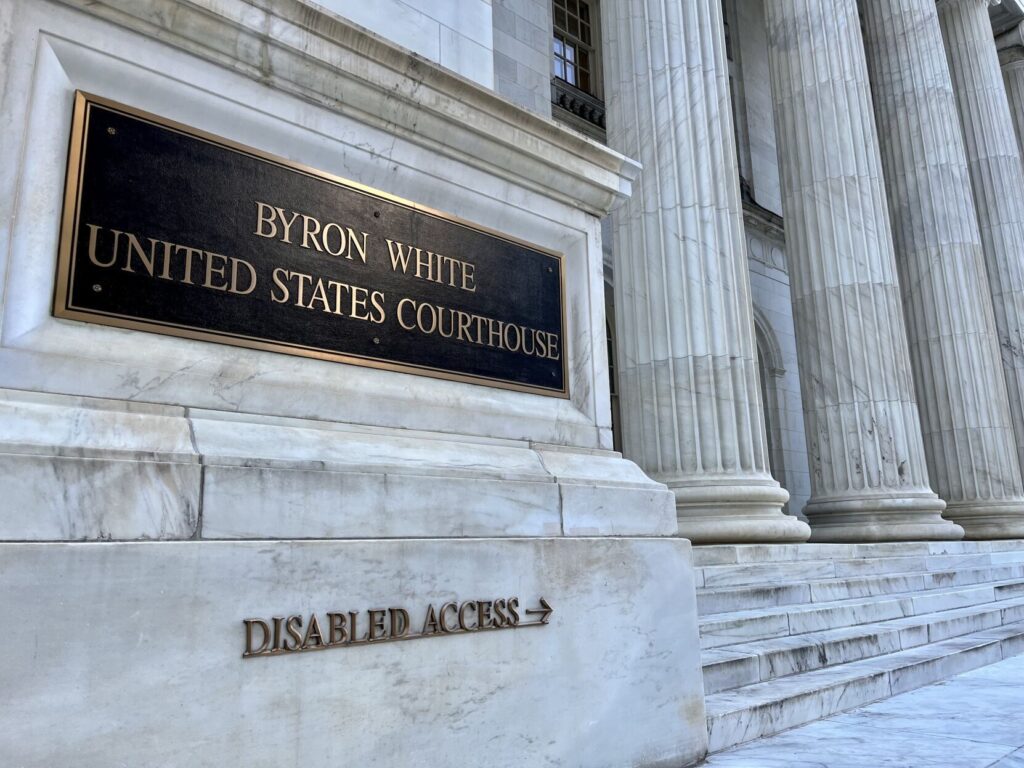
Misconduct complaints from ex-Colorado judicial discipline director dismissed against federal judges
Michael Karlik
michael.karlik@coloradopolitics.com
Updated 2 hours ago
The administrative body for the Denver-based federal appeals court upheld a finding last week that misconduct complaints against Colorado’s chief federal trial judge and the chief appeals judge warranted dismissal and appeared to be a “litigation tactic” by the complaining...

First-ever Red Rocks naturalization ceremony draws most diverse group of new citizens
Michael Karlik
michael.karlik@coloradopolitics.com
Updated 5 hours ago
Colorado’s federal trial court held its first-ever naturalization ceremony for nearly 300 new citizens on Thursday at Red Rocks Park and Amphitheater. “We’re doing it to commemorate the 250th anniversary of the Declaration of Independence and the United States. Red...
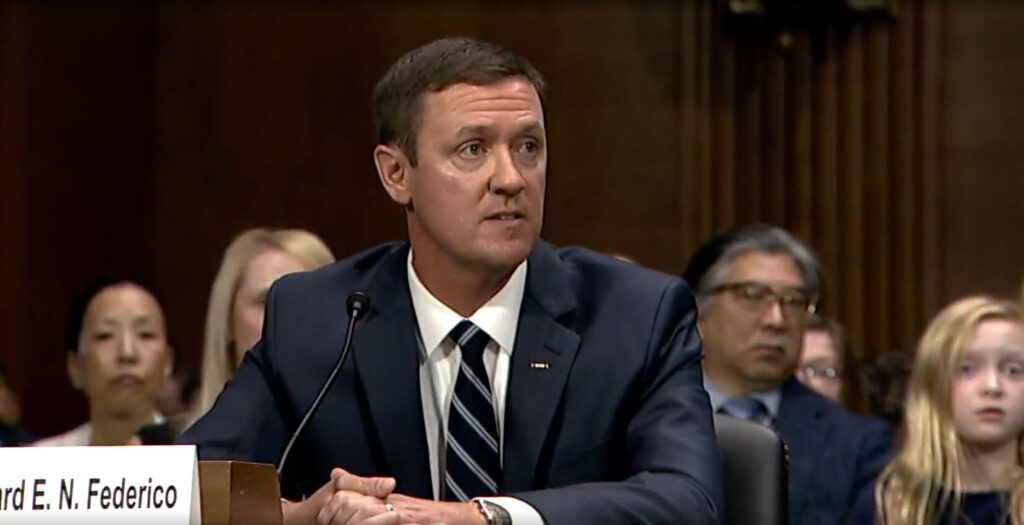
10th Circuit finds no fair housing violation by Littleton landlord for worker’s alleged rape of tenant
Michael Karlik
michael.karlik@coloradopolitics.com
Updated 1 day ago
The Denver-based federal appeals court concluded on Monday that Littleton’s housing authority could not be held liable for a maintenance worker’s alleged rape of a tenant, as the worker’s employment did not provide any special access to the victim. A...

Jeffco Public Schools sues Trump administration to protect funding after alleged transgender policies violation
Matt Kyle
matt.kyle@denvergazette.com
Updated 13 hours ago
In the wake of several threats by the Trump administration to revoke federal funding, Jeffco Public Schools filed a lawsuit against the Department of Education seeking to protect that badly needed money. Jeffco has been under investigation by the DOE’s...

Denver detox center did not violate man’s rights with 10-hour hold, 10th Circuit says
Michael Karlik
michael.karlik@coloradopolitics.com
Updated 2 days ago
The Colorado-based federal appeals court concluded on Tuesday that Denver’s detoxification facility did not violate a man’s rights by holding him against his will for 10 hours until his blood alcohol content was projected to reach zero. Unusually, Brian Garrett’s...

Federal judge clarifies ex-GOP treasurer candidate’s burden to prove defamation claims
Michael Karlik
michael.karlik@coloradopolitics.com
Updated 2 days ago
A federal judge clarified last week that businessman and former Republican statewide candidate Brian Watson will need to surmount a higher hurdle in proving his claim that a party guest’s alleged description of him as a “criminal” amounted to defamation....
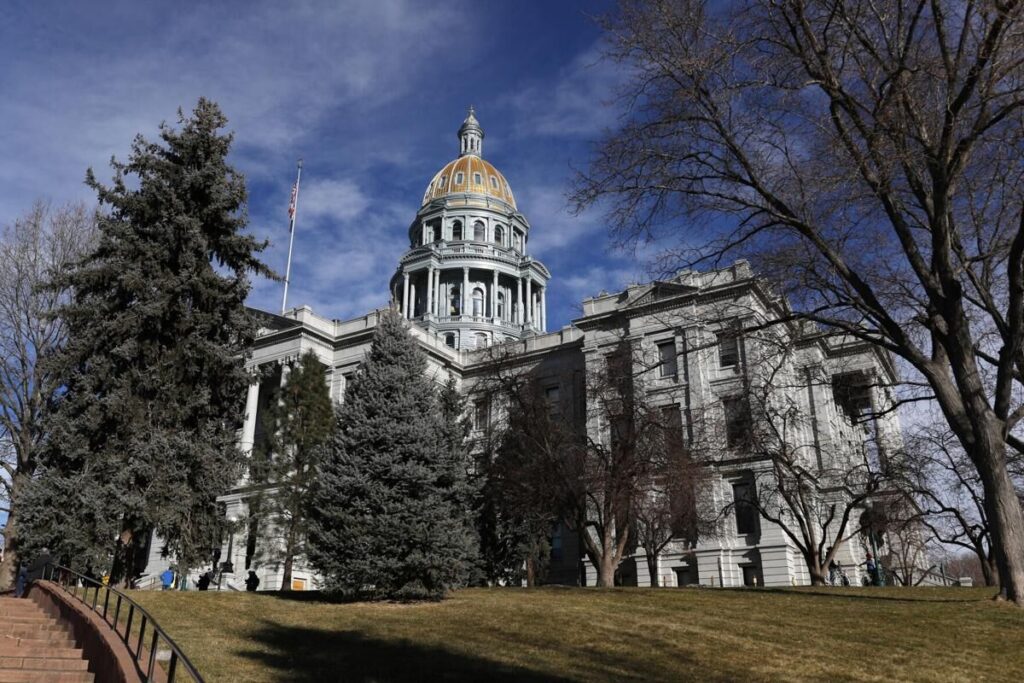
Colorado board permits state to appeal injunction against arthritis drug price cap
Marissa Ventrelli
marissa.ventrelli@coloradopolitics.com
Updated 3 days ago
A Colorado board voted Friday to allow the Attorney General’s Office to fight an injunction against a price cap on a drug that treats arthritis. A U.S. district court judge had granted the company Amgen a preliminary injunction, temporarily blocking...

Federal judge rejects constitutional claims, ‘expressions of hatred’ by Club Q defendant
Michael Karlik
michael.karlik@coloradopolitics.com
Updated 3 days ago
A federal judge rejected a defendant’s claims that he received constitutionally ineffective assistance of counsel while facing federal hate crime and firearms charges for murdering five people at a Colorado Springs LGBTQ nightclub in 2022. Anderson Lee Aldrich is serving...

Divided 10th Circuit upholds Colorado congestion fee on car rentals
Michael Karlik
michael.karlik@coloradopolitics.com
Updated 3 days ago
The Denver-based federal appeals court concluded on Monday that a 2024 “congestion impact fee” that lawmakers imposed on short-term vehicle rentals did not conflict with a federal prohibition on certain airport-related charges. Beginning in the 1970s, Congress began limiting the...
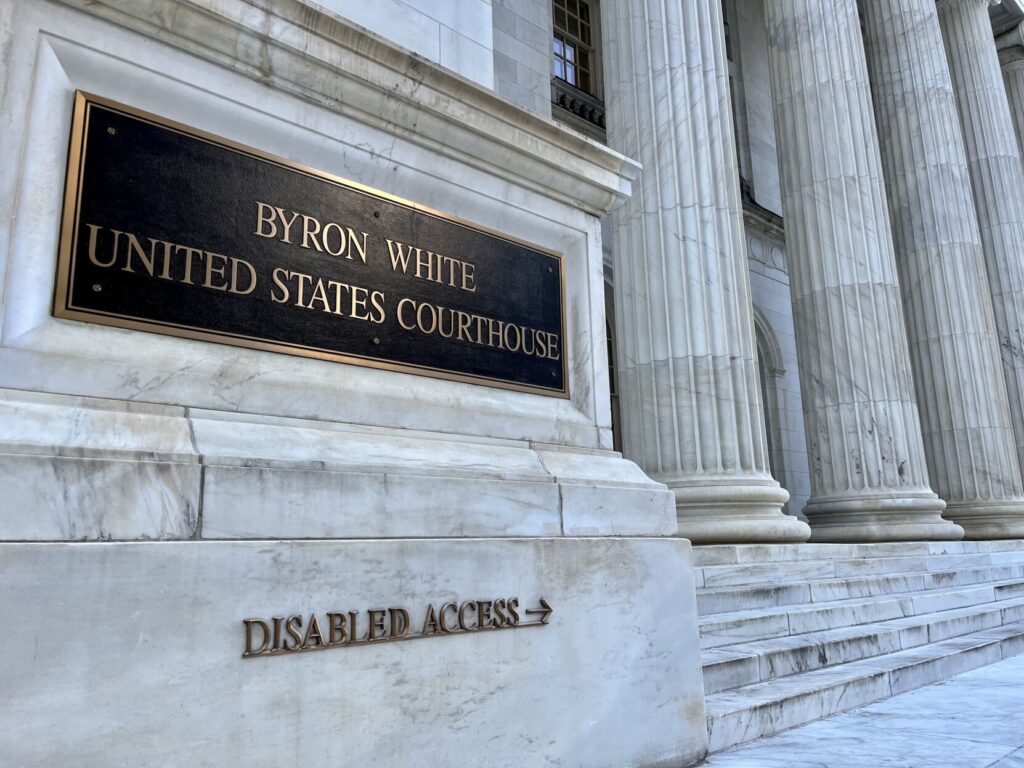
10th Circuit dismisses woman’s lawsuit following 10-year attempt to undo restraining order
Michael Karlik
michael.karlik@coloradopolitics.com
Updated 6 days ago
The Denver-based federal appeals court rejected a woman’s challenge on Friday to a restraining order imposed on her more than a decade ago, finding that she cannot credibly claim she will be prosecuted for violating the restraining order through her...
PREV
PREVIOUS

Get to know Aurora's Ward IV candidates | DENVER VOTERS GUIDE
With Aurora’s November election rapidly approaching, city residents will have several big decisions to make in choosing the next city leaders. Voters will choose between several candidates for mayor, at-large councilmembers and councilmembers for districts (called “wards”) IV, V and VI. Two candidates, Jonathan Gray and Stephanie Hancock, are running for one Ward IV council […]

Denver mayor cuts 87% of council's 2024 budget suggestions
Denver Mayor Mike Johnston wants to cut nearly all of the councilmembers’ proposed additional spending to the city’s 2024 budget plan. The city council made 28 recommendations last week, totaling $81 million in proposed changes to the mayor’s budget. In a letter, Johnston said the price tag for the changes is too high. Denver City […]