

Q&A with Alan Salazar | Veteran politico now leads Colorado’s largest water utility

Alan Salazar’s selection as the next head of Denver Water may have come as a surprise to some, given he’s better known as the chief of staff to former Mayor Michael Hancock or as a strategist in the administration of former Gov. John Hickenlooper.
But Salazar’s lifelong commitment to public service and leadership made him a stellar choice for the state’s largest water utility. And as it turns out, he’s got some pretty good water chops to go with it.
Salazar’s appointment is interim for the next year while the utility’s board of directors board considers long-term strategic needs for the organization. He sat down with Colorado Politics to discuss his new role.
Fast Facts
Born in Leadville, fifth generation Coloradan. Family traces its roots in the San Luis Valley and the Western Slope.
Previous experience working on public policy issues for:
- Senator Gary Hart (after law school and passing the bar)
- Senator Tim With (State Issues Director)
- Governor Roy Romer (Policy Director and Deputy Chief of Staff)
- U.S. Rep. Mark Udall (Chief of Staff)
- Governor John Hickenlooper (Chief Strategy Officer)
- Mayor Michael B. Hancock (Chief of Staff)
- also worked on the campaigns of President Bill Clinton (1992/96) and Hillary Clinton (2016) in Colorado
Salazar holds a bachelor’s degree in history and political science from the University of Colorado Boulder and a law degree, also from CU, where he studied water law, mining law, natural resources law and public lands issues.
Colorado Politics: So what do you know about water?
Salazar: Well, I am not a water lawyer, nor am I a civil engineer. And historically, Denver Water has been led by one or the other, unless you go back to the very beginning. I’m not a stranger to working with and managing civil engineers. Did that at the city for six years, and I’ve worked with and been around water lawyers for the entirety of my career.
When I went to law school, I wanted to take on natural resources. So, Dave Getches and James Corbridge were my professors. Getches was particularly an inspiring and charismatic professor. And so my goal was to finish law school, and then do mining law and water law. I ran that gamut of natural resources. My intention was to work and practice in that area, and I wanted to work for the Native American Rights Fund. But my best friend in law school got that job. He was Native American and he was also a better student than me.
I had the opportunity then to work for Sen. Hart. That was when Two Forks was taking place. (Two Forks was a major reservoir proposed at the confluence of the north and main forks of the South Platte River near Deckers. The $1 billion project would have flooded Cheesman Canyon, which drew heavy opposition from environmental groups. The Environmental Protection Agency vetoed the project in 1990).
I got into the natural resource area through Sen. Hart’s office. After that I went to work for Sen. Wirth, who had an even bigger natural resources and environment agenda than Hart. I was given the job of being state issues director, which means managing the four field offices in the state. That got me around the state.
I was assigned liaison work for the Animas-La Plata project. I continued the work on the endangered fish species and on Two Forks. Everybody was looking for an alternative to two.
That was my introduction to Denver Water as an entity. I was fortunate to be mentored by some great people, such as Greg Hobbs, who had been counsel for the Colorado Water Congress. He taught me how to appreciate the complexity of Colorado water law and the importance of relationships, and also a sense of humor and maybe a love for poetry at the same time.
I have fond memories of meeting Mount Rushmore-type people when it comes to water law, some of whom I’ve continued to keep a relationship with. Dave Robbins comes to mind, and so does John McClow.
After finishing up with Tim Wirth, I had a chance to either go to Washington to work with President Clinton, or to work Gov. Romer. And Gov. Romer’s deputy chief of staff, BJ Thornberry, said: “You don’t want to go to Washington. You want to do this job.”
I decided it would be better for me to be a big fish in a small pond, not a little fish in the big pond.
I landed as deputy chief of staff and worked on rangeland reform. We had a big challenge with grazing fees at the time. Water was certainly a piece of that. It was a great leadership moment for me to observe.
Animas-La Plata came to a crisis, and Lt. Gov. Gail Schoettler was asked to negotiate agreements, and I was part of those discussions.
After my service with Gov. Romer, I had the opportunity to be chief of staff for Congressman Mark Udall, where I served for 11 years. Mark also had an oversized portfolio of natural resources. So for us, it was family business. We worked on abandoned mines, energy, natural gas. I was introduced to those issues in a more realistic and maybe more antagonistic way.
You have to develop relationships to move those things forward. That led to work with the staff for Rep. Scott McGinnis on healthy forests, water quality. The Clean Water Restoration Act was part of Mark’s portfolio.
With Gov. Hickenlooper, it was his view that we should craft a state water plan. I was very nervous about that. That area of policy was mine.
I then went to work for the mayor for six or seven years, and worked closely with Jim Lochhead (his predecessor at Denver Water).
[His background in water] is one I’ve addressed with employees here. My goal is to meet every Denver Water employee between now and the end of the year, spend time with them in groups or individually. And this issue comes up. It’s OK. Tell us what you know about water and what’s your history with the issue, because there’s a expectation that whoever leads this organization has to have the chops to do the policy work.
If you want to work in public policy in Colorado, you have to work with natural resources. And water just is.
I was overjoyed at the opportunity. There’s a public service component to this that I will find personally fulfilling. It will stretch me because I’ll have to learn some new things. That’s always good.
But I had deep anxiety about what Jim Lochhead’s reaction would be, because Jim on the Mount Rushmore of water lawyers in the state.
Jim’s fount of knowledge is almost too small a description. He knows the arcane twists and turns of federal water regulation and policy in ways that I will never have if I live another a hundred years on the planet, I won’t be that person. So I had a lot of anxiety about how’s Jim going to react to me, even though we worked together for a number of years in different ways. And unless he’s a very good actor, and I don’t think he is, he said: “Alan, I’m really excited about this. I’m over the moon that you’re doing it.” And that made me feel that was one person that I really wanted to know, felt good about it.
I’ve subsequently talked to other utility managers inside and outside of Colorado, and other CEOs, people that are responsible for big organizations. And unless they’re humoring me, they say: “Listen, the job of the CEO is not to be the expert. The job of the CEO is to lead the organization to maintain the culture and, morale of the organization and the workforce to make sure it’s financially stable.” If you answer to a board to make sure that you’re accountable, that you’re a person of integrity, a public reputation of honesty and good dealings with other people, and to look strategically at what the next 50 years will be.
You will have experts that will tell you this is the way Colorado law operates in this circumstance. Or you’ll have engineers [who say] this is the way you build something. This is the scope and scale and price of the project. You’ll have a chief financial officer who knows how to manage the budget. What you have to do is think about the long-term, 50 years out.
CP: Why did you decide to take this position? You were coming to the end of the Hancock administration, and you could have ridden off into the sunset to retire and go watch the sunsets. Instead, you take on the biggest water agency in the state, a massive responsibility.
Salazar: I talked to Mayor Hancock about this. I wanted his advice. And he said: “Are you sure you want to work that much?” He wasn’t joking.
To me, it’s is an opportunity to contribute to the prosperity and welfare of the state that I love and have worked in for 40 years. At this point in my life, I saw this as an opportunity to again make a contribution in the public space. And that’s what brings me joy. And that’s what has motivated me. It’s not sainthood. It is just, that’s what I like to do. And I can’t imagine having the opportunity in turning it down. So, to me, it is an opportunity to contribute.
CP: What’s emerging for you as the challenges that Denver Water faces?
Salazar: I’ll start with the big, big challenges – the kind of global challenges, if you will. I think they’re in three big categories. One is climate: How is the climate crisis going to impact this organization and more importantly, the people who we serve?
The other is population. I think we’re on track, even with all the stresses we have, to have 1.8 million people before I leave the planet in this service area. So population will continue.
The third big bucket challenge is agriculture, and what is the future of agriculture in our state. I have passion for that, because those are my people, my family. What does Denver Water care about the future of agriculture? Well, we have to deeply care about the future of agriculture and the rural urban relationship because we’re codependent.
The immediate challenges are capital construction, finishing up the expansion of Gross Reservoir, water treatment and the lead program, which will go through 2030 at least.
Then there’s the day-to-day maintenance. I had not realized until I came to work here that utilities have something that busts every day.
It’s not a once in a month occurrence. It’s a daily grind to make sure that things are repaired and kept in good stead. I’ve been on a couple of replacement jobs, and I’ve seen the difficult work. I’ve also seen the pride that people have in doing that work.
The Colorado River probably looms as one of the biggest challenges.
CP: What’s Denver Water’s role in dealing with that?
Salazar: To bring wisdom and experience from the largest water utility in the state. About half of Denver’s water comes from the Colorado River. Our role is to play a constructive role, to support the strategy that Becky Mitchell (Colorado’s commissioner on the Upper Colorado River Commission) is responsible for and to support the state’s strategy.
Part of it is to acknowledge that there will be challenges, but we’ll have to link arms and build trust. I think Jim Lochhead did that and contributed. It’s a different challenge for the Upper Basin than the Lower Basin.
CP: If you could say one thing to people in the cities and suburbs about water, what would you tell them?
Salazar: I would remind them of a statistic that I had to remind myself about. That is we have about 25% of the state’s population dependent on this resource, and we use 2% of it. Part of it is the efficiencies. Part of it is the conservation program.
We’re in this strange kind of place where the product you’re selling, you don’t want people to use too much of it … That we really do a pretty good job doesn’t mean we can’t do better, and it doesn’t mean that our job is finished.



At Colorado’s 150th anniversary, leaders offer birthday wishes
Thelma Grimes
thelma.grimes@coloradopolitics.com
Updated 1 second ago
As Colorado’s 150th anniversary approaches, leaders from across the state reflect on the spirit that binds the plains, mountains, Western Slope and Front Range — a shared commitment, they underscored, to opportunity, community, stewardship and personal freedom. Their tributes highlight...
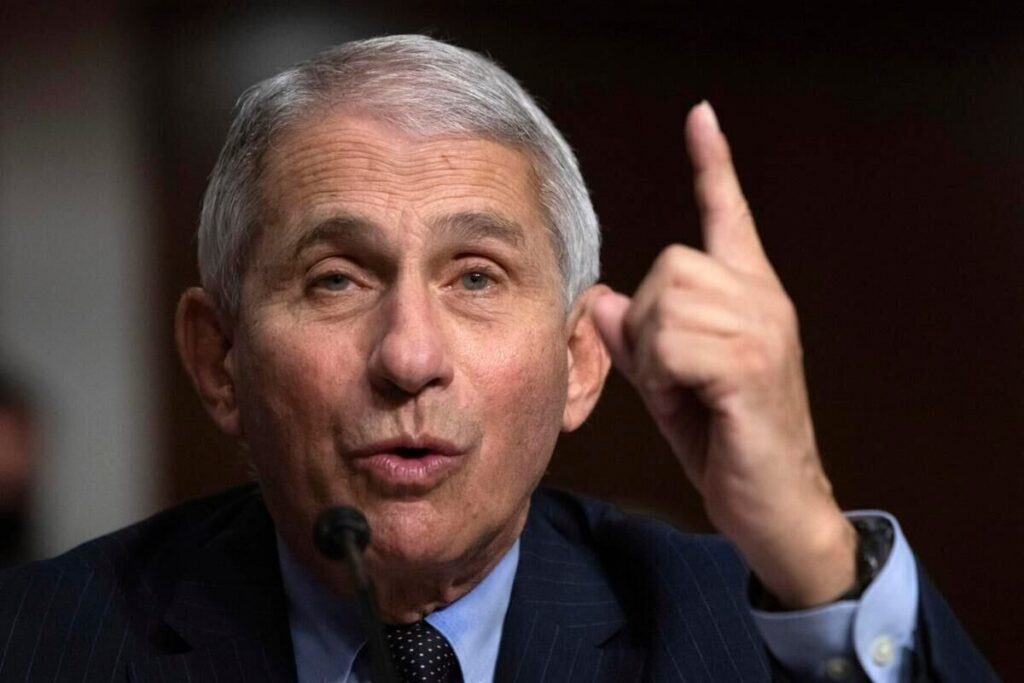
Fauci’s private COVID-19 diaries: Six takeaways on fame, prize money and the lab leak debate
The Washington Examiner
the-washington-examiner@coloradopolitics.com
Updated 2 hours ago
Anthony Fauci’s private writings from 2020 and beyond portray a public health official who was fixated on his growing celebrity while privately grappling with a pandemic response he believed was chaotic, leaderless and consumed by internal rivalries. The writings of...

Denver City Council sends Xcel franchise deal to voters
Deborah Grigsby
deborah.smith@denvergazette.com
Updated 2 hours ago
This November, Denver voters will decide whether to renew the city’s longstanding franchise agreement with Xcel Energy. Members of the Denver City Council approved on Monday sending a proposed 20-year franchise agreement with Xcel that would deliver more than $180...

Denver weighs permanent restriction on low-level traffic stops
Deborah Grigsby
deborah.smith@denvergazette.com
Updated 2 hours ago
A Denver City Council committee is considering permanently limiting certain types of low-level traffic stops used to investigate unrelated crimes and requiring better public reporting about why such stops happen. Members of the Budget and Policy Committee on Monday were...
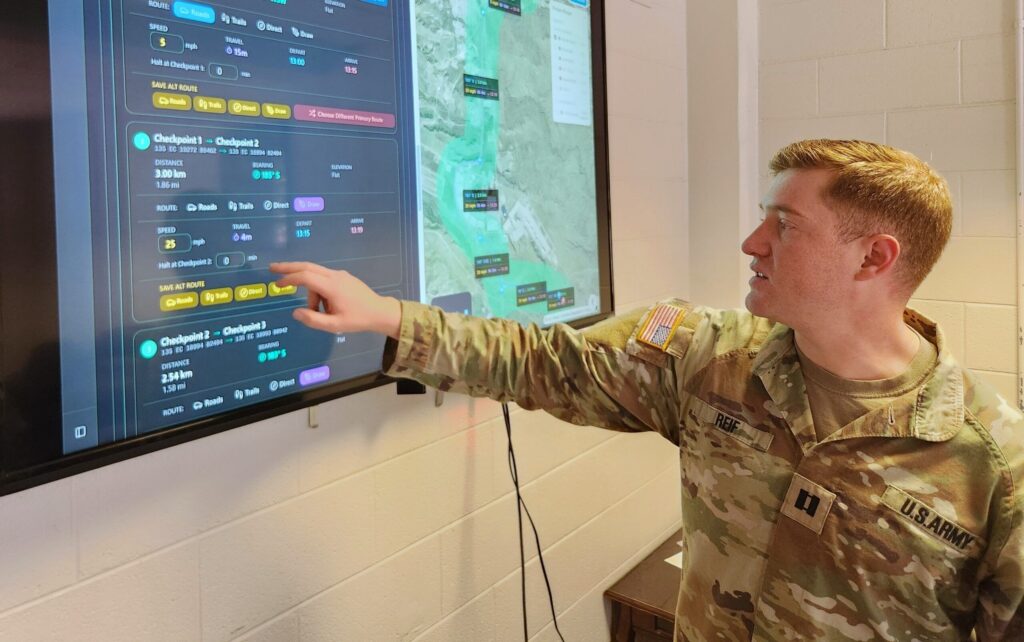
Fort Carson soldiers develop app to plan convoys as part of Next Generation Command and Control
Mary Shinn
mary-shinn@coloradopolitics.com
Updated 2 hours ago
Planning the details of a military convoy with numerous vehicles, personnel, weapons, radios and other details can take a platoon leader three days. In addition to plotting a safe route, leaders need to map out checkpoints to track the convoy’s...
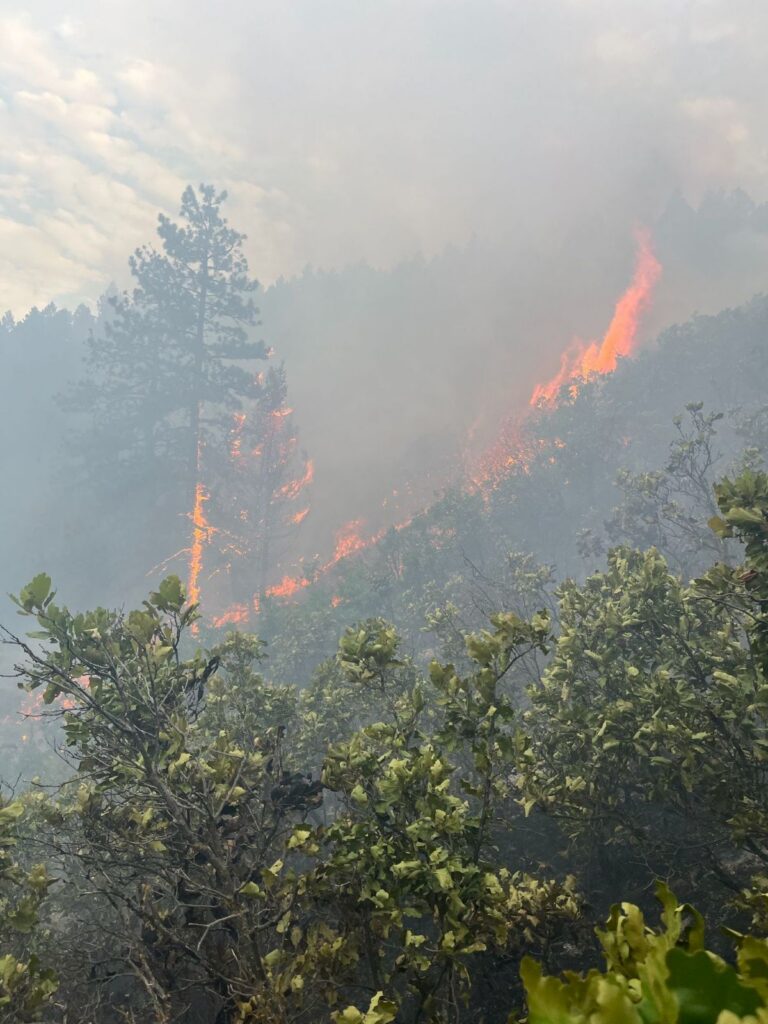
Penley fire near Sedalia reaches 75% containment
Nicholas Fogleman
nicholas.fogleman@denvergazette.com
Updated 2 hours ago
Fire crews battling the Penley fire west of Sedalia made significant progress overnight, holding the wildfire at about 3 acres and reaching 75% containment Monday, according to Douglas County officials. The fire, which sparked Sunday west of Sedalia, prompted evacuation...
Colorado board permits state to appeal injunction against arthritis drug price cap
Marissa Ventrelli
marissa.ventrelli@coloradopolitics.com
Updated 1 hour ago
A Colorado board voted Friday to allow the Attorney General’s Office to fight an injunction against a price cap on a drug that treats arthritis. A U.S. district court judge had granted the company Amgen a preliminary injunction, temporarily blocking...
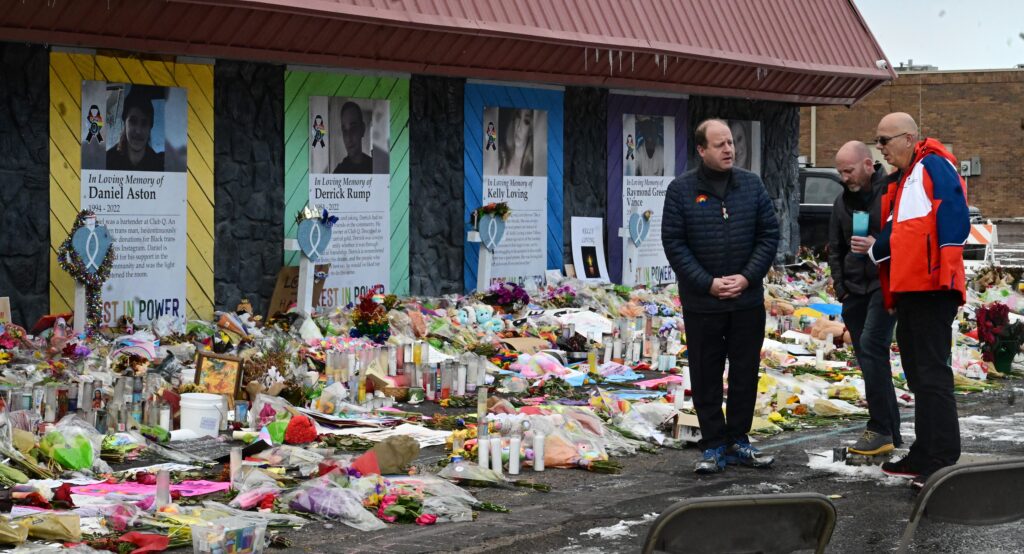
Federal judge rejects constitutional claims, ‘expressions of hatred’ by Club Q defendant
Michael Karlik
michael.karlik@coloradopolitics.com
Updated 17 hours ago
A federal judge rejected a defendant’s claims that he received constitutionally ineffective assistance of counsel while facing federal hate crime and firearms charges for murdering five people at a Colorado Springs LGBTQ nightclub in 2022. Anderson Lee Aldrich is serving...

Divided 10th Circuit upholds Colorado congestion fee on car rentals
Michael Karlik
michael.karlik@coloradopolitics.com
Updated 13 hours ago
The Denver-based federal appeals court concluded on Monday that a 2024 “congestion impact fee” that lawmakers imposed on short-term vehicle rentals did not conflict with a federal prohibition on certain airport-related charges. Beginning in the 1970s, Congress began limiting the...

Space Force should measure workforce needs as it prepares to double in size, GAO report says
Mary Shinn
mary-shinn@coloradopolitics.com
Updated 23 hours ago
The Space Force needs more people. It’s just not precisely sure how many more. A Government Accountability Office report released earlier this month found that the youngest and smallest military branch does not have a process to consistently or accurately...