

Kathryn Starnella, who ‘never does anything halfway,’ ceremonially sworn in as federal judge
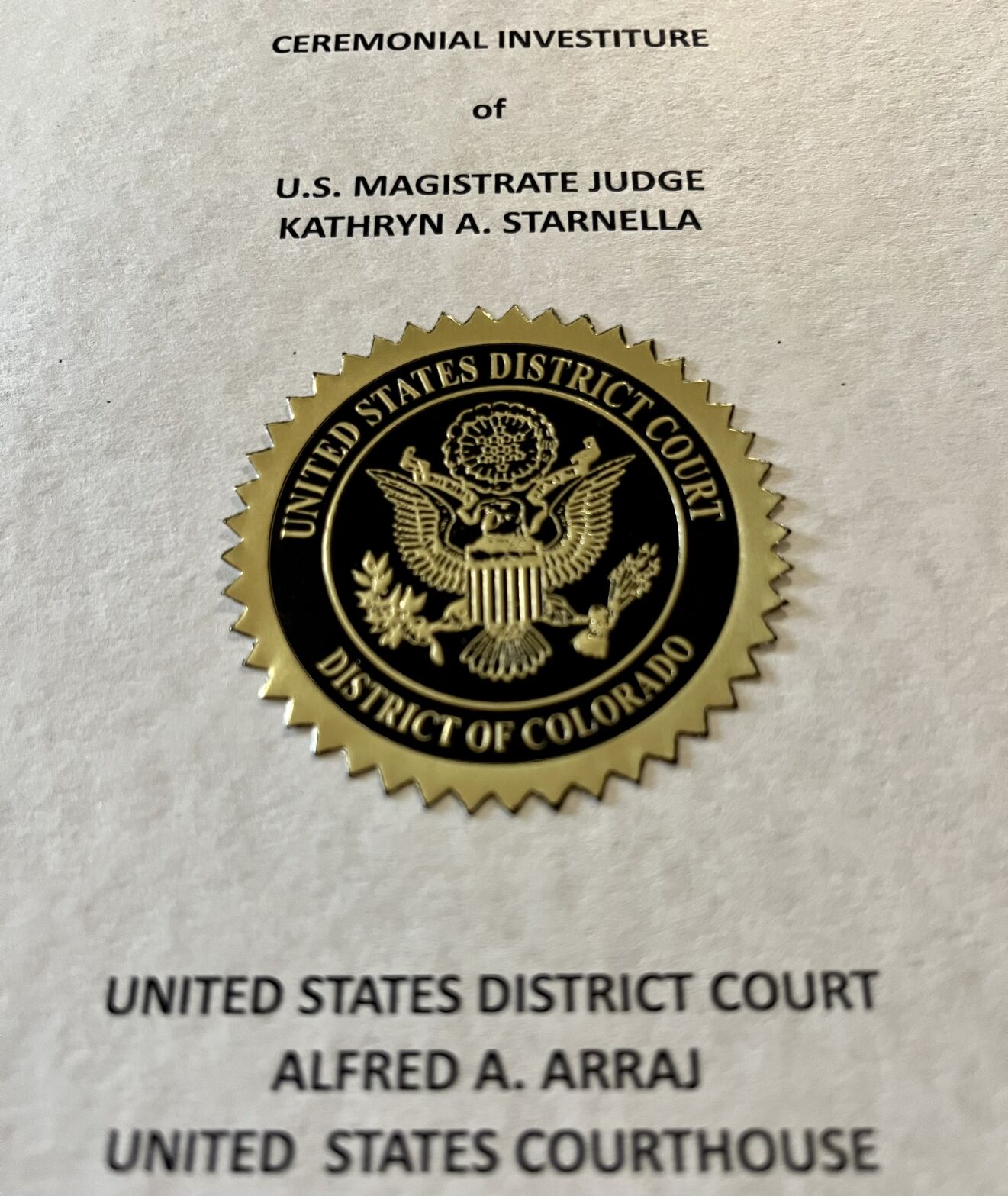
Before Kathryn A. Starnella moved to Colorado more than a decade ago to clerk for a federal judge, she prepared for the job by volunteering at the federal court in Chicago.
Then when Colorado’s U.S. District Court announced last year that she would be joining the bench as a magistrate judge, Starnella spent her free time at the courthouse, learning about the job and even sitting with her predecessor for a trial.
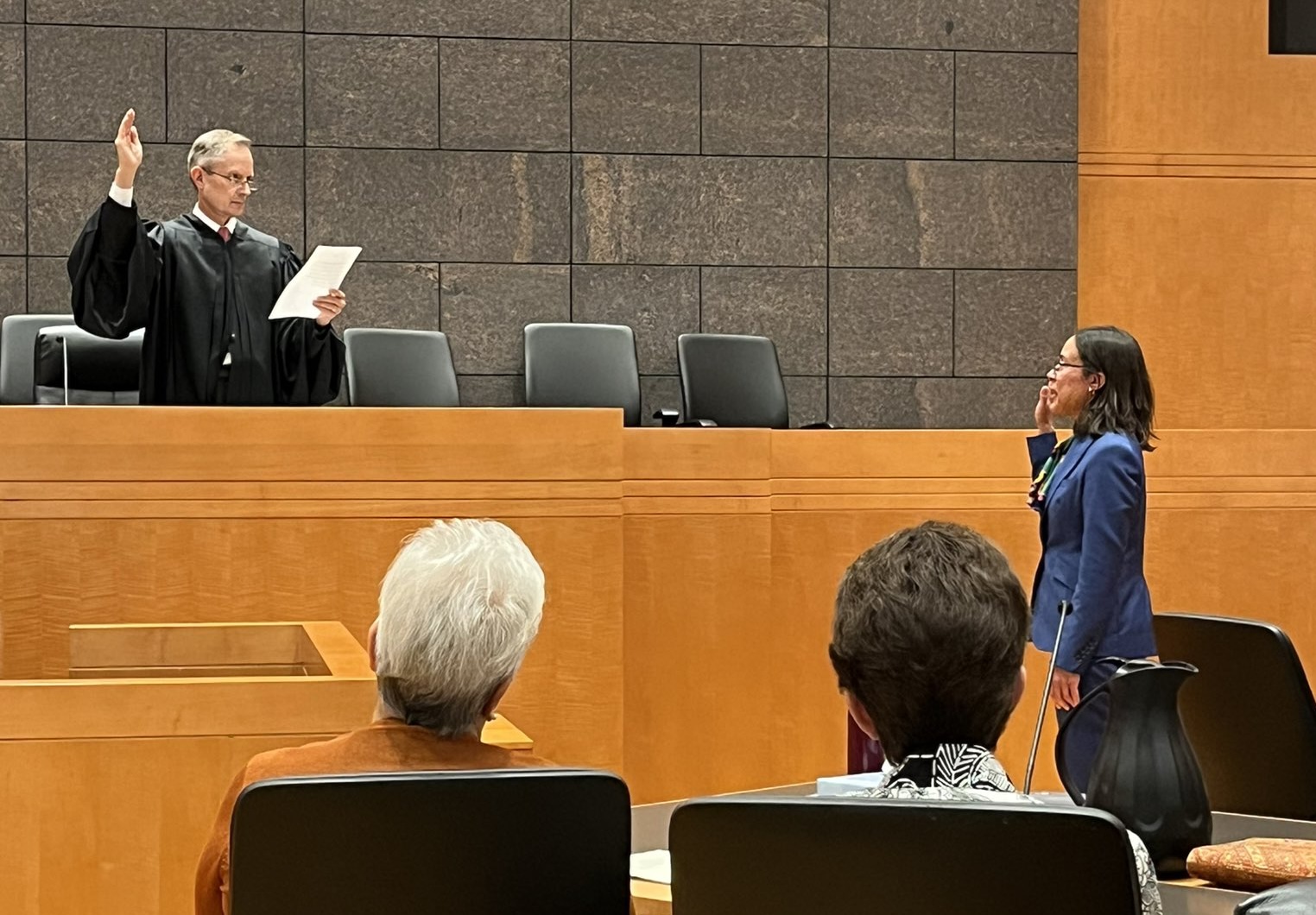
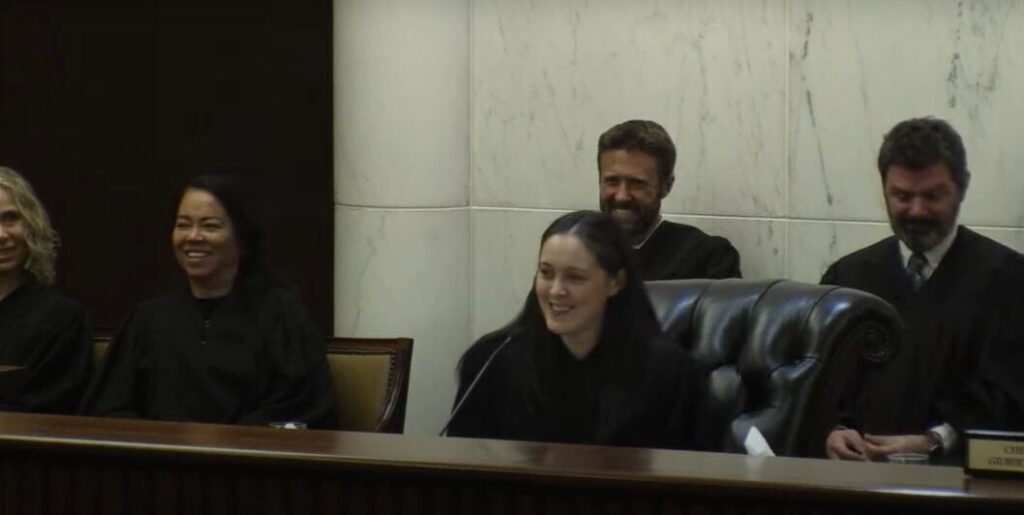
“I am in awe of our justice system and our independence, especially as the judiciary’s independence is being threatened in other countries,” Starnella said at her ceremonial swearing-in in downtown Denver. Quoting one of the hosts of the “Strict Scrutiny” podcast, she added that the role of the courts is to “facilitate democracy” and then “get out of the way.”
Starnella began work as a magistrate judge in August, but her public ceremony, known as an investiture, took place on Friday. Unlike district judges, who the president appoints and the U.S. Senate confirms for life, magistrate judges are screened by a selection panel, hired by the district judges and serve for eight-year terms.
They tend to focus more on administrative and preliminary matters, but can perform most of the same functions as the district judges, including handling civil cases on their own.
Starnella came to the bench with a wide array of legal experience, which she obtained in large part through her work defending the state against civil rights lawsuits and other claims that frequently come before the federal courts.
“Federal judges handle a diversity of types of cases,” said U.S. District Court Chief Judge Philip A. Brimmer. “It’s virtually impossible for any given judge to have a background on all of those things.”
However, Starnella had handled issues ranging from water rights and K-12 education to prisoner claims and lawsuits against government agencies.
“That’s a very broad exposure to the law and that’s a real asset to us,” Brimmer added.
Starnella grew up in Wisconsin as the daughter of a Uruguayan father and a mother from the West Indies. Her father earned extra money by working on racecar engines and her mother pursued her bachelor’s degree at night while Starnella was in middle school.
After graduating from college, Starnella had a brief career in advertising, working with the Leo Burnett agency on its “Army of One” campaign. She then attended Northwestern Law in Chicago and moved to New York City to be a white collar attorney.
There, Starnella learned an “eye-opening lesson” while volunteering at an overnight women’s shelter and encountering a Jamaican woman who happened to have a Ph.D.
“She was homeless. She chose to be homeless rather than to be in an abusive relationship or to return to Jamaica, where she thought her family would view her as a failure,” Starnella described. “I could have easily prejudged the situation and concocted a completely different backstory. But listening to understand, I discovered the fine line that separates people with support systems from homelessness.”
That was “one of the lessons I carry with me each time I walk into chambers and step up on the bench,” she added.

In 2009, Christine M. Arguello, a newly-appointed district judge and the first Hispanic person to be confirmed to Colorado’s federal trial bench, was specifically looking for an experienced, female law clerk from a traditionally underrepresented background. She connected with a Chicago-based organization aimed at increasing diversity in clerkships at the same time Starnella was attempting to get hired as a clerk.
Arguello hired Starnella to the “Arguello Team” – or the “A-Team.” Arguello told her clerk to become involved with the Colorado Hispanic Bar Association and Colorado Women’s Bar Association once she arrived.
“That was early in our relationship, so I didn’t realize Kathryn never does anything halfway,” Arguello said. “How was I supposed to know that ‘getting involved in’ meant ‘becoming the president of both organizations!'”
As president of the women’s bar association prior to her judicial appointment, Starnella staked out a progressive vision, advocating for greater inclusion of trans and nonbinary lawyers and also for preserving reproductive rights in the wake of the U.S. Supreme Court’s overturn of federal abortion protections.
“We all know this is coming at a time when we continue to see women’s rights being eroded,” Starnella’s friend, Sheila Maloney, said at the investiture. “Kathryn is fighting for historically underrepresented groups both within and outside the judiciary.”
After her clerkship, Starnella worked at the Colorado Attorney General’s Office and in private practice. Her work included defending the state against the constitutional claims of incarcerated persons, advocating against the disclosure of consumer complaints and arguing for the dismissal of an employment discrimination suit against the University of Colorado.
“You never would lose your head. You never would be outworked. And you were always a stellar teammate,” said Attorney General Phil Weiser. “It’s never about you, Kathryn. It’s about the team, it’s about the service.”
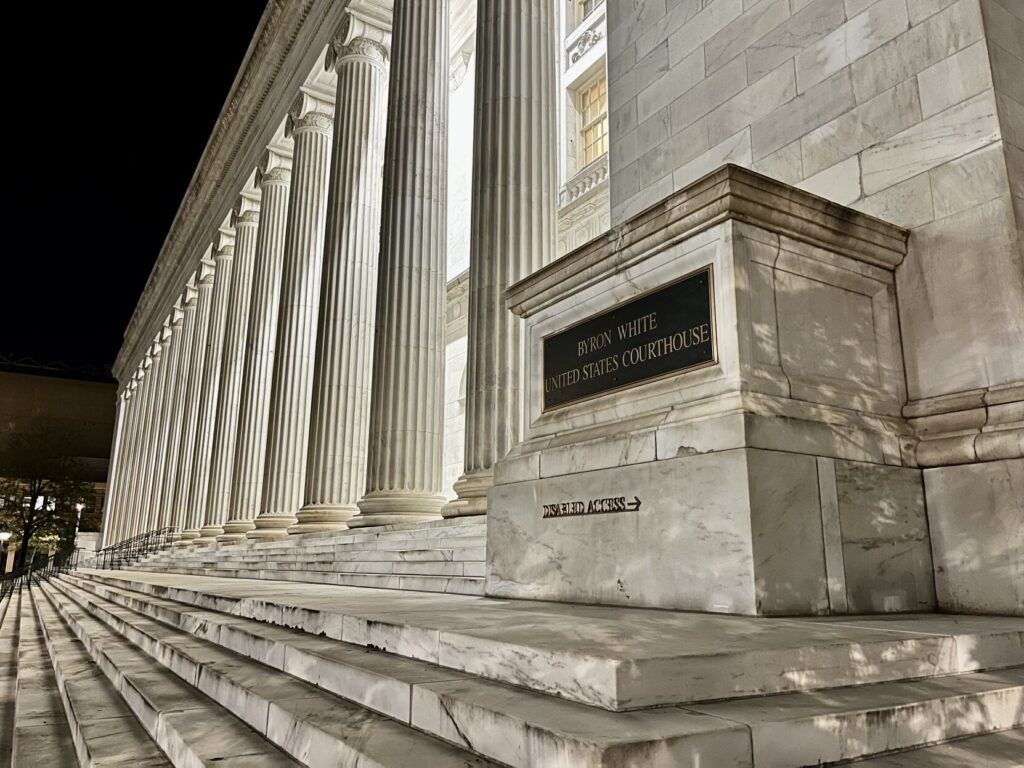
In attendance at the Denver courthouse were Judge Allison H. Eid of the U.S. Court of Appeals for the 10th Circuit; U.S. District Court Judges R. Brooke Jackson and Charlotte N. Sweeney; several magistrate judges, including Starnella’s predecessor, Kristen L. Mix; Colorado Supreme Court Justices Monica M. Márquez, William W. Hood III and Melissa Hart; Colorado Court of Appeals Judges Terry Fox, Stephanie Dunn and W. Eric Kuhn; U.S. Attorney Cole Finegan; and Federal Public Defender Virginia L. Grady.
Afterward, there was a reception at the 10th Circuit’s courthouse, which Starnella paid for herself.
michael.karlik@coloradopolitics.com

10th Circuit finds no fair housing violation by Littleton landlord for worker’s alleged rape of tenant
Michael Karlik
michael.karlik@coloradopolitics.com
Updated 16 hours ago
The Denver-based federal appeals court concluded on Monday that Littleton’s housing authority could not be held liable for a maintenance worker’s alleged rape of a tenant, as the worker’s employment did not provide any special access to the victim. A...
Denver detox center did not violate man’s rights with 10-hour hold, 10th Circuit says
Michael Karlik
michael.karlik@coloradopolitics.com
Updated 2 days ago
The Colorado-based federal appeals court concluded on Tuesday that Denver’s detoxification facility did not violate a man’s rights by holding him against his will for 10 hours until his blood alcohol content was projected to reach zero. Unusually, Brian Garrett’s...

Federal judge clarifies ex-GOP treasurer candidate’s burden to prove defamation claims
Michael Karlik
michael.karlik@coloradopolitics.com
Updated 2 days ago
A federal judge clarified last week that businessman and former Republican statewide candidate Brian Watson will need to surmount a higher hurdle in proving his claim that a party guest’s alleged description of him as a “criminal” amounted to defamation....
Colorado board permits state to appeal injunction against arthritis drug price cap
Marissa Ventrelli
marissa.ventrelli@coloradopolitics.com
Updated 2 days ago
A Colorado board voted Friday to allow the Attorney General’s Office to fight an injunction against a price cap on a drug that treats arthritis. A U.S. district court judge had granted the company Amgen a preliminary injunction, temporarily blocking...
Federal judge rejects constitutional claims, ‘expressions of hatred’ by Club Q defendant
Michael Karlik
michael.karlik@coloradopolitics.com
Updated 3 days ago
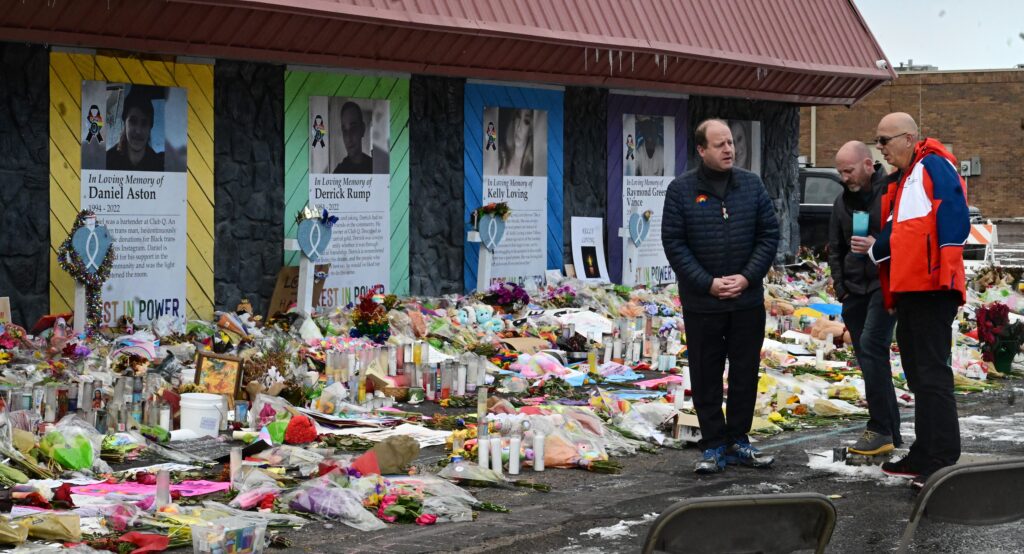
A federal judge rejected a defendant’s claims that he received constitutionally ineffective assistance of counsel while facing federal hate crime and firearms charges for murdering five people at a Colorado Springs LGBTQ nightclub in 2022. Anderson Lee Aldrich is serving...

Divided 10th Circuit upholds Colorado congestion fee on car rentals
Michael Karlik
michael.karlik@coloradopolitics.com
Updated 2 days ago
The Denver-based federal appeals court concluded on Monday that a 2024 “congestion impact fee” that lawmakers imposed on short-term vehicle rentals did not conflict with a federal prohibition on certain airport-related charges. Beginning in the 1970s, Congress began limiting the...
10th Circuit dismisses woman’s lawsuit following 10-year attempt to undo restraining order
Michael Karlik
michael.karlik@coloradopolitics.com
Updated 6 days ago
The Denver-based federal appeals court rejected a woman’s challenge on Friday to a restraining order imposed on her more than a decade ago, finding that she cannot credibly claim she will be prosecuted for violating the restraining order through her...
10th Circuit dismisses woman’s lawsuit following 10-year attempt to undo restraining order
Michael Karlik
michael.karlik@coloradopolitics.com
Updated 6 days ago
The Denver-based federal appeals court rejected a woman’s challenge on Friday to a restraining order imposed on her more than a decade ago, finding that she cannot credibly claim she will be prosecuted for violating the restraining order through her...
Colorado equal pay law does not require plaintiffs to allege gender-based retaliation, appeals court finds
Michael Karlik
michael.karlik@coloradopolitics.com
Updated 5 days ago
The 2019 Colorado law aimed at rooting out pay discrimination on the basis of sex does not require a plaintiff to allege their employer retaliated against them for sex- or gender-related reasons, the state’s second-highest court decided on Thursday. Lawmakers...
Hudson faces lawsuit over ICE detention facility
Nicole C. Brambila
nicole-c-brambila@coloradopolitics.com
Updated 6 days ago
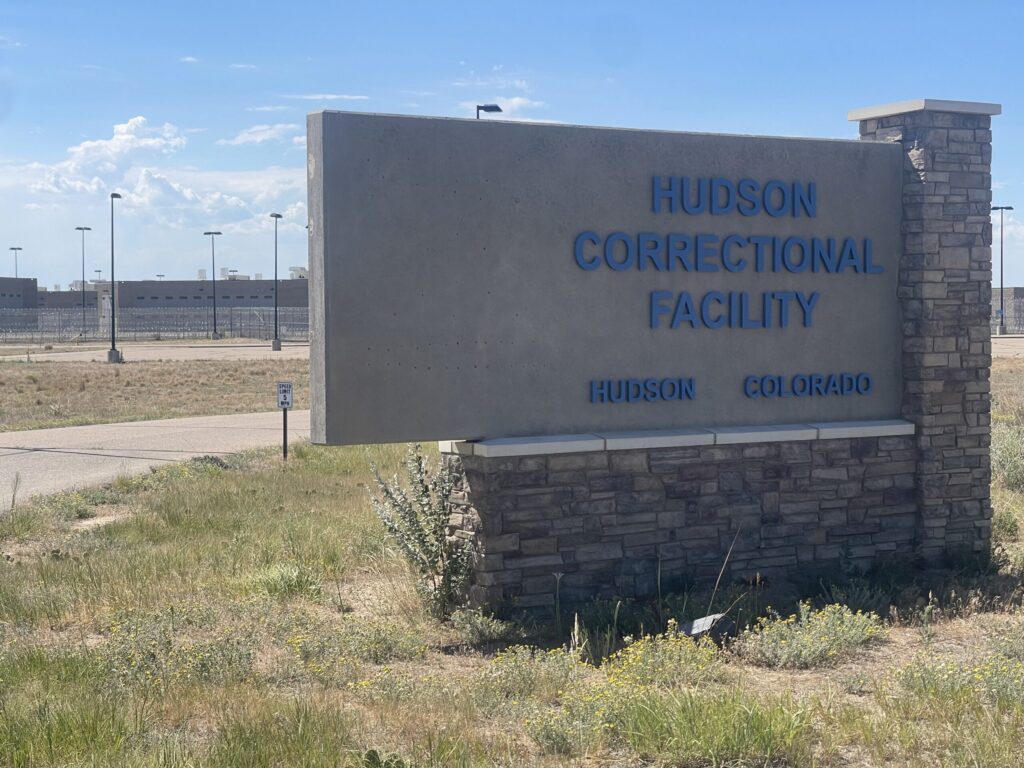
A nonprofit organization filed a lawsuit against the Town of Hudson Wednesday, challenging plans to reopen a former federal prison in the town as a U.S. Immigration and Customs Enforcement detention facility. Together Colorado, along with Janet E. Carlson, filed...
PREV
PREVIOUS

Get to know Aurora's Ward V candidates | DENVER VOTERS GUIDE
With Aurora’s November election rapidly approaching, city residents will have several big decisions to make in choosing the next city leaders. Voters will choose between several candidates for mayor, at-large councilmembers and councilmembers for districts (called “wards”) IV, V and VI. Two candidates, Angela Lawson and Chris Rhodes, are running for one Ward V council […]

'A terrible week for all of us': Colorado leaders join pro-Israel rally at state Capitol | WHAT YOU NEED TO KNOW
Today is Oct. 16, 2023, and here’s what you need to know: Colorado elected officials, Jewish leaders and hundreds of Israel supporters rallied at the steps of the state Capitol on Sunday – nine days after Hamas launched a deadly attack on Israel – to mourn, pray and come together. “This country will make sure […]