

Jury deliberating case of two Aurora officers in Elijah McClain’s death
The case of two Aurora police officers on trial for Elijah McClain’s death went to the jury late Tuesday afternoon.
The 12 members now have to decide whether McClain’s death was a tragedy, but without criminal culpability, or the result of wanton excessive force by the officers.
Officer Randy Roedema and former Officer Jason Rosenblatt each face charges in Adams County of reckless manslaughter, criminally negligent homicide and assault. Criminally negligent homicide is a lesser included charge for the manslaughter counts, which means the jury could choose to convict the officers of it if they decide the evidence doesn’t meet the burden for manslaughter.
Roedema’s attorneys agreed on Tuesday to third-degree assault as a lesser included charge to the second-degree assault charge. Causing serious bodily injury is the difference between the two.
Prosecutors said in closing arguments Tuesday the officers chose to use force at every part of the encounter rather than de-escalate the situation. They argued Roedema and Rosenblatt violated their training by ignoring McClain’s repeated pleas that he could not breathe, not monitoring his pulse or breathing and by not ensuring the paramedics called to the scene checked his vital signs.
“The cuffs went on, and before the ketamine went in, there was not a single thing Elijah McClain could’ve done to save his life,” said Senior Assistant Attorney General Jason Slothouber, his demeanor more forceful than at any other point during the trial.
No witnesses called in defense for Aurora officers charged in Elijah McClain’s death
The officers’ defense attorneys argued prosecutors have tried to appeal to the jurors’ emotions to distract from the fact that they can’t prove the officers caused McClain’s death.
Roedema actually used less force than would have been justified because he believed McClain was resisting, argued one of his attorneys, Donald Sisson. He believed he saw McClain try to grab Rosenblatt’s gun, and the officers had to react to a rapidly changing situation, without the benefit of watching body-worn camera footage in hindsight, he said.
“If they don’t act, they may not go home to their family that night,” Sisson said.
Prosecutors have said there’s no proof McClain tried to grab Rosenblatt’s gun.
Led by Officer Nathan Woodyard, the three officers stopped McClain as he walked home from a convenience store after buying iced tea. He wore a mask, which prosecutors said McClain did because he was often cold, and was listening to music. The officers had responded to a 911 call by a person who reported McClain was acting suspiciously. He had not been accused of a crime, however.
McClain told Woodyard he was going home. Woodyard grabbed McClain within 10 seconds, and told him, “I have the right to stop you because you’re being suspicious.”
The officers took McClain to the ground, and Woodyard put him in a neck hold called a carotid hold that caused him to briefly lose consciousness. Roedema is accused of keeping McClain facedown instead of making sure he was on his side to breathe and, at one point, yanking on his arm until a joint pops. Body-worn camera footage also shows him slamming McClain’s torso into the ground after McClain says, “I can’t fix myself.”
Footage captured Sgt. Dale Leonard on a phone call describing the stop while at the scene, saying McClain was “acting kind of weird. Guy’s got a mask on his face. Nothing really criminal.”
However, Judge Mark Warner instructed jurors not to consider whether the officers had reasonable suspicion to stop McClain.
A paramedic who came to the scene injected McClain with the sedative ketamine. He went into cardiac arrest and stopped breathing shortly after. He died in a hospital a few days later after being declared brain dead.
Woodyard has a separate trial scheduled to start Friday.
Whether McClain actually reached for the officer’s gun is irrelevant, argued one of Rosenblatt’s defense attorneys, Harvey Steinberg. He said Rosenblatt had to adapt to the situation quickly and Roedema was a senior officer who sincerely believed he saw McClain reach for his fellow officer’s gun.
He suggested prosecutors have sought to make Rosenblatt a scapegoat for McClain’s death when the paramedics were actually responsible. The defense attorneys have pointed the finger at paramedics throughout the trial, arguing the officers did not have any authority over the decision to administer ketamine.
“You have to scratch your head, because the paramedics were right there. They were there for 11 minutes,” Steinberg said, his voice rising.
The two sides painted different pictures Tuesday of how medical experts called by prosecutors viewed what led to McClain’s death.
According to the defense attorneys, experts agreed ketamine caused his death, while prosecutors argued the doctors said the subdual and restraint of McClain played a role.
Two of their experts testified the restraint and carotid hold used on McClain led to elevated acid in his blood and vomiting, which he inhaled, that made him more vulnerable to the ketamine injection.
The officers’ defense attorneys did not call any witnesses. They filed a request for Warner to rule the attorney general’s office had not proven its case, which he declined to do last week.
Special Assistant Attorney General Duane Lyons said the defense attorneys’ characterization of McClain’s death as a tragedy, but not criminal, trivializes the officers’ actions.
“His name was Elijah McClain, and he was going home,” Lyons said quietly. “He was somebody who mattered.”
Defense attorneys to ask for body cam to be limited in third Aurora officer’s trial


Federal judge clarifies ex-GOP treasurer candidate’s burden to prove defamation claims
Michael Karlik
michael.karlik@coloradopolitics.com
Updated 2 hours ago
A federal judge clarified last week that businessman and former Republican statewide candidate Brian Watson will need to surmount a higher hurdle in proving his claim that a party guest’s alleged description of him as a “criminal” amounted to defamation....
Colorado board permits state to appeal injunction against arthritis drug price cap
Marissa Ventrelli
marissa.ventrelli@coloradopolitics.com
Updated 5 hours ago
A Colorado board voted Friday to allow the Attorney General’s Office to fight an injunction against a price cap on a drug that treats arthritis. A U.S. district court judge had granted the company Amgen a preliminary injunction, temporarily blocking...
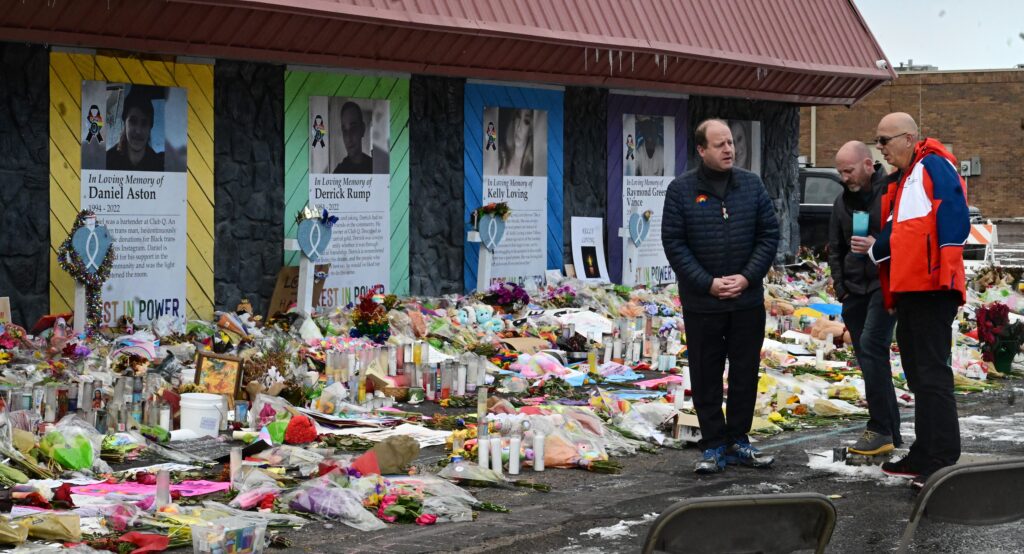
Federal judge rejects constitutional claims, ‘expressions of hatred’ by Club Q defendant
Michael Karlik
michael.karlik@coloradopolitics.com
Updated 21 hours ago
A federal judge rejected a defendant’s claims that he received constitutionally ineffective assistance of counsel while facing federal hate crime and firearms charges for murdering five people at a Colorado Springs LGBTQ nightclub in 2022. Anderson Lee Aldrich is serving...

Divided 10th Circuit upholds Colorado congestion fee on car rentals
Michael Karlik
michael.karlik@coloradopolitics.com
Updated 17 hours ago
The Denver-based federal appeals court concluded on Monday that a 2024 “congestion impact fee” that lawmakers imposed on short-term vehicle rentals did not conflict with a federal prohibition on certain airport-related charges. Beginning in the 1970s, Congress began limiting the...
10th Circuit dismisses woman’s lawsuit following 10-year attempt to undo restraining order
Michael Karlik
michael.karlik@coloradopolitics.com
Updated 4 days ago
The Denver-based federal appeals court rejected a woman’s challenge on Friday to a restraining order imposed on her more than a decade ago, finding that she cannot credibly claim she will be prosecuted for violating the restraining order through her...
10th Circuit dismisses woman’s lawsuit following 10-year attempt to undo restraining order
Michael Karlik
michael.karlik@coloradopolitics.com
Updated 4 days ago
The Denver-based federal appeals court rejected a woman’s challenge on Friday to a restraining order imposed on her more than a decade ago, finding that she cannot credibly claim she will be prosecuted for violating the restraining order through her...
Colorado equal pay law does not require plaintiffs to allege gender-based retaliation, appeals court finds
Michael Karlik
michael.karlik@coloradopolitics.com
Updated 3 days ago
The 2019 Colorado law aimed at rooting out pay discrimination on the basis of sex does not require a plaintiff to allege their employer retaliated against them for sex- or gender-related reasons, the state’s second-highest court decided on Thursday. Lawmakers...
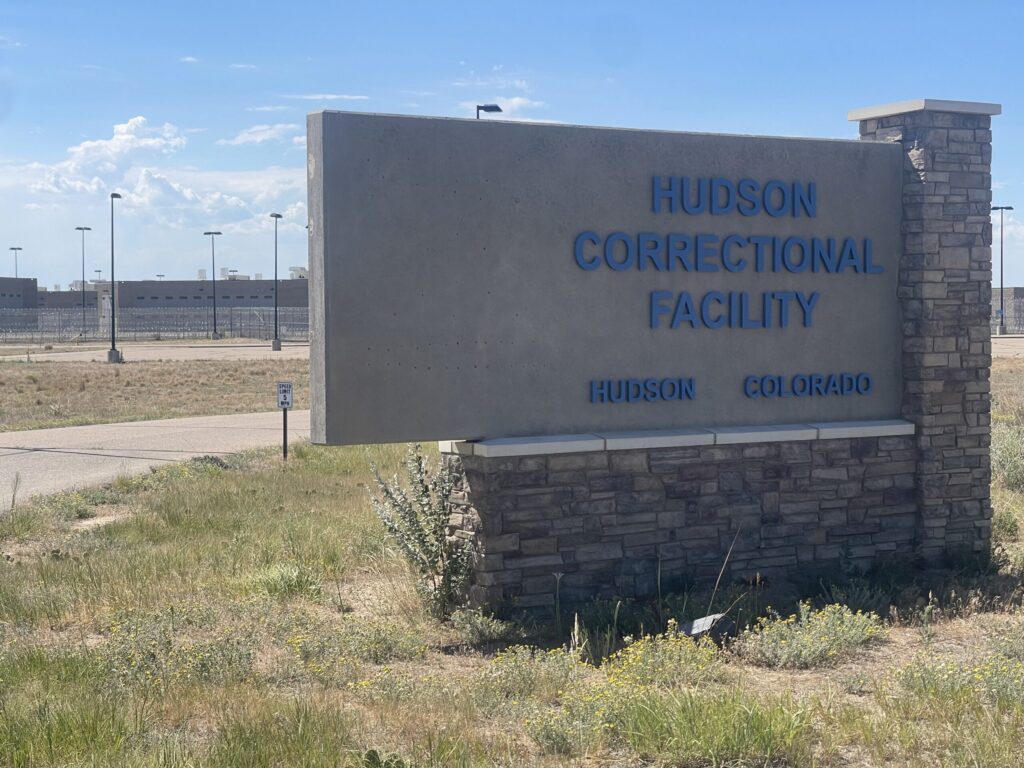
Hudson faces lawsuit over ICE detention facility
Nicole C. Brambila
nicole-c-brambila@coloradopolitics.com
Updated 4 days ago
A nonprofit organization filed a lawsuit against the Town of Hudson Wednesday, challenging plans to reopen a former federal prison in the town as a U.S. Immigration and Customs Enforcement detention facility. Together Colorado, along with Janet E. Carlson, filed...
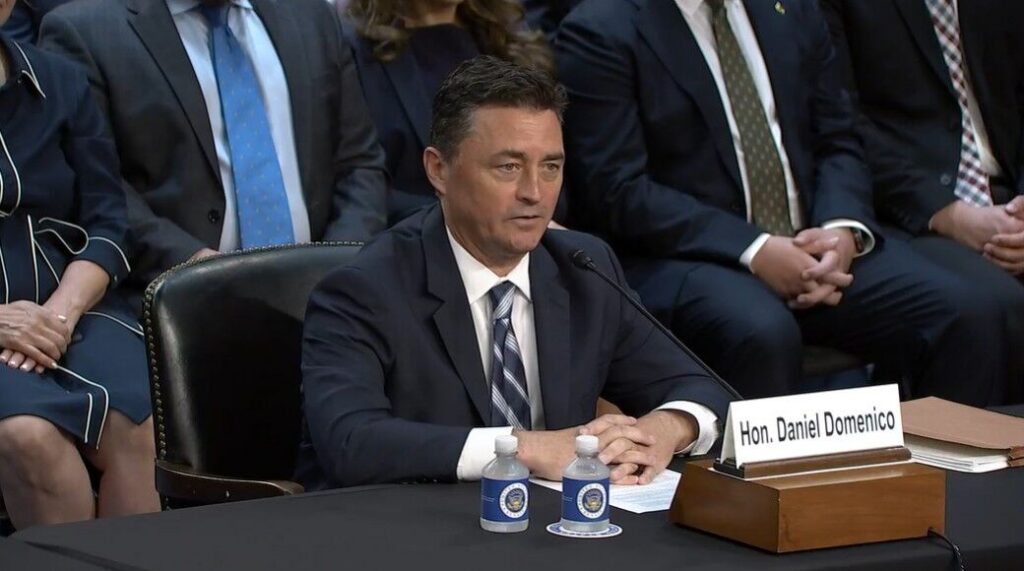
Senate committee advances Trump’s 10th Circuit nominee, as Domenico responds to questions about delays
Michael Karlik
michael.karlik@coloradopolitics.com
Updated 4 days ago
The U.S. Senate Judiciary Committee advanced President Donald Trump’s nominee to the Denver-based federal appeals court on Thursday by a party-line vote of 12-10. U.S. District Court Judge Daniel D. Domenico, who was Trump’s first-term appointee to Colorado’s federal trial...
Colorado justices to hear embryonic donation dispute
Michael Karlik
michael.karlik@coloradopolitics.com
Updated 5 days ago
The Colorado Supreme Court announced on Monday that it will decide whether lower court judges properly applied its framework for adjudicating disputes over the fate of pre-embryos, in which one person wants to use them to become a parent and...
PREV
PREVIOUS

How much will endorsement by teachers union help DPS candidates?
About 70 percent of voters are likely to cast votes for candidates endorsed by the Denver Classroom Teachers Association, but 71 percent of voters are dissatisfied with the all union-backed school board. So, what could this possibly mean for Denver voters who head to the polls next month? In short, it’s complicated. “I think Denver […]

Woodland Park man whose mom may be among Penrose bodies blames 'monsters' allowed by lack of government oversight
His instincts tried to warn him that something wasn’t right about Return to Nature, but Jesse Elliott’s grief had been so loud. The Woodland Park man had just lost his 76-year-old mom, Yong Anderson, on June 2. He was in a fog and just trying to do the things one must after death leaves a […]