

Colorado ‘grassroots capitalism’ a modern commonwealth? | HUDSON
Four American states were founded as commonwealths: Massachusetts, Pennsylvania, Virginia and Kentucky. As a practical matter, that choice makes little difference to their standing as equal participants in the American experiment. Most historians dismiss the designation as a mere adoption of then-contemporary English vocabulary. The British government would later denigrate the term during a century of colonial exploitation. The notion of a commonwealth, or the common good, implies a responsibility to share economic and social benefits on behalf of the governed. A faint, proto-socialist whiff permeates the concept. Yet even center-right think-tanks now talk up “common-good capitalism.” Surprisingly, the Colorado Legislature authorized a grassroots capitalism initiative in 2015 – more about that in a moment.
Over the past half-century, America’s economic life abandoned the implicit promise of an equitable distribution of earnings, substituting a funneling of profits to a tiny sliver residing atop our commercial marketplaces. The degree of tilt that distorts our economic system is so astonishing as to beggar belief. Earnings among the top 1% grew 385%. The next 24% of highest earners enjoyed 250% increases, while the remaining 75% of workers received just 18% during those 50 years – less than a half percent annually. Pointing out these discrepancies is frequently criticized on the right as promoting class envy, even class warfare. What should we make of a political economy where the wealth of just five individuals exceeds the holdings of the bottom half of American families? You don’t have to be a socialist to find this disturbing.
Stay up to speed: Sign-up for daily opinion in your inbox Monday-Friday
Striking autoworkers are objecting to CEO salaries which exceed those of assembly-line workers by a factor of 362 – they seem to have a complaint worth considering. While line personnel accepted 30% pay cuts to help bail their bosses out of bankruptcy 10 years ago, those bosses recently distributed 40% pay raises in recognition of their record profits. None of this means the American Dream of getting rich has moved out of reach, however. Last week’s 11th annual rite of entrepreneurial elbow rubbing, Denver Startup Week, attracted thousands of would-be tycoons – on their way to launching business proposals, products and companies. This is a gathering of Colorado strivers and innovators who would prefer to support themselves than settle for a corporate paycheck.
That doesn’t change the fact that, like every business, they must seek financing, identify suppliers and recruit vendors – the nuts and bolts of moving from napkin drawing to business plan. Perhaps most interesting and surprising are the food and farm projects that see this event as a genuine opportunity for rural entrepreneurs. Our future isn’t all about hand-held screens and esoteric software. Even basement gamers must eat and there are Coloradans eagerly ready to enrich their dinner plates with organic options and other locavore delights.
As you might guess, venture capitalists rarely search for investment opportunities in the wheat fields of our high plains or the furrows of the San Luis Valley. They were hard to identify sniffing around Startup Week, though a few were there while maintaining low profiles. In one of those legislative victories that receives little notice, the legislature has created a framework for crowdfunding Colorado startups. This is itself an innovative financing solution which opens participation up to tens of thousands of small investors willing to place a bet on a product or business plan that makes sense to them, either because they’ve sampled the product or understand the value of a proposal based on their own consumer experience.
Think of the Colorado Crowd Funding Act as a step up from GoFundMe appeals. The latter are usually simple charity, while the structure of crowd funding requires a level of documented financial transparency and specific performance commitments provided in offering documents – returns will not appear immediately but are likely over time. Unfortunately, this unique financial mechanism has received little attention. Corporate concentration in the food processing industry has shuttered dozens of local processing facilities while reducing the options to competitively market farm crops and livestock. Reopening these closed facilities brings a payoff for everyone – both consumers and producers while providing much needed employment in rural communities. A farmer is currently milling gluten-free millet in northwest Colorado, which is far richer than competing, rice-based alternatives. He can’t keep up with demand relying on a manually operated grinder in his open barn.
CrowdSprout, itself a startup, has appeared to advance the “Crowd Funding Ball.” Focused for now on supporting Colorado’s local crops, wellness and cottage food specialties, together with family farmers they intend to assist clients with security registration and deal structure counseling services for micro-businesses. They also plan to convert current customers and retailers into small-time investors. It’s anyone’s guess whether this approach will succeed but Laura Harris, whose Greens Gone Wild is producing tasty, plant-based protein bars that sell well at farmer’s markets will soon be their test case. Investments of as little as a hundred dollars will be incentivized using discount coupons, early access to new products. As equity owners, her crowd funders will have a stake in spreading the word about Greens Gone Wild. Word-of-mouth endorsements were key to the commercial success of both Chobani yogurts and Larabars.
Kimberly and Nathan Mudd, who founded and operate the Arvada and Westminster farmers markets, are co-owners of CrowdSprout. They report, “We have nearly 50 small food vendors selling to thousands of consumers each week. Many of them are in need of investment capital. Why not raise it from their customers?” CrowdSprout’s motto is “Invest in what you believe In.” Recruiting Colorado’s granola-crunching, latte-sipping progressives as grassroots capitalists is a project well worth watching. Crowd-sourced businesses feel a lot closer to a commonwealth than billionaire oligarchs.
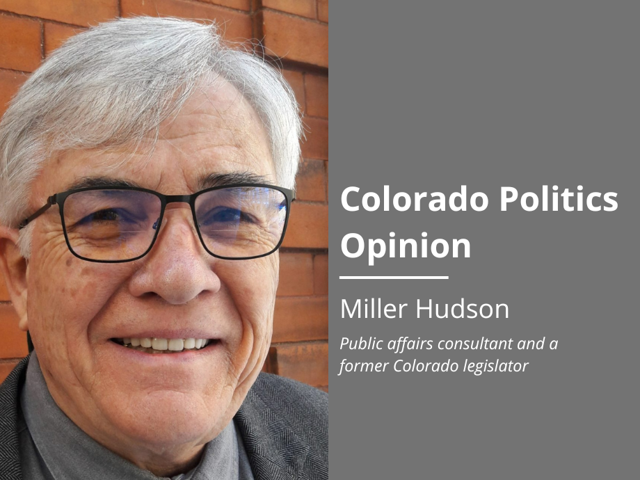
Miller Hudson is a public affairs consultant and a former Colorado legislator.


Colorado can’t forget the lessons of COVID | Jon Caldara
Jon Caldara
jon-caldara@coloradopolitics.com
Updated 2 days ago
We are finally getting a clearer picture of what happened during COVID. Not because the people who locked us up, masked our faces and forced unproven chemicals into our bodies have suddenly become transparent, but because Anthony Fauci’s COVID-era diary...
Historic preservation supporters organize to oppose Trump changes | Bob Loevy
Tom Cronin
tom-cronin@coloradopolitics.com
Updated 1 day ago
Historic preservation organizations in Colorado Springs, the remainder of Colorado and across the nation are organizing to resist a recent effort to relax and weaken historic preservation laws in the United States. In Washington, D.C., the Advisory Council on Historic...

The primary political reform and precondition for all others | SONDERMANN
Eric Sondermann
eric-sondermann@coloradopolitics.com
Updated 3 days ago
In its current state, the American political system has no end of ailments. Far too many factors accelerate polarization and work against moderation and narrowing the differences. Media, and the way so many citizens limit themselves to agreeable, reinforcing sources,...
Pueblo mayor, council concoct Trumpian Texas Two-Step | Dennis Maes
Dennis Maes
dennis-maes@coloradopolitics.com
Updated 2 days ago
Several weeks ago, an article was published positing Pueblo Mayor Heather Graham is a disciple of the calamitous Donald Trump school of governance — specifically as it related to questionable ethical practices and the misuse of public funds. Recently, Graham...
Colorado can’t afford to turn its back on proven public safety technology | GUEST COLUMN
Colorado Politics
colorado-politics@coloradopolitics.com
Updated 2 days ago
By Samuel G. Michael I recently saw a report that said Colorado is leading the way in artificial intelligence adoption for businesses. Across our state, more business owners and employees than ever before use AI for their everyday functions —...
As education conflicts abound across Colorado, who puts the kids first? | Paula Noonan
Paula Noonan
paula-noonan@coloradopolitics.com
Updated 3 days ago
Elected school boards and the Colorado Department of Education (CDE) have hit the headlines with fired superintendents, superintendent resignations, failures of oversight, and misdirected dollars. Cherry Creek School District’s superintendent was fired. Jefferson County Schools’ superintendent found a less stressful...

Clock is ticking on Colorado’s new AI rules | PODIUM
Colorado Politics
colorado-politics@coloradopolitics.com
Updated 3 days ago
By Aashis Luitel On Jan. 1, organizations using covered automated systems must begin complying with Senate Bill 26-189, Colorado’s new Automated Decision-Making Technology Act. They can identify those systems and start building the processes the statute clearly requires. What they...

Meghan Shay on recovery, responsibility and second chances | The OpEdge Podcast
Tony Olivero
tony.olivero@gazette.com
Updated 5 days ago
Step Denver and Step Springs CEO Meghan Shay joins The OpEdge to explore addiction recovery, homelessness, and the role of accountability in lasting change. Shay tells host and investigative columnist Jimmy Sengenberger why she believes recovery is built on personal...
The outrages mount | Hal Bidlack
Hal Bidlack
hal-bidlack@coloradopolitics.com
Updated 5 days ago
My kindly and forgiving editors understand that, from time to time, I can’t help myself from leaping atop my rickety soapbox to vent. And, like many other political commentators have already done, I could easily fill this entire missive with...

Rural Colorado deserves a tax holiday | GUEST COLUMN
Eric Mulder
jstooksberry@gmail.com
Updated 5 days ago
Spend enough time in Colorado’s Eastern Plains, the San Luis Valley, or the Western Slope, and you’ll see boarded-up storefronts, schools consolidating classrooms, and small rural communities stretching every dollar to keep basic services afloat. Once the backbone of Colorado’s...
PREV
PREVIOUS

Marketing milking the milk market | GABEL
Rachel Gabel There’s much ado about labeling requirements for plant-based and lab-created foods these days. Dairy producers have been locking horns with food companies who use dairy terms like milk to describe products that are not milk on the grocery product labels. The nomenclature nightmare has been ongoing since “almond milk” hit the scene some […]
AG farms out Elijah McClain case to ‘tourist attorneys’ | BRAUCHLER
George Brauchler In the most significant case in our state, the People of the State of Colorado are not being represented by people from Colorado. Attorney General Phil Weiser has outsourced the prosecution of the case involving the death of Elijah McClain to civil (not criminal) lawyers in national law firms, one from Chicago, the […]