

Natural gas regs affect everything from food costs to land value | PODIUM
We are so fortunate to live in Colorado, where we have an abundance of natural resources to help feed our families, power our communities and make life livable in the 21st century.
As a livestock producer, I know first-hand how important it is for us to be good stewards of the natural resources we’re blessed with. Farmers and ranchers were among the first environmentalists. We know that if we care for the land, it will provide for us and others. Our agriculture communities in Colorado are not only putting food on tables from Sterling to Durango, but we’re also helping grow the safest and highest quality food that goes around the world. We can all be proud of that.
But as a state senator from northeast Colorado, I also understand how inter-connected our economy is, and how vitally important it is to guard against policies and laws that have broad, damaging impacts that affect families, communities and economies.
It’s one of the reasons I’m concerned with how Democrats I serve with on the state’s Interim Committee on Ozone are targeting the oil and natural gas industry.
The interim committee was made possible by House Bill 23-1294, approved by Democrats this spring. When Gov. Jared Polis signed the legislation creating this interim committee, he encouraged the Democrats who are leading it to consider the entire economy when looking for ways to improve Colorado’s ozone situation. Even the governor, it seems, understands oil and natural gas aren’t the only, nor are they the largest, reason for the Front Range’s ozone issue (The biggest issue is naturally occurring ozone and what blows in from other states and countries).
But at the first hearing, Democrats on the committee seemed to constantly target only oil and gas, despite what the facts showed, and what the experts from state government said.
As a committee, we shouldn’t focus on just one part of our economy if we’re going to try and solve this problem. We should be addressing the full issue and remember we’re all in this together.
As a senator from a rural part of Colorado where agriculture is so vitally important, it’s important to me we have a healthy oil and natural gas industry in this state. If Colorado’s oil and gas industry is upended by overreaching legislation, it doesn’t just hurt one company or one county, it hurts the entire state.
Stay up to speed: Sign-up for daily opinion in your inbox Monday-Friday
Not only is the energy industry an economic driver in this state, many farmers and ranchers depend on reliable and affordable energy to power their farms and, often, diversify their income.
According to a new study called “Advancing America’s Agriculture: The Value of Natural Gas to U.S. Agriculture and Agrochemicals,” the “American farmer relies on domestic natural gas for the fertilizer in their fields, the fuel to run their equipment, and energy to process, store and transport our nation’s food supply to feed 330 million Americans, in addition to the countless individuals overseas who depend on U.S. agricultural exports.”
The uses of natural gas are numerous and as prices increase, input costs around the farm increase affecting what farmers plant, how they plant it and ultimately whether or not they can compete. If farmers can’t compete regionally, or even globally, they scale back what they can grow and our need to import food increases which doesn’t make for a strong or secure food system.
Low-cost natural gas is directly linked to the cost of food on grocery store shelves. Everyone surely has noticed how expensive food is these days.
Any restrictions or bans on natural gas coming out of Colorado’s legislature would not only hurt our friends and neighbors in that vital industry, they would have broad implications to the agriculture sector, including disruptions to the supply chain, an impact on land value, a dangerous reliance on imports needed for agriculture from China and Russia and higher costs passed on to consumers, according to the study from the American Gas Association:
The report also found:
- U.S. agriculture is one of the largest consumers of natural gas, consuming roughly 1.7 trillion cubic-feet (“Tcf”) of natural gas – equivalent to almost 15% of all U.S. commercial and industrial consumption demand.
- Fertilizer and other agrochemical production is the most significant consumer of natural gas in the agriculture supply chain.
- Natural gas is required to produce nitrogen, a main fertilizer component, which enables increased crop yields.
- Between 70% and 80% of the energy used to produce critical fertilizers comes from natural gas.
- The U.S. agriculture sector supports 17.2 million jobs and approximately $1.75 trillion in U.S. GDP, roughly equivalent to the GDP of Texas, the second-largest state economy after California.
Without natural gas-based fertilizers, our farmers would not be able to grow food to satisfy the many diets and preferences we have grown accustomed to.
Colorado’s economic livelihood is a delicate balance. Our state legislators and regulators need to understand how the ripple effects of their anti-oil and gas rhetoric and policies affect other industries, including our farmers and ranchers.
If we want to solve ozone, let’s have that conversation. If you want to punish oil and natural gas and agriculture, count me – and most of Colorado – out.
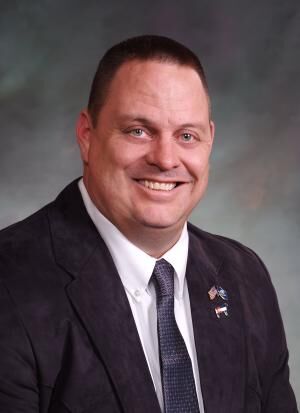
Sen. Byron Pelton is a livestock producer/master electrician, who represents Senate District 1 at the Colorado General Assembly.

Giving credit to Polis where credit is due | SONDERMANN
Eric Sondermann
eric-sondermann@coloradopolitics.com
Updated 3 days ago
It is an understatement to suggest that Gov. Jared Polis has had a tough couple of months. The bloom was already off the rose and Coloradans were paying far more attention to the choice of his replacement than they were...
Will one unqualified AG replace another? | George Brauchler
George Brauchler
george-brauchler@gazette.com
Updated 2 days ago
Colorado Democrats are poised to nominate another attorney general candidate with de minimis relevant credentials or experience. Far from disqualifying, Colorado’s recent voting history mirrors that of America in favoring biography over experience, partisanship over policy, and emphasizing what divides...
Pueblo’s mayor keeps stirring the pot | Dennis Maes
Dennis Maes
dennis-maes@coloradopolitics.com
Updated 2 days ago
Pueblo Mayor, Heather Graham, has clearly proven to be a disciple of the Donald Trump school of governance. And, like her mentor, she is experiencing the same catastrophic results. The format is to ignore what the electorate approved and expects...
The perils of Colorado’s unregulated abortions | GUEST COLUMN
Colorado Politics
colorado-politics@coloradopolitics.com
Updated 2 days ago
By Tom Perille How did the movement which grew out of a genuine concern for the health and safety of women become the same movement that undermines women’s health and safety today? Despite good intentions, it was a long route...
Sans seniors, what does Colorado’s uninterested early turnout say about our disengaged electorate? | Paula Noonan
Paula Noonan
paula-noonan@coloradopolitics.com
Updated 3 days ago
This primary election is poorly attended. Evidence is in the numbers. About 10% of active registered voters are deciding this year’s primaries with seven days to go. If that number triples by June 30, only 30% of voters will decide...
Who gets to decide Colorado’s economic future? | GUEST COLUMN
Colorado Politics
colorado-politics@coloradopolitics.com
Updated 3 days ago
By Sarah Blackhurst Colorado’s prosperity depends on industries that grow our food, build our future and power our homes. But today, these sectors face an invisible threat from 5,000 miles away: the European Union’s Corporate Sustainability Due Diligence Directive (CS3D)....
We have the chance to change Colorado’s cancer outcomes | PODIUM
Colorado Politics
colorado-politics@coloradopolitics.com
Updated 3 days ago
By Erika Hanson Brown Colorado ranks among the healthiest states in the nation by nearly every measure. Yet even here — amid the Rocky Mountains and our deeply rooted culture of health and activity — cancer casts a long and...

Colorado has a playbook for youth mental health — our next governor must use it | GUEST COLUMN
Colorado Politics
colorado-politics@coloradopolitics.com
Updated 5 days ago
By Karen Ron-Li Liaw From the rural communities on the western slope to the eastern plains, to the major urban regions on the Front Range, Colorado families are navigating an all-too-familiar crisis: kids are struggling, and Colorado’s mental health system...

Pigs engineered to fight alpha-gal syndrome | Rachel Gabel
Rachel Gabel
rachel-gabel@coloradopolitics.com
Updated 5 days ago
If I were an evil genius trying to hamstring animal agriculture, I would create a fly that eats livestock alive and a tick whose bite and spit causes some people to have an allergic reaction to meat. (Insert evil laugh...

Registered voters on the eve of the 2026 primaries | Cronin & Loevy
Tom Cronin Bob Loevy
tom-cronin-bob-loevy@coloradopolitics.com
Updated 1 week ago
The Colorado Secretary of State’s Office has published the latest voter registration figures for the state and its counties as of June. Colorado ranks among the highest states for independent, or unaffiliated, voters. Only Alaska and Massachusetts have more. New Hampshire, New Jersey, Maine and Oregon also rank highly. So here...
PREV
PREVIOUS

How to pay for the next Marshall Fire | OPINION
Ron W. Pritchett William S. Donovan Ed Coalson The projection of the Greater Wattenberg Oil and Gas Field – a giant-class field in Colorado – runs southwesterly through Boulder County to the mountain-front. Modern petroleum development can reach miles underground, with very little or no disturbance to surface landscapes. Eastward from the Boulder County line, the people […]

Stepping up to the plate for Colorado’s Buckley SFB | Denver Gazette
It is reassuring for Coloradans that key members of our state’s D.C. delegation are united to secure the future of strategically vital Buckley Space Force Base in Aurora. As reported last week by Colorado Politics, U.S. Sens. Michael Bennet and John Hickenlooper on Friday joined 6th Congressional District U.S. Rep. Jason Crow – who represents […]