

Rising-star Brown downplays rumored ‘dreams about being senator’ | A LOOK BACK
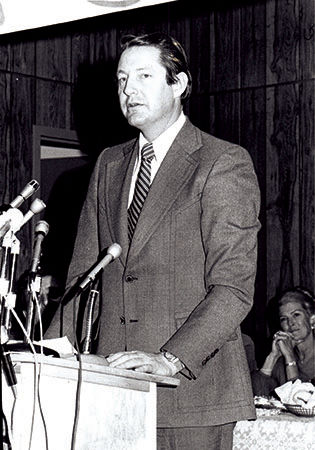
Forty Years Ago This Week: Amid swirling rumors about what future political plans he had up his sleeve, rising Republican star U.S. Rep. Hank Brown brushed off eager-eared reporters who tried to peg him down on the issue, contending he had no announcement to make for the 1986 election year.
“I wouldn’t even begin thinking about making any plans prior to the end of 1984,” Brown said.
Brown was just into his second term representing Colorado’s 4th Congressional District seat, having first been elected in 1980. Since that time, his name regularly echoed around the political halls of the GOP’s political apparatus with many of those in the know calling Brown the obvious choice to fill any of the highest-level political seats in the state whether for U.S. Senate or for governor.
Brown told The Colorado Statesman that he was enjoying his work in Congress much more than he had his first year and was pleased with his luck in getting major amendments passed through the cumbersome legislative process.
“My wife Nan is adjusting to life in D.C. after a few years of uneasiness,” Brown said. “But that doesn’t lend any credence to rumors I’ll go, for sure, for the Senate in ’86.”
But he was careful in his remarks not to close the door to a bid for Colorado governor. While Brown said his main concern was promoting Colorado’s interests at the national level, he was concerned about the state under Dick Lamm.
“I want a governor interested in the state’s future,” Brown said. “Lamm is trying to stop growth, and we need to prepare for it.”
Clearly comfortable with his position of influence in the party, Brown would only commit to saying one thing in response to those attempting to pry him for a glimpse of his future plans – he wasn’t actually certain he would run for anything in 1986, he teased.
But Brown’s downplaying of his future prospects were at odds with comments from his good friend and former state legislator Kenny Monfort, who told The Statesman that Brown “dreams about being [U.S.] Senator.”
Twenty Years Ago: Denver resident Jeff Peckman brought forward a voter initiative to place on the city’s November ballot. The initiative sought to subdue and soften “social stress.”
One Denver city councilman wasn’t at all impressed with it’s goal.
“We have a weed in the West that when cows and horses eat it, they go crazy,” said Denver City Councilman Charlie Brown. “It’s called loco weed. I think the folks behind this initiative are smoking the loco weed.”
Peckman said he sponsored the initiative because it would bring “proven solutions to increase public safety and save the city money at the same time.”
The initiative was strongly influenced by the National Law Party and the its core tenant drawing a direct connection between ‘social stress’ and resulting war, crime, disease and other problems. The party’s website promised that by dissolving stress in the collective consciousness, conflicts could be avoided.
“It’s really quite simple if you see a build-up of society-wide stress as a pollutant,” Peckman said. “The city would tackle stress by identifying trouble areas and finding the most economical way to supply needed services, either in-house or via contracting.”
While vague, the initiative stated that public safety would be ensured through the “identification and implementation of any systematic, stress-reducing technologies that were scientifically demonstrated to reduce society-wide stress … and also shown to be of net financial benefit for the city.”
Peckman had submitted the initiative to the Denver City Council with 3,300 signatures, of which 2,458 had been approved. Although the measure was overwhelmingly opposed, the Council was unable to kill the measure as the city charter required valid petitions to either be signed directly into law or to be put on the November ballot for a vote of all residents.
At-Large Councilmember Carol Boigon argued that the proposal was irresponsible and vague and would result in litigation and “redirection of city services from more critical service provisions.”
In a softer view, Denver County Democratic Chair Sharron Klein wrote to The Statesman stating that she supported the measures goals but not the means.
“Stress is a killer and those who follow anti-stress techniques are much healthier for it. However, mandating that is as ridiculous as mandating prayer in schools. One size doesn’t fit all. Hopefully, while good-intentioned, this won’t pass.”
Brown wasn’t opposed to people practicing transcendental meditation, he said, but it should be done on private time and on private money.
“To mandate this for a city, it’s just unrealistic and bad public policy,” Brown argued.
Rachael Wright is the author of the Captain Savva Mystery series, with degrees in Political Science and History from Colorado Mesa University, and is a contributing writer to Colorado Politics and The Gazette.


Low and slow meets forever: US postage stamps honor lowrider car culture | OUT WEST ROUNDUP
The Associated Press
the-associated-press@coloradopolitics.com
Updated 4 days ago
NEW MEXICO Stamps honor lowrider culture ALBUQUERQUE — From Mexican American and Chicano barrios in the American Southwest to the halls of the Smithsonian on the National Mall and even the streets of Japan, lowrider culture has become part of...

Colorado Politics Calendar Apr. 6-12
Rachael Wright, Special to Colorado Politics
rachael.wright@coloradopolitics.com
Updated 4 days ago
CoPo’s weekly political calendar will help you find political and public-policy events throughout Colorado. It includes candidate and issue campaign events, public policy meetings, court hearings, state and local party conventions, assemblies, debates, rallies, parades, speaking engagements, traveling dignitary appearances,...
Democrats rebounding without learning necessary lessons | SONDERMANN
Eric Sondermann
eric-sondermann@coloradopolitics.com
Updated 21 hours ago
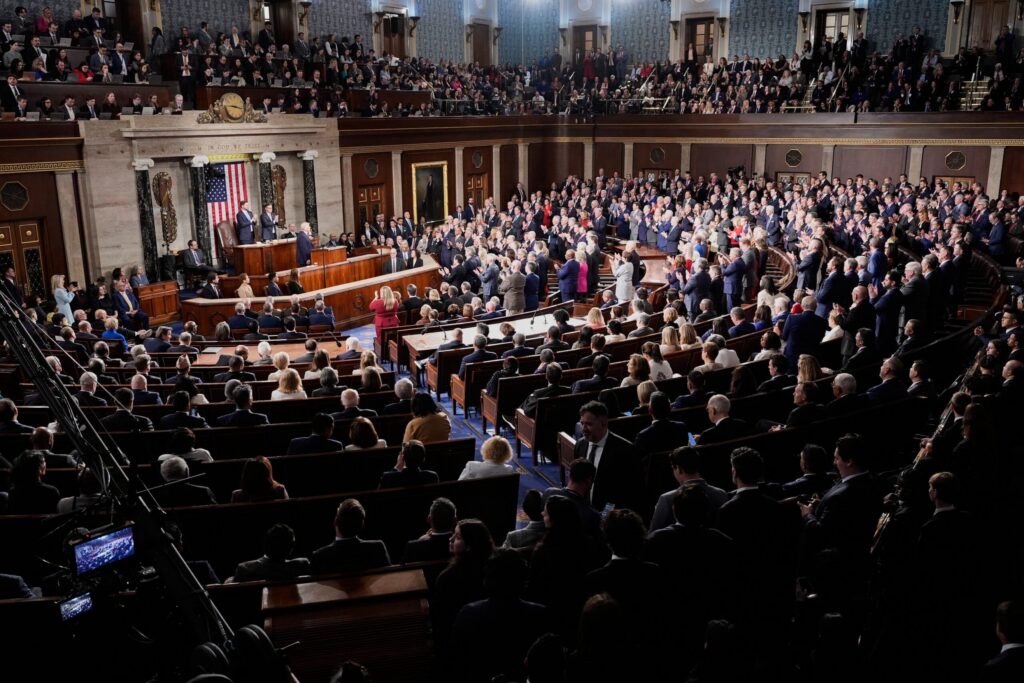
“When we fight, we win!” That, reportedly, was the chant heard over and over again at the Colorado Democratic Assembly a week ago. It suggests that pugilism has been the piece missing from the Democratic toolkit. Perhaps it was just...
An April Fool’s Day to remember | Capitol M | Week of April 4, 2026
Marianne Goodland
marianne.goodland@coloradopolitics.com
Updated 3 days ago
The lighter side of the Capitol, and if light were weight, the Capitol would have lifted off better than the Artemis II rocket on April Fool’s Day. There was a plethora of Fools at the Capitol for April Fool’s Day...

Federal judge sides with Mesa County school district in ex-student’s First Amendment claims
Michael Karlik
michael.karlik@coloradopolitics.com
Updated 1 day ago
A federal judge concluded last week that Mesa County Valley School District 51 and three of its administrators did not violate the First Amendment rights of a former student when they imposed minor discipline in response to disruptive behavior. In...

Colorado Supreme Court intervenes in 4 ongoing cases
Michael Karlik
michael.karlik@coloradopolitics.com
Updated 2 days ago
The Colorado Supreme Court recently moved to intervene in four ongoing cases, including two criminal prosecutions, a civil lawsuit, and a child welfare proceeding. At least four of the court’s seven members must agree to hear a case outside of...
Colorado ski resorts announce early closures amid historic snowpack lows, high temperatures
Kyla Pearce
kyla.pearce@gazette.com
Updated 19 hours ago
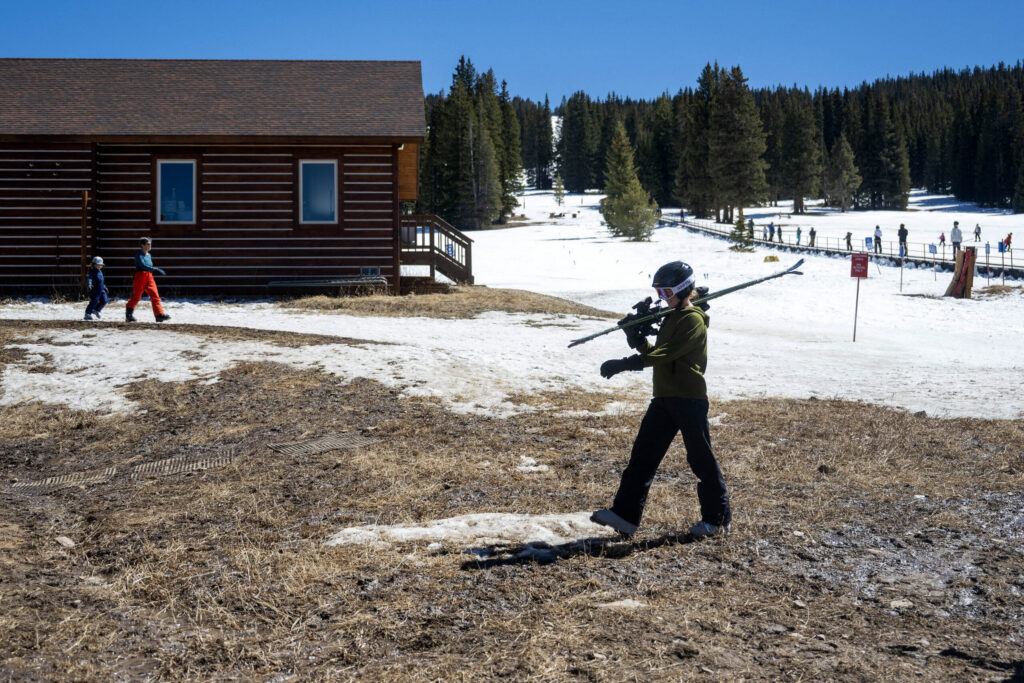
Vail Resorts is the latest area to announce season closure Wednesday As Colorado’s historically low snowpack year comes to a close and spring conditions take over the mountains, the state’s major ski resorts are announcing closing dates — some of...
Kentucky Gov. Andy Beshear set to headline Colorado Democrats’ annual fundraising dinner
Ernest Luning
ernest.luning@coloradopolitics.com
Updated 2 days ago
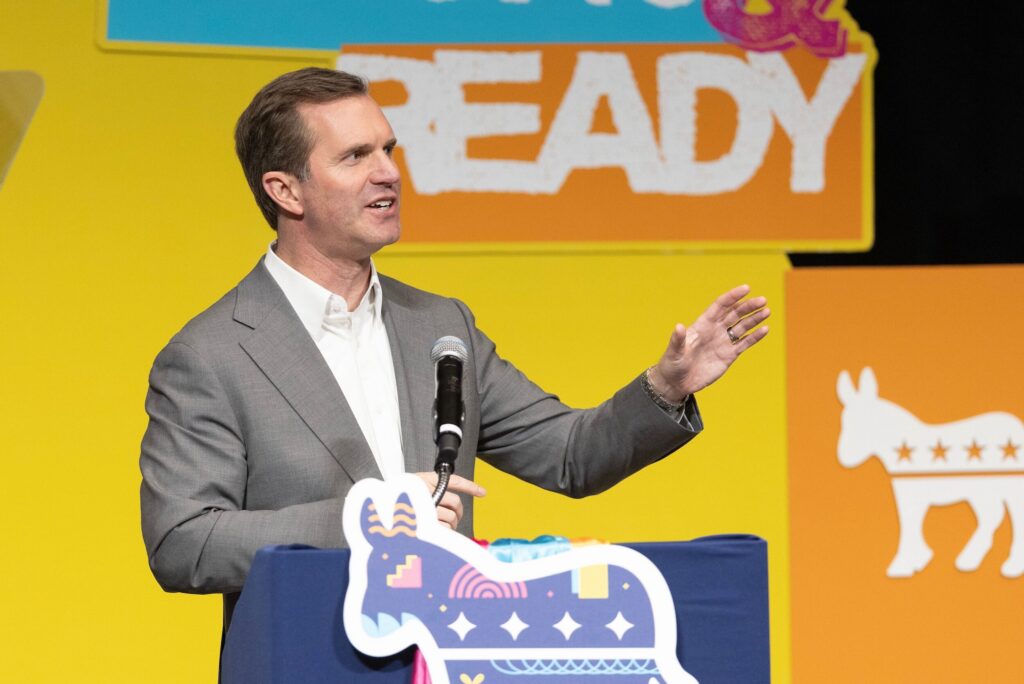
Kentucky Gov. Andy Beshear, one of the Democrats’ top 2028 presidential prospects, is scheduled to deliver the keynote address at the Colorado Democratic Party’s annual fundraising dinner in June in Denver, the party said Friday. Serving his second term as...
Gov. Polis names new leaders for Colorado health agencies in wake of Medicaid turmoil
Marianne Goodland
marianne.goodland@coloradopolitics.com
Updated 2 days ago
Gov. Jared Polis, on Thursday, announced he was appointing Gretchen Hammer to serve as acting executive director of the Colorado Department of Health Care Policy and Financing, and deputy executive director Stephanie Beasley to become the next commissioner of the...
Federal judge releases man immediately as consequence for immigration judge disobeying orders
Michael Karlik
michael.karlik@coloradopolitics.com
Updated 2 days ago
A federal judge ordered a man’s immediate release from immigration detention on Thursday after finding an immigration judge disregarded his prior orders requiring a bond hearing. For the past year, Colorado’s federal district court has faced a flood of “habeas corpus”...
PREV
PREVIOUS
Colorado labor union group gives 36 legislators an 'A+' — and 36 others an 'F'
The labor union organization Colorado AFL-CIO scored all 100 state legislators on their performance during the 2023 legislative session and the results are very mixed: 36 legislators earned “A+” grades of 97% or higher, but just as many earned an “F” grade. The organization, made up of over 130,000 union members, said it scored the […]

Two songs and their tale of our divide | SONDERMANN
August is often the sidebar month of American politics. For those less familiar with newspaper lingo, a sidebar is a secondary story, running alongside a larger, related one. It adds color or offers a different angle or puts a human face on it. But it is usually gravy, not the meat. The hot, doldrum weeks […]