

Federal judge dismisses religious discrimination lawsuit of ex-Douglas County schools administrator
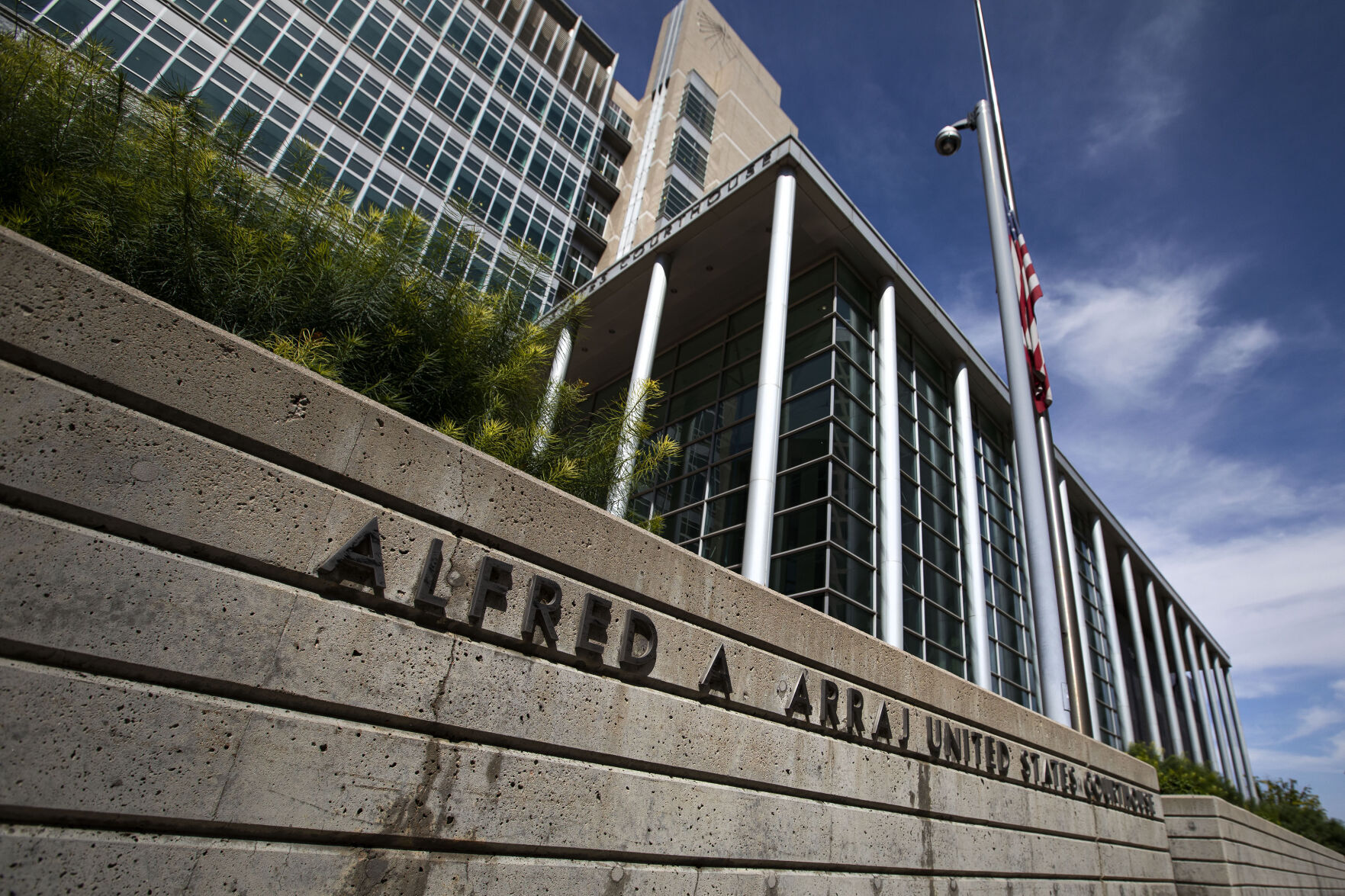
A former Douglas County high school administrator did not credibly allege he was discriminated or retaliated against because of his status as a Christian, a federal judge decided this week in dismissing the lawsuit.
Corey McNellis worked at Ponderosa High School for 14 years and was the athletic director and assistant principal at the time of his termination in October 2020. According to McNellis, the school district fired him because he stated that, as a Christian, he had concerns about an upcoming school play. Specifically, he asked whether the “love that Jesus can provide will help” the play.
On Aug. 28, U.S. District Court Senior Judge Raymond P. Moore concluded McNellis failed meet the legal standard for a discrimination or retaliation claim. The U.S. Supreme Court has established that public employees’ right to free speech is more limited, and McNellis needed to show, among other things, that his comments were not connected to his official duties.
Because McNellis spoke out about the play on a staff-wide email list and specifically mentioned he was writing “as an employee,” Moore determined the speech was not shielded from discipline.
Moreover, he wrote, “the Complaint lacks factual allegations that would establish that Plaintiff’s emails were a motivating factor in his firing.”
On Oct. 2, 2020, Ponderosa’s theater director sent an email to school staff alerting them about an upcoming production of “The Laramie Project.” The play addressed the reaction to the 1998 murder of Matthew Shepard around Laramie, Wyo. The degree to which Shepard’s status as a gay man motivated the crime is disputed.
The theater director’s email clarified the livestreamed play was not intended to “push any kind (of) agenda,” and cautioned staff that there may be “students who have an aggressively adverse reaction to our show.” Multiple school employees responded to praise the choice of production.
McNellis, in four separate emails, was more critical:
? “As a Dad of a student here and also as an employee in the school, what is my recourse if I disagree with the production?”
? “As a christian I would love to collaborate …. Please let me know if the love that Jesus can provide will help your play.”
? “For the record, all of administration does not agree with me on this. I am totally solo.”
? “Forgive me for having a different viewpoint and the audacity to publicly share it.”
Douglas County School District then investigated McNellis’ emails, placing him on leave. Later that month, the district terminated him. A subsequent letter from Ponderosa’s principal at the time, Tim Ottman, alleged the contents of McNellis’ emails were the “catalyst for his firing,” although Ottman admitted the termination “wasn’t my decision to make.”
McNellis then sued, alleging discrimination on the basis of his religion and retaliation for exercising his First Amendment right to free speech. The school district moved to dismiss his complaint, arguing McNellis’ allegations did not amount to a legal violation.
“McNellis seems to believe he states a claim by simply alleging he was terminated at least in part for writing emails in which he stated he was a Christian and mentioned Jesus. Not so,” wrote the district’s lawyers.
Moore sided with the district. Under the Supreme Court’s test for determining whether a public employee’s speech is protected, statements cannot be made pursuant to the employee’s official duties and must be on a matter of public concern. McNellis’ messages from his school email account, sent only to other staff members and with the explicit admission that he was writing “as an employee,” indicated he was speaking as a school official, Moore concluded.
“Plaintiff’s professed disagreement with the play, both as a parent and as a Christian, is a matter of personal, rather than public concern,” he added.
While Moore acknowledged McNellis’ allegations suggested the emails were what prompted the district’s investigation, McNellis did not show how his employer ultimately made the decision to fire him. McNellis also needed to demonstrate that non-Christians received more favorable treatment than him, but he did not.
“Indeed, he fails to plead any facts about the religious beliefs of anyone associated with this case besides himself,” Moore wrote.
The case is McNellis v. Douglas County School District.


Colorado’s chief federal judge orders return of wrongfully deported man, second judge to explore ‘series’ of violations
Michael Karlik
michael.karlik@coloradopolitics.com
Updated 8 hours ago
Colorado’s chief federal judge took the extraordinary step of directing the government on Tuesday to do everything it can to return a man it deported in violation of his order. At the same time, Colorado’s chief magistrate judge has set...
Denver murder, assault convictions reversed due to faulty jury instructions
Michael Karlik
michael.karlik@coloradopolitics.com
Updated 6 hours ago
Colorado’s second-highest court reversed a defendant’s convictions for murder and assault last week after concluding a Denver judge incorrectly omitted key jury instructions that could have affected the verdict and sentencing. Stephen C. Swainson fatally stabbed Israel Casillas in downtown...
‘Understand people for who they are’: 2 federal judges talk about compassion in courtroom
Michael Karlik
michael.karlik@coloradopolitics.com
Updated 14 hours ago
Before taking the bench in 2022, U.S. District Court Judge Charlotte N. Sweeney was an employment discrimination attorney. While the cases could be emotionally charged, they were different from the criminal proceedings she is now handling. “It wasn’t necessarily affecting...
Denver murder conviction reversed for incomplete self-defense instruction
Michael Karlik
michael.karlik@coloradopolitics.com
Updated 1 day ago
Colorado’s second-highest court reversed a defendant’s murder conviction last week because a Denver judge gave an incomplete instruction to the jury about the man’s right to self-defense. Donald R. Gonzales and Gary McLaughlin met up in a Capitol Hill parking...
Colorado lawmaker, House leaders named in workplace-retaliation lawsuit
Marianne Goodland
marianne.goodland@coloradopolitics.com
Updated 1 day ago
A former legislative aide has filed a lawsuit alleging she was mistreated, illegally directed to perform campaign work and harmed by a House leadership structure she charged was fragmented, politicized and ineffective at protecting employees. The lawsuit, filed by Jennifer...
Federal judge hears arguments about Colorado’s 3-day gun purchase waiting period
Michael Karlik
michael.karlik@coloradopolitics.com
Updated 2 days ago
A federal judge heard arguments on Monday about the constitutionality of a 2023 Colorado law that generally imposes a three-day waiting period on firearm purchases after the initiation of a background check. The test that the U.S. Supreme Court created...
Colorado Supreme Court intervenes in Weld County prosecution dismissed due to Missy Woods misconduct
Michael Karlik
michael.karlik@coloradopolitics.com
Updated 1 day ago
The Colorado Supreme Court ordered a Weld County trial judge last week to respond to the district attorney’s claim that he improperly dismissed a criminal case because of “outrageous” conduct by the Colorado Bureau of Investigation. Daniel Lee Eatinger stood...
Schoolchildren’s presence at child sex-related trial did not harm Arapahoe County defendant, appeals court says
Michael Karlik
michael.karlik@coloradopolitics.com
Updated 4 days ago
Colorado’s second-highest court decided on Thursday that the presence of a group of schoolchildren on the first day of a child sexual exploitation trial did not violate an Arapahoe County defendant’s constitutional right to a fair trial. Prosecutors charged Jerry...
Appeals court cites week-old Colorado law to reinstate child neglect case at child, father’s request
Michael Karlik
michael.karlik@coloradopolitics.com
Updated 4 days ago
Colorado’s second-highest court invoked a new state law for the first time on Thursday and reinstated a child neglect case that both the child and her father wished to reopen. House Bill 1227 took effect on Aug. 12, reversing a...
Colorado Supreme Court names William Hood as next chief justice
Michael Karlik
michael.karlik@coloradopolitics.com
Updated 5 days ago
The Colorado Supreme Court has selected Justice William W. Hood III to be the next chief justice, the judicial branch announced on Friday. Hood will succeed Chief Justice Monica M. Márquez, who took over the role in July 2024. “I...
PREV
PREVIOUS

Lawmakers ask Public Utilities Commission to hold off on new towing rules
Democratic lawmakers showed up in force on Thursday for a state agency hearing about new rules on towing that they said don’t match up with the Colorado legislature’s intent. At issue is House Bill 22-1314, a towing “bill of rights” for consumers. Consumers have filed hundreds of complaints over the last two years, many lodged […]

CPW's 'Take a Friend Hunting' contest open
It’s hunting season in Colorado again and Colorado Parks and Wildlife announced Friday that its annual “Take a Friend Hunting” contest is back for its fifth year. Colorado’s hunting season officially opened Aug. 15 for archery Pronghorn hunts, however, starting Friday and into the Labor Day weekend, multiple archery Pronghorn hunts start up again, with […]