

Federal judge sides with Denver in ex-firefighter’s discrimination lawsuit
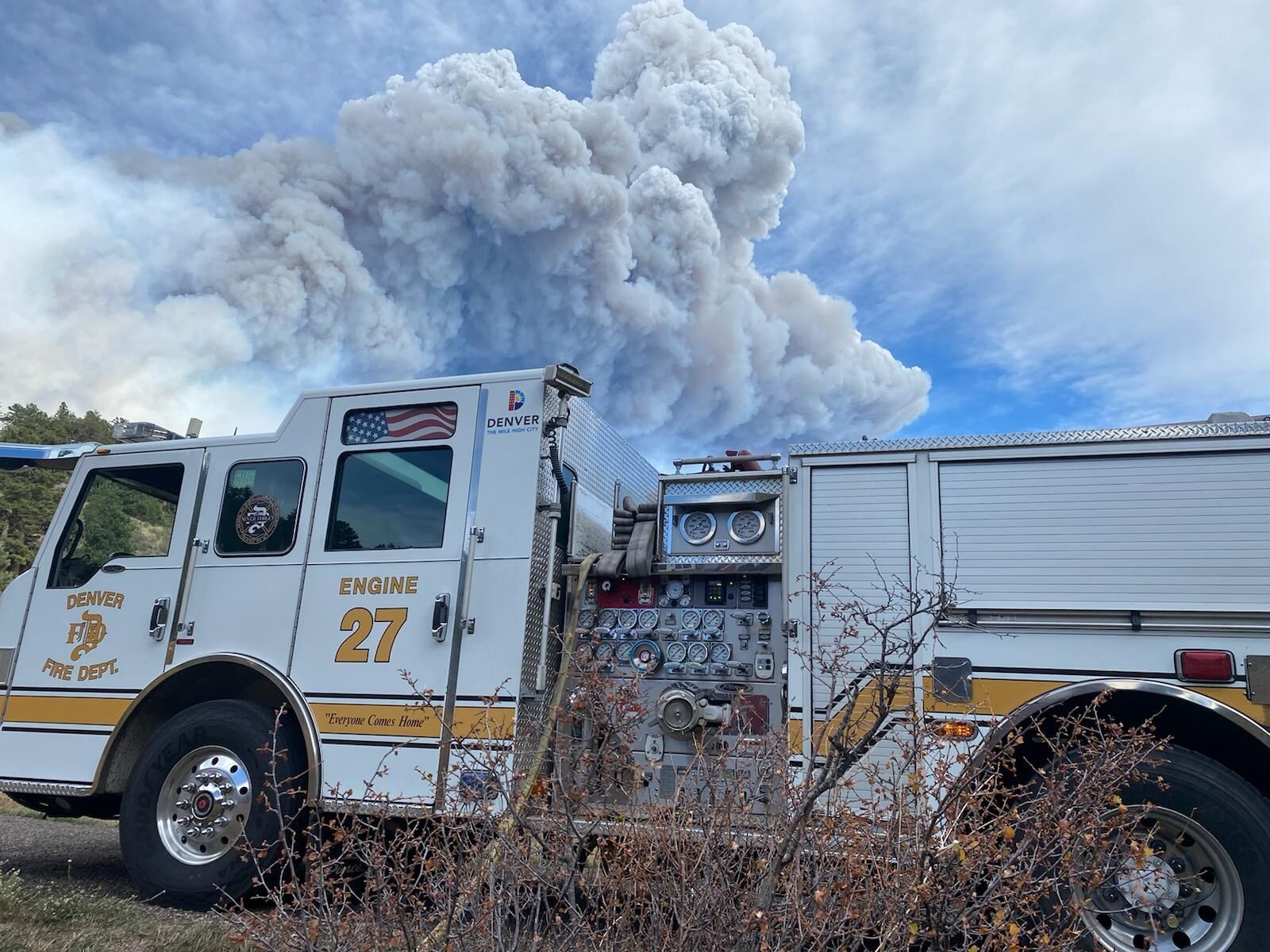
A federal judge determined last week that an aspiring firefighter who sued Denver for allegedly discriminating against her had not proven the city unlawfully terminated her because of race, sex or disability.
Charmaine Cassie, who is Black, alleged Denver unreasonably declined to extend her leave from the fire department in accordance with her doctor’s orders, choosing to terminate her instead. Cassie believed the department treated her less favorably than similarly situated White or male firefighters.
On Aug. 25, U.S. Magistrate Judge Michael E. Hegarty sided with the city. The law did not require Denver to extend Cassie’s already-generous period of leave, he wrote, and there was no evidence the supervisor who approved Cassie’s dismissal was involved in any racist or sexist conduct within the department.
“Based on the investigation of her work restrictions and essential job duties, and given the indefinite nature of her physical limitations, she was terminated. Plaintiff does not demonstrate how a jury could find the real motivator to be her race, gender or disability,” Hegarty concluded.
At the same time, Denver chose not to dispute a series of remarks Cassie said she endured during her firefighter training – ranging from commentary on her hair and the size of her butt to an unnamed fire captain’s advice to “act like a slave.”
Cassie and Da Lesha Allen, who is also a Black woman, filed suit against Denver alleging repeated harassment and discrimination during their time as firefighter trainees. Last September, Hegarty resolved Allen’s claims in the city’s favor, leaving Cassie as the only plaintiff remaining in the case.
Cassie began the firefighter academy in July 2018, but she received an injury that necessitated medical leave prior to completing her training. The fire department did not allow her to graduate, but placed her on modified duty and assigned her to the next training in early 2019. However, Cassie again sustained an injury, requiring modified duties and deferment to a future academy.
During the third training, Cassie was injured once more. She also learned she was pregnant. Although Cassie graduated from the academy in early 2020, her pregnancy precluded her from immediately completing the nine-month firehouse assignment required of new, probationary firefighters.
With continued restrictions from her doctor, the city kept Cassie in a non-firefighting assignment through early 2021. In the summer and fall of 2021, Cassie received 29 possible reassignment options within city government, which she turned down.
Given Cassie’s work injuries, pregnancy and pregnancy-related injuries, Cassie received 364 days in total of modified duty or leave, without having ever started her firehouse assignment.
On Oct. 13, 2021, Mary J. Dulacki, a high-level supervisor in the public safety department, deemed Cassie disqualified from her probationary firefighter position because she could not perform the basic functions of the job.
“Cassie has had numerous return to work dates pass without her clearance to work without significant restrictions,” Dulacki wrote.
In her lawsuit, Cassie alleged the city had a viable option to accommodate her continued medical restrictions: Place her on unpaid leave through December 2021, which was her doctor’s latest estimate of when she could return to work. She also insisted that duties the city listed for firefighters – quickly donning 50 pounds of gear and being able to carry a ladder, for example – were not “essential functions” of the job.
Cassie further noted that very few of Denver’s 1,000 firefighters were women or people of color, and the number of Black female firefighters was estimated to only be three. She argued other trainees who were not Black or not female were treated better than her in the academy, and Cassie had to endure comments about her body and hair and received advice to “act like a slave.”
The department “regularly withheld advantages from Ms. Cassie that it provided her male and/or Caucasian colleagues, held Ms. Cassie to harsher and stricter standards than her male and/or Caucasian colleagues, and forced her to endure an environment of hostility, unlike her male and/or Caucasian colleagues,” her lawyers wrote.
The city countered that Cassie’s indefinite leave precluded her from performing the functions of a firefighter, and she had already received more time on leave than any other probationary worker in her shoes. As for any racist or sexist conduct from department employees, the city argued those “stray comments” were unconnected to her job separation.
Hegarty agreed with the city. Its reason for terminating Cassie was non-discriminatory and related to her indefinite medical restrictions, he found. Moreover, the person who ultimately dismissed Cassie from the department did not appear to participate in any of the inappropriate commentary linked to Cassie’s race or sex.
“Discriminatory comments allegedly made by DFD employees at large do not prove that those who decided to terminate Plaintiff acted with discriminatory motive,” Hegarty wrote. “There is no evidence of any potentially discriminatory comment uttered by Deputy Executive Director Dulacki.”
The case is Cassie v. City and County of Denver.


Trump’s 10th Circuit nominee recuses from cases against federal government without explanation
Michael Karlik
michael.karlik@coloradopolitics.com
Updated 14 hours ago
President Donald Trump’s nominee to fill a vacancy on the Denver-based federal appeals court recused himself without a clear explanation from nine cases against the executive branch while he was undergoing vetting by the White House this spring. U.S. District...
Adams County murder conviction reversed due to faulty jury instruction
Michael Karlik
michael.karlik@coloradopolitics.com
Updated 18 hours ago
Colorado’s second-highest court overturned an Adams County defendant’s murder conviction last month because the instruction provided to the jury about a trespasser’s right to use self-defense did not accurately reflect Colorado law. A person is justified in using force to...
Colorado court upholds murder conviction despite jury disobeying instructions
Michael Karlik
michael.karlik@coloradopolitics.com
Updated 1 day ago
Colorado’s second-highest court upheld an Arapahoe County defendant’s murder conviction last month, even though jurors found he was not the one who shot the victim and the evidence suggested he was not present for the shooting. A three-judge Court of...
Divided appeals court reverses conviction after judge declined to define ‘bludgeon’
Michael Karlik
michael.karlik@coloradopolitics.com
Updated 2 days ago
Colorado’s second-highest court reversed a Jefferson County defendant’s felony menacing conviction on Thursday, concluding that the trial judge’s failure to define “bludgeon” for jurors may have affected the outcome. A three-judge Court of Appeals panel divided in unusual ways in...
10th Circuit dismisses Tina Peters’ challenge to confinement as moot
Michael Karlik
michael.karlik@coloradopolitics.com
Updated 1 day ago
The Denver-based federal appeals court granted the state’s unopposed request on Wednesday to dismiss former Mesa County clerk Tina Peters’ challenge to her confinement as moot. Although Peters received a commutation of her prison sentence last month from Gov. Jared...
Federal judge declines to recuse from death penalty case after Supermax visit
Michael Karlik
michael.karlik@coloradopolitics.com
Updated 1 day ago
A federal judge declined to recuse herself last month from a death penalty case arising out of Colorado’s “Supermax” prison, finding that her tour of the facility earlier this year did not bias her decision-making. U.S. District Court Judge Charlotte...
Appeals court clarifies offense of impersonating a peace officer
Michael Karlik
michael.karlik@coloradopolitics.com
Updated 3 days ago
Colorado’s second-highest court clarified this month that a person commits the offense of impersonating a peace officer if they engage in “any conduct” while pretending to be law enforcement. In a case out of El Paso County, Richard James Coulier...
Colorado Supreme Court reverses 2 Chaffee County judges for imposing fee on habeas petitioner
Michael Karlik
michael.karlik@coloradopolitics.com
Updated 4 days ago
The Colorado Supreme Court rejected two separate appeals earlier this month from an incarcerated defendant seeking immediate release from prison, but concluded that two Chaffee County judges incorrectly required him to prepay filing fees for his cases. David J. Gottorff...
Weld County judge wrongly denied bail to murder defendant in gap between law change
Michael Karlik
michael.karlik@coloradopolitics.com
Updated 3 days ago
Colorado’s second-highest court ruled this month that a Weld County judge was wrong to deny bail to a murder defendant in the window between the state Supreme Court’s recognition of the right to bail and the voters’ subsequent overruling of...
Defendants acquitted by insanity are eligible for records-sealing, appeals court says
Michael Karlik
michael.karlik@coloradopolitics.com
Updated 2 days ago
Colorado’s second-highest court clarified last month that defendants who are found not guilty by reason of insanity are eligible to have their criminal records sealed from public view. Judges must seal criminal records if, among other things, a defendant is...
PREV
PREVIOUS

Colorado Springs school districts accredited with distinction, low-performing school watch list changes under annual performance ratings
Preliminary performance frameworks released Tuesday suggest positive momentum in schools and districts across the state, with the Colorado Springs area slightly trailing in its improvement. Ratings followed a similar trend to state test scores released earlier this month. The Colorado Department of Education reports a greater percentage of schools and districts earned higher marks than […]

Colorado lowers cost of phone calls for prisoners, will make calls free in 2025
Colorado is moving to make phone calls free for prison and jail inmates, as a new law goes into effect on Friday. The Colorado Department of Corrections currently charges 8 cents per minute for phone calls to and from prisons. If an inmate makes a 15-minute phone call everyday, that adds up to $438 each […]