

Contemplating conservatism after James L. Buckley’s passing | SLOAN

There is a temptation when great men pass to assign a sort of existential meaning to that which they represented by way of comparison with their contemporaries. James Lane Buckley, brother of the more famous Buckley (William F.), died last week at the age of 100, granting us occasion to not only mourn the passing of a great American statesman, but to despair over whether this country and the political system it incubates can create such a statesman again. As such, it offers an opportunity for reflection on the conservative movement JLB helped usher in and later stewarded, and to contemplate its future.
James Buckley was, of course, the older brother of William F. Buckley, the patron saint of the conservative intellectual movement that emerged, and at times – almost – dominated the latter half of the 20th century in America. But JLB’s greatest claim was that he numbers among a very few in American history to have served in all three branches of the federal government – legislative, as senator from New York, executive, as undersecretary of state, and judicial, as a federal appellate judge; and what’s more, to have excelled at each.
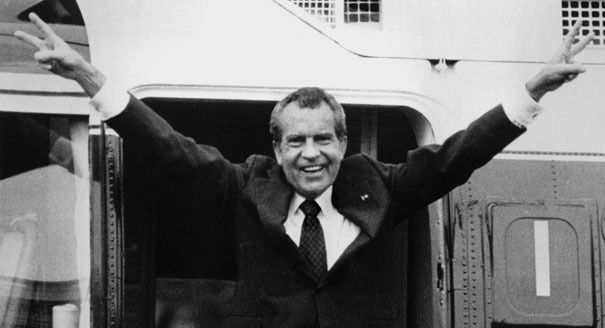
His election to the senate in 1970 (his brother would henceforth refer to him as “the sainted junior senator from New York”) was as a candidate form the Conservative Party (formed back when liberal Republicans were a real thing) and was something of a watershed moment for the conservative movement. It came at a very tumultuous period in American history, with the Vietnam War reaching a crescendo. James Buckley amassed a staunchly conservative record in the Senate, and as the Watergate scandal gripped the nation, he was among the Republicans calling for President Richard Nixon’s resignation, describing the situation as a “crisis of regime.” He wrote at the time, “Inevitably the president is the focus, the essence of the crisis of the regime; the linchpin of its entire structure. It could not be otherwise. The character of a regime always reflects and expresses the character of its leader.”
Stay up to speed: Sign-up for daily opinion in your inbox Monday-Friday
An ungrateful electorate refused to re-elect him in 1976, but he went on to be appointed by President Ronald Reagan as an undersecretary of state for international security affairs, he was in charge of military and economic aid programs before being tasked to head up Radio Free Europe and Radio Liberty in the critical days of the Cold War in the early 1980s. Given how important a weapon these two services proved to be in countering Soviet propaganda and censorship, and the role that played in the USSR’s demise, it would be ungrateful at best to understate Buckley’s role in the West winning the Cold War.
In 1985 he was appointed by President Reagan to the U.S. Court of Appeals for the District of Columbia circuit until his retirement in 2000. He was succeeded on that bench by none other than John Roberts, who of course went on to become Chief Justice of the Supreme Court, and one wonders what even greater favors Buckley would have bestowed on his nation had he added that line into his already impressive resume.
JLB represented the best of conservatism, both in terms of manners and political philosophy – by all accounts the consummate gentleman and scholar, deeply thoughtful and articulate, as syntactically gifted a master of the English language as his brother, and, importantly, possessed of good judgement, born of that most conservative of values: experience.
As I said above, it is tempting, perhaps even useful, to compare and contrast such a man with contemporary offerings, though such exercises can lead quickly to despair. One thinks immediately, of course, to the most ostentatious examples – Donald Trump, for instance, whose manners and indeed much of his philosophy is a study in contrast to Buckley’s; and the likes of Vivek Ramaswamy, whose inexperience is as dangerous as it is embarrassing. And the alternative is a Democratic Party that increasingly acquiesces to the excesses for the far revolutionary left, signaling the triumph of ideology over experience, wisdom, and prudence.
No wonder JLB bemoaned primary elections inasmuch as “they attract people on the fringes of each party.”
In his 2010 book “Freedom at Risk,” Buckley wrote, “My experience suggests that the most useful, but least honored, law is not one to be found in the statute books – the Law of Unintended Consequences… formulated by an astute observer of the human condition who noted the frequency with which governmental remedies inflict greater harm than the ills they are intended to cure… This suggests that we should move with extreme caution before attempting to correct any more of our social and economic ills through government action. We have neither the wealth or resilience to cope with more than one or two panaceas at a time.” That very neatly sums up the American political zeitgeist, and one despairs of our modern society’s ability to create a statesman of the caliber of James – or William – Buckley, the loss of whom further depletes our wealth and resilience.
Kelly Sloan is a political and public affairs consultant and a recovering journalist based in Denver.

A right to buy a product? | Hal Bidlack
Hal Bidlack
hal-bidlack@coloradopolitics.com
Updated 14 hours ago
A recent story in Colorado Politics caught my eye, as I learned of a “citizen initiative” that has qualified for the November ballot. It seems supporters of Initiative 177 have collected enough signatures, 146,165 legitimate ones out of a total...

Fourteen years after Aurora — we can’t afford to go backward | GUEST COLUMN
Colorado Politics
colorado-politics@coloradopolitics.com
Updated 14 hours ago
By John Hickenlooper and Gabby Giffords Two Saturdays ago, a gunman shot and killed three people and wounded several others in Twin Falls, Idaho. This latest deadly shooting comes only days after we remembered the lives we lost 14 years...

A daring and fearless rescuer — is afraid of a debate | Dick Wadhams
Dick Wadhams
dick-wadhams@coloradopolitics.com
Updated 3 days ago
Victor Marx, the Republican nominee for governor who says he can exorcize demons and who claimed he has fearlessly rescued 45,000 women and children during 150 “high-risk” missions around the world, appears to be intimidated by the notion of debating...

Colorado’s ballot-initiative process again a battleground for deep pockets, special interests — not the people | Miller Hudson
Miller Hudson
miller-hudson@coloradopolitics.com
Updated 1 day ago
The Oxford English Dictionary defines a constitution as, “The set of fundamental principles according to which a state is constituted and governed, a body of rules prescribing the major elements of the structure and activities of any organization.” Somewhere in...

Proposed EPA changes could save truckers billions | Rachel Gabel
Rachel Gabel
rachel-gabel@coloradopolitics.com
Updated 3 days ago
Agriculture is in distress across nearly every segment across much of the nation, and certainly to a more dire degree in the western United States. If it were not a historic drought, some pressures could be eased. Others can be...

Colorado Democrats, your time is coming | Jon Caldara
Jon Caldara
jon-caldara@coloradopolitics.com
Updated 3 days ago
Hey, Colorado Democrats! All the fun you’ve had watching Republican dysfunction in Colorado for the last 20 years was just a preview of what is about to happen to you. The Colorado Republican Party no longer exists as a competitive...
Perspective: Hunters and anglers are pushing back
Chris Dorsey
chrisd@gmail.com
Updated 24 hours ago
For generations, Coloradans hunted elk, caught trout and managed wildlife without consulting a constitutional attorney. That was before wildlife management became a recurring statewide election issue, replete with consultants, national pressure groups and enough political mail to denude an aspen...
The relevance of Watergate more than a half-century later | SONDERMANN
By Eric Sondermann
by-eric-sondermann@coloradopolitics.com
Updated 6 days ago
It was the scandal for which all other scandals are now named. In June 1972, a small group of Cuban burglars with high-level connections broke into the headquarters of the Democratic National Committee. Those headquarters were located in the Watergate...
Colorado must continue finding common ground on wildfire policy | GUEST COLUMN
Colorado Politics
colorado-politics@coloradopolitics.com
Updated 5 days ago
By John Herrick Colorado has never lacked for opinions about wildfire policy. We debate forest management, climate change, prescribed burns, land use, air quality and budgets. Those debates are familiar territory, but a new discussion is beginning to happen around...

Proposition NN is the best investment for Colorado’s students and schools | GUEST COLUMN
Colorado Politics
colorado-politics@coloradopolitics.com
Updated 5 days ago
By Justin Ogden Colorado families know what it means to make difficult budget decisions. Inflation has driven up the cost of groceries, housing, utilities and just about everything else. Families like mine work hard to stretch every dollar while still...
PREV
PREVIOUS

Erasing those who served Denver so well | Denver Gazette
Chances are you’ve never heard of S.R. DeBoer. Not unless you’ve stopped by the modest south Denver park that bears his name, and you’ve read his brief biography posted on a sign there. In which case you learned of the remarkable role he played in developing the many parks and other cherished public amenities we […]

Medicare questionnaire misses | NOONAN
Paula Noonan As part of the medical shift to deeper patient inquiry done fast, elders on Medicare now complete a questionnaire to help providers understand their mental and physical health. Some people of conservative persuasion might label the questionnaire “woke.” Those on Medicare surely call the questionnaire wrong-headed as the health conditions described don’t fit […]