

Colorado Water Congress panel debunks ‘big river myths’
Will taking out lawns in municipal areas in Colorado add to the Colorado River supply?
Can temporary reductions in use provide meaningful water to the Colorado River?
Can the Department of the Interior require the Upper Basin states to curtail use of Colorado River water?
Can we buy our way out of drought?
The answers to all of the above, according to a panel at Thursday’s Colorado Water Congress, is a firm “no.”
The panel, which included folks involved in negotiations for the 2026 guidelines for Colorado River operations, took aim at several “big river myths.”
A 2023 survey by the Colorado Water Conservation Board busted the first myth, on water savings from turf reduction.
Savings from turf removal may be lower than previously assumed, the study found. Out of 100,000 acres of turf in Colorado, 26,000 acres are what’s known as ‘functional turf” which is found in parks and ballfields.
Removal of non-functional acreage could save up to 20,000 acre-feet of water per year, but it would take a decade. In addition, Colorado won’t get the same water savings as has been seen in Las Vegas, which is often cited as the model for water savings from turf removal. That’s primarily because annual turf watering demands in Las Vegas are four times higher than in Colorado, tied to a longer watering season and higher evaporation rates in Las Vegas.
An acre-foot of water is about 326,000 gallons, or the amount it would take to cover a football field with one foot of water.
The second myth busted started with the system conservation pilot program utilized by the Upper Colorado River Commission about a decade ago and restarted in the last year, complete with federal funding from the Inflation Reduction Act.
What it would take for Colorado to provide meaningful water to the Colorado River, estimated at about 200,000 acre-feet of water? Erin Wilson of Wilson Water Group said that reduction could come from several sources: the Yampa River Basin could contribute about 100,000 acre-feet of water; transmountain diversions would have to be cut by 20% for the same reduction; the Grand Valley would have to irrigate with 175,000 acre-feet less water, or the Montezuma Valley/Dolores region in southwestern Colorado could reduce their consumptive use by 100,000 acre-feet.
But sending 200,000 acre-feet, which is a substantial amount of the water Colorado gets annually from the Colorado River, would not provide a meaningful supply to Lake Powell, the panel said. That 200,000 acre-feet is less than what annually evaporates out of Lake Powell, on top of transit losses.
Myth No. 3, which held Interior can force the Upper Basin states to cut back on Colorado River water, was busted by attorney David Robbins of Hill & Robbins, who is also an alternate commissioner on the Upper Colorado River Commission.
Robbins said the secretary of the Interior does not have the legal authority to impose those cuts. The allocation of water within states is a state’s right, where the secretary gains authority in Colorado is on construction and contracts tied to water projects. The state engineer administer water rights, not the Interior department, he said.
That’s totally different for the Lower Basin, however, Robbins said. The Interior Department has contracts with water users who get water from Lower Basin reservoirs; the Secretary has the authority under the Law of the River and rulings from the U.S. Supreme Court to be the river master in the Lower Basin. That’s law that goes back to the Civil War era.
John McClow of the Upper Gunnison River Water Conservancy District, who is also an alternate commissioner to the Upper Colorado River Commission, said that any effort from Interior to have impact on projects, it would have to be done on a project by project basis and not like a sweeping effort that could take place in the Lower Basin.
“We know that’s the case,” said Jennifer Gimbel of the Colorado Water Center. “Does Interior know that?”
“It’s critical that we not allow the Secretary of the Interior and her officials to assert that they will do things” that have no legal basis, Robbins added. “These are high stakes negotiations, but you have to separate out bluster from what will really happen.”
Robbins said people should take comfort that state officials, including the state’s Upper Colorado River Commission representative, Becky Mitchell, will protect Colorado’s rights.
The last myth, buying our way out of drought, prompted a story from McClow.
He said 97% of water in the Upper Gunnison goes to irrigation, and once upon a time ranchers were offered an opportunity to participate in a demand management program (that temporary, voluntary and compensated program to reduce water use). As the proposal was made, the consensus was “you can’t give us enough money to make a temporary reduction in our use. We want to ranch. It’s not about the money.”
There will never be enough volunteers to make this work, McClow said.
Robbins noted other basins have been experiencing drought longer than the Colorado River, specifically the Republican River on the Eastern Plains and the Rio Grande River Basin in the San Luis Valley.
“Whether you want to take money in exchange for no longer irrigating, it’s sometimes better to do that than to have [the state engineer] shut down irrigation and for zero money,” he said.
“We have an obligation to our neighbors” through compacts, Robbins explained, and the only question is whether to shut off irrigators so the water goes to the state that’s entitled to it, or what happened in the two basins. Producers raised money and obtained assistance from the state and federal government to obtain financial compensation so they could reduce operations with “their heads held high” and still able to participate in the community and still pay mortgages, Robbins said.
Both basins are now participating in programs to shut down groundwater wells in exchange for about $60 million in funding from the American Rescue Plan Act and as directed by the General Assembly last year.
No one wants to give up the opportunity to do what they’ve done for generations, Robbins said. Sometimes, however, “you’re forced to accept a plan to reduce water use” in order for the state to comply with its compact obligations. That’s not drought. It’s longstanding deals, he said.
It could be realistic to get 100,000 acre-feet of water per year, McClow said, but incentives produced from the system conservation pilot program never produced more than 25,000 acre-feet of water savings in its best year, which was 2014.
Buying our way out of drought is not tenable, McClow said.
The most important thing for people to know about what’s going on with the Colorado River is that there are a number of myths, which McClow said have been popularized by the media, and to be cautious about making assumptions about what will happen in the future.
“Remember that Becky is the commissioner for the whole state,” Robbins said. “All of us are in this together because at the end of the day it’s our state that will have to manage whatever comes out of this current period of significant shortage.”
He also asked people to set aside their short-term interests and be supportive with their commentary with neighbors who might not share the same interests, and to be supportive of the efforts of the state on its water uses. “We’re working very hard on your behalf,” Robbins said.
Wilson said to thank the Attorney General, the Colorado Water Conservation Board and Mitchell.
“Don’t be afraid to fight,” Robbins said. “As long as we stand staunch together, we’ll be okay.”


Colorado Politics Calendar July 27-Aug. 2
Rachael Wright, Special to Colorado Politics
rachael.wright@coloradopolitics.com
Updated 5 days ago
CoPo’s weekly political calendar will help you find political and public-policy events throughout Colorado. It includes candidate and issue campaign events, public policy meetings, court hearings, state and local party conventions, assemblies, debates, rallies, parades, speaking engagements, traveling dignitary appearances,...

The through line from Donald Trump to Victor Marx | SONDERMANN
By Eric Sondermann
by-eric-sondermann@coloradopolitics.com
Updated 5 days ago
Over 10 years ago, before Donald Trump could ever defeat Hillary Rodham Clinton, he had to first engineer a hostile takeover of the Republican Party. Prior to his descent of that golden escalator, the previous seven Republican presidential nominees had...

Colorado districts prepare for school year amid mental health cuts. But will less cellphone distractions help?
Marissa Ventrelli
marissa.ventrelli@coloradopolitics.com
Updated 3 days ago
The signs of a new school year are everywhere — buses in the shop, teachers unpacking boxes, families ticking through supply lists — but behind the familiar rituals, Colorado districts are preparing for a year defined less by routine than...
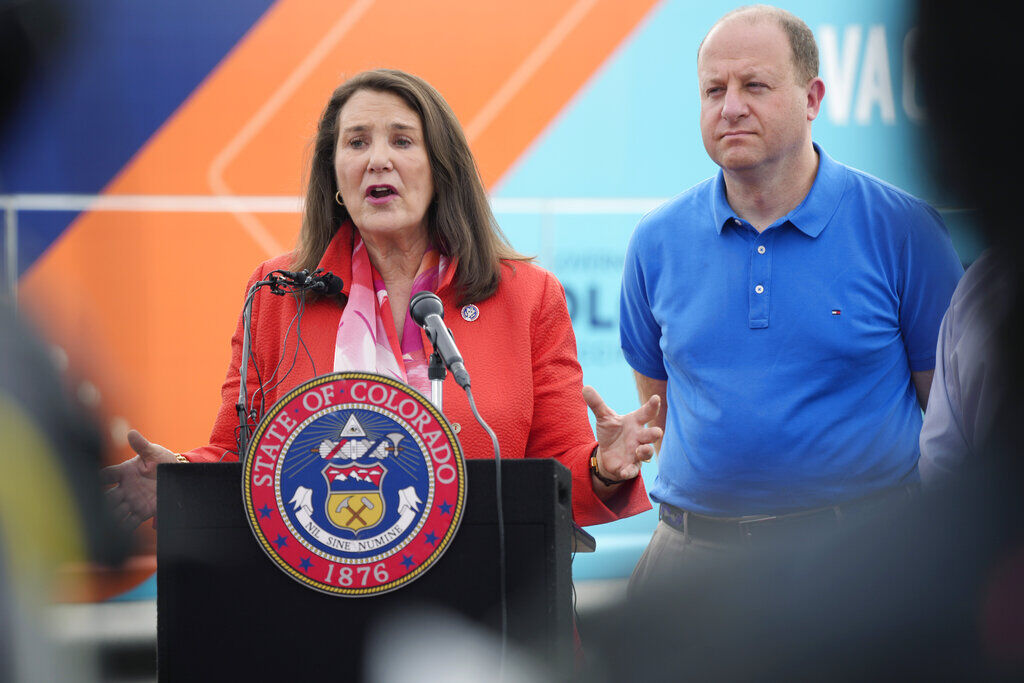
Armstrong staffer considers congressional bid, DeGette angers rural communities with wilderness act | A LOOK BACK
Rachael Wright, Special to Colorado Politics
rachael.wright@coloradopolitics.com
Updated 4 days ago
Forty-five years ago this week: If the lines were drawn just right, Republican Sen. Bill Armstrong stood the chance of losing his office manager, Ruth Fountain. Fountain admitted she was seriously thinking about running for Colorado’s new congressional seat in...
10th Circuit dismisses woman’s lawsuit following 10-year attempt to undo restraining order
Michael Karlik
michael.karlik@coloradopolitics.com
Updated 2 days ago
The Denver-based federal appeals court rejected a woman’s challenge on Friday to a restraining order imposed on her more than a decade ago, finding that she cannot credibly claim she will be prosecuted for violating the restraining order through her...
10th Circuit dismisses woman’s lawsuit following 10-year attempt to undo restraining order
Michael Karlik
michael.karlik@coloradopolitics.com
Updated 3 days ago
The Denver-based federal appeals court rejected a woman’s challenge on Friday to a restraining order imposed on her more than a decade ago, finding that she cannot credibly claim she will be prosecuted for violating the restraining order through her...
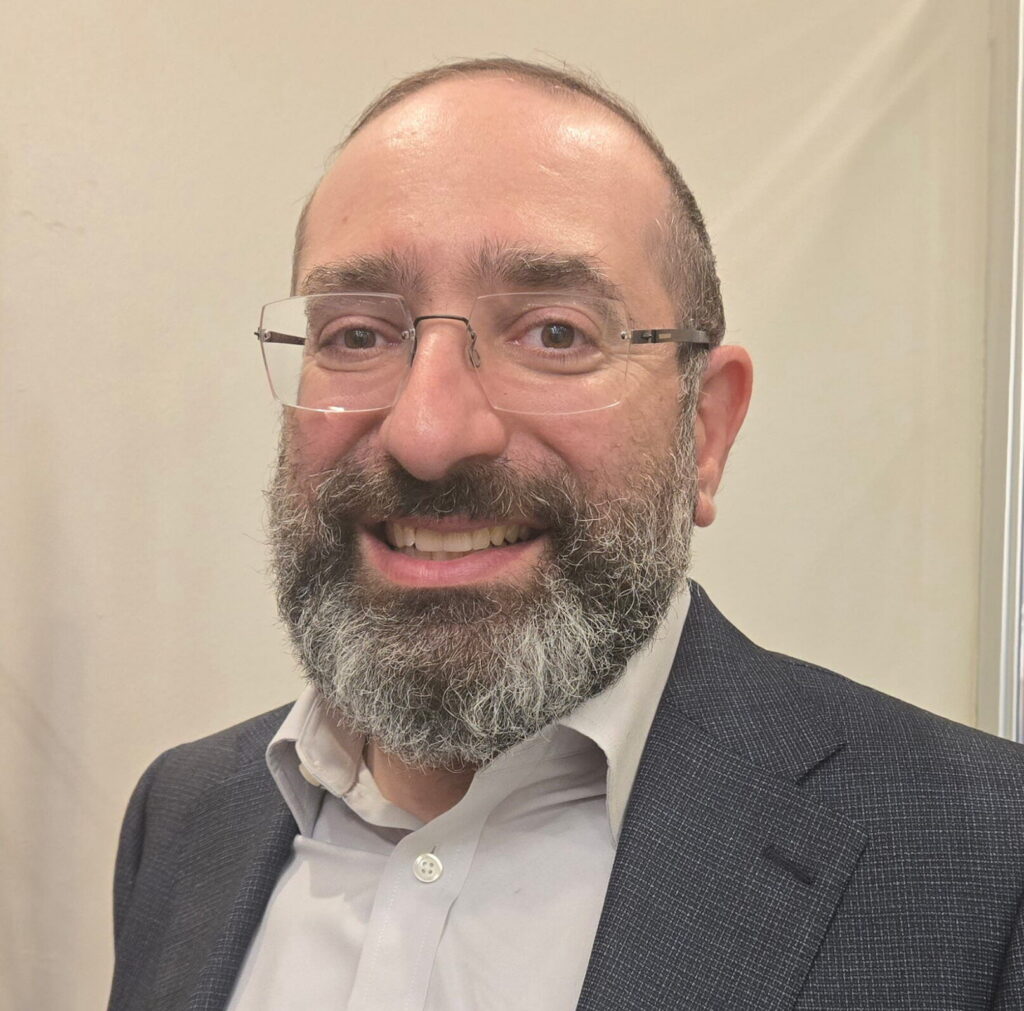
Surprise candidate Shimon Blau cleared to face off against Melat Kiros in November
Ernest Luning
ernest.luning@coloradopolitics.com
Updated 2 days ago
Unaffiliated congressional candidate Shimon Blau, a Denver doctor, has qualified by petition for the general election in Colorado’s 1st District, where Democrat Melat Kiros defeated 15-term U.S. Rep. Diana DeGette in last month’s primary, the Colorado Secretary of State’s Office...

Colorado produce not tied to nationwide cyclospora outbreak, agriculture officials say
Marissa Ventrelli
marissa.ventrelli@coloradopolitics.com
Updated 2 days ago
There is no indication that the recent outbreak of cyclospora, a fecal parasite that has contaminated food and water across nearly every state, can be linked to produce grown in Colorado, according to the state’s Department of Agriculture. “Colorado growers...

UNC opens College of Osteopathic Medicine
Marissa Ventrelli
marissa.ventrelli@coloradopolitics.com
Updated 3 days ago
The University of Northern Colorado held a grand opening for its new College of Osteopathic Medicine on Friday, with Gov. Jared Polis in attendance to celebrate the culmination of a two-year, $127.5 million project. The project was funded through legislation...
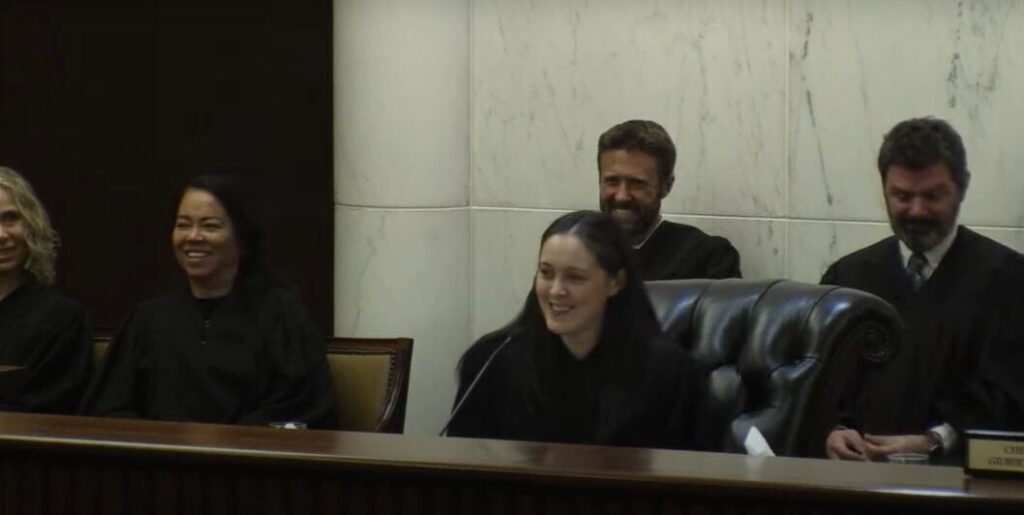
Colorado equal pay law does not require plaintiffs to allege gender-based retaliation, appeals court finds
Michael Karlik
michael.karlik@coloradopolitics.com
Updated 2 days ago
The 2019 Colorado law aimed at rooting out pay discrimination on the basis of sex does not require a plaintiff to allege their employer retaliated against them for sex- or gender-related reasons, the state’s second-highest court decided on Thursday. Lawmakers...
PREV
PREVIOUS

Biden issues disaster declaration for Colorado after summer storms, flooding
The Biden administration on Friday issued a disaster declaration for Colorado, freeing up funding to help the state following a spate of storms, flooding and tornadoes that hit the state this summer. In a news release, Biden directed a Federal Emergency Management Agency official to coordinate recovery operations for affected areas. Under the declaration, funding […]
Denver attorney Davis weighs runs against two different incumbents | A LOOK BACK
Forty Years Ago This Week: Denver attorney and Democratic Party activist Steve Davis told The Colorado Statesman that he was considering running for either House District 10 or Senate District 7. Both districts were held by Republicans, Rep. Betty Neale and Sen. Cliff Dodge, respectively. Davis, who had managed Rep. Jerry Kopel’s, D-Denver, 1982 campaign […]