

Q&A with Virginia Grady | Colorado’s federal public defender sounds alarm on cuts to criminal defense
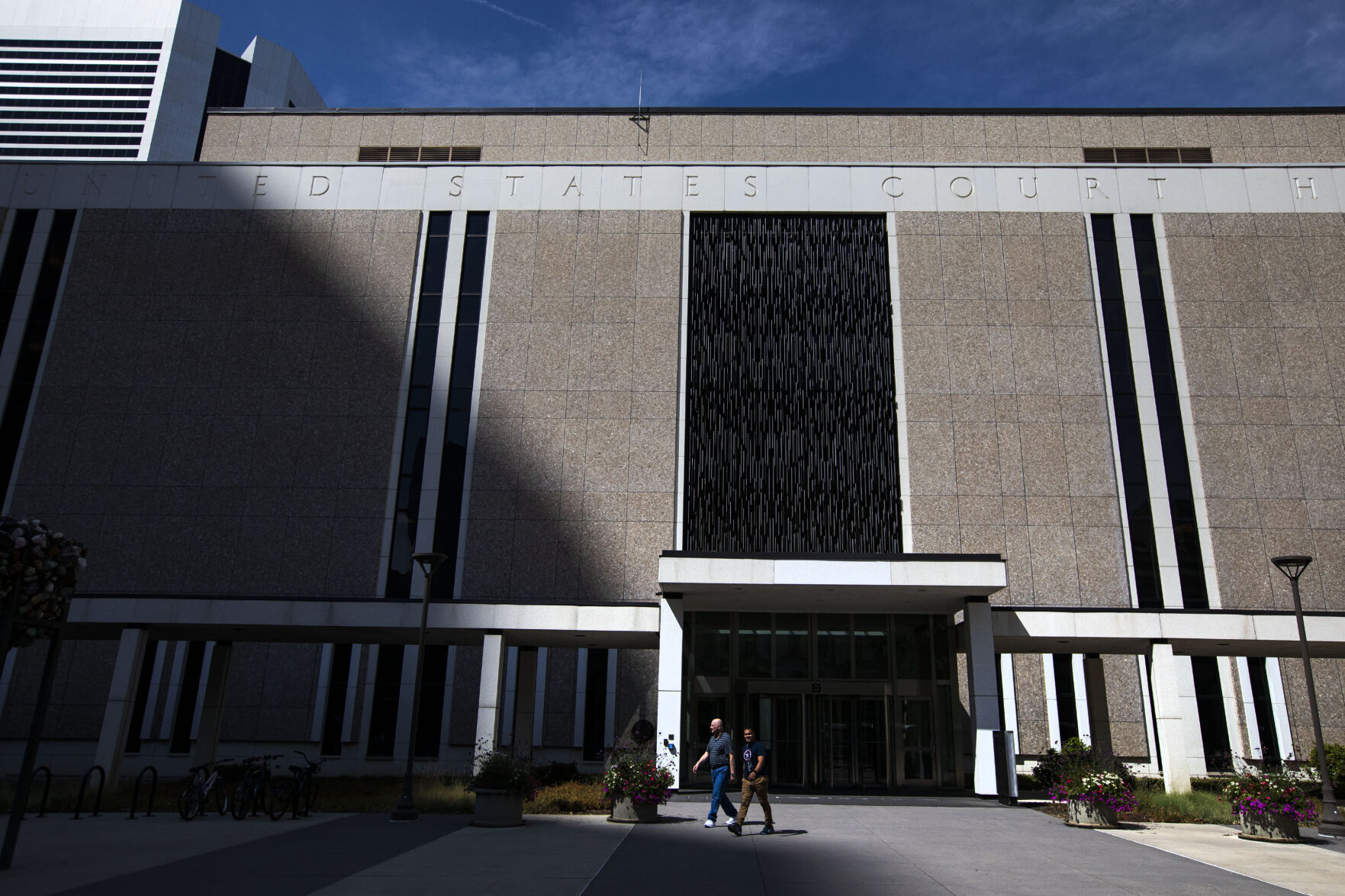
The U.S. Senate and House of Representatives have advanced spending bills that would cut millions of dollars from the budget of Defender Services, which represents poor defendants accused of federal offenses.
Earlier this week, Reuters and NPR reported that the $1.5 billion budget the federal public defenders have requested has been slashed in a pair of recent appropriations bills. The Republican-controlled House has recommended $1.41 billion, while the Democratic-controlled Senate has countered with $1.38 billion.
The reduction appears to stem from a pandemic-era savings of $110 million the public defenders applied to their current budget, which permitted Congress to allocate a lesser amount of new money. However, congressional proposals for the upcoming fiscal year would adhere to the lower amount, raising the possibility of cuts, furloughs and delays for public defenders and the clients they represent.
No members of Colorado’s congressional delegation sit on the appropriations committees. Colorado Politics sent questions about the cuts to some congressional offices, but did not receive a response.

Virginia L. Grady, who heads the federal public defender’s office for Colorado and Wyoming, spoke to Colorado Politics about the effect that Congress’ spending cuts, if enacted, would have on the administration of justice and the provision of criminal defense.
FAST FACTS:
- Virginia L. Grady has been the federal public defender for Colorado and Wyoming since 2013, having first joined the office in 1990.
- Congress created the public defense system and private “panel attorneys,” who represent indigent defendants when the public defender has a conflict, after the U.S. Supreme Court’s 1963 decision in Gideon v. Wainwright.
- There are 4,100 employees in the federal public defense system.
- Defender Services has imposed a hiring freeze in response to Congress’ potential spending cuts and estimates it would need to cut 500 positions.
Colorado Politics: When did you find out that the House and Senate were proposing to cut tens of millions of dollars from the public defenders’ budget?
Virginia Grady: We did not find out until the House mark – that’s what they call it – the publishing of the House mark was in late June. That was the first one. The same process occurs in Senate Appropriations Committee, and that happened last Thursday.
The Senate mark was even worse than the House mark. No idea that this was coming until we saw the marks.
CP: I’m assuming when the House released its proposal, you weren’t terribly surprised because it’s a Republican-controlled House. They are interested in cutting spending. But in a Democratic Senate, you would expect something different. Is that accurate?
VG: We’re not politicians – it should be bipartisan. Traditionally, the House mark and the Senate mark aren’t that far apart. So the two together – to say that we were blindsided does not describe the depth of our shock.
CP: Reportedly, this cut is a product of the pandemic and the carryover of about $110 million in savings. So, the budget you’re currently in was set at a lower rate, but you had the carryover.
VG: The House started with looking at what was the appropriation. They started with the 2023 budget request. Defender Services had money from previous appropriations that were “in the bank.”
So, when the House looked at our budget submission for 2024, they simply looked at the appropriation, which was $1.38 billion, knowing – I don’t know if they looked or not – that only represented a fraction of our need. It’s about 93%. But it’s a lot of money.
The next thing that happens is last week, the Senate Appropriations Committee takes it from there and their group looked at our agencies. I don’t know what they did. But that’s how we ended up down $70 million.
CP: Have you talked since last week with any members of Colorado’s congressional delegation?
VG: Yes, I have.
CP: What has been the response?
VG: Concerned, let me say that. Very concerned. Other defenders have contacted other senators. We’re trying to conduct outreach as much as possible to educate members of Congress in these appropriations committees about the incredible damage they’re doing to our organization.
CP: Is the concern bipartisan in Colorado?
VG: I don’t know the answer to that. We need as many advocates as we can get because the opportunity to fix this error is, as I understand it, pretty limited. It has to be done now.
CP: Let’s say the more restrictive amount, the Senate’s amount, takes effect. What will that mean for your office’s budget?
VG: I don’t know yet. We’re already getting hurt. And everyone is. Because as soon as this news came out, Defender Services declared a hiring freeze. Basically instructed we could not hire. We all have vacancies, but we could not fill them.
We were just studied by the Administrative Office of the U.S. Courts. There was a study done to evaluate our staffing needs, and that revealed we were already operating at a pretty big deficit of staff. We haven’t begun to add those staff. These budgets just obliterated these additional FTE (full-time equivalent workers).
Do three vacancies that I can’t fill hurt us? Yes, they do. So, we are already underwater. Our budget consists of around 80-82% salary and benefits. Add on rent – because we’re all paying rent for our space – that takes you up to almost 90% of money that’s already committed. It’s not as though, “Oh, we can’t buy furniture.”
We have clients in anywhere from 10-13 different jails in the state of Colorado. And in Wyoming, the vast majority of detained clients are in Scottsbluff, Neb. So, just to see our clients, to take care of them, is a lot of time on the road. I’ve lost count, but a considerable number of our clients and (private, government-paid) panel clients are in Pahrump, Nev. It’s on the edge of Death Valley. So, we have to go there and see our clients.
I say all of that because understaffing is a factor. You can never have enough people to chase all these cases. We used our carryover money to reduce the amount of new money Congress had to give us. Now, this year, in this budget we’re being penalized for it.
CP: In the public defenders’ budget request, there are specific reasons for why things are costlier now: increased caseloads since the COVID-19 pandemic, the prosecutions of Jan. 6 rioters at the U.S. Capitol, and the Supreme Court’s McGirt v. Oklahoma decision redirecting certain criminal cases to federal courts. Do any of those affect your office?
VG: Yes. We didn’t take the Jan. 6 cases, but there were a lot of offices that did. The coverage of those cases – it requires travel to D.C. There’s all kinds of other work and expenses that go into that representation. This is going to gut our ability to cover those cases.
Same for the McGirt cases. That’s a spigot of violent crime and other, lower-level cases that come from the native lands and we’re not going to be able to help out.
CP: What other impacts would this level of budgeting have for your office and clients?
VG: I think it’s going to result in more clients being detained for longer periods of time because we’re not going to have enough staff to move cases along. It’s just going to clog the dockets. And the dockets already run slowly in a lot of jurisdictions. We’re not going to have enough people to work on those cases.
I speak not just for us but the panel attorneys, because they’re not in a position to pick up the slack for us.
We’re a product of a promise in the Constitution that all persons who are accused of crimes are entitled to counsel. Our cases cover the gamut of subjects. It’s not just guns and drugs. We have cases that involve complex accusations of fraud, murder cases, we have a lot of cases deeply rooted in serious mental health problems. All of this requires us to retain experts to help advise us on the content of what we’re reading, to help us navigate – by way of example, what’s wrong with our client? What mental health condition is our client suffering from?
The travel, the cost of investigating these cases, the cost of bringing in experts – our clients come with a bundle of other issues that we have to identify and navigate. Not just to help the client through the process but to help the court understand who they are.
All the time and money to do that comes out of this very small portion of our budget.
Defenders have been working on this 24/7 to figure out what we have to do. Now we’re just scrambling.

Federal judge green-lights civil trial against ex-Fort Collins DUI officer
Michael Karlik
michael.karlik@coloradopolitics.com
Updated 2 days ago
A federal judge ruled on Thursday that Fort Collins’ former “DUI officer” will face a civil trial for allegedly investigating a motorist for impaired driving without any reasonable suspicion to do so. In recent years, several people arrested by Officer...

Colorado Supreme Court suspends Mesa County judge pending misconduct investigation
Michael Karlik
michael.karlik@coloradopolitics.com
Updated 22 hours ago
The Colorado Supreme Court suspended Mesa County Court Judge Michael J. Grattan on Thursday amid a misconduct investigation. The court’s Sept. 10 order gave Grattan 21 days to explain why his paid suspension should not continue through the end of...
Colorado Supreme Court changes course, dismisses case about special district bonds
Michael Karlik
michael.karlik@coloradopolitics.com
Updated 22 hours ago
The Colorado Supreme Court declined on Friday to decide a dispute between a large-scale Commerce City development and the various districts financing it, after initially showing interest in the ongoing case. Colorado has roughly 2,800 special districts, which are local...
10th Circuit tosses GEO Group’s pretrial appeal in human trafficking lawsuit
Michael Karlik
michael.karlik@coloradopolitics.com
Updated 3 days ago
The Denver-based federal appeals court dismissed an attempt by The GEO Group on Wednesday to appeal a trial judge’s non-existent decision two months before the company is scheduled to face a civil trial over alleged trafficking violations at the Aurora...
Denver sues Trump to block armed ICE agents from polling sites
Deborah Grigsby
deborah.smith@denvergazette.com
Updated 3 days ago
The city of Denver, along with several groups, sued the Trump administration Thursday, seeking to block U.S. Immigration and Customs Enforcement officers who are armed from polling sites during the upcoming midterm elections. In fact, there are no official orders...
Federal judge takes no action against ICE in Colorado after hearing about mistakes, not ‘blatant violations’
Michael Karlik
michael.karlik@coloradopolitics.com
Updated 20 hours ago
A federal judge declined to take action against U.S. Immigration and Customs Enforcement on Thursday after hearing that a pattern of alleged lawbreaking amounted to mistakes and a misunderstanding of the government’s position in court. For nearly a year, Colorado’s...
Colorado doctors, dentists challenge state law on gender‑transition services in new federal lawsuit
Marissa Ventrelli
marissa.ventrelli@coloradopolitics.com
Updated 17 hours ago
A group of Christian doctors and dentists has filed a federal lawsuit challenging a Colorado law they say requires them to provide gender‑transition services that conflict with their religious and ethical beliefs. The lawsuit, filed by the Christian Medical and...
Federal judge directs plaintiff to revise complaint alleging Denver officers’ constitutional violations
Michael Karlik
michael.karlik@coloradopolitics.com
Updated 20 hours ago
A federal judge directed a plaintiff to revise his allegations on Wednesday to more precisely state what two Denver officers and the city itself allegedly did to violate his constitutional rights by facilitating his prosecution for murder until prosecutors dropped...
Lawsuit challenges Douglas County commissioners’ ballot actions
Nicholas Fogleman
nicholas.fogleman@denvergazette.com
Updated 3 days ago
A new lawsuit against Douglas County commissioners seeks to invalidate the board’s intervention in efforts to expand the commission from three members to five and restore the original ballot language approved by more than 20,000 petition signers. The suit marks...
Federal judge explores new sanctions against ex-Colorado judicial discipline director
Michael Karlik
michael.karlik@coloradopolitics.com
Updated 22 hours ago
A federal judge on Wednesday directed Colorado’s former judicial discipline director, for the third time this year, to explain why she should not sanction him for his latest conduct in his litigation against the state’s judiciary. Christopher S.P. Gregory, who served...
PREV
PREVIOUS

STAR Command matures ahead of possible move from Colorado Springs to Florida
As a high-profile fight rages over the future of Space Command, another Colorado Springs-based command has been growing up and getting ready to leave. Now in its second year, the Space Training and Readiness Command, or STAR Command, marked a milestone Thursday in its maturity as its first leader, Maj. Gen. Shawn Bratton handed the […]

Colorado boasts record as host of presidential primary, general election debates | TRAIL MIX
Next year’s presidential election is poised to move from the political pages to the nation’s living rooms next month as the contest for the Republican nomination reaches that modern milestone of the race’s first full-fledged debate. Up to this point, there’s been plenty of jockeying for position by more than a dozen candidates, with President […]