

The Final Stanza: Denver mom-and-pop music store goes out on blue note
Chuck Schneider was eight years old when his dad bought him his first clarinet – a Buffet model with nickel-plated keys made in France and sold in America.
The freelance jazz musician graduated to fancier horns, but he stayed loyal to the Colorado mom-and-pop music store Kolacny Music Co. where he first fell in love with music when Elvis was King.
Lillies of the Colorado field: The curious life of Colorado’s cloistered nuns
“I ran down here when I found out they were closing. It’s like a dagger to my heart,” said Schneider, 74, of the longtime Denver store on south Broadway. “It’s a shame and a disgrace that it had to be this way.”
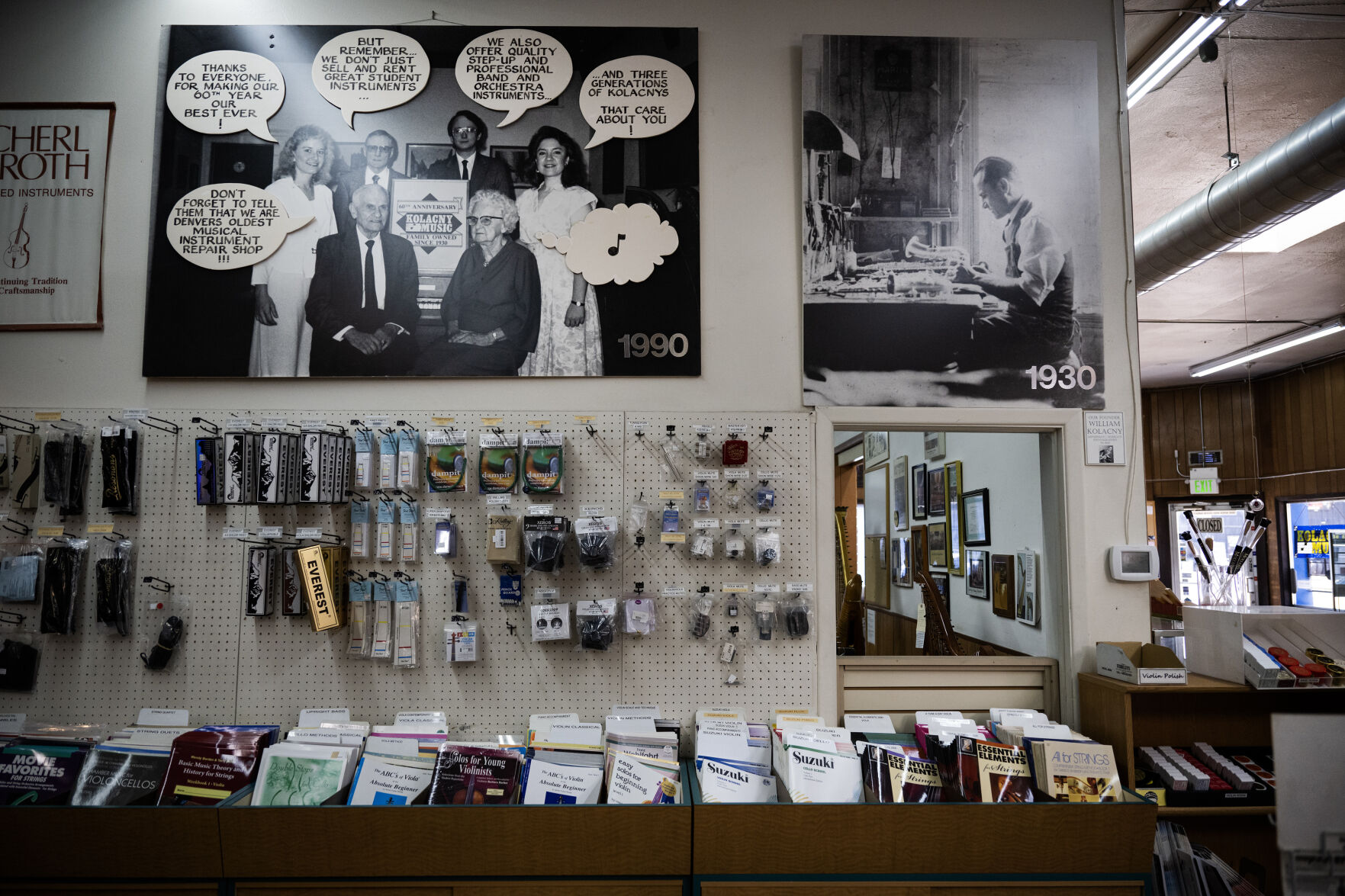
Kolacny (pronounced ko-LASS-nee) Music Company, circa 1930, is playing the blues.
“You shouldn’t be here today at 93 years,” 30-year-employee professional saxophonist Max Wagner told a reporter. “This shouldn’t be the story. You should be here seven years from now, writing about the 100th anniversary celebration,” he said, with an apology for being emotional.
Kolacny’s announcement came just weeks after Universal Music, a 63-year-old mom and pop music store in Thornton, also closed. Lakewood’s Rockley Music Center called it quits in 2019 after 73 years.
What is the deal with the number three?
The three stores had 219 years between them, all closing within three years of each other.
“This happened really fast,” said Pete Dunnewald, who bought Flesher Hinton from the Flesher family three years ago and is the last metro store standing.
To keep the Wheat Ridge store afloat, he dipped into his own savings.
“Clearly with stores closing, the mom-and-pop music market is unstable,” he said. A saxophone tuned up in the background, a sign of life.
Flesher Hinton is left to lock horns with Amazon, a feat that Kolacny Music could not sustain after being crippled by COVID shutdowns and the collapse of elementary school music programs.
A 2019 American Education Data Project study found that 92% of public-school students K-12 have some kind of access to music education, but more and more parents’ only option for their kids is through private lessons.
Kolacny’s bread and butter came from elementary school instrument rentals and service. Part of the staff’s job was to deliver rented violins and trumpets to area schools. Being on a first name basis with music teachers helped draw parents in need of instrument repair, reeds and music books to the store.
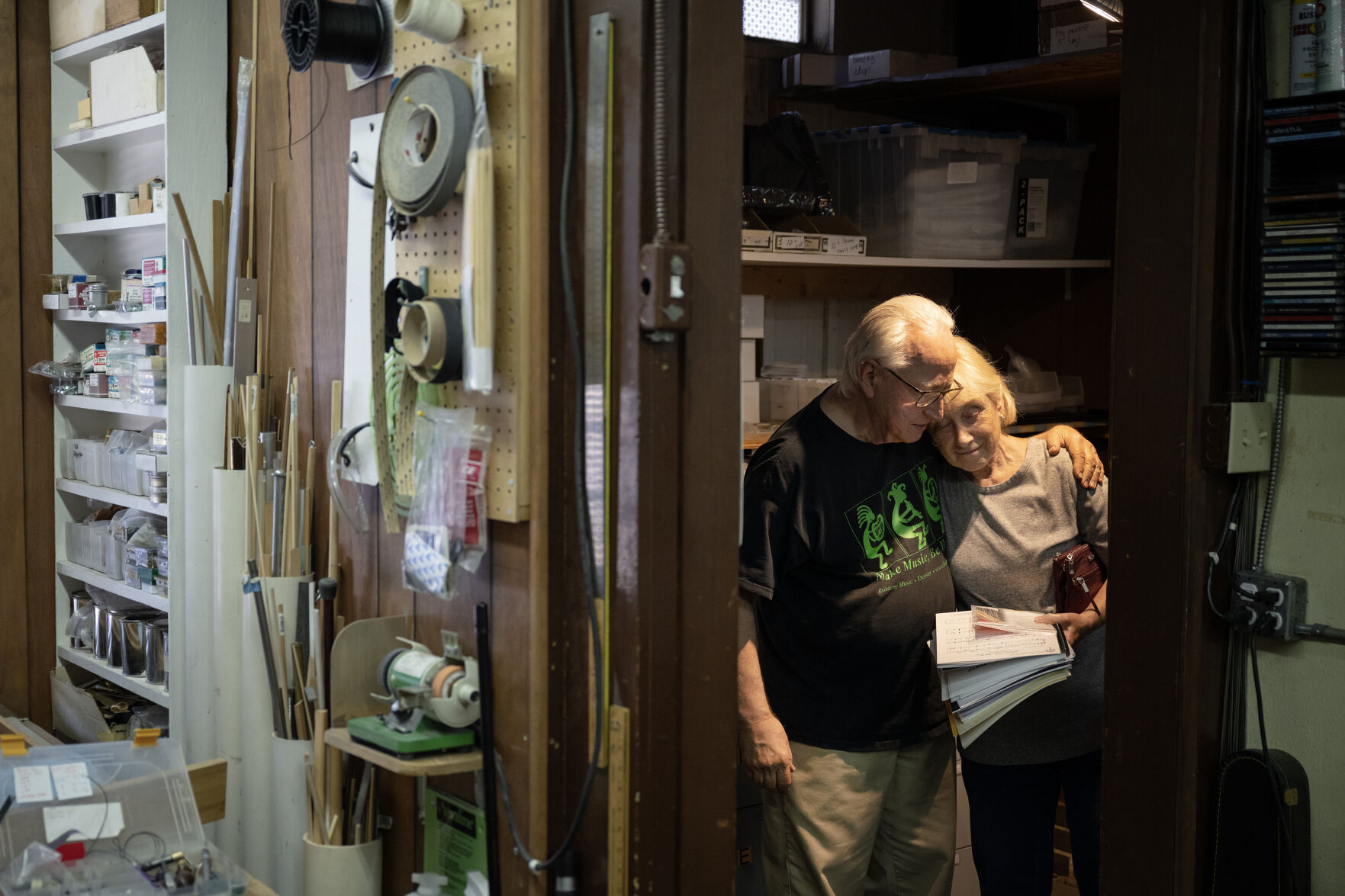
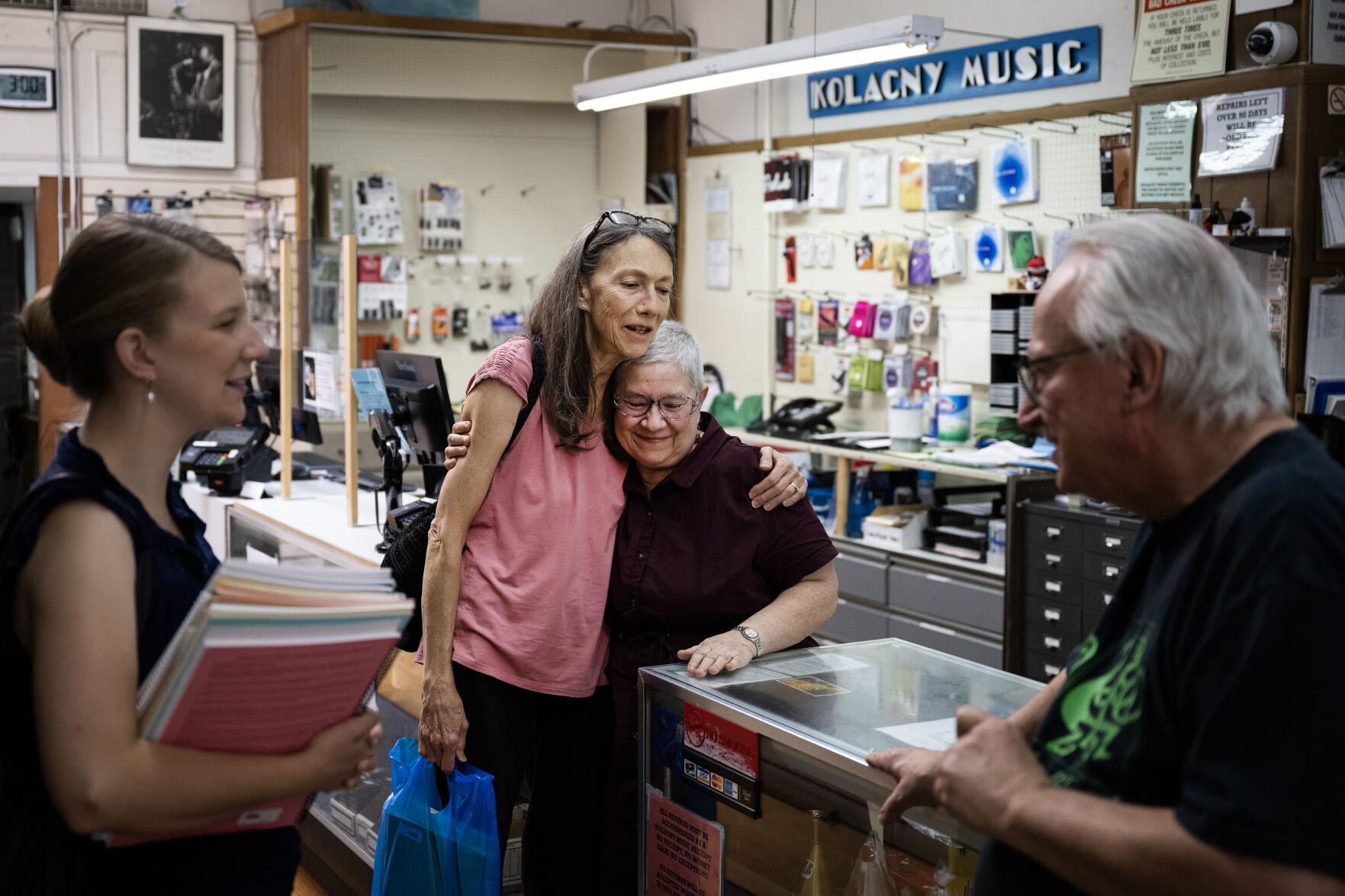
David and Donna Kolacny, the founder’s grandchildren, have kept the place going for decades along with David’s wife, Debra. The couple met on the set of Englewood High School’s production of “The King and I,” around forty years ago when “we were a lot cuter,” according to David.
On cue, Debra deadpanned: “We’re still cute.”
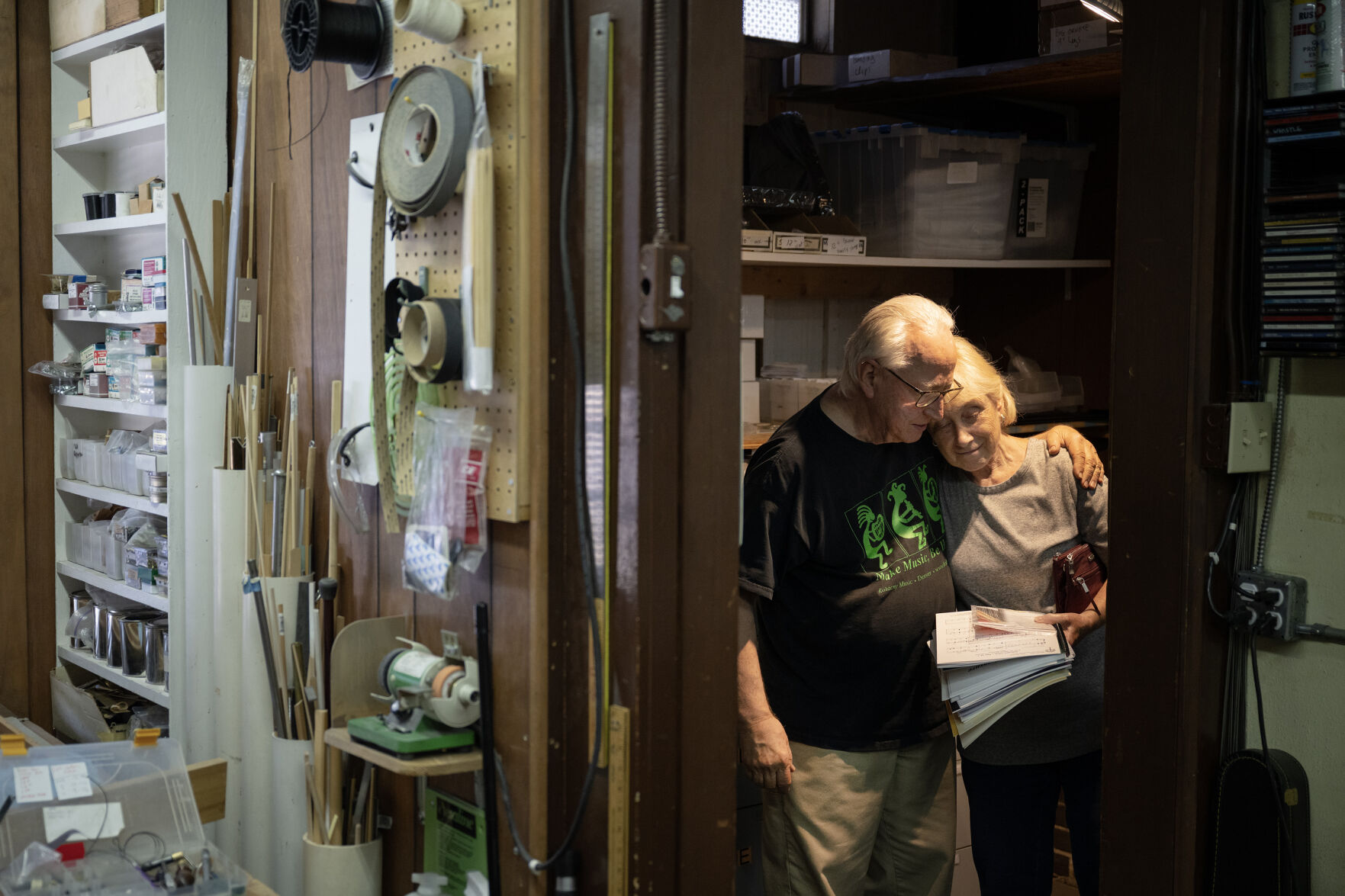
Kolacny, 69, who trained at Chicago’s prestigious Lyon and Healy Harps, is one of only approximately three dozen harp technicians in the world.
He is to the Colorado’s small but passionate harp community what Nikola Jokic is to the Nuggets.
Marissa Lonigro held on tight to a brown paper sack which contained a complete set of harp strings she bought to last her once the store closes.
“Where will I go now?” she asked.
To Kolacny’s garage?
The show will go on for David Kolacny, who plans to repair harps from his house. Last Friday, a friend dropped by to discuss installing a heat pump in a garage space for cold winter days.
In his hand was a going away gift – a zip-lock bag of home-grown snap peas.
Tuskegee Airman in Denver celebrates 100th birthday
I’ll cry if I want to
The 7,000 square foot store has begun selling off inventory in a mad scramble to empty the building by September. Kolacny said he’s too busy to be sad.
“Most people who retire pack up their desks and eat a piece of cake. That’s not how this business works,” said David. “Every time I think about emptying this place, I want to puke.”
Anyone in the market for a violin chin rest, a box of method books, or a delicate woodwind reed can pick them up for a song.
“Those double reed players hit this place like Grant hit Richmond,” said Wagner, with an inside joke only bassoonists and oboe players would understand.
It’s a language spoken by band and orchestra nerds who found a place to belong when they weren’t playing gigs at the Aurora Fox Theater or The Brown Palace.
Customers buying reams of sheet music at 30% off might be rung up by Derek Banach, a world class trumpet player. They may have questions about a second-hand harp of Don Hilsberg, who “flunked retirement,” and joined Kolacny’s a day after stepping down from a 30-year music teaching career with the Denver Public Schools.
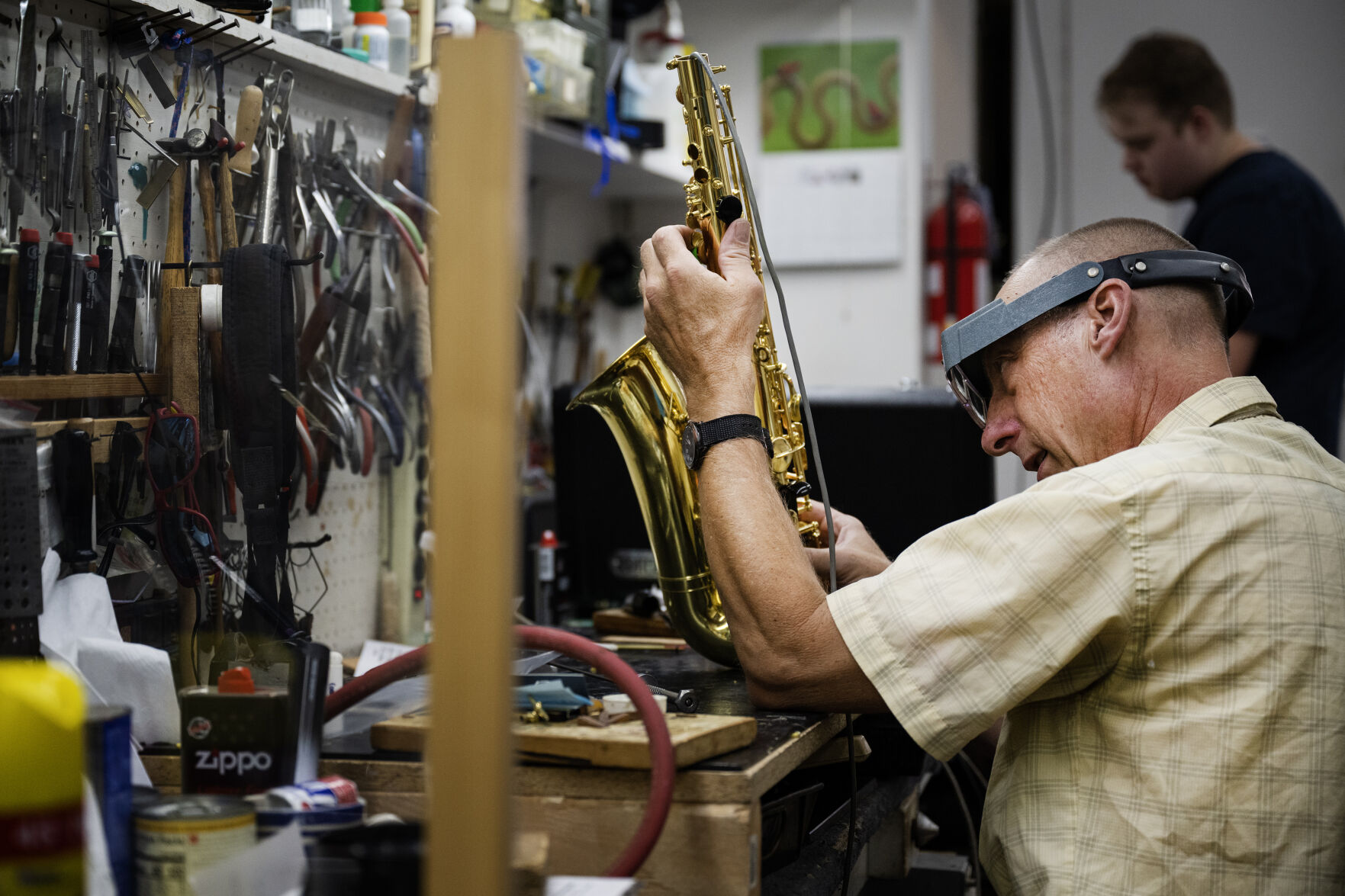
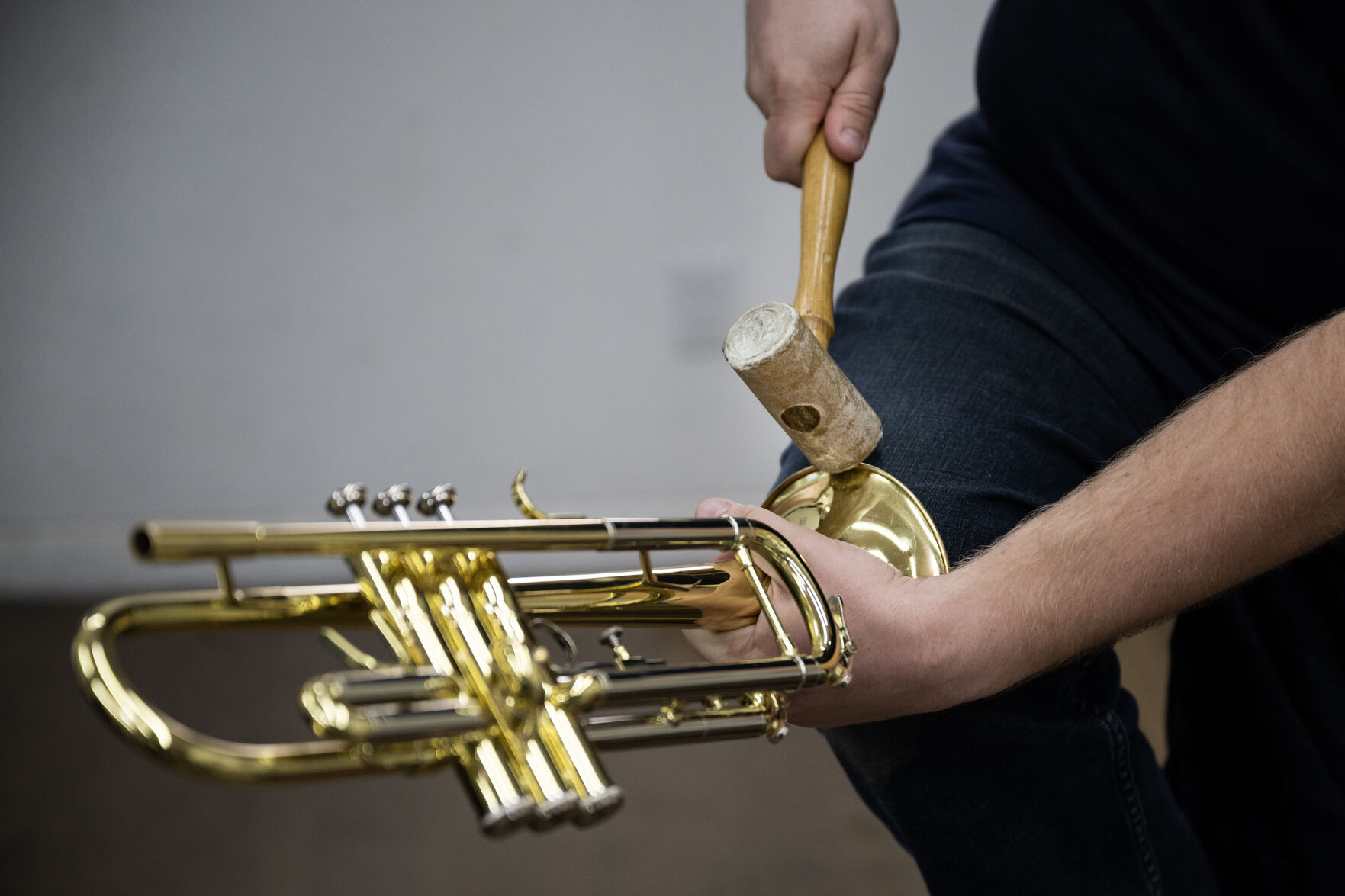
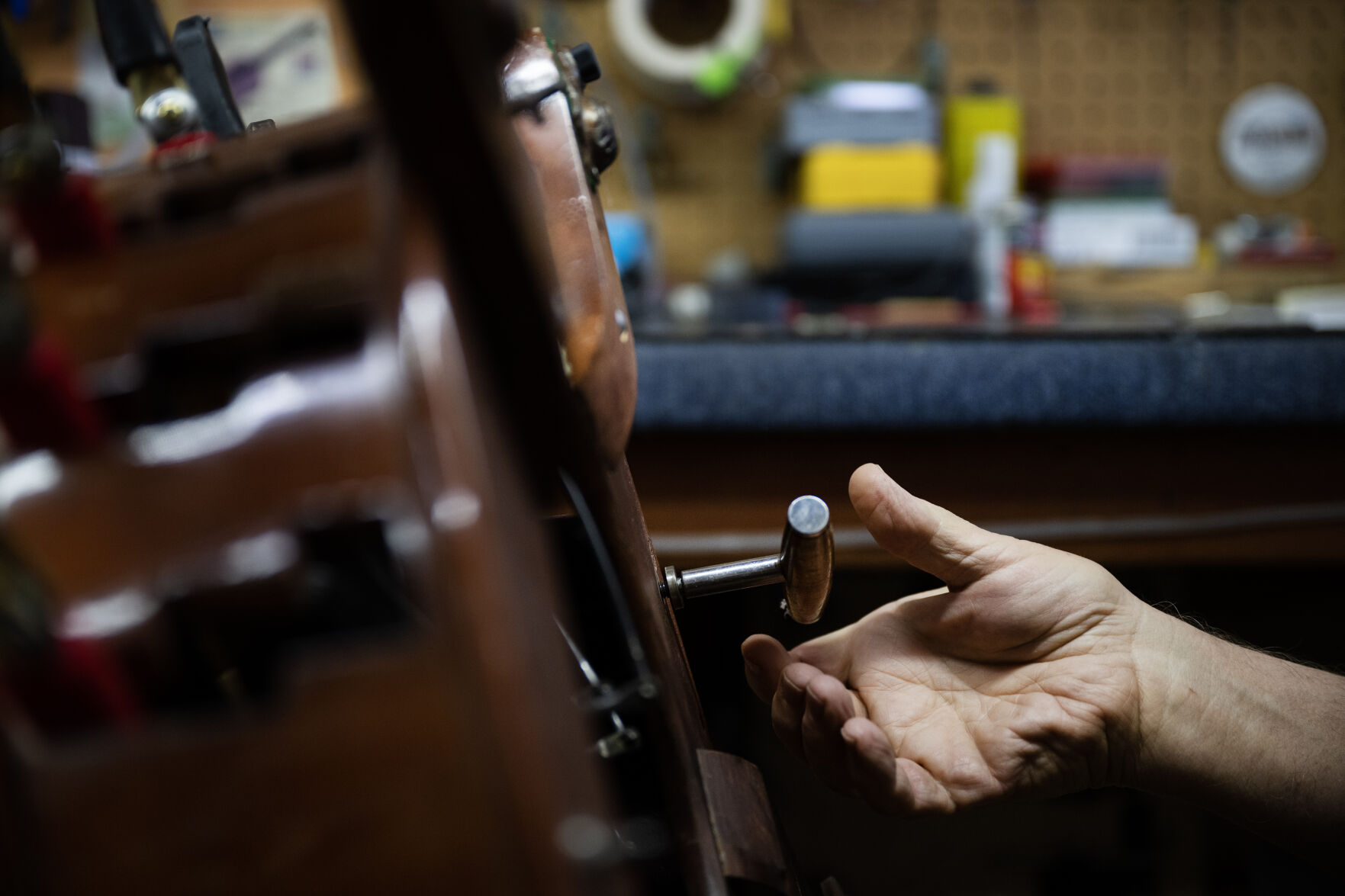
In quiet back rooms, specialized woodwind technicians applied one last round of soft keypads and joint corks. Ropes of horse-hair-tail trailed from a hook on the side of a desk waiting to be fashioned into fresh bow strings.
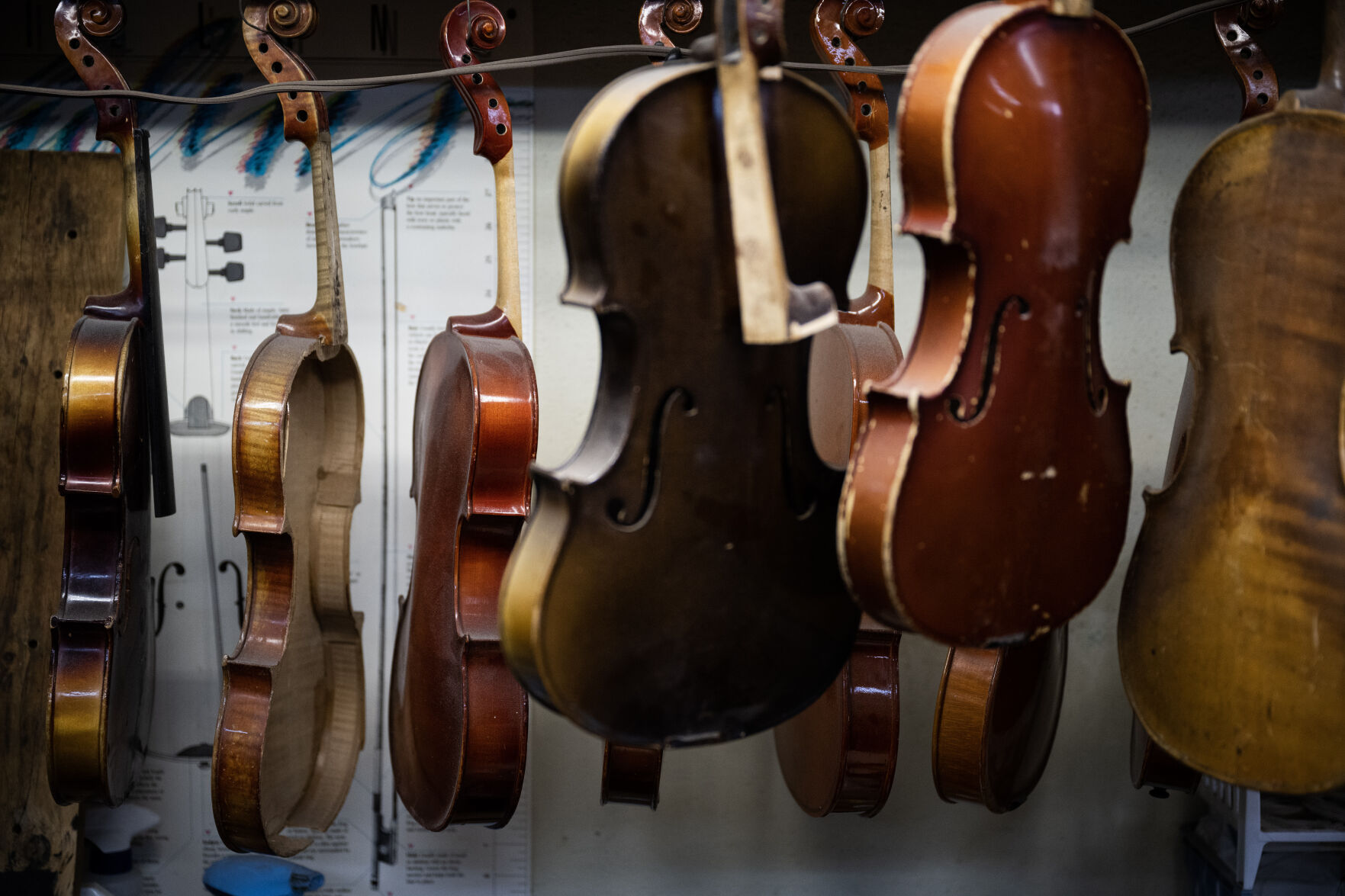
A Cello with a “sold” post-it sticker leaned against the wall and a handwritten sign on a batch of dusty instrument cases instructed someone to hold them for sale to Parker’s Sagewood Middle School.
Instruments can be sold or donated, but memories are forever.
Mile High Music Makers
In a makeshift hall of fame room, photos of The Brown Palace Orchestra, The Teensters, El Chapultepec’s Freddy Rodriguez and Mile High Banjo Society are displayed like a makeshift museum.
Bandleader Benny Carter called on Kolascny’s as did Miles Davis’ jazz tenor saxophonist Eddie Harris, and Maceo Parker, who played sax for James Brown, Parliament Funkadelic and Prince.
Dee Minor, of Dee Minor and the Dischords, record producer Stanley Turentine and Denver bassist Charlie Burrell were also friends of the store.
Marianne Goodland, a Colorado Politics reporter who moonlights as a Celtic harp player, scanned a room full of the heavenly instruments, a sale tag hanging from each triangular frame. One gold-leafed beauty which belonged to the mother of the principal harpist for the Colorado Symphony recently sold for $12,500 firm.
Goodland felt sick to her stomach.
“This is like a death in the family,” she said.
“I’m not dead,” said David Kolacny. “We need out. We had big bills to pay. They wanted this corner.”
“They” is a group called Alchemy which Kolacny said is buying up South Broadway property in the area formerly known as Antique Row. When marijuana was legalized, pot shops replaced the antique dealers, and the area earned a new nickname: The Green Mile.
Today, Kolacny’s neighbors include tattoo parlors, a Flamenco dance studio, and a storefront called Reefer Madness.
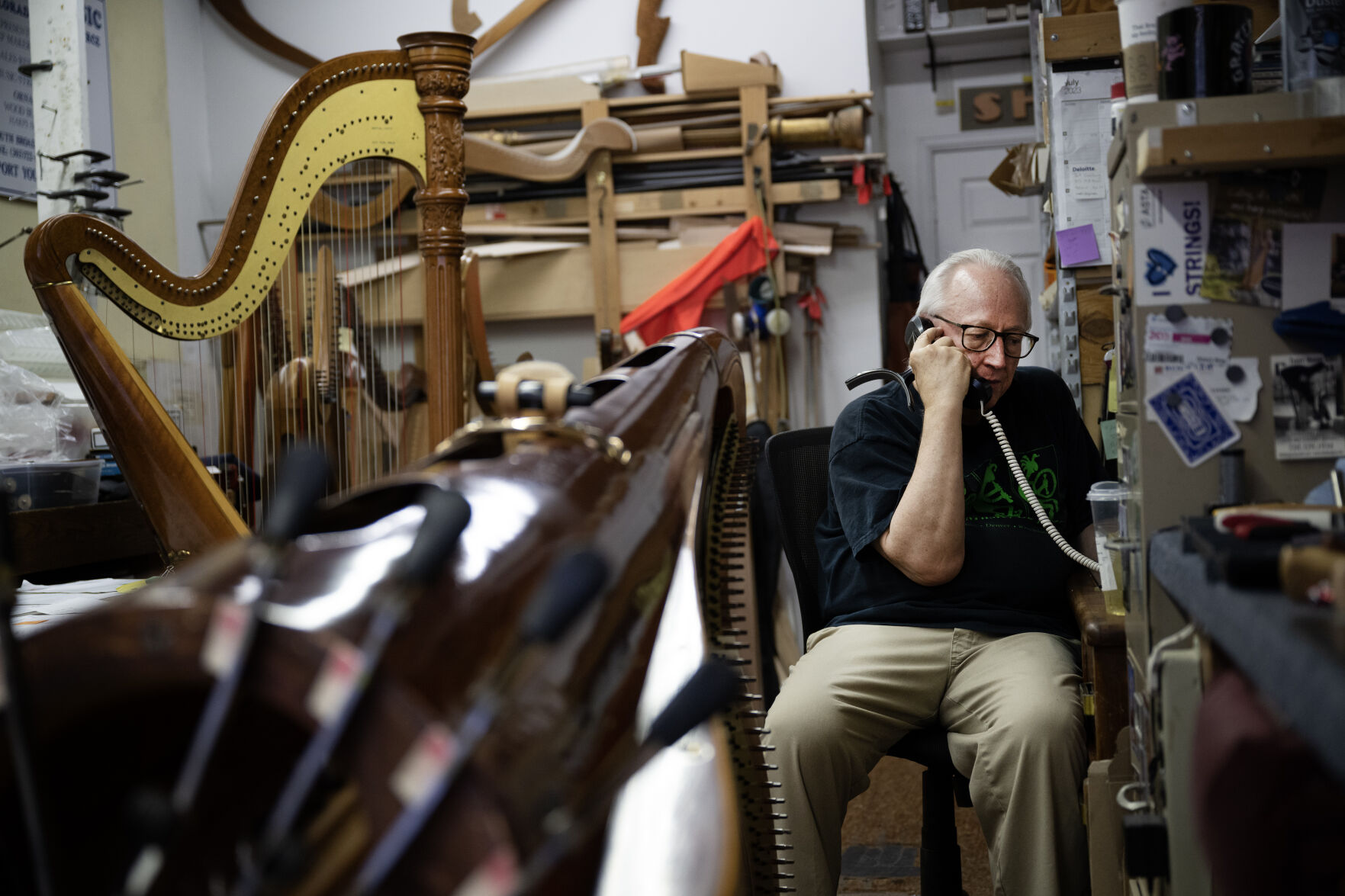
“This will probably be a pot store,” said Eli Acosta. The bass repair specialist parted the strings of a huge golden-hewed bass, a string of LED lights trailing into its belly to light up the inside.
No one is sure what Alchemy has in mind for the voluminous space with the worn hardwood floors and treble clef wrought iron window dressing.
A call to the company went unanswered, but Kolacny is not leaving on a sour note.
“They are not villains,” he said. The company is giving the family extra time to move out, considering they have collected nearly a century’s worth of musical madness.
Wagner believes Kolacny’s absence will not hit people until “the day of the parade when someone will need a piccolo to be fixed and there’s no one to fix it.”
The loss of traditional family music stores like Kolacny Music Company is akin to the symphonic folk tale, “Peter and the Wolf,” which is often the first introduction little kids have to the sounds of classical music. Said Hillsberg: “I always cried when the wolf ate the duck.”
Sparks Flew: A Denver Gazette Swiftie’s concert review




As street camera use surges, Colorado legislators grapple with law enforcement, privacy implications
Marissa Ventrelli
marissa.ventrelli@coloradopolitics.com
Updated 1 day ago
In Boulder, the Flock camera system helped authorities locate the car of the suspect in the firebombing that killed a woman and injured 29 others in June last year. The car had contained explosives, authorities said. In Columbine Valley, authorities...

Business leaders see ‘cracks’ in Colorado, while governor insists state is ‘competitive’
Marianne Goodland
marianne.goodland@coloradopolitics.com
Updated 3 days ago
How does Colorado get back to the climate in the early 2000s, when there was collaboration between state government, companies and colleges and universities? That was the question posed to Gov. Jared Polis and a panel convened Tuesday by the...

Denver stops new data centers for 12 months
Deborah Grigsby
deborah.smith@denvergazette.com
Updated 2 days ago
Denver just slammed on the brakes on new data centers Monday after members of the Denver City Council voted unanimously to impose a one-year moratorium on permits and site development plan applications for data centers as the proposed primary use. Close to...
Gala’s purpose: to raise funds to protect Colorado’s open lands | NONPROFIT REGISTER
Joanne Davidson Special to Colorado Politics
joanne-davidson-special-to-colorado-politics@coloradopolitics.com
Updated 3 days ago
COLORADO OPEN LANDS Lakewood News: Wendell Fleming perhaps said it best in her explanation of the “why” behind the Lakewood-based nonprofit, Colorado Open Lands: “It’s not enough to just love this state … we have to preserve it. We have to preserve it not just for us, but for the...
Colorado’s proposed battery regulations target fire risks, raise enforcement, cost questions
Scott Weiser
scott.weiser@gazette.com
Updated 13 hours ago
Some worry consumers would face civil or administrative fines under the legislation Lawmakers have passed new regulations mandating sellers of lithium-powered batteries to register with the state and produce outreach plans before they can engage in business in Colorado. Under...
Girls and their bright futures were celebrated at annual luncheon | NONPROFIT REGISTER
Joanne Davidson Special to Colorado Politics
joanne-davidson-special-to-colorado-politics@coloradopolitics.com
Updated 4 hours ago
GIRLS INC. OF METRO DENVER Denver News: With United Airlines as the presenting sponsor, My Bold Future, the annual fundraising luncheon hosted by Girls Inc. of Metro Denver, provided a figurative takeoff to success for the 2026 scholarship recipients and a smooth landing for the...
Colorado Cost of Living: State is now 4th most expensive in U.S., and residents feel the strain
Breeanna Jent
breeanna-jent@coloradopolitics.com
Updated 1 day ago
Think of Colorado and what comes to mind? Majestic mountain views; skiing, sledding, rafting, hiking and more in the Great Outdoors; alpine forests and golden plains; ample sunshine, craft beer and breathtaking sunsets. Just to scratch the surface. But the...

Colorado Cost of Living: Moving closer to downtown Denver
Deborah Grigsby
deborah.smith@denvergazette.com
Updated 4 days ago
As the mid-morning sun spills through a small window in Elizabeth Nagle’s small Denver apartment, her 12-year-old dog, Freya, gnaws intently on a small toy rabbit. On her table sits a retro, portable record player and a plate of small...
Cast announced for 2026 Dancing with the Denver Stars | NONPROFIT REGISTER
Joanne Davidson Special to Colorado Politics
joanne-davidson-special-to-colorado-politics@coloradopolitics.com
Updated 6 days ago
CLEO PARKER ROBINSON DANCE Denver News: Thirteen civic leaders, including Kourtny Garrett, president and chief executive officer of the Downtown Denver Partnership; Nick Lopez, CEO of the Latin American Education Foundation; and CBS Colorado anchor/reporter Kelly Werthmann, have agreed to take part in the...

AI’s rapid growth spurs regulatory reaction in Colorado
Marissa Ventrelli
marissa.ventrelli@coloradopolitics.com
Updated 1 week ago
The 2026 legislative session was marked by a major push to regulate artificial intelligence, a technology advancing at breakneck speed. Colorado is at the forefront of AI policy, becoming the first state to pursue regulation on “algorithmic discrimination” by passing...
PREV
PREVIOUS

Colorado State Fair parade marshals announced
The Colorado State Fair Parade Committee on Tuesday announced the 2023 parade marshals, including a former Colorado State University Pueblo head football coach and the owners of a popular Italian restaurant in Pueblo. John Wristen, a former head coach for CSU Pueblo football, is the parade’s grand marshal. Tom and Anna Marie Giodone of Giodone’s […]

Appeals court rejects Adams County's argument that sheriff's office is not a 'public entity'
Colorado’s second-highest court last week rejected an argument from Adams County that sheriffs’ offices are not actually “public entities” that, consequently, cannot be held liable for deputies’ motor vehicle collisions. A three-judge panel for the Court of Appeals acknowledged that multiple prior court cases stated as fact that sheriffs’ offices are public entities, but none […]