

What to expect after filing a property tax valuation protest

Arapahoe County saw almost 31,000 protests against property tax valuations – a record number – after the valuation for the median residential home rose by 42%.
Arapahoe County Assessor PK Kaiser earlier noted that the areas that experienced the largest gains in residential property value were Aurora, Littleton and Englewood.
Anders Nelson, the county spokesperson, talked to Colorado Politics recently about the tax protests and what to expect.
Colorado Politics: Can you tell me more about the nature of these protests? Mostly people saying the assessment or valuation is wrong?
Anders Nelson: Protests typically come from residents who do not believe their property is worth what the valuation was determined to be. Normally, the resident feels the value is too high and wants to get it lowered so taxes are lower.
CP: What typically is the remedy? How often does the assessor say, “Yup, you’re right. We got the valuation wrong”?
Nelson: It depends on what evidence is presented by the taxpayer. If a taxpayer can show evidence that their home is not updated like surrounding homes or has unresolved structural or other problems, for example, or presents appropriate comparable sales the Assessor’s Office did not consider, the better the chances of getting their valuation adjusted. Every determination is based on the information available and provided by the taxpayer. The more evidence available, the better the chances of an adjustment.
CP: So, the property tax owner submits an appeal, and the notice of determination (NOD) is basically the assessor saying, “We looked at your appeal and you’re right or you’re wrong or we’re going to modify your assessment”?
Nelson: Yes, but there are five levels of appeal: Protest at assessor level, County Board of Equalization, Board of Assessment Appeals, binding arbitration, district court.
CP: The equalization board decides these protests, correct? Who makes up the equalization board? Any info as to how often the board sides with the property tax owner?
Nelson: The County Board of Commissioners comprises the County Board of Equalization (CBOE). The CBOE, as allowed by statute, appoints qualified independent referees to conduct the hearings at the CBOE (second) level of appeal and make recommendations on the protests for the CBOE’s final decision. Each protest is evaluated on its own facts, and, like at the assessor level, the independent CBOE referees consider all available evidence presented before and at the hearings and make a determination on the merits of each protest.
CP: Can you tell me more about this hearing process?
Nelson: If a taxpayer is not satisfied with the results of their protest upon receiving the NOD from the Assessor’s Office (first level of appeal), they have the ability to continue their protest by filing a timely petition to the CBOE (second level of appeal). A CBOE hearing will then be scheduled before one or more independent referees who hear from both the petitioner and a representative of the Assessor’s Office and determine each protest based on the evidence submitted. The referees submit recommendations on each petition for the CBOE’s final determination. A decision letter is then sent to the petitioner once CBOE decisions are rendered. If the taxpayer is still not satisfied with the results of their protest at that time, they can again continue their protest further to the Board of Assessment Appeals, district court, or an arbitration process through the county (third level of appeal).
CP: What’s the timeline for deciding each protest?
Nelson: The Assessor’s Office has until Aug. 15 to answer all appeals. CBOE hearings will then begin after Aug. 15 and will continue as necessary until CBOE decisions are rendered no later than Nov. 1.
CP: If there are nearly 31,000 protests? How does the equalization board expect to hear all these protests from August to October? That’s 90 days. Or only a fraction of these protests are heard?
Nelson: Typically, a number of the protests received are resolved at the assessor level, and a smaller percentage of the overall number of protests are then filed on to the CBOE level for further evaluation. The CBOE will do its best to schedule and hold hearings on all petitions it receives. An even smaller number of protests are then typically filed on for further evaluation at the BAA/District Court/arbitration level.



Low and slow meets forever: US postage stamps honor lowrider car culture | OUT WEST ROUNDUP
The Associated Press
the-associated-press@coloradopolitics.com
Updated 4 days ago
NEW MEXICO Stamps honor lowrider culture ALBUQUERQUE — From Mexican American and Chicano barrios in the American Southwest to the halls of the Smithsonian on the National Mall and even the streets of Japan, lowrider culture has become part of...

Colorado Politics Calendar Apr. 6-12
Rachael Wright, Special to Colorado Politics
rachael.wright@coloradopolitics.com
Updated 4 days ago
CoPo’s weekly political calendar will help you find political and public-policy events throughout Colorado. It includes candidate and issue campaign events, public policy meetings, court hearings, state and local party conventions, assemblies, debates, rallies, parades, speaking engagements, traveling dignitary appearances,...

Democrats rebounding without learning necessary lessons | SONDERMANN
Eric Sondermann
eric-sondermann@coloradopolitics.com
Updated 22 hours ago
“When we fight, we win!” That, reportedly, was the chant heard over and over again at the Colorado Democratic Assembly a week ago. It suggests that pugilism has been the piece missing from the Democratic toolkit. Perhaps it was just...
An April Fool’s Day to remember | Capitol M | Week of April 4, 2026
Marianne Goodland
marianne.goodland@coloradopolitics.com
Updated 3 days ago
The lighter side of the Capitol, and if light were weight, the Capitol would have lifted off better than the Artemis II rocket on April Fool’s Day. There was a plethora of Fools at the Capitol for April Fool’s Day...
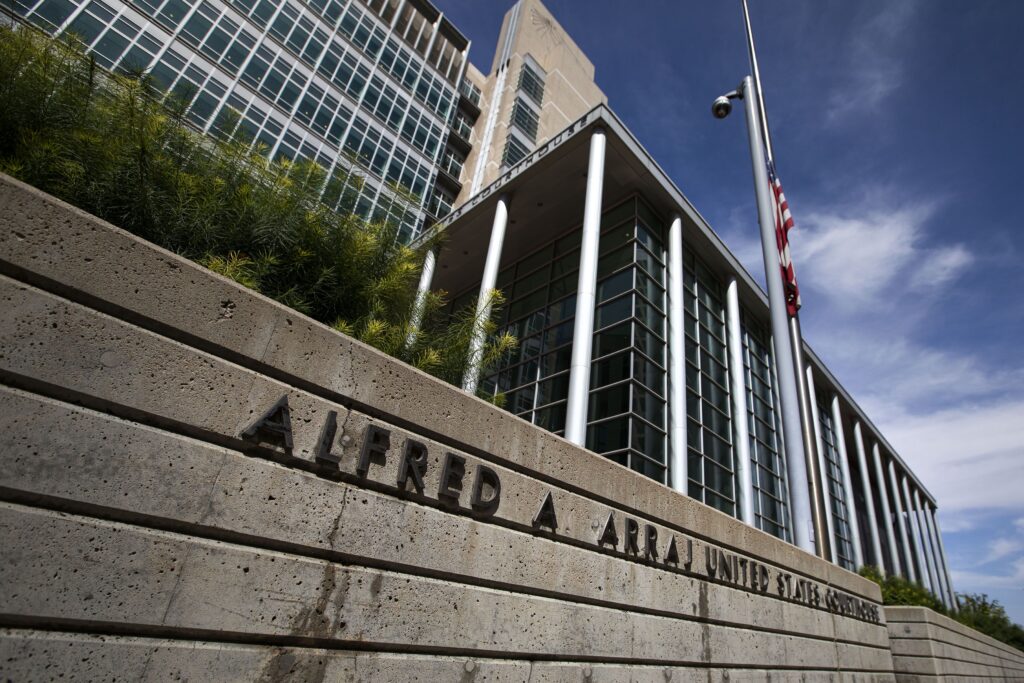
Federal judge sides with Mesa County school district in ex-student’s First Amendment claims
Michael Karlik
michael.karlik@coloradopolitics.com
Updated 1 day ago
A federal judge concluded last week that Mesa County Valley School District 51 and three of its administrators did not violate the First Amendment rights of a former student when they imposed minor discipline in response to disruptive behavior. In...

Colorado Supreme Court intervenes in 4 ongoing cases
Michael Karlik
michael.karlik@coloradopolitics.com
Updated 2 days ago
The Colorado Supreme Court recently moved to intervene in four ongoing cases, including two criminal prosecutions, a civil lawsuit, and a child welfare proceeding. At least four of the court’s seven members must agree to hear a case outside of...
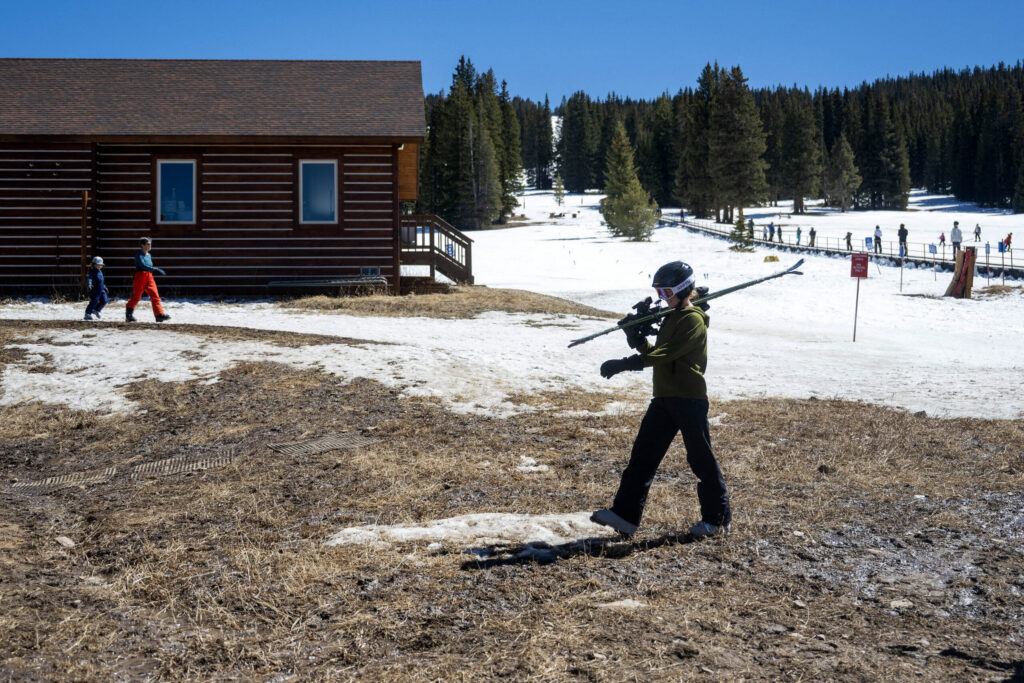
Colorado ski resorts announce early closures amid historic snowpack lows, high temperatures
Kyla Pearce
kyla.pearce@gazette.com
Updated 20 hours ago
Vail Resorts is the latest area to announce season closure Wednesday As Colorado’s historically low snowpack year comes to a close and spring conditions take over the mountains, the state’s major ski resorts are announcing closing dates — some of...

Kentucky Gov. Andy Beshear set to headline Colorado Democrats’ annual fundraising dinner
Ernest Luning
ernest.luning@coloradopolitics.com
Updated 2 days ago
Kentucky Gov. Andy Beshear, one of the Democrats’ top 2028 presidential prospects, is scheduled to deliver the keynote address at the Colorado Democratic Party’s annual fundraising dinner in June in Denver, the party said Friday. Serving his second term as...
Gov. Polis names new leaders for Colorado health agencies in wake of Medicaid turmoil
Marianne Goodland
marianne.goodland@coloradopolitics.com
Updated 2 days ago
Gov. Jared Polis, on Thursday, announced he was appointing Gretchen Hammer to serve as acting executive director of the Colorado Department of Health Care Policy and Financing, and deputy executive director Stephanie Beasley to become the next commissioner of the...

Federal judge releases man immediately as consequence for immigration judge disobeying orders
Michael Karlik
michael.karlik@coloradopolitics.com
Updated 2 days ago
A federal judge ordered a man’s immediate release from immigration detention on Thursday after finding an immigration judge disregarded his prior orders requiring a bond hearing. For the past year, Colorado’s federal district court has faced a flood of “habeas corpus”...
PREV
PREVIOUS

Record number of Coloradans protest soaring property tax valuations
Tens of thousands of Coloradans are protesting soaring property valuations that threaten to take out a lot more from people’s pockets than in previous tax years. The sharp rise in protests also means a significant increase in the workload for county assessors and their staffers and, later, for county commissioners and district courts that ultimately […]

10th Circuit grants immunity to Douglas County deputies who entered home over man's objection, used force
Douglas County sheriff’s deputies cannot be held liable for entering a man’s home without a warrant, over his objection, and forcibly arresting him on suspicion of domestic violence, the federal appeals court based in Denver ruled last month. Bryce Watkins sued three deputies for violating his Fourth Amendment right against unreasonable searches and seizures by […]