

Colorado Supreme Court rules domestic violence treatment is not ‘punishment’
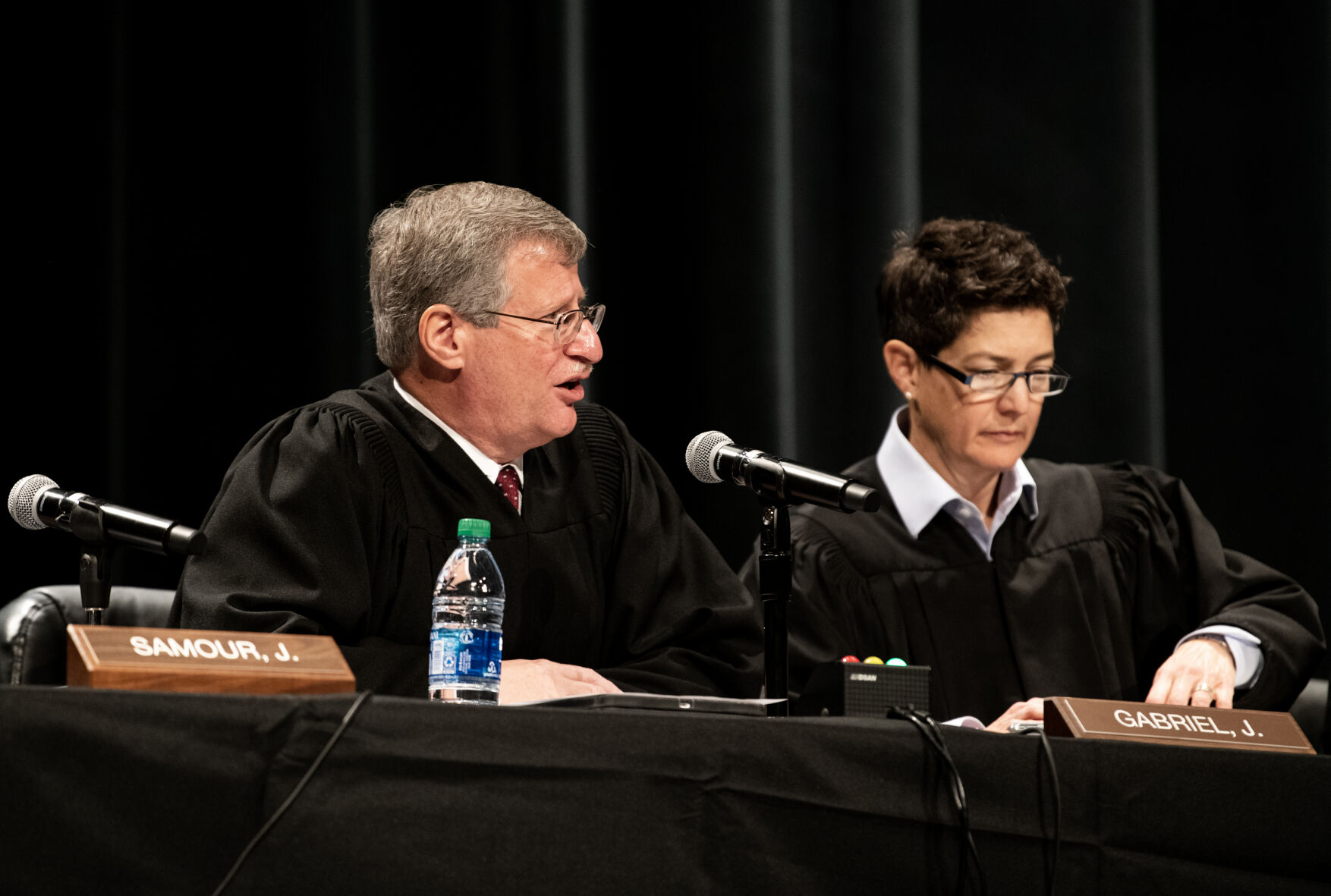
Domestic violence treatment imposed after a criminal conviction is not “punishment,” the Colorado Supreme Court ruled on Monday, meaning that judges alone can determine whether a crime amounts to domestic violence.
Justice Richard L. Gabriel explained in the June 12 opinion that while state lawmakers have not specified whether a finding of domestic violence is meant to be punitive, there are other, non-punishment reasons for requiring defendants to undergo domestic violence treatment.
The treatment is “designed to reduce the occurrence of future acts of domestic violence and thus promotes deterrence,” Gabriel acknowledged, but “it does not promote the traditional punitive goal of retribution.”

Defense attorneys sharply criticized the idea that mandatory treatment, costing defendants hundreds or thousands of dollars, does not function as punishment.
“People don’t perceive that as ‘you’ve trying to rehabilitate me. You’re trying to do this wonderful favor,'” said Jeffrey S. Gard. “I know a lot of people who, at the end of 36 weeks of domestic violence counseling, are broken, pissed off and do not feel that he or she should have had to do that.”
“The ruling doesn’t surprise me,” added Tristan Gorman of the Colorado Criminal Defense Bar, “but it is surprising how easy it is for people sitting on the bench to say this isn’t punishment because they have no idea what it’s like for an indigent defendant.”
The justices took up the issue in order to examine whether Colorado’s process of letting judges label a crime “domestic violence” complies with U.S. Supreme Court precedent. Specifically, the nation’s highest court has held that evidence used to increase a penalty above the legal maximum requires a jury to make findings beyond a reasonable doubt.
Courts have previously concluded that certain consequences of criminal convictions are not punishment. For example, the requirement for sex offenders to register, while onerous and stigmatizing, is not recognized as punishment.
In the case of Trevor A. Pellegrin, an El Paso County jury convicted him of stalking and harassment after he posted a nude photo of his former partner on craigslist with the location of her home, also telling readers to text or call the woman’s phone number for a “free good time.” The victim received dozens of vulgar texts from strangers as a result, which included photos of genitals, and she temporarily moved out of her apartment.
Pellegrin received a jail sentence plus probation. The trial judge, finding the offenses amounted to domestic violence, also ordered Pellegrin to complete treatment – which, under Colorado law, is “in addition to” the sentence.
The state’s Court of Appeals upheld Pellegrin’s convictions, labeling the treatment as a “condition,” rather than an added punishment.
On appeal to the Supreme Court, the government argued the treatment requirement is meant to “better the defendant and protect society,” so there is no need for juries to weigh in. Pellegrin countered that a domestic violence finding carries serious consequences, including a prohibition on firearm possession.
“The effects are so punitive that a jury trial right applies,” argued Deputy State Public Defender Emily Hessler.
Gabriel, in the Supreme Court’s opinion, indicated that domestic violence treatment is not a “historic form of punishment,” and is instead connected to the “alternative purpose” of rehabilitation.
“(T)o be sure, some burden to a defendant results from the imposition of domestic violence treatment,” he wrote, alluding to the cost of paying for treatment. But “we cannot say that any such burden is excessive in relation to its rehabilitative purpose.”
Gard, the defense attorney, called it a “no brainer” that juries should determine whether a crime is domestic violence, especially because a conviction imposes consequences for a person’s Second Amendment rights.
“A judge always makes the finding of domestic violence,” he said. “I do think juries would take a more somber look, a longer look, at ‘what is domestic violence? And does this apply to that definition?'”
The Supreme Court also ruled that harassment is not a lesser offense of stalking. Therefore, Pellegrin’s separate convictions did not merge together. Justice Monica M. Márquez wrote separately to say that while she agreed with that outcome, she had concerns about the logic employed in the majority opinion.
The case is Pellegrin v. People.

Colorado justices to hear appeal in Kendrick Castillo death lawsuit, ‘fugitive’ rule
Michael Karlik
michael.karlik@coloradopolitics.com
Updated 14 hours ago
The Colorado Supreme Court announced on Tuesday that it will decide whether it was proper to dismiss a lawsuit over the 2019 shooting death of Kendrick Castillo after the defendants paid the maximum amount of damages available to Castillo’s parents,...

Arapahoe County judge’s frustration with defense lawyer not grounds for new trial
Michael Karlik
michael.karlik@coloradopolitics.com
Updated 16 hours ago
Colorado’s second-highest court decided last week that an Arapahoe County judge’s repeated rebukes of a defense attorney and orders to “be quiet” did not rise to the level of bias or a violation of the defendant’s due process rights. A...

Divided appeals court upholds vehicle theft conviction despite unclear origin of car’s value
Michael Karlik
michael.karlik@coloradopolitics.com
Updated 12 hours ago
Colorado’s second-highest court upheld a defendant’s conviction for aggravated motor vehicle theft last week, even though it was unclear how the Thornton Police Department estimated the value of the stolen car. Officer Marc Faivre encountered Ashley Shelee Gibbens-Martinez in a...
Disgraced ex-CBI analyst Missy Woods sentenced to prison in DNA scandal
Jenny Deam
jenny.deam@gazette.com
Updated 16 hours ago
A Jefferson County district court judge on Tuesday sentenced a disgraced former Colorado Bureau of Investigation DNA analyst to a decade in prison for altering and deleting data in scores of criminal cases over several years. Jefferson County District Judge...

Parenting from prison: Inmates hope to be present in their children’s lives, while physically absent
Marianne Goodland
marianne.goodland@coloradopolitics.com
Updated 21 hours ago
The room was decorated with balloons, the tables sparking bright with colors as the smell of pizza and cake wafted through the air. As did music. This was, after all, a father-daughter dance. Except this was not a typical father-daughter...
Appeals court confirms Colorado judges can compel electronic records from out of state
Michael Karlik
michael.karlik@coloradopolitics.com
Updated 3 days ago
Colorado’s second-highest court clarified on Thursday that judges are empowered to compel out-of-state companies to produce electronic records under state law. El Paso County jurors convicted Mischa Jargowsky on three counts of money laundering and one violation of Colorado’s organized...

10th Circuit upholds finding of no racial discrimination against family at Denver Chili’s
Michael Karlik
michael.karlik@coloradopolitics.com
Updated 5 days ago
The Denver-based federal appeals court agreed on Wednesday that a Black plaintiff failed to show that a Chili’s manager’s request for her family to provide valid payment at the outset of their meal amounted to racial discrimination. Markesha Futrell-Smith filed...

Appeals court reinstates Mesa County defendant’s request for DNA testing under new Colorado law
Michael Karlik
michael.karlik@coloradopolitics.com
Updated 6 days ago
Colorado’s second-highest court revived a Mesa County defendant’s petition for DNA testing in his three-decade-old attempted murder case on Thursday, concluding that a trial judge wrongly interpreted a recent Colorado law in dismissing the request outright. Jurors convicted Billy Joe...
Appeals court reverses Denver juvenile’s conviction due to improper expert testimony
Michael Karlik
michael.karlik@coloradopolitics.com
Updated 4 days ago
Colorado’s second-highest court reversed a juvenile defendant’s conviction for unlawful sexual contact on Thursday after an expert witness’s testimony improperly suggested the child victim was telling the truth. The defendant, identified as S.H-S., was around 16 years old when he...

Judge orders home confinement for Barry Morphew
Dennis Huspeni
dennis.huspeni@gazette.com
Updated 6 days ago
An Alamosa County district judge has ordered home confinement for Barry Morphew, who is accused of murdering his wife. Barry Morphew, 59, faces a first-degree murder charge in the death of his wife, Suzanne Morphew, who disappeared Mother’s Day weekend...
PREV
PREVIOUS

Former Colorado Springs Councilwoman Stephannie Fortune has died
Former Colorado Springs Councilwoman Stephannie Fortune has died. Former Mayor John Suthers, who left office June 6, issued a written statement Tuesday morning remembering her as “a great citizen of Colorado Springs.” Lou Mellini, longtime Colorado Springs radio executive and community advocate, has died “She had a servant’s heart and worked in a myriad of […]

Colorado Libertarians ink pact with state Republicans to stand down next year in crucial races
Colorado’s Libertarian Party has agreed with state Republicans to stay out of competitive races in next year’s election where a right-leaning, third-party candidate could be a spoiler, the chairs of both parties announced Tuesday. Colorado GOP Chairman Dave Williams said the agreement he negotiated with Hannah Goodman, his Libertarian counterpart, will boost the chances of […]