

Emotions, GMOs and virtue signalling | GABEL
The majority of corn grown in the U.S. is genetically-modified, a “GMO,” or bioengineered to resist insect damage, tolerate herbicides and resist plant viruses. A favorite old farmer pal of mine loves to tell the story of how prior to GMO corn seeds, the neighborhood pot growers had great success sneaking into corn fields and planting pot among the corn. The plants benefit from the irrigation water and because the farmers didn’t spray herbicides to control invasive weeds – and marijuana – it was of great benefit to the trespassing entrepreneurs. Once farmers began planting herbicide resistant corn, he said the hippies had to find other ways to raise their crop.
People’s running fear of GMO corn seems to stem from the built-in insect protection from a naturally occurring microorganism, Bacillus thuringiensis, or Bt. Bt is widely commercially available to even organic gardeners for control of caterpillars and borer species of pests for $12.99 per quart. It is not labeled or classified as hazardous, though the label does recommend washing your hands after use prior to smoking or eating. That seems fair.
Stay up to speed: Sign-up for daily opinion in your inbox Monday-Friday
The use of GMO corn has allowed U.S. farmers to feed more people, utilize herbicides – safer herbicides, mind you – to control weeds and, in turn, store more carbon through reduced tillage, reduced erosion with stubble left on fields and reduced water usage. It is exactly what consumers have asked of producers. In short, it keeps farmers from being forced to return to 1930s farming practices, which you’ll recall had a very poor outcome. American consumers have certainly not asked any other industry to make leaps and bounds backward and it makes no sense in the case of food production either.
My favorite Yuma County corn farmer averages about 270-290 bushel-per-irrigated acre. In 1984, the same farm was barely yielding 190 bushels-per-acre. The bag of seeds in 1984 cost about $85 whereas last year, bags ran about $310. I’ve said many times I’m no mathlete, but if a farmer plants 1,000 acres at a rate of 2.5 bags-per-acre, it’s a large enough investment that he doesn’t want to see it fail – and the people depending upon it also can’t afford for it to fail.
In 2022, Sri Lanka’s economy was in a frightening freefall after the country’s former President Gotabaya Rajapaksa banned synthetic fertilizer and pesticide imports practically overnight, forcing the country’s farmers to grow entirely organic crops. A group of scientists warned Rajapaksa of the impending disaster and their predictions were correct. Nine in 10 families were suffering significant food instability, fuel lines stretched for days, and nearly 55% inflation was a reality.
Sri Lanka’s ag chemical ban was touted as a $400 million savings and an investment in people’s health and environment, not to mention food self-sufficiency. Rice production dropped 20% in the six months after implementation, forcing the country to spend $450 million on rice imports, exceeding the proposed $400 million in savings. The country’s real cash crop, though, is tea leaves and that production fell by 18% forcing government subsidies to replace the loss of productivity. It was agriculture and self-sufficiency that lifted Sri Lanka out of poverty in the 1960s and it was forcing the hands of farmers based on emotion that sent it back.
Mexico’s Presidential Decree banning genetically modified corn is in direct violation of the USMCA and Mexico’s obligation to use science and risk-based policies to regulate biotechnology in a transparent way. The decree not only threatens the mutually beneficial trade relationship the U.S. and Mexico have enjoyed, but it will make it more difficult for families to put food on the table. The primary reason Mexican President Andres Manuel López Obrador cited for the ban are human health risks and his preference for food sovereignty and self-sufficiency. This should sound familiar.
Self-sufficiency includes the ability of the middle and lower classes to feed themselves. It is projected the cost of corn in Mexico will rise nearly 20% and other goods, like poultry, will rise in price nearly 67%. That is not sustainable for the majority of citizens outside the vocal elite who virtue signal through forcing their beliefs on others who are unable to pay even more for food.
U.S. Secretary of Agriculture Tom Vilsack has long insisted that genetically modified crops are safe and science based. The motivation behind Mexico’s ban on GM corn, of which nearly every bushel grown in the U.S. qualifies, is purely emotional.
Mexico is one of the largest buyers of U.S. corn, with American farmers sending about 17 million tonnes of mostly GMO yellow corn to Mexico annually, the majority of which is used for animal feed. Mexican officials have said they will keep importing GM corn for animal feed. Ironically, the ban has been modified to include only white corn, which is used primarily in tortillas and chips, which is exported back to the U.S. in huge amounts.
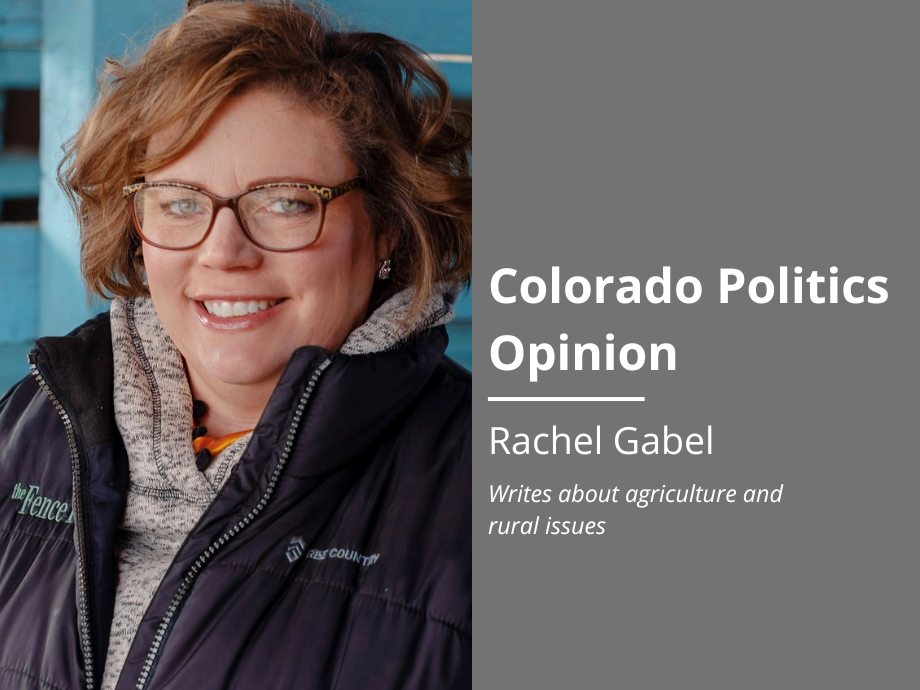
Rachel Gabel writes about agriculture and rural issues. She is assistant editor of The Fence Post Magazine, the region’s preeminent agriculture publication. Gabel is a daughter of the state’s oil and gas industry and a member of one of the state’s 12,000 cattle-raising families, and she has authored children’s books used in hundreds of classrooms to teach students about agriculture.

Will one unqualified AG replace another? | George Brauchler
George Brauchler
george-brauchler@gazette.com
Updated 8 hours ago
Colorado Democrats are poised to nominate another attorney general candidate with de minimis relevant credentials or experience. Far from disqualifying, Colorado’s recent voting history mirrors that of America in favoring biography over experience, partisanship over policy, and emphasizing what divides...
Pueblo’s mayor keeps stirring the pot | Dennis Maes
Dennis Maes
dennis-maes@coloradopolitics.com
Updated 8 hours ago
Pueblo Mayor, Heather Graham, has clearly proven to be a disciple of the Donald Trump school of governance. And, like her mentor, she is experiencing the same catastrophic results. The format is to ignore what the electorate approved and expects...
The perils of Colorado’s unregulated abortions | GUEST COLUMN
Colorado Politics
colorado-politics@coloradopolitics.com
Updated 8 hours ago
By Tom Perille How did the movement which grew out of a genuine concern for the health and safety of women become the same movement that undermines women’s health and safety today? Despite good intentions, it was a long route...
Sans seniors, what does Colorado’s uninterested early turnout say about our disengaged electorate? | Paula Noonan
Paula Noonan
paula-noonan@coloradopolitics.com
Updated 1 day ago
This primary election is poorly attended. Evidence is in the numbers. About 10% of active registered voters are deciding this year’s primaries with seven days to go. If that number triples by June 30, only 30% of voters will decide...

Who gets to decide Colorado’s economic future? | GUEST COLUMN
Colorado Politics
colorado-politics@coloradopolitics.com
Updated 1 day ago
By Sarah Blackhurst Colorado’s prosperity depends on industries that grow our food, build our future and power our homes. But today, these sectors face an invisible threat from 5,000 miles away: the European Union’s Corporate Sustainability Due Diligence Directive (CS3D)....
We have the chance to change Colorado’s cancer outcomes | PODIUM
Colorado Politics
colorado-politics@coloradopolitics.com
Updated 1 day ago
By Erika Hanson Brown Colorado ranks among the healthiest states in the nation by nearly every measure. Yet even here — amid the Rocky Mountains and our deeply rooted culture of health and activity — cancer casts a long and...

Colorado has a playbook for youth mental health — our next governor must use it | GUEST COLUMN
Colorado Politics
colorado-politics@coloradopolitics.com
Updated 3 days ago
By Karen Ron-Li Liaw From the rural communities on the western slope to the eastern plains, to the major urban regions on the Front Range, Colorado families are navigating an all-too-familiar crisis: kids are struggling, and Colorado’s mental health system...

Pigs engineered to fight alpha-gal syndrome | Rachel Gabel
Rachel Gabel
rachel-gabel@coloradopolitics.com
Updated 4 days ago
If I were an evil genius trying to hamstring animal agriculture, I would create a fly that eats livestock alive and a tick whose bite and spit causes some people to have an allergic reaction to meat. (Insert evil laugh...

Registered voters on the eve of the 2026 primaries | Cronin & Loevy
Tom Cronin Bob Loevy
tom-cronin-bob-loevy@coloradopolitics.com
Updated 6 days ago
The Colorado Secretary of State’s Office has published the latest voter registration figures for the state and its counties as of June. Colorado ranks among the highest states for independent, or unaffiliated, voters. Only Alaska and Massachusetts have more. New Hampshire, New Jersey, Maine and Oregon also rank highly. So here...

A room for Sundance, a reality check for big-government Boulder | Jon Caldara
Jon Caldara
jon-caldara@coloradopolitics.com
Updated 1 week ago
There are few things more satisfying to watch than socialists getting mugged by reality. The Sundance Film Festival is invading my hometown of Boulder early next year. Sundance drew 85,000 attendees last year in Park City, Utah. Boulder’s hotel room...
PREV
PREVIOUS

Denver’s gun haters, go to Ukraine | CALDARA
Jon Caldara The gun-phobic, “Here 4 the Kids” just led a protest at the State Capitol demanding Gov. Jared Polis immediately confiscate all guns in Colorado via executive order. They said they’d protest until he does, or until four days passed, whichever came first. Have you ever seen a toddler try to hold his breath […]
For Johnston, fixing Denver daunting, but doable | HUDSON
Miller Hudson The din in the great hall at Union Station drowned out everything but shouted conversations on election night. The expected mayoral winner, Mike Johnston, had moved his watch party from the boutique Maven hotel on Wazee where he hosted his reception following the first round of voting. Homeward bound Colorado Rockies fans trooped […]