

Polis vetoes drug task force, defies Colorado legislature by seeking criminal justice panel reboot
The General Assembly’s decision to allow the Colorado Commission on Criminal and Juvenile Justice to lapse did not go over well with Gov. Jared Polis.
Polis on Tuesday evening vetoed House Bill 1258, a plan by legislative Democrats to replace the commission after they opted against extending it beyond this fall. In a letter announcing the veto, the governor chided them for the pair of moves.
“I would be remiss if I did not mention that the type of study contemplated by HB23-1258 would have been appropriately scoped and conducted by the soon-to-sunset Colorado Commission on Criminal and Juvenile Justice,” Polis wrote.
The governor said he plans to take executive action “shortly” to, in some form, continue the work of the 30-member commission, first set up through legislation in 2007.
HB 1258 would have set up a drug crime task force.
The task force would “study state and local government costs associated with enforcing drug laws, investigating and punishing drug crimes, and rehabilitating those convicted of drug crimes.” The group would then make recommendations to the legislature on how cost savings from fewer drug crimes could be used to fund substance use and dependence programs.
A second provision would have tasked the Colorado School of Public Health with an actuarial cost study on enforcement of drug laws and incarceration.
Polis called the concept well-intentioned but lacking, in that the work would not look at costs, risks, and ramifications “that may accompany a reduction in enforcement of drug crimes and drug crime sentencing.”
The charge to the task force also lacked balance, the governor wrote. He was in favor of action taken by the Senate Judiciary Committee to add requirements such as a two-thirds vote on recommendations, and to remove from the study the most serious drug felonies.
Those changes got no love from the House, which voted on May 8 to reject the Senate amendments and adhere to its position in order to keep the bill closer to its introduced version. The Senate receded from its position, and sent the bill to the governor without the changes he wanted.
Senate Bill 158, which in its original version would have continued the CCJJ until 2028, was introduced in mid-February. But it didn’t get its first hearing until two months later.
It finally passed the Senate three days before the end of the session, and died in the House Judiciary Committee on May 7.
Progressive Democrats believed the commission wasn’t doing enough on criminal justice reform, a view shared by some of their backers, including the ACLU and the Colorado Criminal Defense Bar. Rep. Serena Gonzales-Gutierrez, the Denver Democrat who sponsored the bill, advocated for the commission’s end during the May 7 hearing.
She noted she has been on the CCJJ as a legislative appointee for five years, and said the commission has done good work. But things and times have changed, and this is an opportunity to reassess and re-evaluate that work. Gonzales-Gutierrez, who is leaving the legislature to join Denver City Council, pointed to a lack of representation from people who work in the juvenile justice space.
There are frustrations with CCJJ, added House Judiciary Chair Rep. Mike Weissman. The Aurora Democrat in the past has sponsored seven bills related to the commission’s work.
Sen. Bob Gardner, R-Colorado Springs, was the sole Senate sponsor of the CCJJ sunset bill. He told Colorado Politics he was willing to work with the CCJJ’s critics, shortening the reauthorization from five years to one, for example, to give time to look at the commission’s makeup and mission and whether those were correct.
The bill was postponed indefinitely on a party-line 9-4 vote. That means the CCJJ will officially end on Sept. 1. The commission, housed in the Department of Public Safety, has already canceled its final meetings and any future work.
But the governor believes there is still a need for the commission, and highlighted his future plans in the veto letter on the drug crimes task force.
The work envisioned in HB 1258 “underscores the importance of the state having a multidisciplinary commission with broad representation from across the spectrum such as the CCJJ to take on important subjects relating to criminal justice.” Polis said he would take executive action to continue the CCJJ’s work “in a new forum” and that he contemplates asking the new group to take up the work envisioned in HB 1258.
Polis told Colorado Politics Wednesday he anticipates issuing that execution action in July, after the CCJJ authorization formally expires. The requirements of SB 88, that it draw on the experience and previous work of the commission, also means bringing into this new group some who have or are currently serving on the commission.
“There’s a treasure trove of intellectual resources” among those who have served, Polis said.
Weissman told Colorado Politics he would be interested in some kind of rebooted sentencing commission, and that he will be working on that during the interim.
Gardner said he is pleased with the governor’s veto, as well as for his support for bringing back the CCJJ in some form.
“I applaud the governor for making the point in his veto letter that this kind of effort is something that ought to be conducted by the CCJJ and that we need to have something like the CCJJ,” Gardner, who has been on CCJJ for the past five years, added.

Healthcare freefall: Once built on federal investment, rural hospitals today fight to survive
Thelma Grimes
thelma.grimes@coloradopolitics.com
Updated 1 hour ago
Editor’s Note: Colorado’s healthcare system is entering a period of accelerating instability — a “tsunami,” as multiple leaders describe it — driven by collapsing hospital finances, shrinking Medicaid reimbursements, disappearing services and a political fight over who is responsible for...

Healthcare freefall: Subsidy cuts, insurance gaps reshape how Coloradans will seek care
Thelma Grimes
thelma.grimes@coloradopolitics.com
Updated 8 minutes ago
Editor’s Note: Colorado’s healthcare system is entering a period of accelerating instability — a “tsunami,” as multiple leaders describe it — driven by collapsing hospital finances, shrinking Medicaid reimbursements, disappearing services and a political fight over who is responsible for...

Healthcare Freefall: Finger‑pointing intensifies as Colorado’s healthcare system strains under rising costs, shrinking coverage
Thelma Grimes
thelma.grimes@coloradopolitics.com
Updated 1 hour ago
Editor’s Note: Colorado’s healthcare system is entering a period of accelerating instability — a “tsunami,” as multiple leaders describe it — driven by collapsing hospital finances, shrinking Medicaid reimbursements, disappearing services and a political fight over who is responsible for...
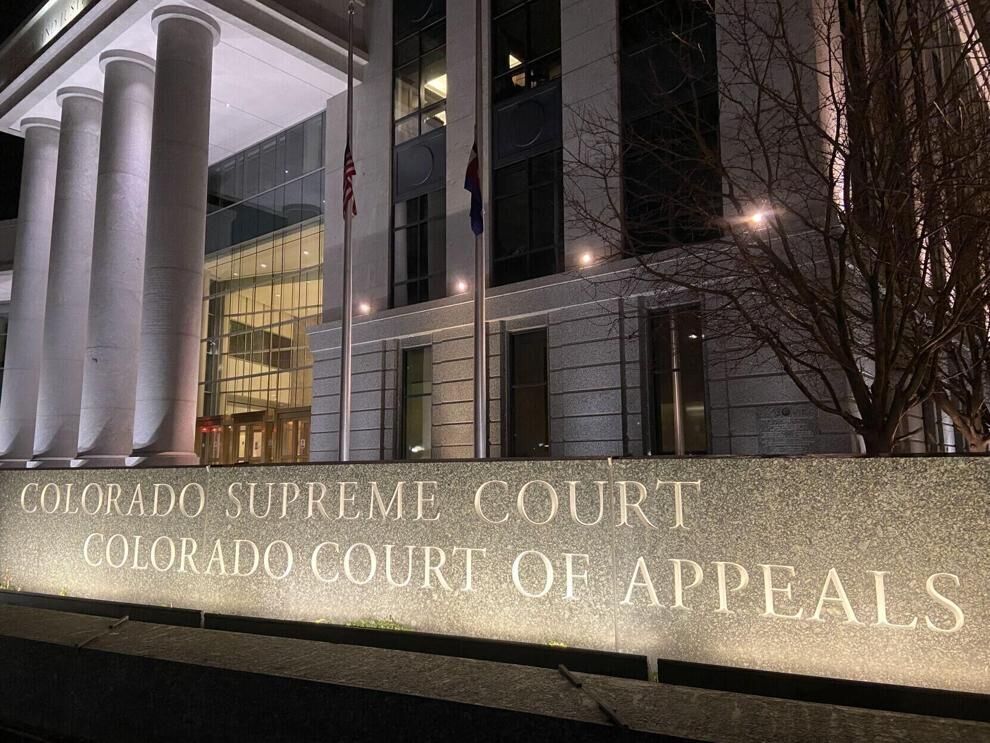
Colorado appeals judge’s delays in releasing opinions noted by performance commission
Michael Karlik
michael.karlik@coloradopolitics.com
Updated 6 hours ago
The citizen-led performance commission that provides guidance to voters about whether to retain members of Colorado’s second-highest court raised concerns by judges and attorneys that Judge Elizabeth L. Harris sometimes struggles with releasing opinions promptly. Harris, who joined the Court...

DPS board sends $44 million tax increase to Denver voters
Nico Brambila
nico.brambila@denvergazette.com
Updated 3 hours ago
The Denver Public Schools board on Thursday unanimously voted to place a mill levy override on the November ballot that — if approved by voters — would raise taxes by $43.9 million annually, largely to fund employee raises. The request...
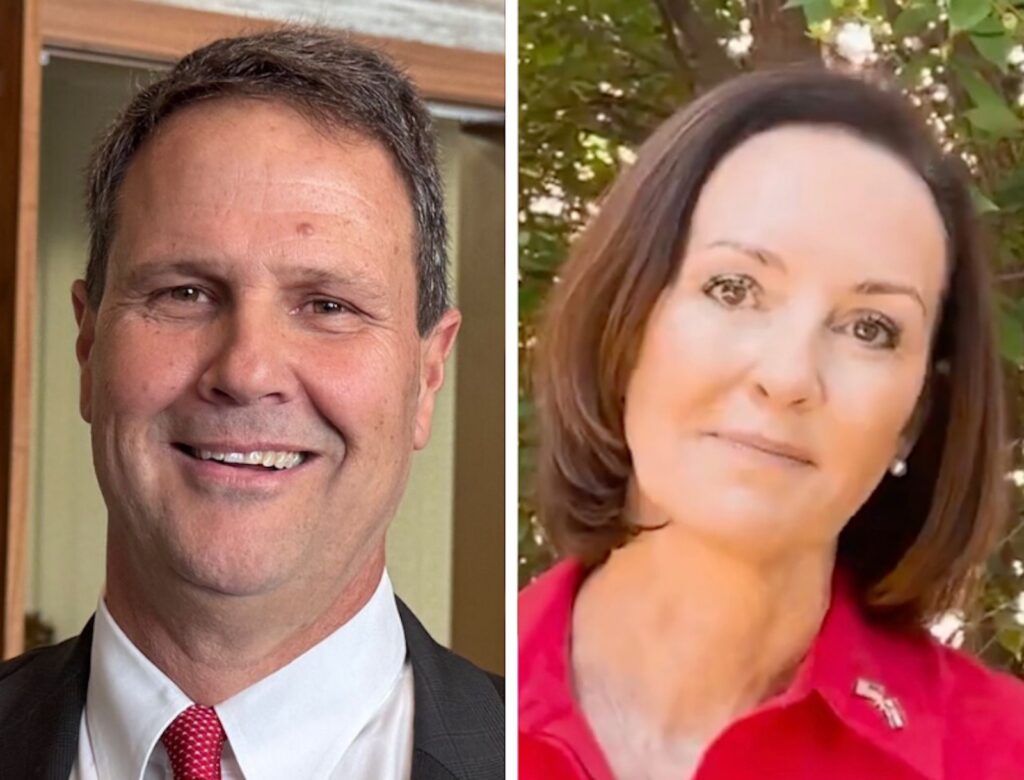
Jeff Crank, Jessica Killin set to face off in 2 debates in Colorado’s 5th Congressional District
Ernest Luning
ernest.luning@coloradopolitics.com
Updated 2 hours ago
Republican U.S. Rep. Jeff Crank and Jessica Killin, his Democratic challenger, have agreed to debate twice in the weeks leading up to the general election in Colorado’s 5th Congressional District, their campaigns have said. Crank is seeking a second term...
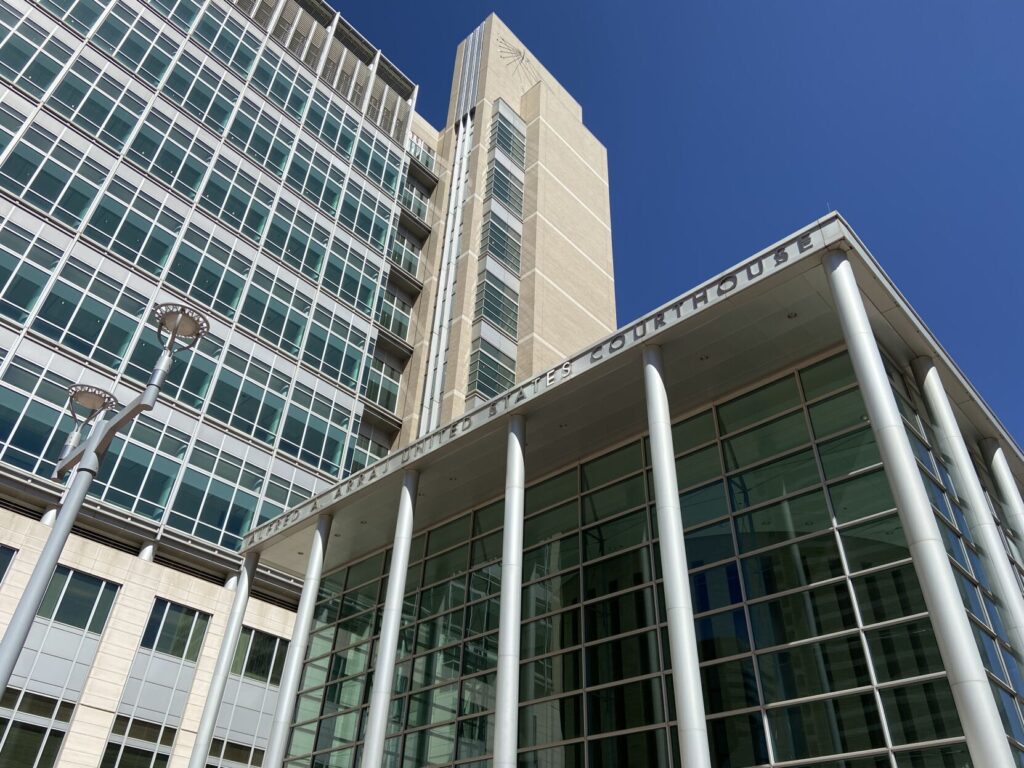
Colorado judge explores sanctions against DOJ, ICE for rearresting man 4 days after release on bond
Michael Karlik
michael.karlik@coloradopolitics.com
Updated 19 hours ago
A federal judge in Colorado is considering sanctions against the government after immigration agents rearrested a man four days after an immigration judge found him suitable for release on bond. On July 28, U.S. Magistrate Judge N. Reid Neureiter ordered...

White House deploys private companies to help crack down on cybersecurity breaches
David Zimmermann
david-zimmermann@coloradopolitics.com
Updated 1 day ago
The White House intends to use private companies in the United States to help crack down on cybersecurity breaches perpetrated by transnational criminal organizations. President Donald Trump signed a memorandum on Wednesday, directing his administration to employ the private sector...
Voters prefer socialist over MAGA candidate in 2028 matchup: Poll
Mabinty Quarshie
mabinty-quarshie@coloradopolitics.com
Updated 23 hours ago
New polling released this week suggests that a socialist candidate would defeat a Make America Great Again candidate in a hypothetical 2028 presidential matchup, a move that implies the reach of progressive leftists isn’t abating despite recent setbacks in Wisconsin....

Fort Carson garrison commander says staff cuts created ‘uncertainty and fear’
Mary Shinn
mary-shinn@coloradopolitics.com
Updated 20 hours ago
The Fort Carson garrison commander departed Wednesday after what he described as a difficult 18 months for installation and garrison staff. “I know the last 18 months has been marked by profound uncertainty and fear, but you weathered the storm...
PREV
PREVIOUS

Expressing qualms over some measures, Gov. Jared Polis signs two dozen bills
With a Wednesday deadline nearing for signing bills from the 2023 General Assembly session, Gov. Jared Polis got to work on Tuesday, adding another 24 new state laws through his signature pen. But many of those signings came with statements expressing displeasure or concerns about either the process for those bills or gaps that will […]

Alan Salazar named interim CEO of Denver Water
The man who has served as chief of staff to Denver Mayor Michael Hancock since 2016* has been named interim CEO and manager of Denver Water, the state’s largest water provider. Alan Salazar was chosen by the Denver Board of Water Commissioners to replace Jim Lochhead, who has led Denver Water since 2010. Salazar will begin […]