

Leaky Colorado orphan oil wells being sealed through public-private partnership
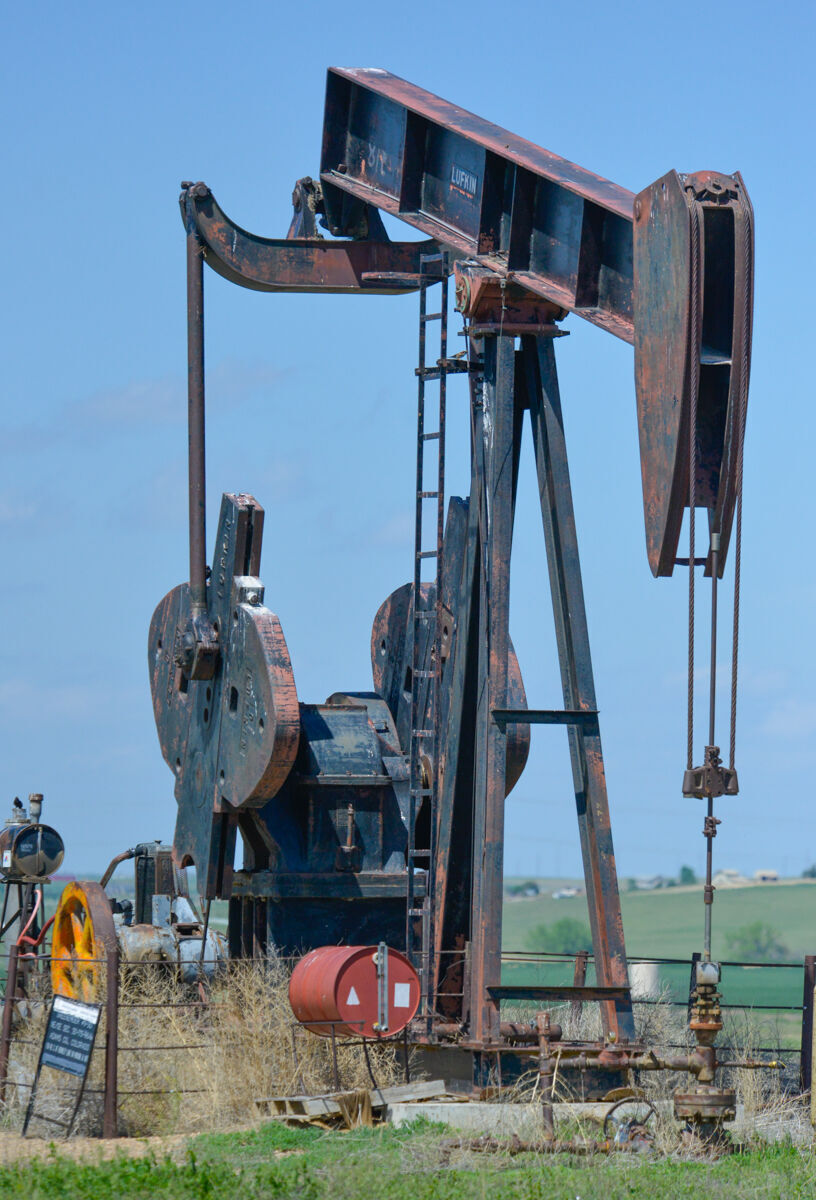
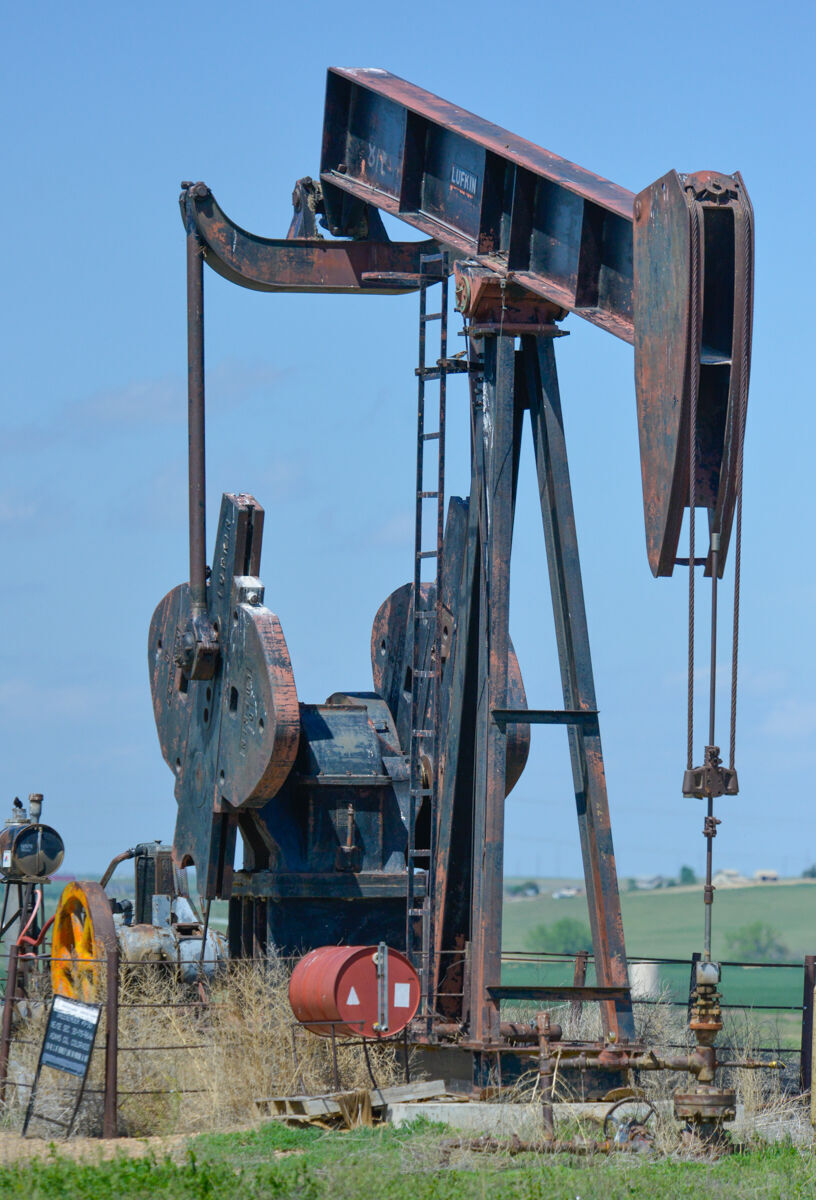
U.S. Sen. John Hickenlooper met with oil industry and environmental officials Thursday at an “orphan” oil well to kick off a remediation program for 42 abandoned oil and gas wells in Adams County.
Adams County Commissioner Lynn Baca said there are more than 300 orphan wells in the county, and more than 1,100 statewide.
“Orphan wells are a constant nagging source of pollution, but they’re also ticking time bombs,” Hickenlooper said. “You end up with a lot of these wells that were drilled by small operators, people that didn’t have the resources to properly plug them and make sure that you don’t have methane seeping out. We respect that Adams County is leading the state and setting up the priorities necessary to find these wells, identify the resources, and then get the right professionals in so they get capped properly. Because again, doing this half-assed, it’s just a bad solution for everybody.”
Fuel spill cleanup underway in Woodland Park
The event was held at an abandoned well site that was drilled in 1975 and was closed in April 2018. The operator, Houston-based Painted Pegasus Petroleum, filed for bankruptcy in late 2021, abandoning 195 wells throughout Colorado – including the one visited by Hickenlooper, according to reports.
The project is part of a partnership between private industry, state regulators and county officials.
Civitas Resources, a Denver-based oil and gas producer, CarbonPath, a carbon offset registry that helps finance permanent closures of orphan oil and gas wells, and Greenfield Environmental Solutions, which focuses on the remediation and certification of well sites, have come together to deal with these abandoned, often-leaking wells.
“Doing the right thing is always a team effort and as a Colorado-based company, Civitas is proud to do its part because our employees live, work and enjoy the outdoors here, too,” Civitas Chief Sustainability Officer Brian Cain said. “As Colorado’s first carbon neutral oil and natural gas company, we have also committed to plugging 42 orphaned wells in partnership with the state to further improve our air quality and safeguard our communities.”
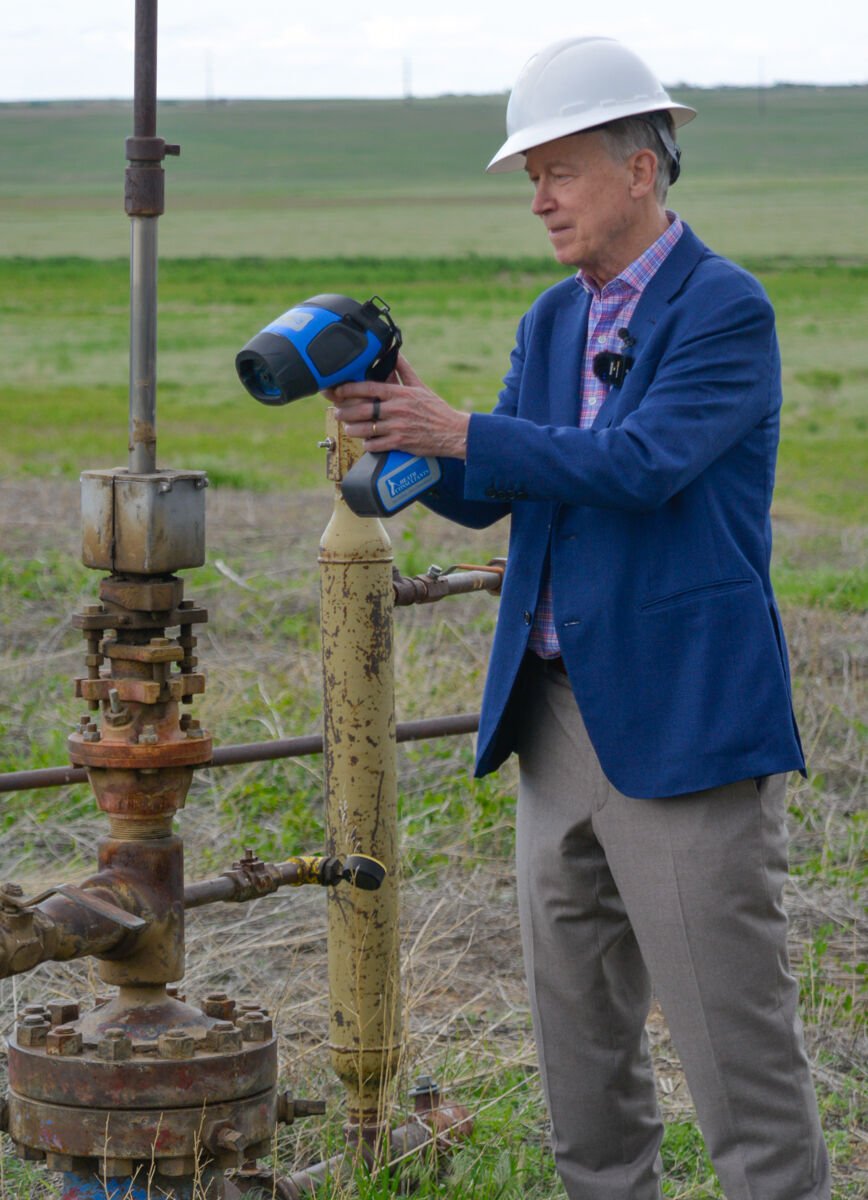
At the event, Greenfield demonstrated some of its advanced technology for detecting and quantifying leaks from oil and gas infrastructure, including handheld laser devices and optical imaging tools as well as a “sniffer” that can determine how much gas is escaping from a well site.
“We started up a year ago, in March of 2022,” CEO Michael Rigg said. “We built kind of a one-stop shop solution for plugging oil and gas wells. So we own the whole kit of equipment, and we also do the methane quantification and with partners we’ll do the land reclamation.”
Colorado may join in nuclear power generation renaissance
Chris Rice, Greenfield’s environmental supervisor, said plugging the well involves removing various down-hole parts, including the rod and pump that lift oil to the surface, and much of the well casing and then using special cement to seal the well bore permanently.
“The state of Colorado regulates how you plug the well,” said Rice in an interview with The Gazette. “You have to submit a plugging plan. It’s an engineered plugging design. I think that the big difference here is that we go out afterwards and actually confirm that it’s not leaking with a series of instruments. That’s not currently in the rules and regulations. But that’s standard practice for Greenfield.”
After the well has been sealed – if the contract calls for it, as it does with this well – all the infrastructure including tanks, underground piping, other equipment and the pumpjack itself, is removed. That’s along with any contaminated soil, and the surface is restored to a natural state.
“In the long run, if you’re a landowner, you want to get this cleaned up. If you’re worried about air quality and leaks, you want to get this cleaned up. And yeah, it’s tough,” said Rigg. “We plugged our first well in May of 2022. We saw this was a great place to help operators deal with the changing regulatory environment and plug wells.”


Federal judge hears ICE agents’ confusion about law, injunction on warrantless arrests
Michael Karlik
michael.karlik@coloradopolitics.com
Updated 9 hours ago
A federal judge heard testimony on Tuesday from U.S. Customs and Immigration Enforcement agents in Colorado, who had trouble describing the requirements of his recent injunction and the training they received on making warrantless arrests pursuant to the law. On...

10th Circuit dismisses challenge to Colorado legislature’s decorum rules
Michael Karlik
michael.karlik@coloradopolitics.com
Updated 15 hours ago
The Denver-based federal appeals court concluded on Tuesday that Colorado lawmakers cannot be sued for creating and enforcing rules of decorum that circumscribe the public commentary allowed at legislative committee hearings. A three-judge panel of the U.S. Court of Appeals...
U.S. energy secretary warns Colorado’s energy policies could drive up prices, deter businesses
Scott Weiser
scott.weiser@gazette.com
Updated 14 hours ago
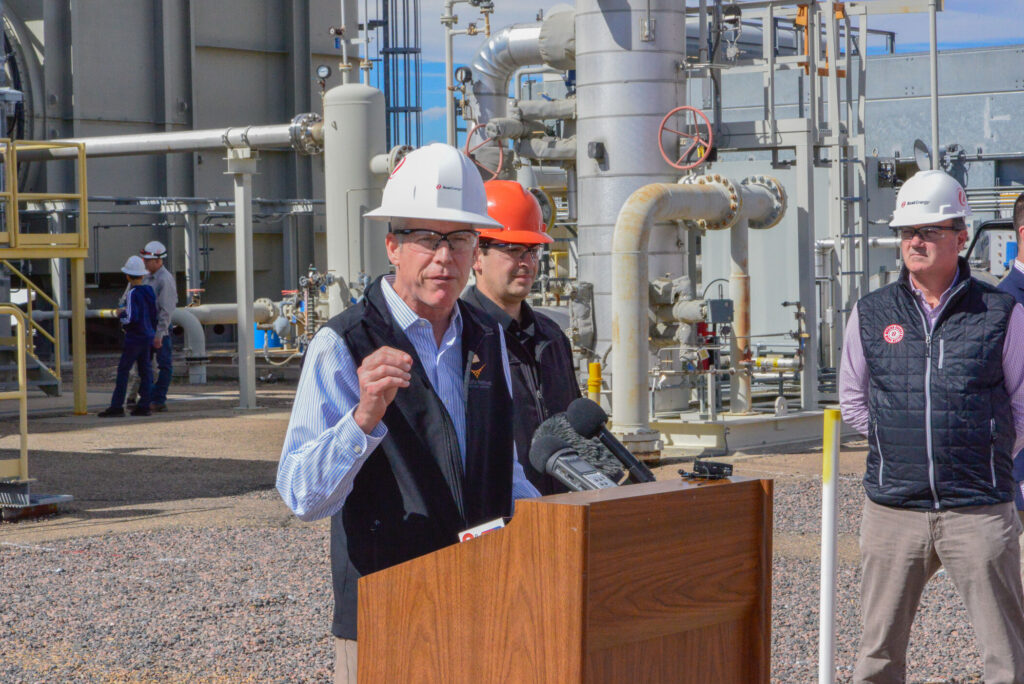
U.S. Energy Secretary Chris Wright on Monday warned that Colorado’s energy policies could lead to higher electricity prices and deter businesses, such as data centers, from locating in the state. Wright, a former executive of a Colorado-based energy company tapped...

Split vote by Colorado Title Board stops ballot push to privatize Pinnacol Assurance
Marianne Goodland
marianne.goodland@coloradopolitics.com
Updated 18 hours ago
The Colorado Title Board, a three-member panel that sets the language for ballot measures, recently reversed a prior decision and blocked a proposal to privatize Pinnacol Assurance from moving forward. The main issue decided by the title board is whether...

Jackson and Kavanaugh disagree over if the Supreme Court treats Trump like Biden
David Zimmermann Washington Examiner
davidzimmermannwashingtonexaminer@wpstage.coloradopolitics.com
Updated 19 hours ago
Supreme Court justices Ketanji Brown Jackson and Brett Kavanaugh disagreed on Monday over whether the high court treats President Donald Trump the same as former President Joe Biden in cases brought by their respective administrations. Jackson, who often writes dissents...

Rand Paul announces tentative date for Mullin DHS confirmation hearing
Washington Examiner Staff, Washington Examiner
washington.examiner.staff.washington.examiner@gazetteedit.wpenginepowered.com
Updated 19 hours ago
The nomination of Sen. Markwayne Mullin (R-OK) to be the next Department of Homeland Security Secretart was officially sent to the Senate by the White House on Monday. Mullin was nominated on March 5 by President Donald Trump to replace...

Trump calls SAVE America Act his ‘No. 1’ priority for House GOP
Rachel Schilke, Washington Examiner
rachel.schilke.washington.examiner@gazetteedit.wpenginepowered.com
Updated 19 hours ago
DORAL, Florida — President Donald Trump made his “biggest plea” to House Republicans on Monday: Pass the SAVE America Act, a GOP voter identification bill, even if it takes the rest of this year. A little over 100 of the...

Colorado Senate panel OKs bill named for Boulder teen cyclist killed in 2023 crash
Marissa Ventrelli
marissa.ventrelli@coloradopolitics.com
Updated 13 hours ago
The Senate Judiciary Committee on Monday gave unanimous approval to a bill that would require law enforcement officers responding to crashes resulting in serious injury or death to offer drivers a voluntary breathalyzer test. Sponsors hope the measure would provide...

Fort Carson-based soldier killed in Iranian attack
Mary Shinn
mary-shinn@coloradopolitics.com
Updated 21 hours ago
A Fort Carson-based soldier is among the U.S. service members killed in an attack by Iran during Operation Epic Fury, according to a Department of Defense news release. Sgt. Benjamin N. Pennington, 26, died Sunday of injuries sustained during an...
Colorado open records bill dies in Senate committee
Marianne Goodland
marianne.goodland@coloradopolitics.com
Updated 20 hours ago
Efforts to overhaul Colorado’s open records law stalled anew. A proposal that would have extended response times for public records requests and added accountability measures for late responses failed to advance out of its first committee and will not move...
PREV
PREVIOUS

Critics: Polis' property tax plan guts TABOR refunds
Gov. Jared Polis’ plan to offer relief to property taxpayers effectively guts refunds from the Taxpayer’s Bill of Rights by compounding the amount the state is allowed keep and spend each year, exponentially shrinking the money that Coloradans get and potentially eliminating it altogether at some point, according to critics of the proposal. Critics charged […]

DIA ignores recommendations for fair competition in contracts: Auditors
Back in 2016, Denver International Airport authorities structured a multi-year, multi-million dollar contract for shuttle services in a way that effectively favored only one company – its existing vendor, auditors who reviewed that bidding process concluded two years ago. A follow up audit this year said DIA officials are still ignoring recommendations to ensure fair […]