

Colorado Supreme Court considers whether vestige of death penalty still applies

On July 1, 2020, Colorado ended the death penalty for the most serious criminal offenses, following a multiyear effort from Democratic lawmakers – with some Republican support – to join 21 other states in abolishing capital punishment.
But three years later, Colorado’s death penalty is not completely dead.
Last week, the state Supreme Court heard oral arguments in a case that focuses on one specific provision of the Colorado Constitution. Generally, people accused of criminal offenses are eligible for release on bail pending trial. There is a constitutional exception, however, for “capital offenses.”
“Capital has always meant ‘cut the head off,’ punish by death. That’s a term we don’t question the meaning of, and no case has ever held that capital means anything other than punishable by death,” argued defense attorney Adrienne R. Teodorovic to the Supreme Court.
Teodorovic represents Jerrelle Aireine Smith, who was allegedly involved in the murder of Ryan Dillard in October 2021 in connection with a payroll scam. Charged with first-degree murder, an Adams County judge denied bail to Smith on the grounds that the end of the death penalty did not end the prohibition on bail for “capital offenses.”
The Supreme Court agreed to hear Smith’s appeal directly, and the justices were confronted with two options – developed by other states – for interpreting the constitutional exception to bail for capital offenses.
Under the “penalty theory,” which the majority of states with similar constitutional provisions subscribe to, an offense is capital simply when the punishment can include death. Colorado, on the other hand, adheres to the “classification theory,” in which some crimes, like murder, are deemed capital regardless of the punishment.
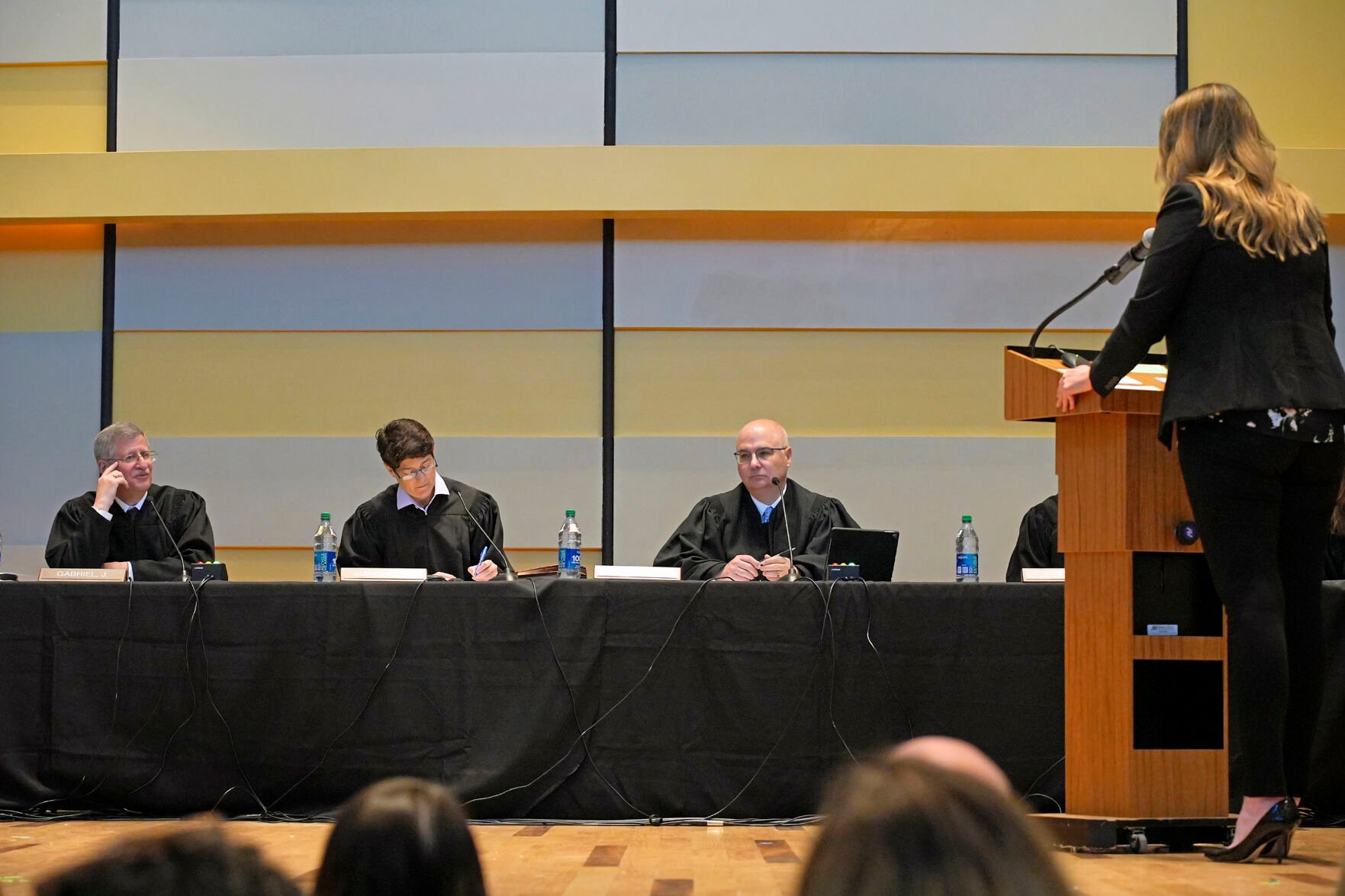
“You would agree at the time the constitution was adopted, capital offense meant punishable by death?” Justice Richard L. Gabriel asked the prosecution.
Senior Deputy District Attorney Todd Bluth took a long pause, then recommended the Supreme Court not define what “capital offense” meant. Instead, Bluth suggested allowing voters to amend the constitution to clarify whether offenses that were formerly death penalty-eligible may now entitle defendants to a bail hearing.
Colorado’s embrace of the classification theory originated with a short 1972 opinion from the state Supreme Court in Dunbar v. District Court, decided two months after a U.S. Supreme Court ruling put an effective moratorium on the administration of the death penalty. In Dunbar, the state Supreme Court declared, without elaboration, “Our Constitution has defined a class of crimes which permit the denial of bail. Murder is within that class of crimes.”
Nearly five decades later, the New Mexico Supreme Court addressed in 2018 whether its own legislature’s abolition of the death penalty rendered former capital offenses eligible for bail under the state’s similar constitutional provision. Noting that no court had ever upheld the denial of bail under such circumstances, New Mexico’s justices blasted Dunbar and similar classification theory decisions as “ungrounded in principle.”
Colorado’s justices acknowledged Dunbar may not apply anymore given that the circumstances surrounding the death penalty in 1972 do not exist in 2023.
“All of our prior cases were from a time when the death penalty was imposed in Colorado,” said Justice Melissa Hart. “Doesn’t that change the landscape?”
“Is there any state in the country at this point that has adhered to the classification theory in the wake of legislative abolition of the death penalty?” added Justice William W. Hood III.
Teodorovic, the lawyer representing Smith, responded that she knew of none.
The government warned that allowing people accused of murder to be considered for bail could imperil community safety. Teodorovic countered that defendants charged with non-first-degree murder already have the ability to seek bail, and a defendant is less able to prepare a defense when incarcerated.
Hood wondered if most of the defendants who would be affected by a favorable decision from the Supreme Court would not, in reality, receive the benefit of bail.
“Most people who are charged with first-degree murder, if they have a bond amount imposed, it’s typically going to be a six-figure bond amount, is that right?” he asked. “How often are people posting on six-figure bonds?”
“It’s going to be difficult for many of the people we represent,” said Teodorovic, “because they are considered indigent and below the poverty line.”
The court held oral arguments at Colorado Mesa University in Grand Junction as part of its “Courts in the Community” program. Justice Carlos A. Samour Jr. was not present for arguments, but he is still participating in the case.
The case is People v. Smith.

Colorado Supreme Court reverses 2 Chaffee County judges for imposing fee on habeas petitioner
Michael Karlik
michael.karlik@coloradopolitics.com
Updated 13 hours ago
The Colorado Supreme Court rejected two separate appeals earlier this month from an incarcerated defendant seeking immediate release from prison, but concluded that two Chaffee County judges incorrectly required him to prepay filing fees for his cases. David J. Gottorff...
Weld County judge wrongly denied bail to murder defendant in gap between law change
Michael Karlik
michael.karlik@coloradopolitics.com
Updated 10 hours ago
Colorado’s second-highest court ruled this month that a Weld County judge was wrong to deny bail to a murder defendant in the window between the state Supreme Court’s recognition of the right to bail and the voters’ subsequent overruling of...
Defendants acquitted by insanity are eligible for records-sealing, appeals court says
Michael Karlik
michael.karlik@coloradopolitics.com
Updated 7 hours ago
Colorado’s second-highest court clarified last month that defendants who are found not guilty by reason of insanity are eligible to have their criminal records sealed from public view. Judges must seal criminal records if, among other things, a defendant is...
Colorado Supreme Court shuts down ‘new form of representation’ in postconviction cases
Michael Karlik
michael.karlik@coloradopolitics.com
Updated 1 day ago
While unrepresented defendants in postconviction proceedings are permitted to have a court-appointed attorney investigate and augment their claims, that is not the case when a private lawyer authors the original petition, the Colorado Supreme Court decided on Monday. In contrast...

Colorado State Shooting Association files constitutional challenge to firearms dealer law
Marissa Ventrelli
marissa.ventrelli@coloradopolitics.com
Updated 1 day ago
A firearms group has filed a lawsuit challenging a recently signed law expanding regulations for firearms dealers in Colorado. House Bill 26-1126 clarifies that firearms dealers must hold both a federal and state license to operate. The bill also allows the...
Colorado justices walk back appeals court’s expansion of rezoning via ballot box
Michael Karlik
michael.karlik@coloradopolitics.com
Updated 2 days ago
The Colorado Supreme Court ruled on Monday that rezonings of planned-unit developments cannot occur through a vote at the ballot box, reversing an appellate decision that found such changes were fair game for a popular vote. In contrast to traditional,...

Colorado Supreme Court recognizes right to self-defense in workplace
Michael Karlik
michael.karlik@coloradopolitics.com
Updated 1 day ago
The Colorado Supreme Court recognized on Monday that there is a right to self-defense in the workplace for which employers may not terminate workers so long as they lawfully exercise that right. The court’s majority in the 5-2 decision cautioned...

Colorado Supreme Court heads toward summer recess, newest justice authors first opinion | COURT CRAWL
Michael Karlik
michael.karlik@coloradopolitics.com
Updated 2 days ago
Welcome to Court Crawl, Colorado Politics’ roundup of news from the third branch of government. The state Supreme Court is in the process of releasing a large batch of opinions as it heads toward its summer recess in July, plus...
Colorado justices say insurers may access policyholders’ medical info in denied-benefits litigation
Michael Karlik
michael.karlik@coloradopolitics.com
Updated 3 days ago
The Colorado Supreme Court declined on Monday to expand its narrow prohibition on insurance companies accessing policyholders’ medical information, clarifying that a dispute over an insurer’s bad-faith decision to deny benefits is the only situation where a company is limited...
Colorado Supreme Court declines to loosen requirements for insurance company defendants
Michael Karlik
michael.karlik@coloradopolitics.com
Updated 3 days ago
The Colorado Supreme Court declined last week to reconsider its longstanding expectations for insurance company defendants, and agreed that an insurer failed to properly raise its defenses against a policyholder’s breach-of-contract lawsuit. When an insured driver has an accident with...
PREV
PREVIOUS

3 takeaways from the 2023 legislative session
Fresh from an election that gave them supermajority control of the House and expanded numbers in the Senate, Democrats flexed their muscle this year to push for hot-button proposals, many of which – guns and abortion, in particular – found their way to Gov. Jared Polis’ desk, who promptly signed them. Here are three takeaways from […]

Study: Colorado's major metros most expensive in US for renters
A new study analyzing data from real estate website company Zillow.com data shows Colorado is the “most expensive US state for renters in its major metropolitan areas,” according to a news release. Researchers looked at rent increases over the past three years in metropolitan statistical area around America and found Colorado’s MSAs saw an average […]