

Federal judge refuses to halt proceedings as podcaster appeals in ex-Dominion exec’s defamation suit
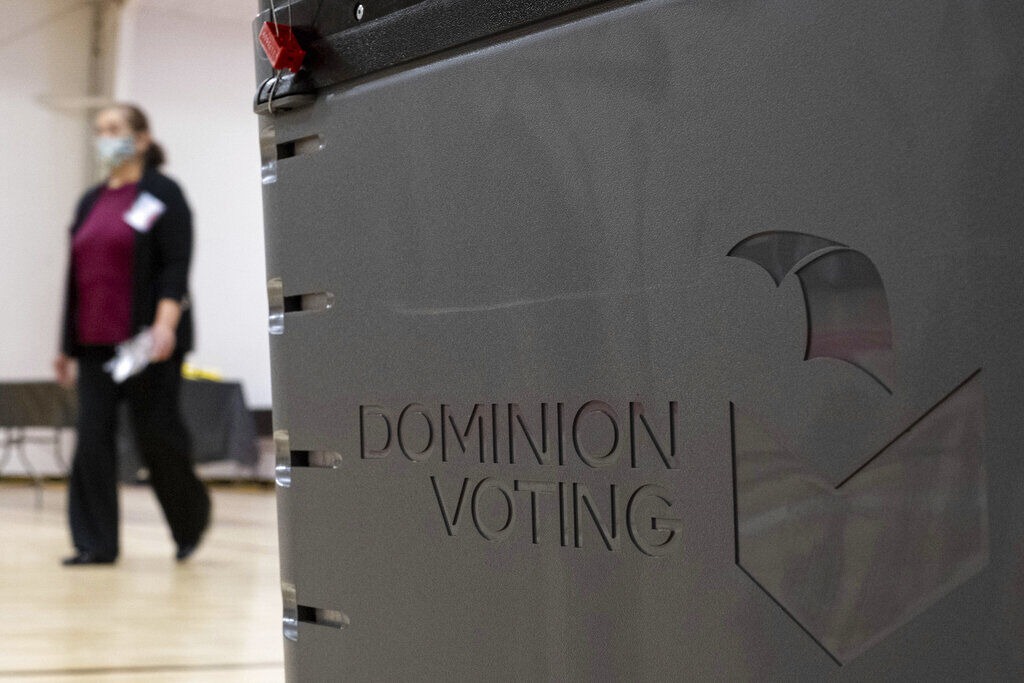
A federal judge who recently declined to dismiss a defamation lawsuit against an Oklahoma podcaster for his alleged lies about election-rigging has now refused to pause the litigation while the defendant appeals.
On March 7, U.S. District Court Senior Judge William J. Martínez found Eric Coomer, the former director of product security and strategy for voting technology supplier Dominion Voting Systems, is likely to prevail on his defamation claim against podcaster Clayton Thomas “Clay” Clark. In the wake of the 2020 presidential election, Clark promoted an unproven rumor that Coomer had allegedly confessed to ensuring former President Donald Trump would not win reelection.
Clark subsequently appealed the ruling to the U.S. Court of Appeals for the 10th Circuit and asked Martínez to halt the proceedings in the trial court. But on Monday, Martínez indicated he would not grant the request in Clark’s interlocutory, or mid-case, appeal.
“Defendants cite to no Tenth Circuit or Supreme Court decision authorizing interlocutory appeal of the denial of their Special Motion to dismiss this action,” he wrote in a May 1 order.
Following Trump’s 2020 loss, Denver-based Dominion was ensnared in allegations that it was involved in a conspiracy to rig the vote. The company fought back against its accusers, with Fox News recently settling for nearly $800 million for its role in propagating unfounded claims that Dominion swung the election to President Joe Biden.
Coomer has also filed multiple lawsuits against conservative personalities over conspiracy theories implicating him.
The litigation before Martínez centers around Colorado podcaster Joe Oltmann, who appeared on Clark’s “Thrivetime Show” alleging he personally heard Coomer say, on a conference call with activists, that Coomer had ensured Trump would not win reelection.
“You have these people like Eric Coomer that are attempting to overthrow what appears to be the will of the people by switching the votes,” Clark responded. He added that Oltmann was “exposing the truth” and Coomer “actually said that.”
“After more than fifteen years as a respected professional at the top of his field, Dr. Coomer’s reputation has been irreparably tarnished,” Coomer’s attorneys wrote in his ensuing defamation lawsuit against Clark.
Clark filed a motion to dismiss under Colorado’s “anti-SLAPP” law, which stands for “strategic lawsuits against public participation.” The General Assembly enacted the law in 2019 to provide a mechanism for quickly disposing of lawsuits that are grounded in protected First Amendment activity – specifically, the rights to free speech and to petition the government.
Martínez denied the motion, finding the allegations credible that Cark and Thrivetime promoted false statements about Coomer maliciously.
Clark then appealed to the 10th Circuit and asked Martínez to halt the proceedings in the trial court. Because the anti-SLAPP law governs whether a person can be held liable for their conduct under the First Amendment, Clark argued his appeal could decide whether the lawsuit is viable to begin with.
Although the anti-SLAPP law authorizes an immediate interlocutory appeal to Colorado’s state appellate court, Martínez noted he is operating according to federal rules. While some types of appeals can occur before a case reaches its conclusion, Clark’s appeal did not fall into that category.
“For these reasons, the Court concludes – until the Tenth Circuit holds otherwise – that the March 7 Order is not among the ‘small class’ of orders for which interlocutory review is authorized,” the judge wrote.
The case is Coomer v. Make Your Life Epic, LLC. et al.


A new day? Colorado’s troubled guardianship office pursues ‘cultural reset’
Marianne Goodland
marianne.goodland@coloradopolitics.com
Updated 3 days ago
Colorado’s guardianship program, long criticized for mismanagement and high staff attrition, is undergoing a “cultural reset,” as its new director works to repair partnerships and prepare for a major expansion under recent legislation. Created by lawmakers in 2017, the Office...
Local party leaders, incoming judge among members of judicial performance commission that violated law
Michael Karlik
michael.karlik@coloradopolitics.com
Updated 1 day ago
A local Democratic leader and 2024 presidential elector. A legislative aide and leader in the Young Republicans. An incoming county court judge freshly appointed by the governor. They are among the eight members of the northeastern Colorado judicial performance commission...
Judge dismisses lawsuit seeking records from Colorado Democratic group
Marianne Goodland
marianne.goodland@coloradopolitics.com
Updated 2 days ago
A lawsuit seeking to obtain records from Democratic lawmakers affiliated with a caucus has been thrown out by a Denver District Court judge. On July 17, Judge Ericka Englert dismissed the April lawsuit filed by progressive activist Derrick Blanton, who...
Colorado Springs mother Deborah Nicholls’ murder conviction overturned
Nick Smith
nick-smith@coloradopolitics.com
Updated 3 days ago
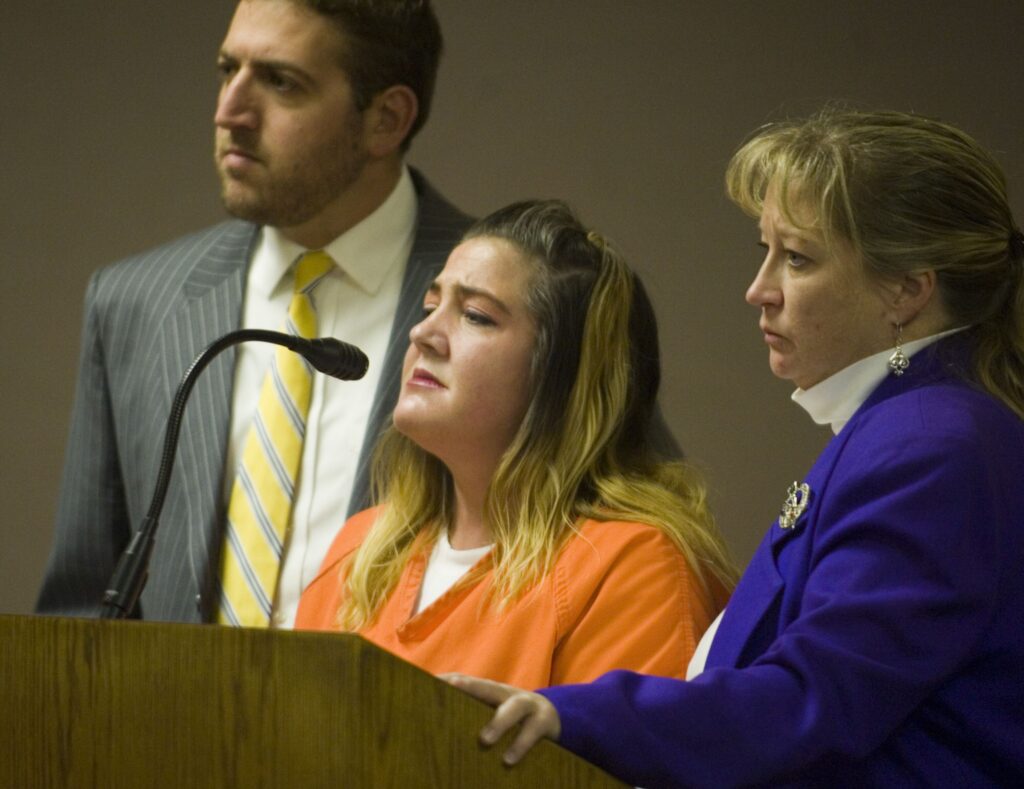
A Colorado Springs mother convicted in 2008 of murdering her three children in a house fire might get a new trial after a judge ruled that prosecutors withheld key evidence that could have impacted the jury’s verdict. Deborah Nicholls, whose...
Colorado court overturns illegal $7,000 restitution order
Michael Karlik
michael.karlik@coloradopolitics.com
Updated 2 days ago
Colorado’s second-highest court overturned a Weld County defendant’s obligation to pay more than $7,000 in crime victim restitution on Thursday because a trial judge failed to issue a legally compliant restitution order at the time of sentencing. In Colorado, as...

Appeals court rejects former DougCo commissioner’s legal fee claim
Nicholas Fogleman
nicholas.fogleman@denvergazette.com
Updated 3 days ago
The Colorado Court of Appeals rejected a former Douglas County commissioner’s bid for reimbursement of attorney fees she incurred while responding to multiple investigations into her conduct. The dispute stemmed from a 2019 anonymous letter sent to county officials alleging...
Appeals court orders second look at Denver Water’s immunity for cyclist’s injury
Michael Karlik
michael.karlik@coloradopolitics.com
Updated 3 days ago
Colorado’s second-highest court ordered another look at a bicyclist’s negligence lawsuit against Denver Water on Thursday, concluding that a trial judge needed to evaluate the utility’s potential immunity using the state Supreme Court’s new guidance. Joseph A. “Joey” Scott alleged...
Labels, duration not definitive proof of ‘intimate relationship,’ Colorado court rules in domestic violence case
Michael Karlik
michael.karlik@coloradopolitics.com
Updated 2 days ago
Colorado’s second-highest court clarified on Thursday that the length of a couple’s relationship and the labels they attach to it are not conclusive evidence of whether it is an “intimate relationship” that can give rise to a domestic violence prosecution....

Colorado AG urges Supreme Court to let Boulder climate lawsuit proceed
Marissa Ventrelli
marissa.ventrelli@coloradopolitics.com
Updated 3 days ago
Colorado Attorney General Phil Weiser has filed a court brief with the U.S. Supreme Court in a lawsuit brought by Boulder city officials seeking to hold oil companies liable for their environmental impact. The case began in 2018, when the...
10th Circuit says landowner cannot sue ex-Routt County judge for statements in decision
Michael Karlik
michael.karlik@coloradopolitics.com
Updated 4 days ago
A Routt County landowner cannot sue a former judge for his allegedly inaccurate statements in a case where the landowner was not a party, the Denver-based federal appeals court decided on Wednesday. Anne Fitzsimmons, who lives in Germany, owns a...
PREV
PREVIOUS
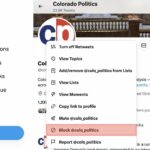
Colorado lawmakers vote to let themselves block constituents on social media
Colorado lawmakers on Thursday decided to allow themselves to block their constituents on social media. If signed into law, House Bill 1306 would give all elected officials in the state the power to block someone from viewing or interacting with an official’s social media pages – for any reason. This would apply to their personal social media […]

Colorado economy slowly grows amid 'disappointing' first quarter nationally
Colorado’s economy crept forward during the first quarter of 2023 albeit at a slower rate than the second half of 2022, signaling to economists an earlier than expected economic slowdown this year. Economists with University of Colorado Boulder Leeds Business Research Division anticipated an economic slowdown during the second half of 2023. But a slow […]