

Polis housing bill wins preliminary Senate OK — but with even more changes
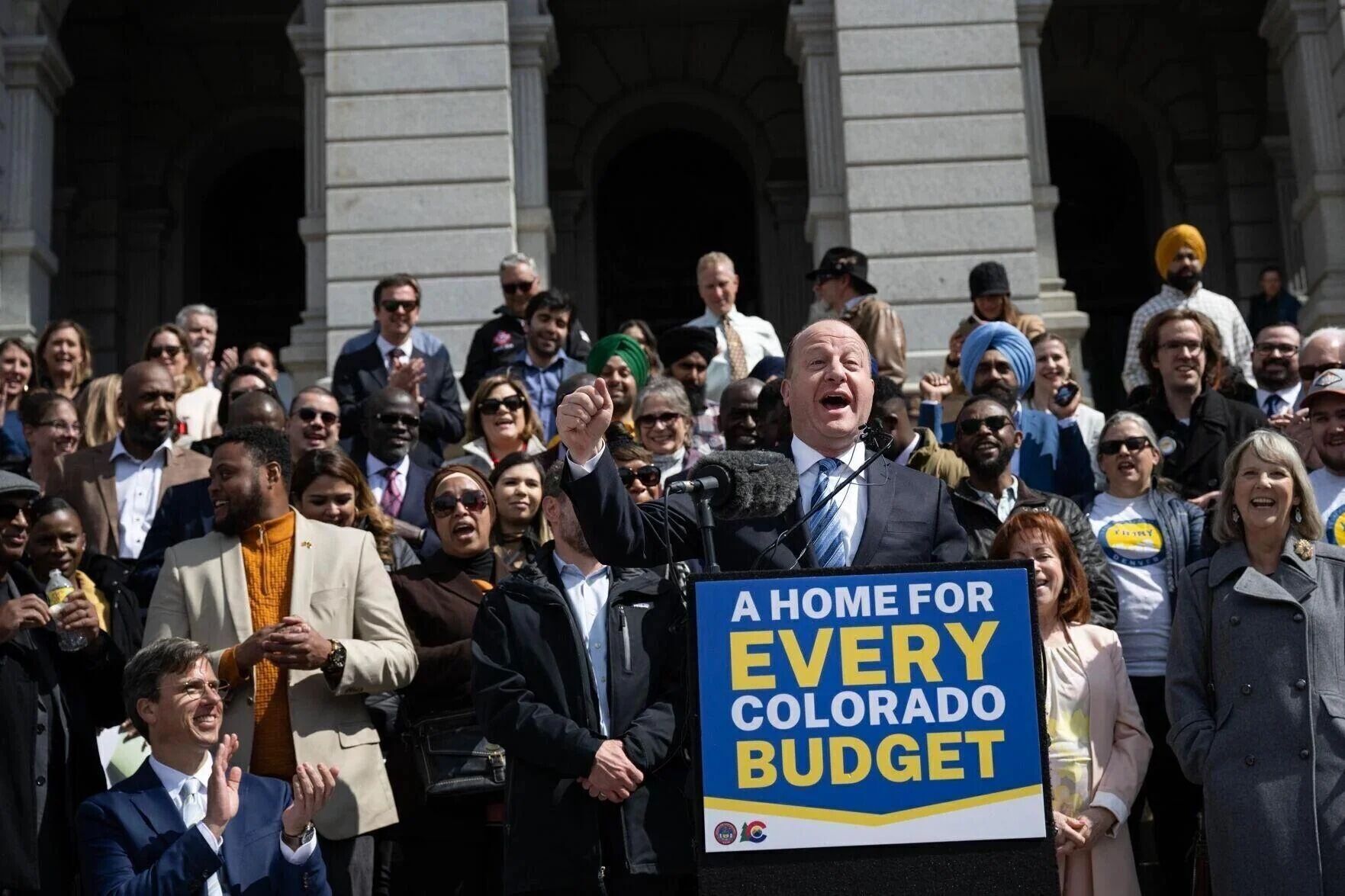
Gov. Jared Polis’ signature housing bill won preliminary approval from the state Senate but not without more changes, though most were minor.
Senate Bill 213, which, as introduced intended to impose state mandates and effectively strip local governments of their authority over land use and zoning, was already gutted in the Senate Appropriations Committee on Wednesday.
What is left is largely a bill requiring a statewide housing needs assessment.
SB 213 started off by allowing the state to take control of local land use planning, which has been the purview of local governments for decades and backed – opponents argued – by 50 years of Colorado Supreme Court rulings. Opponents also said the original bill would be unconstitutional, given that local governments have home rule authority to make their own governance decisions, granted to them under the state constitution.
The measure, while requiring more dense housing to be built in Front Range and rural resort communities, did not require that housing to be affordable.
Supporters believed increasing the supply would drive down prices and make some of that housing – accessory dwelling units: granny flats, townhomes, triplexes and fourplexes – affordable.
Notably, the bill never addressed condo development, long considered more affordable both for first-time homeowners and older Coloradans seeking to downsize.
After several days of delays, the Senate Appropriations Committee on Wednesday tossed the the original bill and replaced it with an amendment, offered by its sponsor, Sen. Dominick Moreno, D-Commerce City. It stripped out most, but not all, of the state control over local government decisions on land use.
The rewritten bill won enough support from key Democrats on the appropriations committee to move it to the full Senate for Thursday’s debate, but not without comments that more changes would be necessary.
A total of 17 amendments, offered by Democrats, made it onto the bill on Thursday.
Several amendments offered during that debate won support from Sen. Barbara Kirkmeyer, R-Brighton, who has offered her own version of the bill in two committee hearings.
Kirkmeyer’s most popular idea, which deals with a statewide housing summit, was among the amendments the Senate adopted.
Another amendment added one more person to a 13-member multi-agency committee, which Republicans have decried as unelected bureaucrats who aren’t answerable to local government constituents. The 14th member would represent special districts and would be appointed by the House minority leader.
An amendment from Sen. Sonya Jaquez Lewis, D-Longmont, however, drew objections from Kirkmeyer and other Republicans that it added requirements to the housing needs assessment they said don’t need to be in state law.
During the bill’s first committee hearing a week ago, Sen. Julie Gonzales, D-Denver, said she wanted to see more language in the bill around affordability and displacement strategies. On Thursday, she got approval for such an amendment. Under the change, the bill would define displacement as the involuntary relocation of residents, along with a host of displacement causes, such as gentrification, in which residents are forced to move because rents and sales prices have exceeded what they can afford and other issues.
She also won support for a nine-page amendment that created a legislative oversight committee on affordable housing and homelessness, along with a task force on the same issue. Both would eventually provide reports on housing issues.
Sen. Dylan Roberts, D-Avon, who also wanted to see changes in the bill when it was in the Senate Local Government and Housing Committee, won support for the ideas that would get his vote. That included a definition of affordability, in part based on regional or preexisting definitions from rural resort communities, and an amendment addressing water that would require both the state water plan and basin implementation plans to be taken into consideration on water supply forecasts.
Those forecasts, under the amended bill, would assess the availability and sufficiency of water supplies for new housing developments.
“This bill is not necessary,” Kirkmeyer said prior to the voice vote. “It’s a power grab.”
She complimented Moreno for removing the state control and for adding the summit provision. Allowing the counties and municipalities to come up with a statewide vision is a good idea but doesn’t need a bill, she said.
It’s unclear whether the governor or the bill’s House Democratic sponsors, Reps. Iman Jodeh of Aurora and Stephen Woodrow of Denver support the changes to the bill in the past few days. The Colorado Municipal League and its allies regard their feedback as key to moving from a position of opposition to support.
SB 213 heads to a final vote on Friday.


Wyoming judge blocks law that bans all but earliest abortions | OUT WEST ROUNDUP
The Associated Press
the-associated-press@coloradopolitics.com
Updated 5 days ago
WYOMING Judge blocks broad abortion ban A Wyoming judge has blocked a new state law that bans abortions beyond the earliest stages of pregnancy while a lawsuit challenging the provision moves ahead. It’s the first court ruling affecting the legal...
Trump order aims to help more people get retirement savings plans in time for new federal match
Collin Binkley
collin.binkley@associatedpress.com
Updated 2 days ago
WASHINGTON • President Donald Trump signed an executive order on Thursday calling for a new government website where people in the United States can find and compare private-sector retirement savings accounts, aiming to help millions of workers whose employers do not offer such...

Colorado Politics Calendar May 4-10
Rachael Wright, Special to Colorado Politics
rachael.wright@coloradopolitics.com
Updated 5 days ago
CoPo’s weekly political calendar will help you find political and public-policy events throughout Colorado. It includes candidate and issue campaign events, public policy meetings, court hearings, state and local party conventions, assemblies, debates, rallies, parades, speaking engagements, traveling dignitary appearances,...
Gov. Lamm scolds own party over losing modernization battle against GOP | A LOOK BACK
Rachael Wright, Special to Colorado Politics
rachael.wright@coloradopolitics.com
Updated 5 days ago
Forty-Five Years Ago This Week: “The Democratic Party lost the battles of ideas and political technology last November,” Gov. Dick Lamm told the Boulder County Democratic Party at the annual Harry S. Truman Memorial Dinner. Lamm argued that the Democratic...

The need for a governor to say “no” to his friends | SONDERMANN
By Eric Sondermann
by-eric-sondermann@coloradopolitics.com
Updated 4 days ago
A wise man once remarked that the real test of a governor is his willingness to turn down and reject the pleadings of political friends and allies. That gentleman knew something of what he spoke. He occupied the corner-office executive...

Dismissal sought in Michael Clark’s second trial
Jenny Deam
jenny-deam@coloradopolitics.com
Updated 21 hours ago
The murder conviction of Michael Clark should be dismissed due to a 32-year delay that led to crucial evidence being lost or destroyed, a bungled police investigation and “outrageous conduct” at the state crime lab, according to defense motion filed...

Colorado to get $75 million from opioid settlement with Purdue Pharma
Marissa Ventrelli
marissa.ventrelli@coloradopolitics.com
Updated 2 days ago
A $7.4 billion settlement reached with the pharmaceutical company Purdue Pharma and the Sackler family — its owners — is now legally effective a decade after attorneys general from multiple states launched an investigation and seven years after Colorado filed...

Committee approves reworked version of previously vetoed rideshare bill
Marissa Ventrelli
marissa.ventrelli@coloradopolitics.com
Updated 3 days ago
Members of the Colorado House Business Affairs and Labor Committee voted across party lines to pass a modified version of a bill establishing regulations on rideshare companies. Last year, Reps. Jenny Willford, D-Northglenn, and Meg Froelich, D-Englewood, introduced House Bill...
Fight over credit card ‘swipe fees’ attracts nearly 200 lobbyists in Colorado
Marianne Goodland
marianne.goodland@coloradopolitics.com
Updated 17 hours ago
One of the most expensive fights of the 2026 session got a little closer to being over on Friday, when the Colorado Senate took a second final vote on the proposal to eliminate “swipe fees” on sales taxes. It’s not...

Veto likely as union-backed bill heads to Colorado governor’s desk — again
Marissa Ventrelli
marissa.ventrelli@coloradopolitics.com
Updated 3 days ago
For the second year in a row, a bill that would make it easier for labor organizations to impose fees on all workers, regardless of union membership, is headed for Gov. Jared Polis’ desk. The governor, who vetoed the legislation...
PREV
PREVIOUS

Colorado moves to protect Native American students' right to wear traditional regalia
Native American students in Colorado may soon be guaranteed the right to wear their traditional regalia to graduation ceremonies – thanks to a new bill passed by the state legislature. If signed into law, Senate Bill 202 will require preschools, K-12 schools, public colleges and universities to allow Native American students to wear and display traditional Native American […]

Colorado bill creating HOA and metro district task forces passes Senate committee
A state Senate committee on Thursday approved a bill to set up a pair of task forces that will separately identify problems within homeowners associations and metropolitan districts and offer possible legislative fixes. In a 5-2 vote, the Senate Local Government and Housing committee moved House Bill 23-1105 to that chamber’s panel on appropriations. It […]