

The Farm Bill and bipartisanship | GABEL
Ag groups are either gearing up for a new Farm Bill, in the midst of Farm Bill updates and debates, or groping their way through changes from the previous Farm Bill. Welcome to the midst. This omnibus bill is updated about every five years and it’s a beast of a bill that governs policy on farm income support, food assistance, trade, crop insurance and other timely policy issues.
The most recent Farm Bill, the Agriculture Improvement Act of 2018, is a 530-page monster that covers (get ready): commodity policy, marketing loans, sugar policy, dairy margin coverage, agricultural disaster assistance noninsured crop insurance, conservation and the Conservation Reserve Program (CRP), Agricultural Conservation Easement Program and trade requirements, assurance and laws.
Title IV, nutrition, and with it, the Supplemental Nutrition Assistance Program (SNAP) appears to be a relatively brief portion before the bill jumps back into operating loans, hemp research, barley data, forestry, energy, livestock and oilheat research.
Light a candle for the legislative aids who read this puppy and report back.
Stay up to speed: Sign-up for daily opinion in your inbox Monday-Friday
I’ve said many times previously how diverse Colorado agriculture is with an amazing array of commodities and enough difference from east to west and north to south that a passport isn’t a bad idea. Once we look at agriculture through a national lens and take into consideration dairy, sugar, cotton and other commodities, the differences are stunning. It is truly an incredibly diverse industry, and I envy those who have a firm grasp on the high points of each state and region. My understanding of farmed seafood, citrus, sugar and algebra are all at a similar level and it’s not the gifted class level.
Each of the major ag groups outlines their priorities for the Farm Bill and I’ll offer some notes about the priorities outlined by the American Farm Bureau Federation. AFBF is keeping a keen eye on continued farm bill program funding; keeping nutrition programs and farm programs unified in a single bill; prioritizing risk management tools including federal crop insurance and commodity programs; and ensuring adequate USDA staffing and resources to provide technical assistance.
Since 2018’s Farm Bill, agriculture has weathered price volatility, processing gluts, natural disasters and input costs that have increased to a staggering level. Terms like “black swan event” have been thrown around enough to become a part of the vernacular, even when it leaves a bitter taste on the speaker’s tongue. The Farm Bill is a chance to grasp at stability and predictability for ag producers. With 80% of the most recent Farm Bill dedicated to the SNAP (formerly known as food stamps) program and putting food on the table of those who need it most, it also offers an opportunity for security to parents who struggle to put nutritious food in their children’s bellies. At ag’s core, we feed hungry people and be the debate over nutrition often contentious, ag wants people to have access to the abundant, affordable and safe food supply we enjoy here in the United States.
One of the perennial debates that makes discussions around the Farm Bill particularly contentious is SNAP work requirements. According to an opinion article by Robert Paarlberg and G. William Hoagland, SNAP is likely to be used as a pawn in the battle to raise the federal debt limit. Though neither party has support to cut funding to either Social Security or Medicare, the two said no one in D.C. has promised to avoid cuts to SNAP.
In Fiscal Year 2023, SNAP will cost an estimated $153.9 billion, which Bloomberg has reported is more than double the annual spending level prior to COVID. The SNAP program serves 42 million people and has long been managed via the Farm Bill. The bipartisan nature of the Farm Bill is somewhat solid as Republicans traditionally wish to support agriculture producers and Dems traditionally wish to support nutrition programs for low-income households, giving everyone a vested interest in the bill. With rural food insecurity at an all-time high, it’s a reminder hunger doesn’t differentiate between zip codes. COVID-time increases in benefits and costly programs are running out and hopefully that will restore the bipartisan nature of the Farm Bill and highlight its importance for producers and consumers alike.
My dad has long preached a country able to feed itself is a country able to defend itself. My hope is lawmakers and trade groups can work with that in mind to fund vital programs and support those who need it, be it through SNAP or increased stability for farm and ranch families.
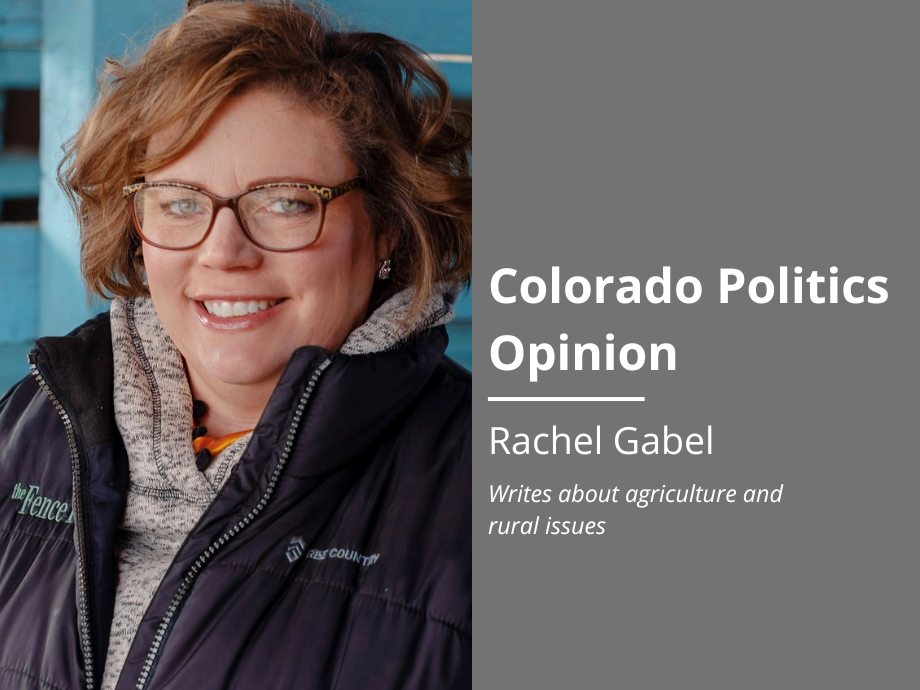
Rachel Gabel writes about agriculture and rural issues. She is assistant editor of The Fence Post Magazine, the region’s preeminent agriculture publication. Gabel is a daughter of the state’s oil and gas industry and a member of one of the state’s 12,000 cattle-raising families, and she has authored children’s books used in hundreds of classrooms to teach students about agriculture.


The grift at the core of Colorado ed department’s ‘innovation programs’ | Paula Noonan
Paula Noonan
paula-noonan@coloradopolitics.com
Updated 12 hours ago
Colorado’s K-12 school finance, transparency and accountability systems have urgent, connected problems with a slow-motion state response. Money is spilling out of school finance funds to home-schooled and private-school students. This multi-million-dollar flood of funds to cooked-up micro schools, home-school...

‘Second look’ bill would cause lasting harm to crime’s victims | OPINION
Colorado Politics
colorado-politics@coloradopolitics.com
Updated 12 hours ago
By Robert Fallbeck Senate Bill 26-115, being considered by lawmakers in the current legislative session, seeks to allow re-sentencing (aka a “second look”) of inmates who have served 20 calendar years in the Colorado Department of Correction (DOC) for two...

Colorado cannot afford to get the Colorado River wrong | OPINION
Colorado Politics
colorado-politics@coloradopolitics.com
Updated 12 hours ago
By Larry Don Suckla Colorado and our neighboring states are standing on the edge of a crisis that is no longer theoretical. The Colorado River, the lifeline of the American west, is facing conditions that demand immediate, responsible action. If...

Colorado state legislators must recognize EMS is essential | OPINION
Colorado Politics
colorado-politics@coloradopolitics.com
Updated 12 hours ago
By Dusty A. Johnson Currently, emergency medical services (EMS) clinicians such as EMTs and paramedics are not listed as essential in Colorado, and that is not OK. A few weeks ago, the Colorado House of Representatives unambiguously passed a bill...

Colorado’s childcare contribution tax credit bolsters our economy by keeping programs afloat | PODIUM
Colorado Politics
colorado-politics@coloradopolitics.com
Updated 2 days ago
By Mike Kehoe, Lisa Steven and Johnna Reeder Kleymeyer Colorado parents are struggling to find childcare, programs that serve our most vulnerable families are stretched thin, and private philanthropy has never been more critical. Since it was first enacted in...

Cherry Creek school district plays defense | Jimmy Sengenberger
Jimmy Sengenberger
jimmy.sengenberger@gazette.com
Updated 2 days ago
Cherry Creek Schools is a shadow of its former self. When I graduated from Grandview High School in 2008, the district still earned its motto: “Dedicated to Excellence.” These days, Colorado’s fourth-largest district clings to that antiquated reputation even as it unravels...

Just kidding about the separation of church and state? | Hal Bidlack
Hal Bidlack
hal-bidlack@coloradopolitics.com
Updated 2 days ago
You may recall the old truism the three things you shouldn’t discuss at a cocktail party are religion, politics, and, well, that last one often depends on the situation. But those first two tend to be commonly warned against as...

Tap THC beverage tax to address budget gap | OPINION
Colorado Politics
colorado-politics@coloradopolitics.com
Updated 2 days ago
By Christine Lafferty Colorado is faced with the largest budget deficit in recent memory — calculated to be a $1.5 billion hole according to the state’s Joint Budget Committee. Legislators have been scrambling to address this gap, which signals massive cuts...

A bill to bring back Colorado’s world-class music scene | OPINION
Colorado Politics
colorado-politics@coloradopolitics.com
Updated 2 days ago
By Akilah Graham and Bobby Rogers There was a time when Denver was a destination for music lovers. Jazz clubs lined our streets, and places like El Chapultepec — that legendary little bar on 20th and Market — drew world-class...

When a species is managed atop a pedestal, it isn’t management — it’s emotion | Rachel Gabel
Rachel Gabel
rachel-gabel@coloradopolitics.com
Updated 6 days ago
With petitions being tossed around like glitter at prom, it’s time for reasonable voters to sharpen their pencils and speak up. The first, of course, is in response to the Colorado Parks and Wildlife Commission’s blatant disregard for their director,...
PREV
PREVIOUS

House bill without a home | CALDARA
Jon Caldara The most troublesome bill for legislators this session is Senate Bill 213, Gov. Jared Polis’ own pride and joy, that he promises will create a “home for every budget.” So, is this bill good or bad? Well, it’s a little of both. Absolutely. It’s hard to summarize SB 213, not only because it’s […]

Polis, Lamm and land use | HUDSON
Miller Hudson It was 43 years ago when Gov. Dick Lamm announced an executive branch initiative he was launching at the Department of Local Affairs (DOLA) to create a “Human Settlements Policy” for Colorado. Although specifics were a little vague at the outset, his goal was to corral runaway growth along the Front Range. The […]