

Colorado reduces prison sentences for inmates pursuing higher education
Colorado has among the worst recidivism rates in the country, with more than 50% of people released from prison ending up back behind bars within three years.
Now, the state is taking a new approach to address the issue by incentivizing prisoners to pursue higher education.
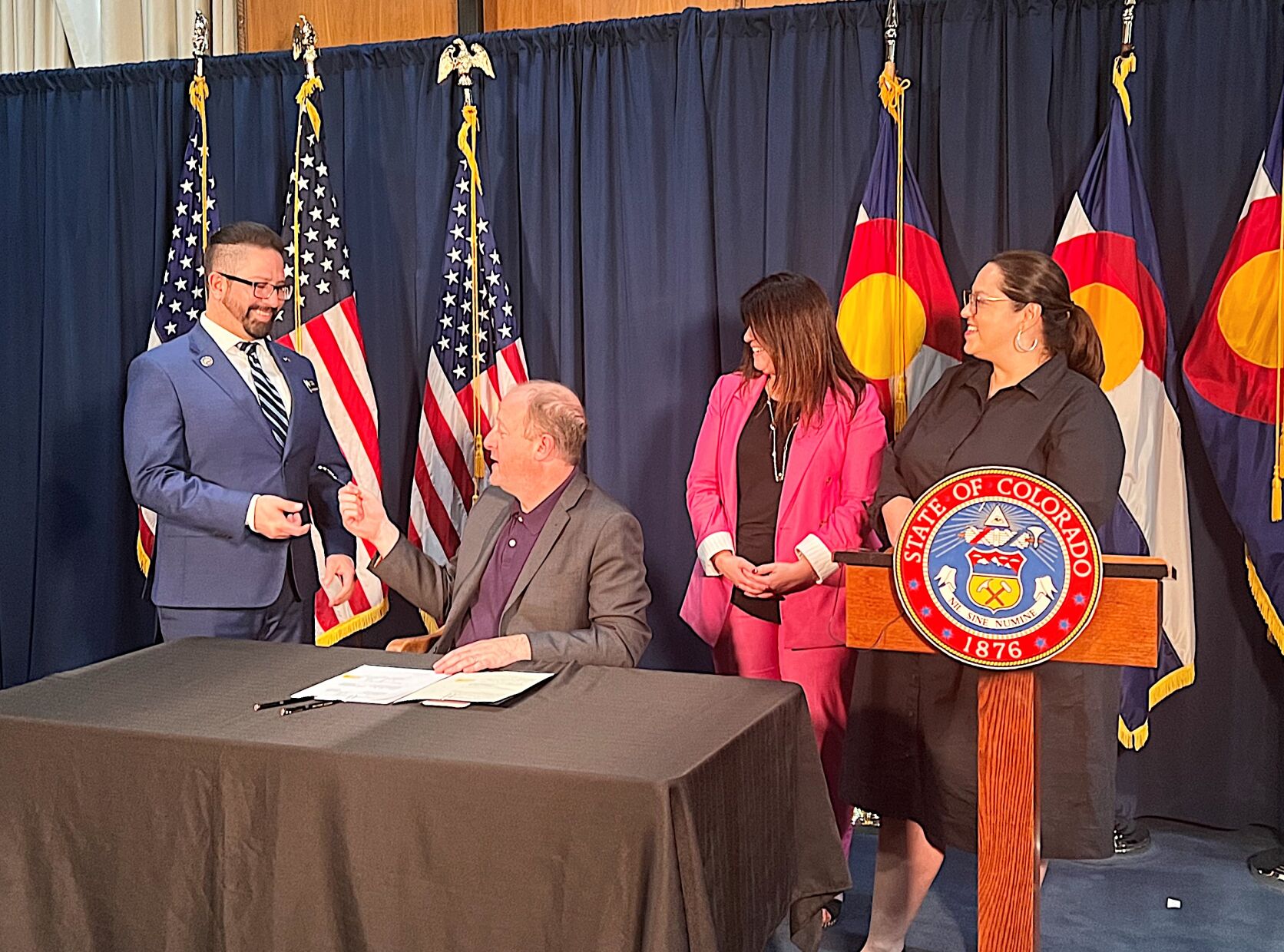
House Bill 1037 reduces prison sentences for non-violent offenders who complete higher education while incarcerated. The new law deducts six months for earning a certificate, one year for an associate or bachelor’s degree, 18 months for a master’s degree and two years for a doctorate degree.
Gov. Jared Polis signed the bill into law on Wednesday. It is scheduled to take effect in August.
“We laid out the goal of making Colorado one of the 10 safest states over the next five years,” Polis said. “This bill alone won’t do that. But it is a very positive step in that direction by providing additional incentive so, before people are released, they get the credentials, the skills and the degree that will allow them to succeed.”
Prisoners who pursue higher education while incarcerated have been found to be less likely to return to crime after they’re released. Recidivism rates drop to 13.7% for prisoners who earned associates degrees, 5.6% for those who earned bachelor’s degrees and 0% for those who earned master’s degrees, according to a 2006 national analysis by Emory University.
Over 48% of U.S. adults age 25 and older have a postsecondary education, but less than 13% of inmates have attained the same level of education, according to the U.S. Department of Justice.
Wednesday’s signing came after the Senate passed the bill in a 28-6 vote last month and the House approved the bill, 61-1, in February.
Though the bill has bipartisan sponsorship and support, only Republicans opposed it. Sen. Kevin Van Winkle, R-Highlands Ranch, said he doesn’t oppose incentivizing higher education in prisons, but he is concerned that offenders in Colorado already don’t serve enough of their original sentences.
“Inmates should certainly pursue every opportunity to better themselves. The bigger issue I have is with the need for sentencing reform in our state,” Van Winkle said of his “no” vote on the bill last month. “Colorado inmates serve on average less than half of their sentences.”
In the Colorado Department of Corrections, the average sentence for a class 2 felony is 377 months, while the average time served is 164.5 months, according to a 2021 report from the department. The average time served was 50% or less of the average sentence for class 3, 4, 5 and 6 felonies, as well as level 1, 2, 3 and 4 drug felonies.
However, proponents argue this is a small compromise to make to stop the cycle of repeat criminal offenders.
The bill’s lead sponsor, Rep. Matthew Martinez, D-Monte Vista, used to be the director of the Adams State University Prison Education Program before being elected. He said his work inspired him to bring forward the bill, seeing first-stand the difference education can make for prisoners.
“It makes Colorado a safer state,” Martinez said. “When you get them connected to education, they get back in society, they become productive, they get their families back together. Overall, that makes Colorado a better state.”
Under the new law, prisoners released prior to completing their degree can also choose to finish to earn time off of their parole.
All of the money saved by shortening sentences of qualifying inmates will go to the Department of Higher Education to continue facilitating higher education programs in prisons.

hannah.metzger@coloradopolitics.com

Top officials in Arizona’s Maricopa County agree on how to oversee elections | OUT WEST ROUNDUP
The Associated Press
the-associated-press@coloradopolitics.com
Updated 4 days ago
ARIZONA Officials agree on election oversight PHOENIX — Election officials in Arizona’s most populous county reached an agreement a week before the state’s July 21 primary on how to jointly oversee the vote, ending a prolonged legal battle. Republican Maricopa...

Colorado Politics Calendar Aug. 3-9
Rachael Wright, Special to Colorado Politics
rachael.wright@coloradopolitics.com
Updated 4 days ago
CoPo’s weekly political calendar will help you find political and public-policy events throughout Colorado. It includes candidate and issue campaign events, public policy meetings, court hearings, state and local party conventions, assemblies, debates, rallies, parades, speaking engagements, traveling dignitary appearances,...

The primary political reform and precondition for all others | SONDERMANN
Eric Sondermann
eric-sondermann@coloradopolitics.com
Updated 4 days ago
In its current state, the American political system has no end of ailments. Far too many factors accelerate polarization and work against moderation and narrowing the differences. Media, and the way so many citizens limit themselves to agreeable, reinforcing sources,...
Susemihl wins surprise victory to replace Steve Durham as Colorado Springs state senator | A LOOK BACK
Rachael Wright, Special to Colorado Politics
rachael.wright@coloradopolitics.com
Updated 4 days ago
Forty-five years ago this week: In a closed session, the vacancy committee for Colorado’s Senate District 12 selected attorney Peter Susemihl to complete Sen. Steve Durham’s, R-Colorado Springs, term. Durham resigned his seat to become Region 8 Director of the...

10th Circuit partially revives lawsuit over 2020 Denver protest injuries
Michael Karlik
michael.karlik@coloradopolitics.com
Updated 9 hours ago
The Colorado-based federal appeals court revived a man’s claims against Denver on Friday after concluding a trial judge resolved the case in the city’s favor without analyzing two of the three instances of alleged excessive force and other constitutional violations....

At conservative summit, Colorado Republican leaders concede Democrats’ election edge
Marissa Ventrelli
marissa.ventrelli@coloradopolitics.com
Updated 1 day ago
Four Republican state lawmakers told attendees at a gathering of conservative leaders on Friday they doubt their party can win statewide races, noting that Colorado’s electorate has been shifting toward Democrats but adding they see an opening in several pockets....
Federal judges find Colorado immigration judge violated several orders
Michael Karlik
michael.karlik@coloradopolitics.com
Updated 1 day ago
Multiple federal judges in Colorado have freed people from immigration custody after determining that one immigration judge violated their directives for properly conducting bond hearings. For nearly a year, Colorado’s U.S. District Court has faced a flood of habeas corpus petitions...
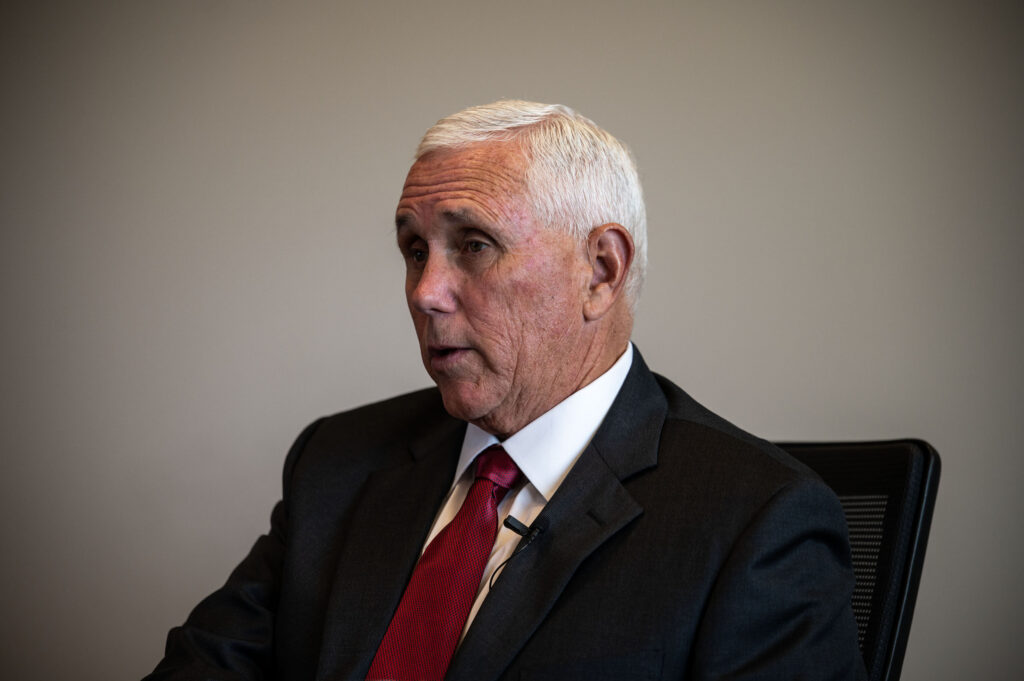
Q&A with Mike Pence | Former vice president says GOP’s populist turn from conservatism isn’t permanent
Ernest Luning
ernest.luning@coloradopolitics.com
Updated 1 day ago
Former Vice President Mike Pence says he’s concerned that the Republican Party has taken a populist turn away from bedrock conservative principles during President Donald Trump’s second term, but he believes the party will return to its roots when Trump...

New federal plan sets short-term rules for Colorado River management
Marianne Goodland
marianne.goodland@coloradopolitics.com
Updated 2 days ago
Interior Department’s plan spares Colorado from mandatory cuts for now After years of stalled negotiations among the seven states that rely on the Colorado River, the federal government on Friday released its own plan for managing the drought-strained system. Calling...
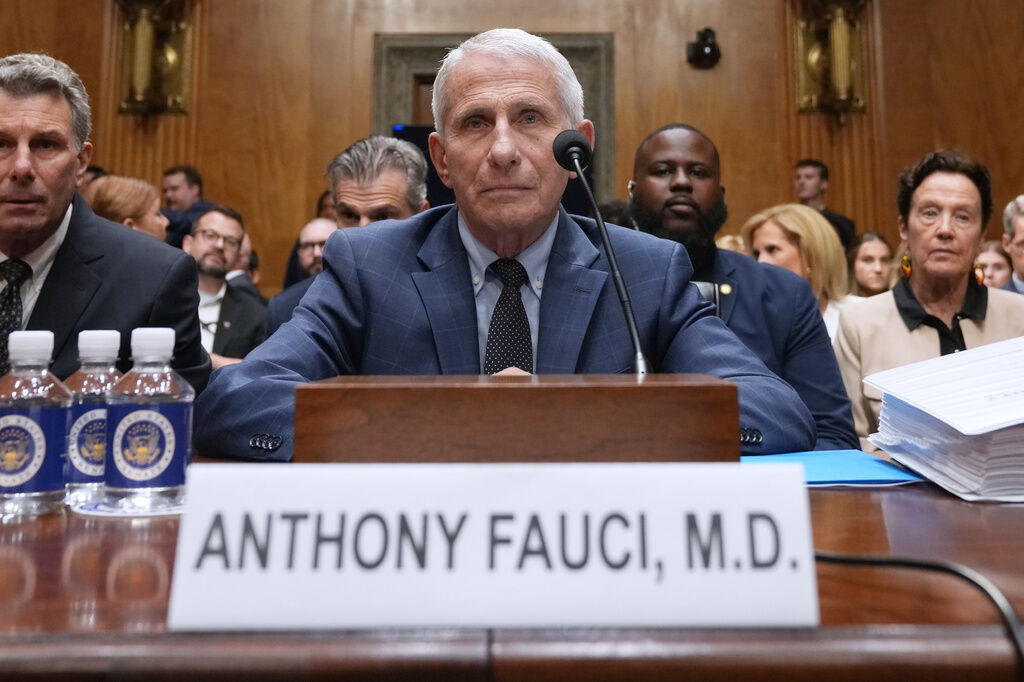
Fauci’s diary details blooming outrage toward ‘far right,’ softness toward Biden and China
Hudson Crozier
hudson.crozier@washingtonexaminer.com
Updated 2 days ago
Dr. Anthony Fauci increasingly railed against “far right” critics of his approach to COVID-19 issues while describing strong support from the Biden White House in his pandemic-era diary, which was recently released by Congress. The former National Institute of Allergy...
PREV
PREVIOUS

Colorado Senate OKs letting community colleges issue high school diplomas
Update: Senate Bill 7 passed the House in a 57-8 vote on April 26. It will next be sent to Gov. Jared Polis for final consideration. Community colleges in Colorado may soon be able to issue high school diplomas, if a bill passed by the state Senate becomes law. Senate Bill 7 seeks to allow community […]

Colorado's 2023-24 spending plan heads to House
The legislative body that crafts Colorado’s state budget on Wednesday came up with its recommendations on which spending to keep and pitch to lawmakers. In making its recommendations, the Joint Budget Committee acted as the conference committee, which serves to reconcile differences between the two legislative chambers. Notably, the committee decided to allocate a $10 […]