

Colorado appeals court rules warrantless search of man’s computer constitutional
Fort Collins police acted constitutionally when they viewed and collected files depicting illegal activity from a defendant’s computer without a warrant, Colorado’s second-highest court ruled last week.
The case questioned whether the Fourth Amendment, which prohibits unreasonable searches and seizures, applies when a private party shows a video on another person’s device to law enforcement – provided the person had a right to use the device in the first place.
Although no precedent existed among Colorado’s courts, a three-judge panel for the Court of Appeals reviewed federal cases and concluded an electronic search by someone not connected to the government, even when they later turn over evidence to police, is constitutional.
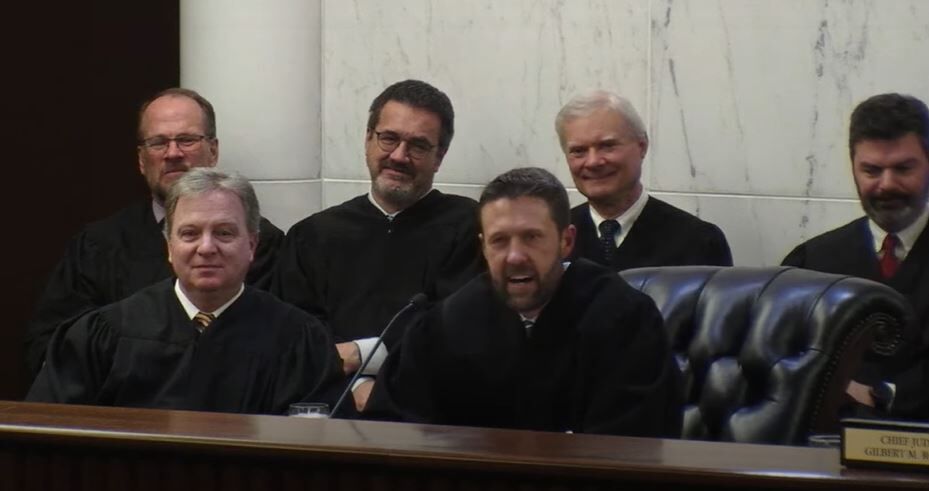
Officers “do not violate the Fourth Amendment by viewing the same files that the independent private party previously viewed and made available to them,” wrote Judge Karl L. Schock in the panel’s March 23 opinion.
Fort Collins police responded to an apartment Brendan Morse shared with the victim. Morse had given her permission to play games on his computer, but she came across a video, recorded without her consent, of Morse sexually assaulting her while she was unconscious. She first showed the video to a friend, who copied it onto a USB drive to give to law enforcement.
The responding officer saw the video. Then a forensic analyst arrived to collect files from the computer and other hard drives. The viewing of the video and copying of files occurred prior to any warrant.
Morse sought to suppress evidence from the computer from being used at trial, alleging the search was constitutionally unreasonable. Larimer County District Court Judge Stephen J. Jouard disagreed, finding police had acted in accordance with four exceptions to the Fourth Amendment’s warrant requirement:
? the “private search doctrine,” in which law enforcement did not exceed the victim’s own search
? the “need to preserve the evidence”
? the fact that the computer was in “plain view” of officers
? the “independent source doctrine,” meaning officers would have eventually discovered the evidence legitimately as part of their investigation
Morse’s jury saw the video and subsequently convicted him in 2021 of sexual assault and invasion of privacy for sexual gratification.
On appeal, Morse contested Jouard’s findings. The appellate panel declined to say whether the plain view or evidence-preservation rationales applied, and instead focused on the private search and independent source doctrines.
In 1984, the U.S. Supreme Court decided United States v. Jacobsen, in which Federal Express workers examined a damaged package pursuant to company policy and found what appeared to be narcotics. They contacted federal agents, who arrived to search and test the contents. Law enforcement determined it was cocaine and they arrested the recipients of the package.
The court’s majority concluded that, as long as the the government did not exceed the private party’s own search, an officer’s “viewing of what a private party had freely made available for his inspection did not violate the Fourth Amendment.”
Colorado’s appellate panel, without speculating what would happen if the private party were not authorized to access the incriminating video file, determined the officers’ lawfully viewed Morse’s video after the victim showed it to them.
Even if police had exceeded the victim’s own search when they copied Morse’s files, Schock elaborated, the independent source doctrine allowed them to do so. The later application for a search warrant contained the victim’s own testimony of what she saw and Morse’s incriminating statements made to the victim.
“This information – none of which was obtained from officers’ purported search of the computer – established probable cause to believe that the computer … contained evidence of a crime,” Schock wrote.
The panel rejected Morse’s other claims on appeal, as well.
The case is People v. Morse.


10th Circuit partially revives lawsuit over 2020 Denver protest injuries
Michael Karlik
michael.karlik@coloradopolitics.com
Updated 1 day ago
The Colorado-based federal appeals court revived a man’s claims against Denver on Friday after concluding a trial judge resolved the case in the city’s favor without analyzing two of the three instances of alleged excessive force and other constitutional violations....

Federal judges find Colorado immigration judge violated several orders
Michael Karlik
michael.karlik@coloradopolitics.com
Updated 6 hours ago
Multiple federal judges in Colorado have freed people from immigration custody after determining that one immigration judge violated their directives for properly conducting bond hearings. For nearly a year, Colorado’s U.S. District Court has faced a flood of habeas corpus petitions...

Misconduct complaints from ex-Colorado judicial discipline director dismissed against federal judges
Michael Karlik
michael.karlik@coloradopolitics.com
Updated 2 days ago
The administrative body for the Denver-based federal appeals court upheld a finding last week that misconduct complaints against Colorado’s chief federal trial judge and the chief appeals judge warranted dismissal and appeared to be a “litigation tactic” by the complaining...

First-ever Red Rocks naturalization ceremony draws most diverse group of new citizens
Michael Karlik
michael.karlik@coloradopolitics.com
Updated 4 hours ago
Colorado’s federal trial court held its first-ever naturalization ceremony for nearly 300 new citizens on Thursday at Red Rocks Park and Amphitheatre. “We’re doing it to commemorate the 250th anniversary of the Declaration of Independence and the United States. Red...
Jeffco taxpayers could be on the hook for a possible child sex assault settlement
Matt Kyle
matt.kyle@denvergazette.com
Updated 2 days ago
Taxpayers may end up on the hook for a child sexual assault settlement, possibly worth up to $15 million, after Jeffco Public Schools failed to notify its insurance company in a timely manner about the case. The incident stems from...
10th Circuit finds no fair housing violation by Littleton landlord for worker’s alleged rape of tenant
Michael Karlik
michael.karlik@coloradopolitics.com
Updated 6 hours ago
The Denver-based federal appeals court concluded on Monday that Littleton’s housing authority could not be held liable for a maintenance worker’s alleged rape of a tenant, as the worker’s employment did not provide any special access to the victim. A...

Jeffco Public Schools sues Trump administration to protect funding after alleged transgender policies violation
Matt Kyle
matt.kyle@denvergazette.com
Updated 3 days ago
In the wake of several threats by the Trump administration to revoke federal funding, Jeffco Public Schools filed a lawsuit against the Department of Education seeking to protect that badly needed money. Jeffco has been under investigation by the DOE’s...

Denver detox center did not violate man’s rights with 10-hour hold, 10th Circuit says
Michael Karlik
michael.karlik@coloradopolitics.com
Updated 4 days ago
The Colorado-based federal appeals court concluded on Tuesday that Denver’s detoxification facility did not violate a man’s rights by holding him against his will for 10 hours until his blood alcohol content was projected to reach zero. Unusually, Brian Garrett’s...

Federal judge clarifies ex-GOP treasurer candidate’s burden to prove defamation claims
Michael Karlik
michael.karlik@coloradopolitics.com
Updated 4 days ago
A federal judge clarified last week that businessman and former Republican statewide candidate Brian Watson will need to surmount a higher hurdle in proving his claim that a party guest’s alleged description of him as a “criminal” amounted to defamation....
Colorado board permits state to appeal injunction against arthritis drug price cap
Marissa Ventrelli
marissa.ventrelli@coloradopolitics.com
Updated 5 days ago
A Colorado board voted Friday to allow the Attorney General’s Office to fight an injunction against a price cap on a drug that treats arthritis. A U.S. district court judge had granted the company Amgen a preliminary injunction, temporarily blocking...
PREV
PREVIOUS

$85.5 million in budget changes focus on education, Indian mascot replacement grants, pet projects
The state Senate on Wednesday began working on the 2023-24 budget, and, at the conclusion of their efforts, blew an $85.5 million hole in the spending plan by, among other actions, allocating millions for a retirement fund and a small amount to pay for replacing Indian mascot imagery at a school. But those changes won’t […]

Colorado lawmakers OK dispensing prescription drugs via 'vending machines'
Picking up prescription medications could soon be as easy as buying a candy bar in Colorado, thanks to a bill passed by the state legislature on Wednesday. If enacted, House Bill 1195 would allow pharmacies to use automated “vending machines” to dispense prescription medications to patients. The machines could be put in hospitals, health clinics or retail […]