

Colorado appeals court overturns menacing conviction due to Boulder County judge’s error
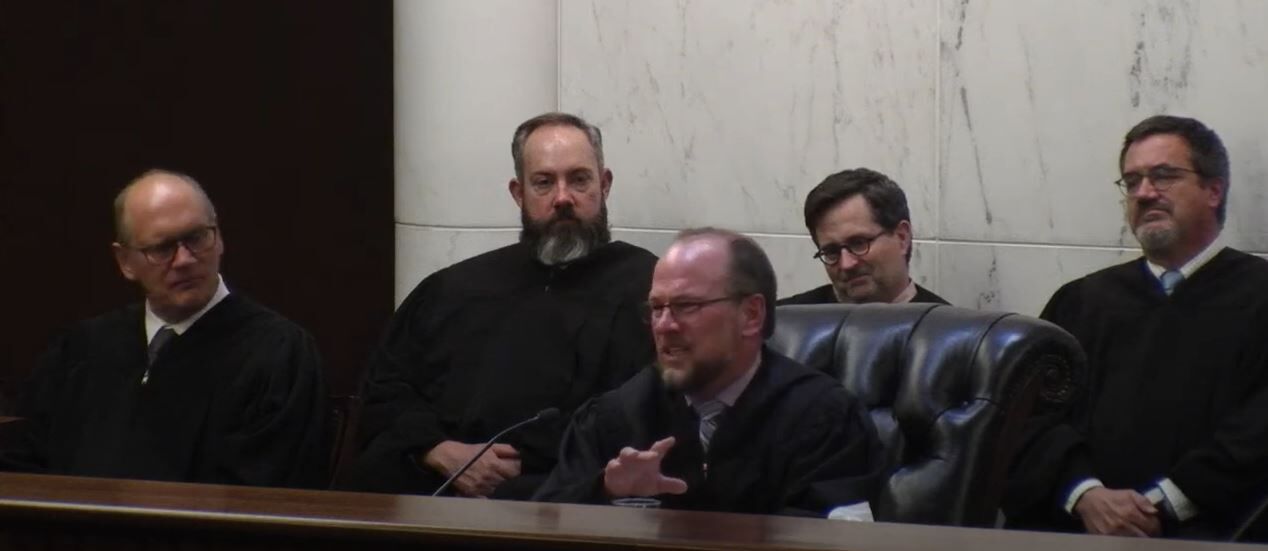
Colorado’s second-highest court last week overturned a woman’s felony menacing conviction because a Boulder County judge effectively barred jurors from hearing evidence suggesting she acted to defend herself against a sexual assault.
In Michelle Nicole Couch’s 2019 trial, jurors learned that Couch had twice pulled a knife on the alleged victim while the two were engaged in intimate behavior. They did not learn about Couch’s earlier warning to the victim that she would not be having sex with him. District Court Judge Bruce Langer had told the defense that if they asked about Couch’s statement, which implied Couch drew a boundary around what she was comfortable with, the prosecution could introduce damaging information about her criminal history.
“This ruling had important consequences,” wrote Judge Timothy J. Schutz in the Court of Appeals’ March 23 opinion.
A three-judge panel for the appellate court noted that jurors were confused about the level of consent in Couch’s interaction with the victim, and the omission of her statement affected the fairness of her trial.
Couch and the alleged victim returned to his home late one night. Couch told the man she would not have sex with him. The two began making out, but at one point Couch brandished a pocketknife. The victim acknowledged he was “playing with lines a little bit,” but continued making out with her. Couch then pulled out the knife with the blade open, which halted the interaction.
Couch left the home and called 911. When police arrived, they arrested her.
Langer believed Couch’s advisement to the victim was hearsay, meaning an out-of-court statement aimed at proving the truth. The judge allowed the defense to ask the victim about Couch’s statement, but if they did, Langer would permit the prosecution to introduce evidence about Couch’s criminal history.
The defense opted not to bring up Couch’s statement about having sex. Langer also did not instruct jurors that they could find Couch acted in self-defense. After jurors submitted multiple questions about whether Couch viewed the encounter as consensual – which Langer declined to ask the witnesses – they convicted her of felony menacing.
On appeal, Couch argued it was unfair for jurors to be shielded from evidence that could corroborate her defensive response to the victim’s advances after previously drawing the line for him.
“That statement was not hearsay because at the end of the day, it just doesn’t make any difference whether it was true or not,” public defender Mark Evans told the Court of Appeals panel at oral arguments. “It impacted her perception of events because having provided that line to (the victim), it was more reasonable for her to believe when he started to try to push over it, that she was at risk of being subject to unlawful physical force.”
The appellate panel agreed with Couch.
“Whether a person has consented to sexual contact is directly relevant to the question of whether an assault is being committed,” Schutz wrote, “and, hence, directly relevant to a determination of whether the person was justified in using physical force to resist the perceived assault.”
He elaborated that Couch’s statement to the victim would have allowed the jury to better understand Couch’s reaction to the victim’s advances. In the absence of that evidence, the questions jurors raised about consent suggested the jury “could have assessed Couch’s deployment of the knife within a wholly different context,” Schutz added.
The panel’s decision came days before the Colorado Supreme Court is set to hear oral arguments in another case out of Boulder County – also featuring Langer as the trial judge – in which jurors did not learn about a purported hearsay statement relevant to the victim’s consent in a sex assault case.
The Court of Appeals similarly ordered a new trial in that case, finding Langer relied on a “nonexistent evidentiary rule” to exclude the statement.
The case is People v. Couch.



Denver murder conviction reversed for incomplete self-defense instruction
Michael Karlik
michael.karlik@coloradopolitics.com
Updated 3 hours ago
Colorado’s second-highest court reversed a defendant’s murder conviction last week because a Denver judge gave an incomplete instruction to the jury about the man’s right to self-defense. Donald R. Gonzales and Gary McLaughlin met up in a Capitol Hill parking...
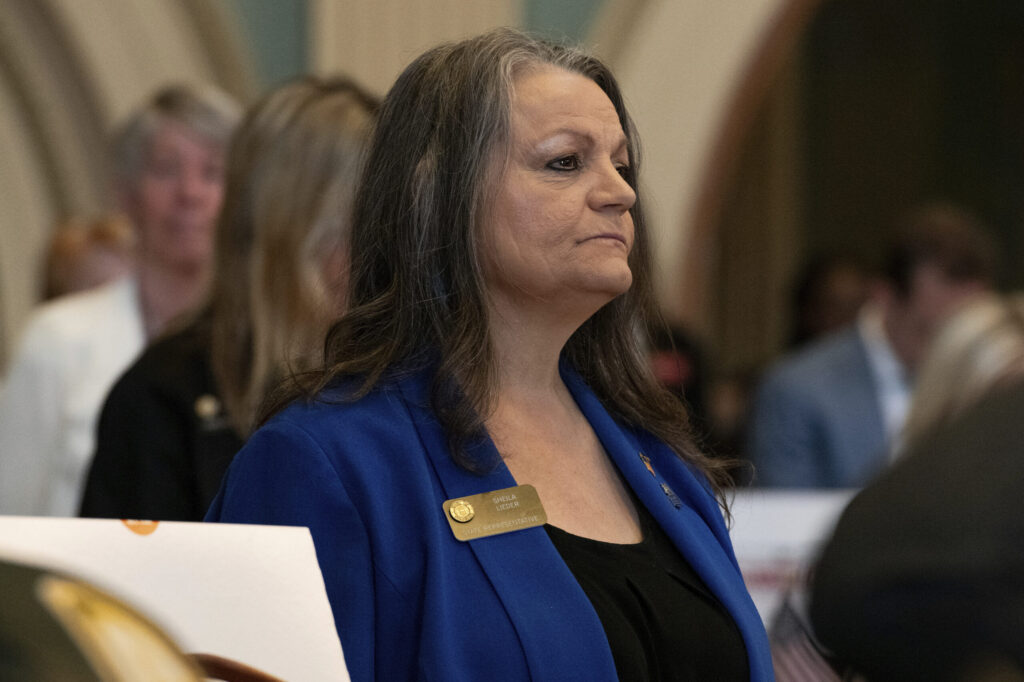
Colorado lawmaker, House leaders named in workplace-retaliation lawsuit
Marianne Goodland
marianne.goodland@coloradopolitics.com
Updated 3 hours ago
A former legislative aide has filed a lawsuit alleging she was mistreated, illegally directed to perform campaign work and harmed by a House leadership structure she says was fragmented, politicized and ineffective at protecting employees. The lawsuit, filed by Jennifer...

Federal judge hears arguments about Colorado’s 3-day gun purchase waiting period
Michael Karlik
michael.karlik@coloradopolitics.com
Updated 4 hours ago
A federal judge heard arguments on Monday about the constitutionality of a 2023 Colorado law that generally imposes a three-day waiting period on firearm purchases after the initiation of a background check. The test that the U.S. Supreme Court created...
Colorado Supreme Court intervenes in Weld County prosecution dismissed due to Missy Woods misconduct
Michael Karlik
michael.karlik@coloradopolitics.com
Updated 19 hours ago
The Colorado Supreme Court ordered a Weld County trial judge last week to respond to the district attorney’s claim that he improperly dismissed a criminal case because of “outrageous” conduct by the Colorado Bureau of Investigation. Daniel Lee Eatinger stood...
Schoolchildren’s presence at child sex-related trial did not harm Arapahoe County defendant, appeals court says
Michael Karlik
michael.karlik@coloradopolitics.com
Updated 3 days ago
Colorado’s second-highest court decided on Thursday that the presence of a group of schoolchildren on the first day of a child sexual exploitation trial did not violate an Arapahoe County defendant’s constitutional right to a fair trial. Prosecutors charged Jerry...
Appeals court cites week-old Colorado law to reinstate child neglect case at child, father’s request
Michael Karlik
michael.karlik@coloradopolitics.com
Updated 3 days ago
Colorado’s second-highest court invoked a new state law for the first time on Thursday and reinstated a child neglect case that both the child and her father wished to reopen. House Bill 1227 took effect on Aug. 12, reversing a...
Colorado Supreme Court names William Hood as next chief justice
Michael Karlik
michael.karlik@coloradopolitics.com
Updated 4 days ago
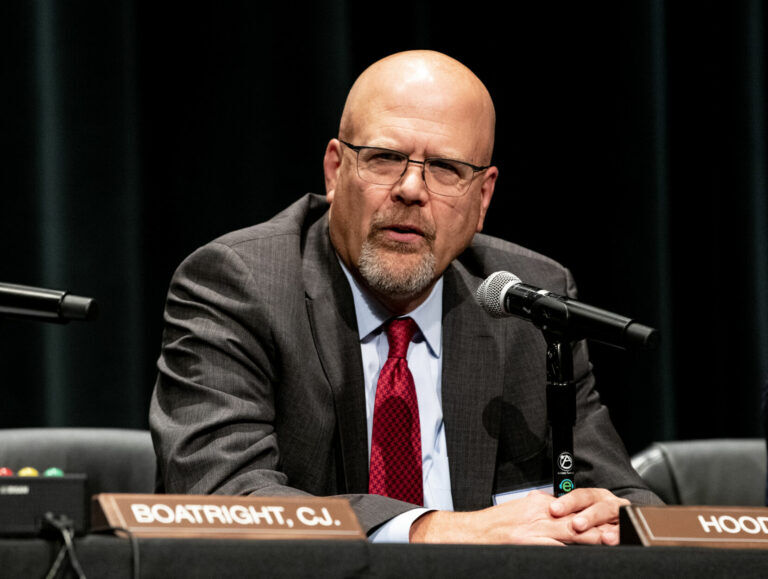
The Colorado Supreme Court has selected Justice William W. Hood III to be the next chief justice, the judicial branch announced on Friday. Hood will succeed Chief Justice Monica M. Márquez, who took over the role in July 2024. “I...
Family of slain Lakewood teacher releases statement as murder suspect makes first court appearance
Matt Kyle
matt.kyle@denvergazette.com
Updated 1 day ago
Patrick Theodore Barnett, the Lakewood man accused of killing his wife, a Jeffco Public Schools art teacher, made his first court appearance Friday morning as his wife’s family looked on. The status conference hearing was held before District Court Judge...

Appeals court upholds Park County trophy hunting conviction
Michael Karlik
michael.karlik@coloradopolitics.com
Updated 4 days ago
Colorado’s second-highest court clarified on Thursday that a defendant may stand convicted under the state’s trophy hunting laws if he abandons a bear carcass but returns later to remove the meat. Under Colorado law, it is a felony to detach...

Judge grants partial injunction to GEO in fight against state health inspection law
Kyla Pearce
kyla.pearce@gazette.com
Updated 5 days ago
A judge ruled Thursday that The GEO Group does not have to follow parts of a new state law requiring more frequent health and safety inspections at the U.S. Immigration and Customs Enforcement processing center in Aurora. Under the order...
PREV
PREVIOUS
Gov. Polis orders flags at half-staff to honor Nashville school shooting victims
Gov. Jared Polis ordered flags on all public buildings to be lowered to half-staff early Tuesday in honor of the victims of Monday’s mass shooting in Nashville. Flags will remain lowered to half-staff from the announcement Tuesday morning until sunset on Friday, according to a news release. The order comes after Monday’s shooting at The […]

Colorado Democrat Brittany Pettersen names senior staff in district, DC congressional offices
U.S. Rep. Brittany Pettersen this week announced her senior staff hires, including Capital Hill veterans, a former campaign aide and top staffer for the Colorado Democrats, and a former chief of staff for a fellow member of the state’s congressional delegation. The announcement came days after the Lakewood lawmaker opened her main district office in […]