

Democrats advance protections for out-of-state abortion patients, restrictions on crisis pregnancy centers
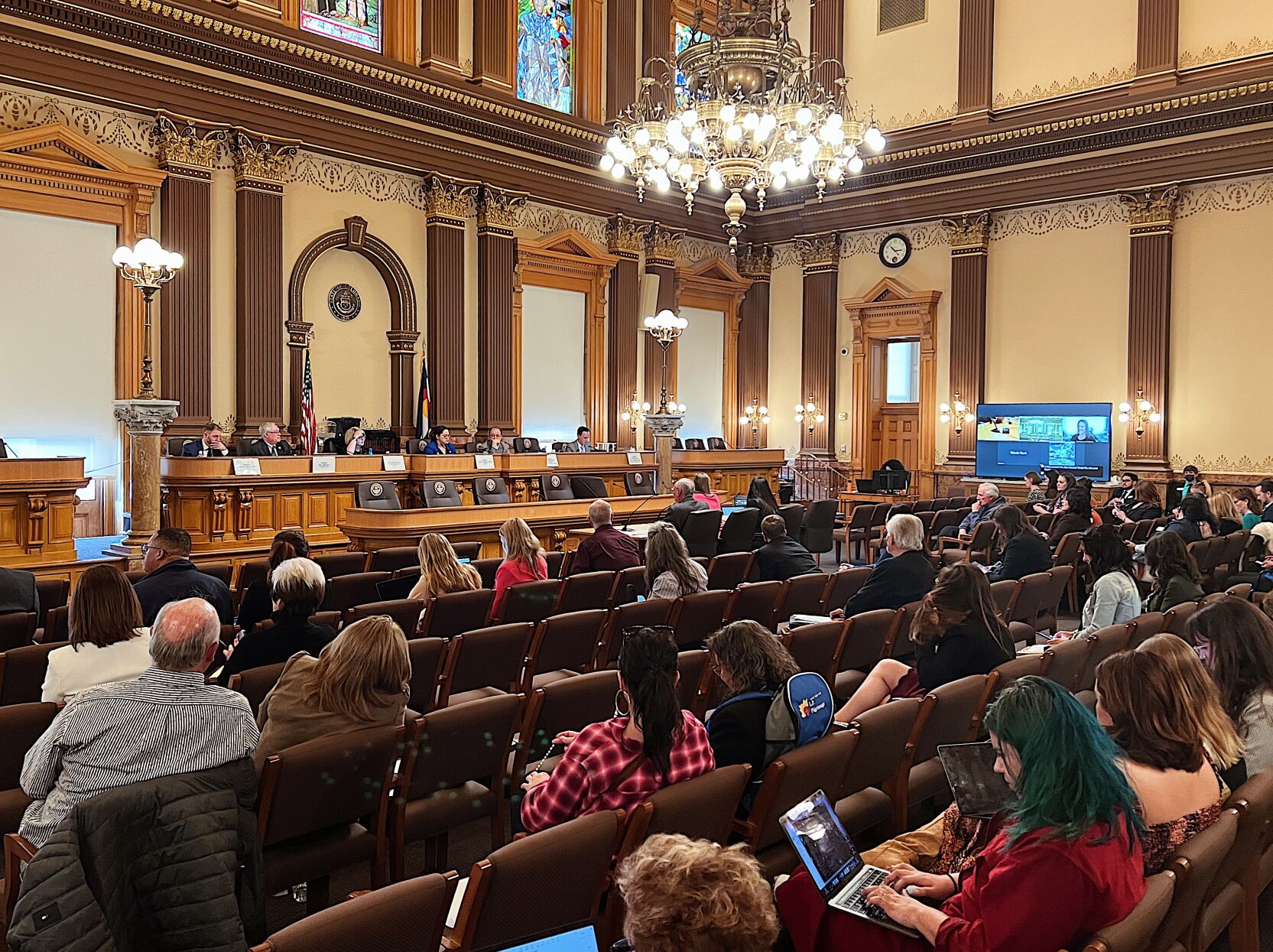
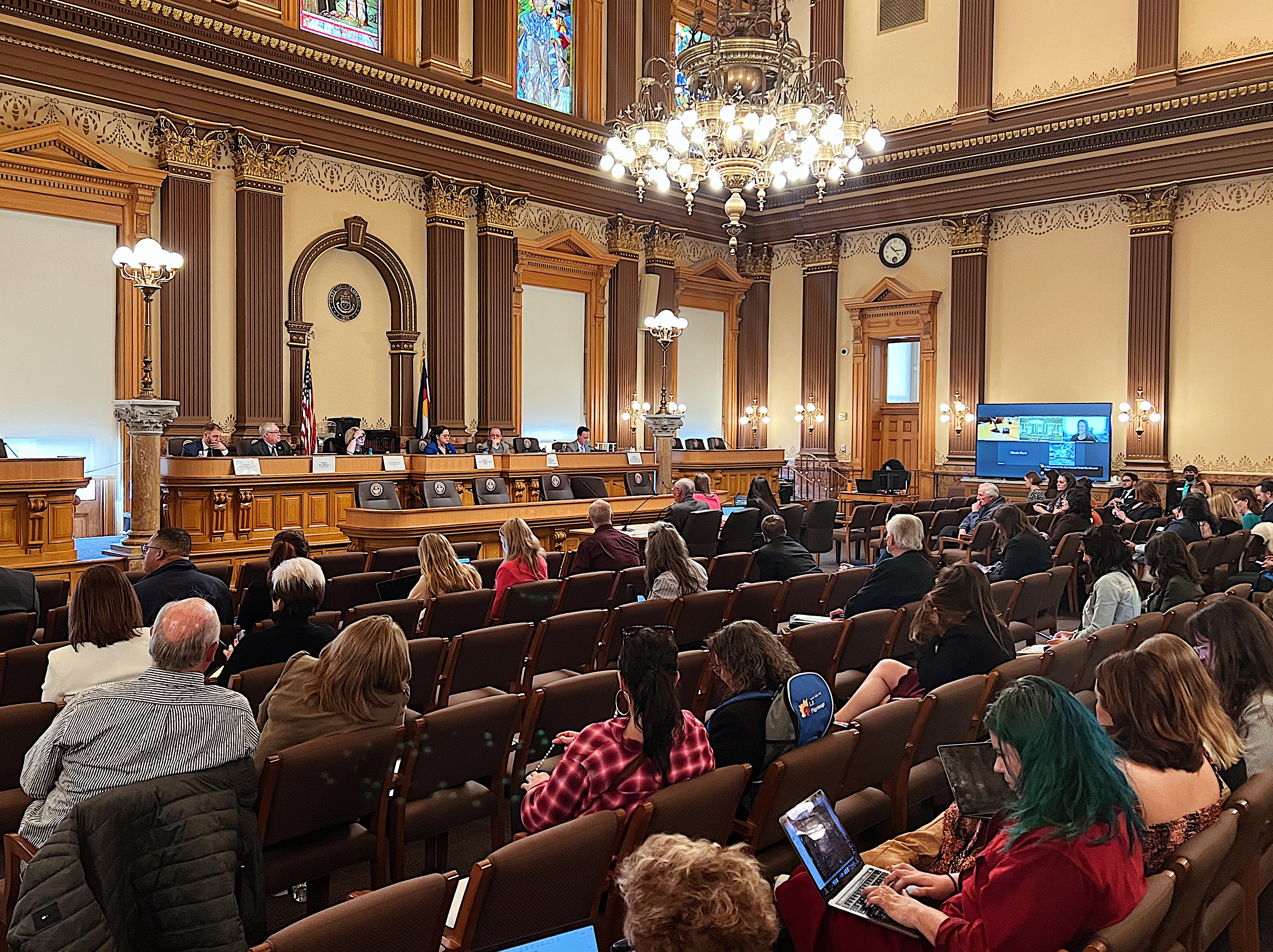
Two bills seeking to bolster abortion rights in Colorado cleared their first hurdle Wednesday night, receiving approval from the Senate Judiciary Committee.
If passed by the full legislature, the bills would shield abortion patients and providers from interstate investigations, and prohibit “deceptive” advertising from crisis pregnancy centers, deemed “anti-abortion clinics” by critics.
Critics of the efforts charge they make a mockery of other states’ laws on abortion, while defending crisis pregnancy centers as clinics that provide real services.
The bills are the first legislative action Colorado lawmakers have taken up on the subject since the Supreme Court overturned national abortion protections in the Dobbs v. Jackson Women’s Health Organization ruling last year. Two months prior to the ruling, state lawmakers enshrined abortion as a fundamental right with the Reproductive Health Equity Act.
The first of the bills, Senate Bill 188, would protect abortion patients and providers giving and receiving care in Colorado from facing criminal or civil consequences from other states in which abortion is illegal. Fourteen states have passed laws banning or limiting abortion, with many more currently trying to enact blocked bans.
“We must take a leading role in protecting the fundamental rights of our citizens,” said Sen. Sonya Jaquez Lewis, D-Longmont, sponsor of SB 188. “Bounty hunter laws have created a climate of fear and intimidation and it will prevent Colorado health care workers from offering care and prevent patients who are trying to simply seek care.”
The bill builds off an executive order signed by Gov. Jared Polis in July, directing state agencies to withhold records from states that may impose criminal or civil penalties on those who receive or provide abortions in Colorado. The bill would enshrine this executive order into state law, as well as prohibit the state from recognizing criminal prosecutions or civil lawsuits regarding legally-protected abortion care.
In addition to abortion, the bill would also extend these protections to “gender-affirming care” received by transgender individuals. Other states have moved to ban or limit gender-affirming care, with more than 20 states considering such legislation in 2023. Gender-affirming care includes social, psychological or medical interventions, such as hormone therapy and surgical procedures.
Critics of the bill argued that out-of-state residents receiving abortions in Colorado could harm their home state or violate the home state’s law. For example, if a patient gets abortion-inducing medication from Colorado then takes it in their home state where abortion is illegal, or if the home state has laws that prohibit residents from traveling out of state for abortion care.
“We should respect the laws of other states,” said Tom Perille, a physician with Democrats for Life Colorado. “If a Wisconsin physician was actively performing conversion therapy, prescribing drugs via telehealth to a Colorado resident to try to change their orientation, should Colorado have no recourse to enforce our laws against conversion therapy? Of course not.”
Proponents countered that Colorado should be a safe haven for people seeking abortion, particularly if their home state’s abortion ban puts their health and safety at risk.
Lauren Miller said she traveled from her home in Texas to Colorado to receive an abortion after one of her twins was determined to be unviable. Miller said continuing to carry the unviable twin risked killing both her and the viable twin, but Texas’s law did not allow her any options to terminate the pregnancy.
In the month following the Dobbs decision, the Colorado-based Cobalt Abortion Fund reported that 94% of its clients seeking practical abortion support came from out of state, including 66% from Texas alone. In January, 750 people traveled to Colorado Planned Parenthoods from out of state for abortion care – compared to only 1,500 people during the entirety of 2021, according to Planned Parenthood of the Rocky Mountains.
“There’s a certain terror of being hunted by your own state when all you’re trying to do is access health care,” Miller said. “(Texas’s) law nearly cost me and my viable twin our lives. … Please do not abandon us to the cruelty imposed by the leadership in our states who are preventing health care that they do not understand.”
Seven states and Washington D.C. have already passed similar protections against interstate investigations regarding abortions and 12 governors have issued executive orders establishing such protections, according to the Center for Reproductive Rights. Other states including Washington, New Mexico, Minnesota and Vermont are currently considering similar legislation.
The second bill, Senate Bill 190, targets crisis pregnancy centers, which counsel pregnant women against having an abortion and to instead choose to carry the pregnancy to term, with parenting or adoption as an alternative.
The bill would prohibit crisis pregnancy centers from directly or indirectly advertising abortions, emergency contraceptives or referrals for abortions or emergency contraceptives that they don’t actually provide, classifying it as “deceptive advertising.”
In Colorado, there are 51 of these crisis pregnancy centers, compared to 20 abortion clinics.
“When someone is making a decision to continue or end a pregnancy, they deserve accurate information about all of their options so they can determine what is best for their health and wellbeing,” said bill sponsor Sen. Janice Marchman, D-Loveland. “All people have the right to truth in advertising and shouldn’t have to worry about being misled or deceived when seeking essential health care services.”
Marchman said the centers pretend to offer abortion care but don’t, using “disinformation, intimidation, shame and delay tactics” to prevent people from accessing abortion care.
The American Medical Society Journal of Ethics called the centers unethical, claiming they spread misinformation and give the impression that they offer medical services and advice, “yet they are exempt from regulatory, licensure, and credentialing oversight that apply to health care facilities.” A 2012 study from the National Library of Medicine claimed that 86% of the centers provide misinformation on abortion.
Supporters of crisis pregnancy centers denied misleading patients, arguing that they legitimately provide services, including health education, ultrasound and counseling. They said SB 190 would unfairly limit their advertisement, potentially prohibiting them from saying they offer “help with unplanned pregnancies” without specifying the services provided.
Dr. Karysse Trandem of Save the Storks, a nonprofit that partners with crisis pregnancy centers, said she has encountered “thousands” of women who said they regretted getting an abortion and wished they were given information about alternative options at the time, which she said the centers provide.
“It is a gift and a blessing to see women strengthened to make a decision that is best for them by giving them the health care at a pregnancy resource clinic so that they don’t have any regrets in the future,” Trandem said. “If this (bill) were to pass, it would have an enormous negative effect on women’s health care, on women’s right to choose.”
SB 190 would also classify providing abortion “reversal” treatment as unprofessional conduct. The controversial practice claims that the hormone progesterone can stop a medication-based abortion after a patient has completed the first part of the two-step process.
Crisis pregnancy centers support the practice, pointing to a small-scale 2012 study which found that four of six women who had begun medication abortions were able to carry their pregnancies to term after taking progesterone. However, the study has been criticized for having methodological flaws and subsequent research has concluded that there is insufficient evidence to support abortion reversal treatment.
A larger 2019 University of California study attempted to test the effectiveness of abortion pill reversal, but the study was ended prematurely due to safety concerns after three participants required ambulance transport to a hospital for treatment of severe vaginal bleeding, NPR reported. The American College of Obstetricians and Gynecologists also rejects prescribing progesterone to reverse abortions, saying it is “not based on science and do not meet clinical standards.”
Following 10 hours of witness testimony and debate among lawmakers, both bills passed the Senate Judiciary Committee with votes of 3-2 at 11:30 p.m. All Democrats voted in support of the bills and all Republicans voted in opposition.
The bills will now be sent to the full Senate for a vote in the coming weeks.
hannah.metzger@coloradopolitics.com

U.S. Senate OKs funding bill to avoid government shutdown
Wire Services
wire-services@coloradopolitics.com
Updated 10 hours ago
Hemp provision became point of contention WASHINGTON • The U.S. Senate in an overnight vote Saturday approved a short-term measure to fund federal agencies into early December and avoid a government shutdown during the middle of campaign season. The late-summer...

The relevance of Watergate more than a half-century later | SONDERMANN
By Eric Sondermann
by-eric-sondermann@coloradopolitics.com
Updated 3 days ago
It was the scandal for which all other scandals are now named. In June 1972, a small group of Cuban burglars with high-level connections broke into the headquarters of the Democratic National Committee. Those headquarters were located in the Watergate...

Wirth downplays Social Security disaster talk | A LOOK BACK
Rachael Wright, Special to Colorado Politics
rachael.wright@coloradopolitics.com
Updated 2 days ago
Forty-five years ago this week: “As time goes on,” said Democratic U.S. Rep. Tim Wirth, of the 2nd Congressional District, “we are finding that the safety net, which was proposed earlier this year, has some very large holes in it,”...
Colorado Politics Calendar Aug. 10-16
Rachael Wright, Special to Colorado Politics
rachael.wright@coloradopolitics.com
Updated 2 days ago
CoPo’s weekly political calendar will help you find political and public-policy events throughout Colorado. It includes candidate and issue campaign events, public policy meetings, court hearings, state and local party conventions, assemblies, debates, rallies, parades, speaking engagements, traveling dignitary appearances,...

Democratic group aims Spanish-language TV ad at Gabe Evans in Colorado’s battleground 8th CD
Ernest Luning
ernest.luning@coloradopolitics.com
Updated 24 hours ago
A national group tied to House Democratic leadership launched a six-figure Spanish-language TV ad in Colorado this week targeting Republican U.S. Rep. Gabe Evans and the GOP’s signature budget legislation. The 30-second spot is part of $15 million in new...

Colorado School of Mines lands major share in Trump’s $100M mining-education plan
Thelma Grimes
thelma.grimes@coloradopolitics.com
Updated 1 day ago
President Donald Trump on Friday named the Colorado School of Mines among roughly a dozen institutions that will share in a $100 million commitment “to train the next generation of American miners.” Paul Johnson, the university’s president, said he is...
Local party leaders, incoming judge among members of judicial performance commission that violated law
Michael Karlik
michael.karlik@coloradopolitics.com
Updated 5 hours ago
A local Democratic leader and 2024 presidential elector. A legislative aide and leader in the Young Republicans. An incoming county court judge freshly appointed by the governor. They are among the eight members of the northeastern Colorado judicial performance commission...
Judge dismisses lawsuit seeking records from Colorado Democratic group
Marianne Goodland
marianne.goodland@coloradopolitics.com
Updated 1 day ago
A lawsuit seeking to obtain records from Democratic lawmakers affiliated with a caucus has been thrown out by a Denver District Court judge. On July 17, Judge Ericka Englert dismissed the April lawsuit filed by progressive activist Derrick Blanton, who...

DOJ official decries ‘nonsense’ in Jeffco schools at fundraising gala
Matt Kyle
matt.kyle@denvergazette.com
Updated 11 hours ago
Amid a legal battle between Jeffco Public Schools and the federal government, a Department of Justice official spoke at a fundraising gala and decried “crazy stuff” and “nonsense” in the school district. The gala was for Jeffco Kids First, an...
Colorado Springs mother Deborah Nicholls’ murder conviction overturned
Nick Smith
nick-smith@coloradopolitics.com
Updated 2 days ago
A Colorado Springs mother convicted in 2008 of murdering her three children in a house fire might get a new trial after a judge ruled that prosecutors withheld key evidence that could have impacted the jury’s verdict. Deborah Nicholls, whose...
PREV
PREVIOUS

Bills overhauling judicial discipline unanimously pass Colorado House panel
Bills that propose overhauling the process for how Colorado disciplines its judges – including a constitutional referendum that voters would see in 2024 – were overwhelmingly approved by a state House committee on Wednesday. The three measures – House Concurrent Resolution 23-1001, House Bill 23-1019 and House Bill 23-1205 – each unanimously passed the House Judiciary Committee, 13-0. They are now headed […]

Colorado report explores gaps in services if children can't be criminally charged until 13
A task force studying the gaps in services if policymakers raise the minimum age that Colorado children can be charged with crimes released its final report, recommending a slew of changes to mitigate potential impacts. The Pre-Adolescent Task Force was created by House Bill 22-1131, passed by the legislature in June. The bill originally sought […]