

House Republicans’ filibuster produces Saturday workday, GOP scheduling conflicts

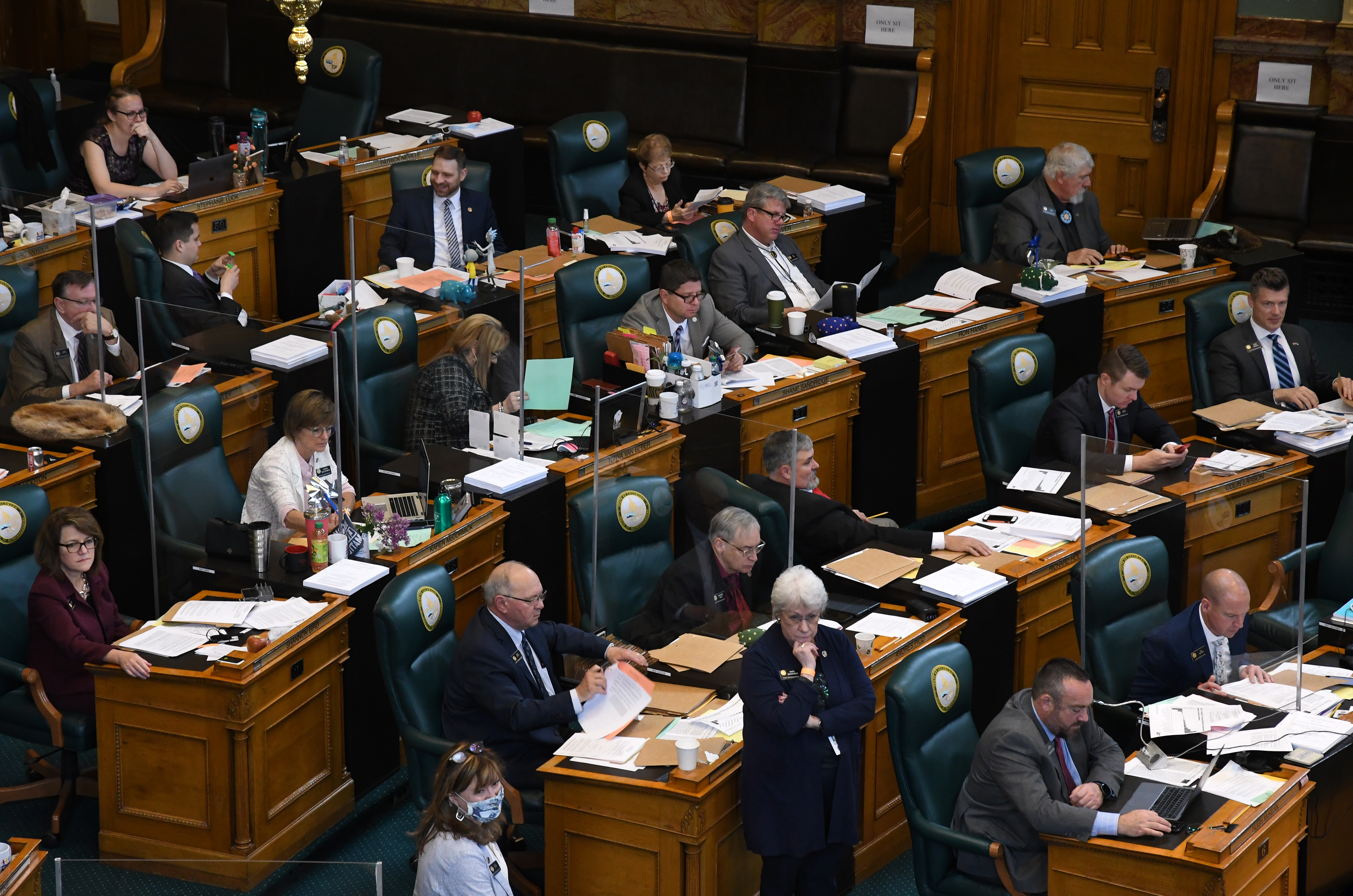
Lawmakers in the Colorado state House Spent Thursday afternoon, evening and early Friday morning debating a proposal to establish a three-day waiting period for purchasing firearms and a bill on safe injection sites.
But most of the talking was done by Republicans, who engaged in a lengthy filibuster as an attempt to persuade Democrats to either water down the bills, or get rid of them entirely.
Neither worked.
Both House Bill 1219, on a three-day waiting period for purchasing firearms, and House Bill 1202, which would allow for safe injection sites for drug users, passed on voice votes early Friday morning.
But the filibuster turned into an elaborate game of chicken and in the end, Republicans lost.
Here’s why: The debate over the three-day waiting period started around 1:15 p.m. on Thursday and continued until nearly 3 a.m. Friday. Since the debate went past midnight, a final vote on the bill won’t take place on Friday, under state law that requires one intervening midnight between second reading debate and the final vote. That means its first chance for final passage would be on Saturday.
Saturday also happens to be the day that Republicans will gather in Loveland to elect a new party chair. All of the Republican lawmakers are part of the state party central committee that would elect that new leader.
Democrats announced when the House finally adjourned around 7 a.m. Friday that there would be no Friday session and they will convene at 10 a.m. on Saturday. Under the rules, Republicans would be required to be at the Capitol for the Saturday session and would have to be granted approval to be excused to attend the meeting in Loveland, a highly unlikely prospect.
House Majority Leader Monica Duran, D-Wheat Ridge, confirmed the strategy with Colorado Politics Thursday evening.
“We have a lot of work to do and not a lot of time,” Duran said. “I want to make sure we get our work done. If it takes a Saturday, it takes a Saturday … we’ll stay until we get them done.”
House Bill 1219 is sponsored by Reps. Judy Amabile, D-Boulder and Meg Froelich, D-Englewood.
The Republican filibuster started off almost immediately, with Rep. Ken DeGraaf, R-Colorado Springs, reading off a 6,000-word essay by Dave Kopel, research director for the Independence Institute, on the history of waiting periods and legal decisions tied to them. Throughout the night, Republicans offered a dozen amendments, but only one succeeded.
That change was to remove the safety clause in favor of a petition clause, offered by House Minority Leader Mike Lynch, R-Wellington.
A safety clause means the bill becomes law upon the governor’s signature. Its language is intended for bills that impact public safety, and while use of the safety clause is often abused by lawmakers, it appears to be a logical fit for HB 1219.
The petition clause allows a delay in the implementation in the bill – in HB 1219, that implementation date is Oct. 1, 2023. That would give citizens the opportunity to launch a ballot measure intended to block the bill.
That’s only happened twice in the last 100 years, in 1932, on a bill regarding oleomargarine, and more recently, in 2020, an effort to block Colorado’s participation in National Popular Vote. Proposition 113 failed by a 52.33 percent to 47.67 percent vote.
What’s notable, however, is that the two people who led the ballot measure campaign are now members of the Republican caucus in the state House: Assistant Minority Leader Rep. Rose Pugliese, R-Colorado Springs and Rep. Don Wilson, R-Monument.
The second bill lawmakers tackled early Friday morning was on safe injection sites, a shorter debate that started just after 3 a.m. and wrapped up just before 7 a.m.
HB 1202 is sponsored by Reps. Jenny Willford, D-Northglenn and Elisabeth Epps, D-Denver.
Willford told the House: “You have to be alive to get well … Their lives matter.”
HB 1202 would allow cities to operate a facility where an individual can access illegal substances, including drug equipment, as well as access counseling and referral services.
Supporters say the sites save lives, help connect people to treatment services and reduce instances of people using drugs in public places. Critics counter that the approach normalizes substance abuse and potentially increases crime. They also argued that the sites will lower property values. An amendment from Rep. Mary Bradfield, R-Colorado Springs, would have sought to put 2,000 feet between a facility and a school, child care facility, playground, senior center or health care facility. That amendment failed.
Another amendment from Rep. Gabe Evans, R-Fort Lupton, would require facilities to post notices on the dangers of drug use, along with pictures of what drugs to a person’s face and other parts of the body. It also failed.
“I can’t tell you how many times I’ve heard from my residents who are finding needles in the park where children play, seeing people use drugs on trails and bathrooms, witnessing Narcan being administered behind the grocery store and losing their loved ones,” Willford said during a Wednesday hearing on the measure.
She told the House early Friday morning the bill was intentionally drafted to make sure before a community says “yes,” it has a chance to decide about guardrails, to talk to law enforcement and to the community.
This is a public health and local control approach to give cities the tools they need to address substance use disorders, she added.
The bill was amended at the request of Republicans to strike the safety clause and add a petition clause. A second amendment, offered by Willford, will require public hearings before the sites can be set up.
Both bills will be up for a final vote on Saturday. They are expected to pass with the Democrats’ supermajority, and then head to the Senate.
The Denver Gazette’s Julia Cardi contributed to this report.

Appeals court reinstates Garfield County arson charge
Michael Karlik
michael.karlik@coloradopolitics.com
Updated 10 hours ago
Colorado’s second-highest court reinstated a Garfield County defendant’s arson charge on Thursday, concluding a trial judge improperly credited a witness’s claim that she alone was responsible for starting the fire. A sheriff’s deputy responded to a brush fire near Parachute...

Democratic US Sen. John Hickenlooper qualifies for Colorado primary by petition, will skip assembly
Ernest Luning
ernest.luning@coloradopolitics.com
Updated 9 hours ago
U.S. Sen. John Hickenlooper has qualified for Colorado’s Democratic primary after the first-term incumbent submitted enough valid petition signatures to make the ballot, state officials said. Hickenlooper is facing primary challenges from state Sen. Julie Gonzales, D-Denver, and university professor...
Federal judges rebuke ex-Colorado judicial discipline director for conduct in lawsuit
Michael Karlik
michael.karlik@coloradopolitics.com
Updated 11 hours ago
A pair of federal judges expressed a desire on Thursday to break the logjam on a lawsuit by Colorado’s former judicial discipline director against the state Supreme Court and related entities, while simultaneously showing little tolerance for the plaintiff’s scorched-earth...

Democratic bill would let recipients of ‘conversion therapy’ sue Colorado providers with no statute of limitations
Marissa Ventrelli
marissa.ventrelli@coloradopolitics.com
Updated 9 hours ago
Colorado lawmakers have advanced a proposal that would allow people who underwent conversion therapy to sue licensed providers for damages, moving the measure forward on a party-line vote in the House Judiciary Committee. House Bill 1322, proposed by Democratic Reps....
Pinnacol separation bill delayed as Colorado budget remains in flux due to $1.5B deficit
Marianne Goodland
marianne.goodland@coloradopolitics.com
Updated 9 hours ago
A bill that would allow Pinnacol Assurance to formally sever its remaining ties with the state appears unlikely to emerge anytime soon, as House leaders juggle a massive budget shortfall, unresolved negotiations with key stakeholders, and growing doubts about whether...

100 days until America250: Five host cities unveiled for July 4 celebrations
Emily Hallas, Washington Examiner
emily.hallas.washington.examiner@gazetteedit.wpenginepowered.com
Updated 15 hours ago
America250, the entity tasked by Congress with marking the United States’ semiquincentennial, on Thursday revealed further details about its sweeping plans to celebrate the milestone. America250 chairwoman Rosie Rios launched the official 100-day countdown to July 4, and said the...
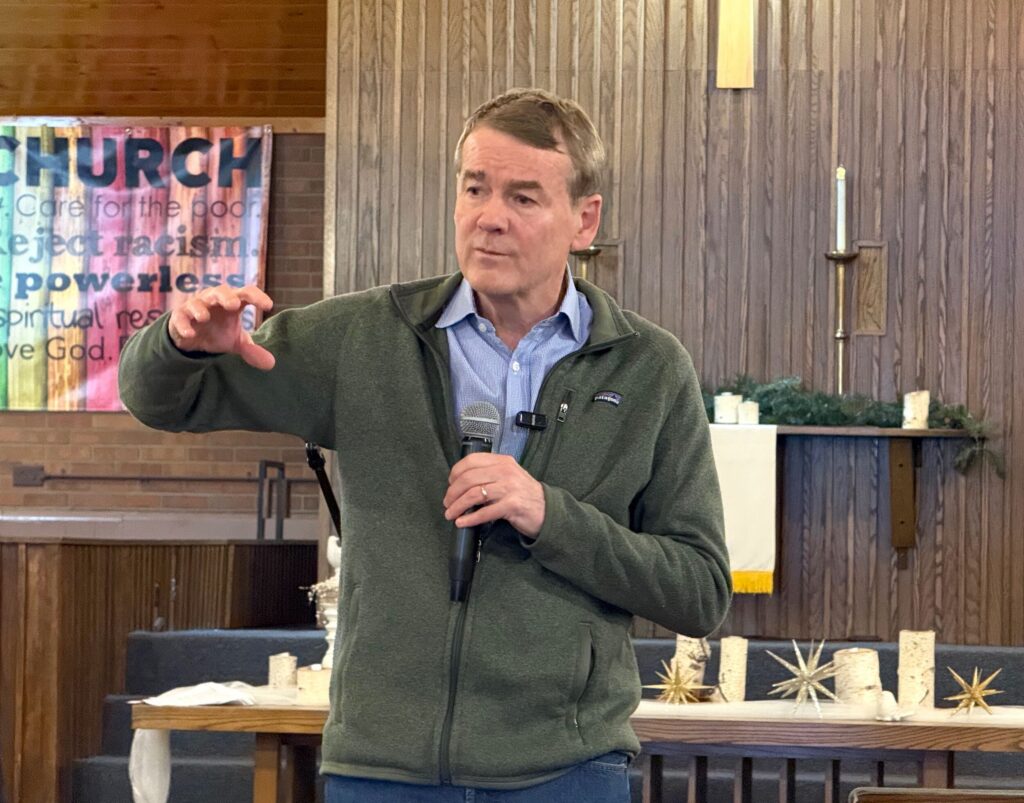
U.S. Sen. Michael Bennet qualifies by petition for Colorado’s Democratic gubernatorial primary
Ernest Luning
ernest.luning@coloradopolitics.com
Updated 10 hours ago
U.S. Sen. Michael Bennet on Tuesday became the first gubernatorial candidate to qualify for Colorado’s June primary ballot after state election officials determined the three-term Democrat’s campaign submitted enough valid petition signatures. Bennet is running against Attorney General Phil Weiser...

Thornton police investigating homicide
Matt Kyle
matt.kyle@denvergazette.com
Updated 11 hours ago
Police in Thornton are investigating a homicide that happened late Wednesday night. Thornton Police Department officers responded just before 11 p.m. near the intersection of East 88th Avenue and Grant Street after a 911 caller reported someone bleeding. Upon arrival,...
Colorado legislators consider $500 million in general fund cuts amid $1.5 billion deficit
Marianne Goodland
marianne.goodland@coloradopolitics.com
Updated 1 day ago
The legislature’s Joint Budget Committee is working through a list Wednesday of about 150 suggestions to cut as much as $1.5 billion in general fund dollars out of next year’s budget. The largest on the list prepared by JBC staff...
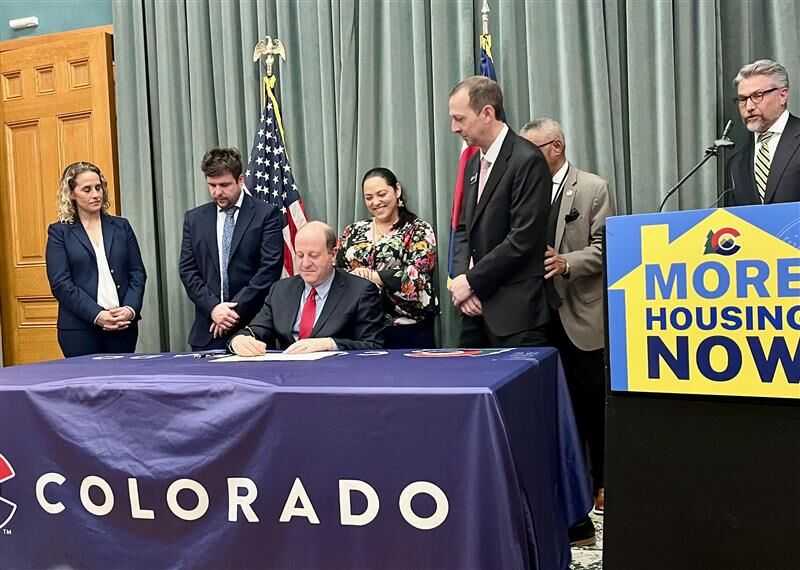
Gov. Jared Polis signs housing bills amid push for ‘affordability’
Marissa Ventrelli
marissa.ventrelli@coloradopolitics.com
Updated 10 hours ago
Gov. Jared Polis held the first public bill signing of the 2026 legislative session on Wednesday on a pair of housing measures that, sponsors said, are aimed at affordability. Part of Democrats’ “affordable” housing package this year, the bills —...
PREV
PREVIOUS
Second federal judge in Colorado adopts plain English summaries in decisions
A second federal judge in Colorado appears to have adopted the practice of summarizing her decisions in plain English for people who represent themselves before the court. U.S. District Court Judge Charlotte N. Sweeney, a 2022 appointee of President Joe Biden, recently issued multiple written orders in cases where the plaintiffs are “pro se,” meaning […]

Alleged Colorado Springs Planned Parenthood shooter's case remains on hold
The state-level case of the man who allegedly shot and killed three people at a Colorado Springs Planned Parenthood in 2015 continues to stall as attorneys await the result of a federal appeal to not have him forcibly medicated. Attorneys gathered on Friday morning for a status conference for Robert Lewis Dear Jr., where prosecutor […]