

What Jimmy Carter means to me | HUDSON
A long time ago, long before the internet or Wikipedia, I was reading my copy of Newsweek and discovered the governor of Georgia was going to run for president in 1976. I’d never heard of Jimmy Carter but was intrigued to read he was a nuclear engineer. So was my father, who had always struck me as a very bright guy, even though he detested both politics and politicians. It took me nearly a week to figure out how to contact the Carter campaign in Atlanta. Colorado Democrats had no idea how to reach Carter’s campaign office and neither did the National Democratic Party. I turned to Denver’s recently elected Congresswoman Pat Schroeder’s staff and eventually received a mailing address but no phone number.
I mailed a note indicating I would appreciate receiving any position papers the campaign had developed. A week later I received a two-inch thick stack of detailed statements outlining the candidate’s policy preferences on just about every conceivable federal issue, together with a few bumper stickers and the usual voter handouts. I couldn’t help noticing the Carter campaign was opting for a green and white palette rather than the usual red, white and blue. It was in his biography I learned Carter had served in the nuclear Navy under Admiral Hyman Rickover and taken part in the clean-up after an accident at a Canadian reactor. I recalled my father had also been involved in the response to the Canadian incident.
Several recent articles have exaggerated the role Lieutenant Jimmy Carter played in the effort to clean-up the radioactive mess that was created by the accident. More than ten thousand American soldiers and sailors, with nearly as many Canadian service men and women, were required to undertake the restoration of the facility. Broken into teams of about a dozen, each participant’s exposure had to be limited to just under two minutes – receiving an exposure to a year’s worth of background radiation. The response teams were trained in a simulated reactor room, identical to the one that was actually “hot.” Carter’s group would have been assigned a very specific set of tasks to be completed during their two minutes – “pick up these four items and place them in these bins” and then get the hell out.
This experience left Carter more dubious about the worth of civilian nuclear technology than any other American president. He blocked the reprocessing of spent fuel, which has held for 50 years, and was hesitant to approve further research on breeder reactors. My father likely met Jimmy then, but the clean-up routine involved fewer than 15 minutes spent with each team before they were on their way home. I would first meet candidate Carter at the Marina Hotel in Denver, located across Colfax from the U.S. Mint. A few months after contacting the campaign I received an invitation from Wellington Webb to join him at a reception for Carter in the building that now houses the Denver District Attorney’s offices. I only knew Webb at the time as a former state legislator serving in Gov. Dick Lamm’s cabinet.
Although he had mailed out hundreds of invitations, only a few dozen Democrats bothered to attend – Webb’s closest political backers, a handful of former Georgians transplanted to Colorado and those who, like me, had reached out to the campaign. Webb introduced the candidate by attributing his support for the governor to conversations with black Georgia legislators. Just a decade from the civil rights bills advanced by Lyndon Johnson, Jimmy Carter was a southern Democrat committed to equal treatment and full political participation for African-Americans.
The meeting was a typical “grip and grin” gathering, highlighted by the candidate’s practiced stump speech. By 9:30 p.m., the crowd had shrunk to just five or six die-hard and would-be supporters. Carter suggested we all adjourn to his hotel room where he would continue taking our questions. Slipping off his shoes and sitting at the top of his bed, the conversation continued until 2 in the morning.
There were no questions he ducked or failed to answer. Democratic primary campaigns were still a few months away. It took me a while to recognize he was asking us as many questions as we were asking him, usually inquiring of us, “why are you asking about this, or what do you think?” He was loading his memory banks with our replies so he could be better prepared to answer similar questions in the months ahead. At the same time, he was gracious, frequently funny, charming and apparently honest. When I arrived home at 2:30 a.m., managing to wake my wife in the process, I told her, “I think I just spent seven hours with the next president of the United States.” His chances of winning were still believed to be vanishingly small.
The next time I met then former President Carter was at a Habitat for Humanity event long after he departed the White House. For a decade, his example encouraged me to volunteer with Habitat projects, pre-wiring new homes for telephone and cable networks until fiber-optic technology outstripped my personal competence. Americans were looking for simple decency above all other qualifications in 1976. Jimmy Carter promised exactly what the nation wanted following Watergate – “…a government as good as our people.” It feels like we would profit from a return to this political principle today.
As president, Jimmy turned out to be a bit of a public scold and voters sent him back to plains and his peanut fields in 1980. He has reportedly opted to avoid the pomp and circumstance of a Washington funeral, complete with the horse drawn caisson and laying in state in the Capitol rotunda, in favor of a funeral at the integrated church he and Rosalyn formed with neighbors 60 years ago when local Baptists refused to welcome black members. This service will be followed by burial at the Carter family cemetery on his farm. The past 48 years I’ve received a Christmas card from the Carters. I hope I still open another from Rosalyn in 2023.
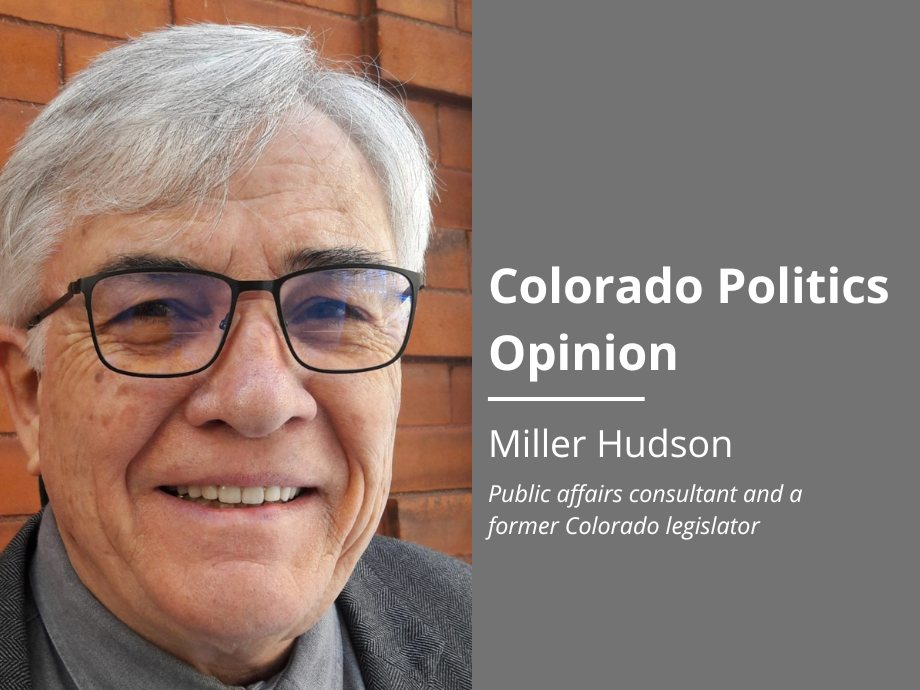
Miller Hudson is a public affairs consultant and a former Colorado legislator.

Will one unqualified AG replace another? | George Brauchler
George Brauchler
george-brauchler@gazette.com
Updated 14 hours ago
Colorado Democrats are poised to nominate another attorney general candidate with de minimis relevant credentials or experience. Far from disqualifying, Colorado’s recent voting history mirrors that of America in favoring biography over experience, partisanship over policy, and emphasizing what divides...
Pueblo’s mayor keeps stirring the pot | Dennis Maes
Dennis Maes
dennis-maes@coloradopolitics.com
Updated 14 hours ago
Pueblo Mayor, Heather Graham, has clearly proven to be a disciple of the Donald Trump school of governance. And, like her mentor, she is experiencing the same catastrophic results. The format is to ignore what the electorate approved and expects...
The perils of Colorado’s unregulated abortions | GUEST COLUMN
Colorado Politics
colorado-politics@coloradopolitics.com
Updated 13 hours ago
By Tom Perille How did the movement which grew out of a genuine concern for the health and safety of women become the same movement that undermines women’s health and safety today? Despite good intentions, it was a long route...
Sans seniors, what does Colorado’s uninterested early turnout say about our disengaged electorate? | Paula Noonan
Paula Noonan
paula-noonan@coloradopolitics.com
Updated 2 days ago
This primary election is poorly attended. Evidence is in the numbers. About 10% of active registered voters are deciding this year’s primaries with seven days to go. If that number triples by June 30, only 30% of voters will decide...
Who gets to decide Colorado’s economic future? | GUEST COLUMN
Colorado Politics
colorado-politics@coloradopolitics.com
Updated 2 days ago
By Sarah Blackhurst Colorado’s prosperity depends on industries that grow our food, build our future and power our homes. But today, these sectors face an invisible threat from 5,000 miles away: the European Union’s Corporate Sustainability Due Diligence Directive (CS3D)....
We have the chance to change Colorado’s cancer outcomes | PODIUM
Colorado Politics
colorado-politics@coloradopolitics.com
Updated 2 days ago
By Erika Hanson Brown Colorado ranks among the healthiest states in the nation by nearly every measure. Yet even here — amid the Rocky Mountains and our deeply rooted culture of health and activity — cancer casts a long and...

Colorado has a playbook for youth mental health — our next governor must use it | GUEST COLUMN
Colorado Politics
colorado-politics@coloradopolitics.com
Updated 3 days ago
By Karen Ron-Li Liaw From the rural communities on the western slope to the eastern plains, to the major urban regions on the Front Range, Colorado families are navigating an all-too-familiar crisis: kids are struggling, and Colorado’s mental health system...

Pigs engineered to fight alpha-gal syndrome | Rachel Gabel
Rachel Gabel
rachel-gabel@coloradopolitics.com
Updated 4 days ago
If I were an evil genius trying to hamstring animal agriculture, I would create a fly that eats livestock alive and a tick whose bite and spit causes some people to have an allergic reaction to meat. (Insert evil laugh...
Registered voters on the eve of the 2026 primaries | Cronin & Loevy
Tom Cronin Bob Loevy
tom-cronin-bob-loevy@coloradopolitics.com
Updated 6 days ago
The Colorado Secretary of State’s Office has published the latest voter registration figures for the state and its counties as of June. Colorado ranks among the highest states for independent, or unaffiliated, voters. Only Alaska and Massachusetts have more. New Hampshire, New Jersey, Maine and Oregon also rank highly. So here...

A room for Sundance, a reality check for big-government Boulder | Jon Caldara
Jon Caldara
jon-caldara@coloradopolitics.com
Updated 1 week ago
There are few things more satisfying to watch than socialists getting mugged by reality. The Sundance Film Festival is invading my hometown of Boulder early next year. Sundance drew 85,000 attendees last year in Park City, Utah. Boulder’s hotel room...
PREV
PREVIOUS

Private property, public lands and Colorado 'corner crossing' | GABEL
Rachel Gabel Bob Schultz raised buffalo not far from where I grew up. He was a colorful character and he posted signs all along his long, winding driveway leading to his ranch headquarters. The one I remember – and can repeat in print – read “If you trespass on this ranch you better be able to cross […]

Kelly Brough is up to Denver’s crime fight | Denver Gazette
Colorado’s epic crime wave has Denverites on nerve’s edge. New poll results reported in The Gazette last week reflect that. Crime is in fact top of mind for Denver voters heading into next month’s mayoral election. The poll – commissioned by The Denver Gazette, Colorado Politics, 9News and Metropolitan State University, and conducted by SurveyUSA – […]