

Appeals court overturns assault conviction for lack of evidence defendant was ‘in custody’
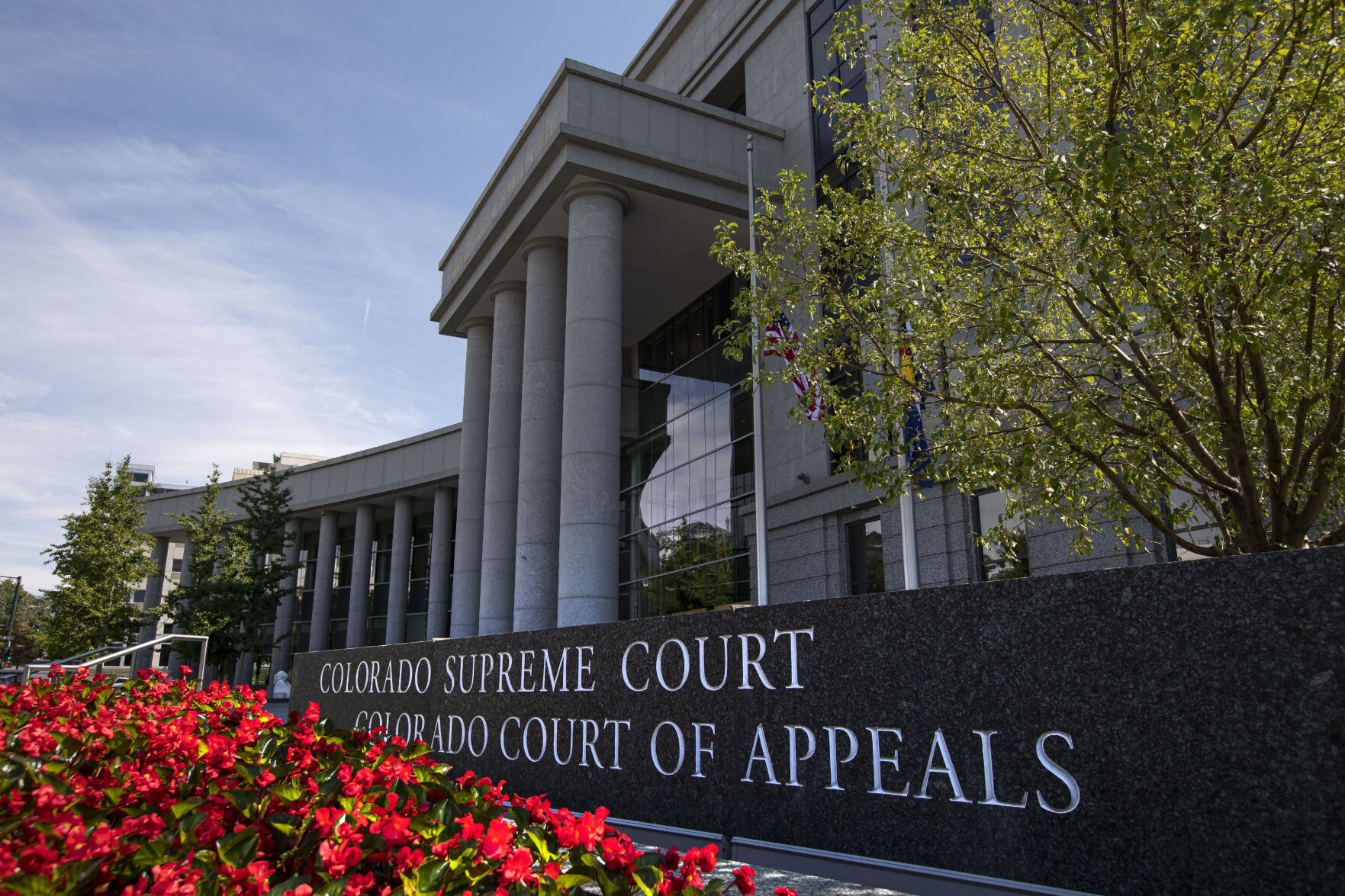
Pueblo County prosecutors failed to prove a defendant was “in custody” at the time she allegedly assaulted a sheriff’s deputy, the state’s Court of Appeals ruled on Thursday in overturning the conviction.
Alicia Antonia Martinez is serving a six-year sentence for allegedly striking a deputy with her vehicle as she evaded law enforcement. Prosecutors charged her under the law that criminalizes “violently (applying) physical force” against a peace officer while “in custody.” A jury found her guilty of the offense.
But a three-judge panel for the Court of Appeals noted the purported assault occurred during a vehicle chase in which Martinez continued to resist arrest. She was only in custody after Pueblo County Deputy Jason Hanratty shot her and ended the pursuit.
“Indeed, she was literally driving away from them at the time Hanratty’s hand grazed her vehicle,” wrote Judge Terry Fox in the panel’s March 2 opinion. “While the officers went to great lengths to stop Martinez, they were unable to effectuate an arrest until she was wounded and ceased driving.”
On the night of Jan. 13, 2019, a Fremont County sheriff’s deputy attempted to pull Martinez over for a vehicle infraction, but she drove off, prompting a pursuit into Pueblo County. Other officers joined and one of them rammed her vehicle in a semi-rural part of the county, temporarily halting it.
Hanratty, who was under the mistaken belief that Martinez had hit a deputy, got out of his car and drew his gun. Martinez accelerated near him and Hanratty fired multiple rounds as she passed by. The bullets injured Martinez and killed her passenger, Amiliano Apodaca. Pueblo County’s district attorney later deemed Hanratty’s actions justified.
Although the summary of Hanratty’s interview to investigators did not mention Martinez striking him, prosecutors believed the body-worn camera video showed Hanratty reaching his arm toward Martinez’s vehicle as she drove by. The contact between the deputy and the vehicle was the alleged assault.
On appeal, Martinez challenged the notion that she was in custody or that Hanratty potentially touching the vehicle amounted to her “violently” applying physical force.
“Officers never handcuffed Martinez. They didn’t block her car from leaving. They didn’t disable her car from driving. They didn’t tell her she was under arrest. They didn’t command her to stop. And Martinez didn’t submit to officers’ command,” wrote Deputy State Public Defender Julia Chamberlain.
The prosecution countered that officers were trying to prevent Martinez from leaving the scene at the time she allegedly struck Hanratty, rendering her “in custody.”
The appellate panel sided with Martinez. Under Colorado Supreme Court precedent, someone is in custody when an arrest has been “effected” – meaning officers have physical control over a person to ensure they do not leave. Only after that point can force against a police officer be considered assault.
“This distinction matters because, before an arrest is effected and the individual is considered ‘in custody,’ the application of force against a peace officer can constitute resisting arrest,” Fox wrote, “but not second degree assault.”
Because Martinez was evading arrest at the time she allegedly used force, the prosecution failed to prove she assaulted Hanratty. The panel declined to resolve Martinez’s other claim that she did not violently apply physical force, nor did it address Martinez’s other concerns about the definitions the trial judge and prosecutor had offered to the jury about the meaning of “in custody.”
Martinez still stands convicted of four counts of vehicular eluding.
The case is People v. Martinez.


Federal judge dismisses ex-Colorado judicial discipline director’s conspiracy lawsuit
Michael Karlik
michael.karlik@coloradopolitics.com
Updated 14 hours ago
A federal judge dismissed a lawsuit from Colorado’s former judicial discipline director on Tuesday, finding that he failed to adequately state claims for conspiracy or constitutional violations. Christopher S.P. Gregory, who served as the executive director of the Colorado Commission on Judicial...
Federal judge allows retaliation claims to proceed against prison officials
Michael Karlik
michael.karlik@coloradopolitics.com
Updated 12 hours ago
A federal judge agreed last week that a man incarcerated at Sterling Correctional Facility had credibly alleged that employees retaliated against him for filing grievances, including by taking away his disability accommodations and turning off his electricity. Louis Peoples Jr.,...

U.S. Rep. Lauren Boebert’s son arrested, faces charges of sexual exploitation of minor
Matt Kyle
matt.kyle@denvergazette.com
Updated 2 days ago
U.S. Rep. Lauren Boebert’s son Tyler Jay Boebert has been arrested and accused of recording and sharing a video depicting himself having intercourse with a minor, according to court records. The case originated in Garfield County in Western Colorado and...

Adams County water district may proceed with cost-recovery lawsuit against Denver for contamination
Michael Karlik
michael.karlik@coloradopolitics.com
Updated 1 day ago
A federal judge rejected Denver’s arguments last week for pausing or dismissing a lawsuit brought by an Adams County special district seeking to recover its costs for addressing water contamination as a result of Denver firefighting activities. In January, the...
Federal judge declines to dismiss First Amendment retaliation claim against prison official
Michael Karlik
michael.karlik@coloradopolitics.com
Updated 24 hours ago
A federal judge agreed last month that an incarcerated Native American woman may pursue her claim of First Amendment retaliation against a prison official who allegedly interfered with her religious exercise. Yvonne Peterson resided at Buena Vista Correctional Facility for...

Colorado’s troubled guardianship office pursues ‘cultural reset’
Marianne Goodland
marianne.goodland@coloradopolitics.com
Updated 2 days ago
Colorado’s guardianship program, long criticized for mismanagement and high staff attrition, is undergoing a “cultural reset,” as its new director works to repair partnerships and prepare for a major expansion under recent legislation. Created by lawmakers in 2017, the Office...

Local party leaders, incoming judge among members of judicial performance commission that violated law
Michael Karlik
michael.karlik@coloradopolitics.com
Updated 4 days ago
A local Democratic leader and 2024 presidential elector. A legislative aide and leader in the Young Republicans. An incoming county court judge freshly appointed by the governor. They are among the eight members of the northeastern Colorado judicial performance commission...

Judge dismisses lawsuit seeking records from Colorado Democratic group
Marianne Goodland
marianne.goodland@coloradopolitics.com
Updated 5 days ago
A lawsuit seeking to obtain records from Democratic lawmakers affiliated with a caucus has been thrown out by a Denver District Court judge. On July 17, Judge Ericka Englert dismissed the April lawsuit filed by progressive activist Derrick Blanton, who...

Colorado Springs mother Deborah Nicholls’ murder conviction overturned
Nick Smith
nick-smith@coloradopolitics.com
Updated 5 days ago
A Colorado Springs mother convicted in 2008 of murdering her three children in a house fire might get a new trial after a judge ruled that prosecutors withheld key evidence that could have impacted the jury’s verdict. Deborah Nicholls, whose...
Colorado court overturns illegal $7,000 restitution order
Michael Karlik
michael.karlik@coloradopolitics.com
Updated 4 days ago
Colorado’s second-highest court overturned a Weld County defendant’s obligation to pay more than $7,000 in crime victim restitution on Thursday because a trial judge failed to issue a legally compliant restitution order at the time of sentencing. In Colorado, as...
PREV
PREVIOUS
Frontrunners are starting to appear in crowded Denver Mayor's race
The Denver Gazette, in partnership with 9 News and Metropolitan State University conducted a poll including 820 Denver adults regarding the municipal election. Amongst those polled, favorites in the crowded mayoral field emerged, as well as key issues voters voted were, “one of the very most important for Denver to address in the next few […]

Class-action suit filed against parental evaluator who said he disbelieves 90% of domestic violence allegations
A parental evaluator already under fire for saying he disbelieves 90% of the domestic violence allegations he hears in custody cases faced new legal woes Thursday with the filing of a lawsuit that alleges his evaluations are extremely biased and favor abusive parents. Colorado’s parenting evaluation industry profits as bitter child custody cases thrown into […]