

Metro district bill would protect homeowners | OPINION
Have you ever driven past signs for new communities offering “homes starting in the low $400s,” with planned amenities like parks and recreation centers, and asked yourself how such opportunities are possible in this housing market? In all likelihood, the planned master communities are within a locally approved metro district.
For many Colorado families, metro districts have become one of the most important ways to lower the barriers to homeownership while not compromising on the amenities people desire and the public infrastructure they need. Although metro districts are a commonly used financing tool – there are more than 2,300 metro districts across the state – they’re not well understood, even by residents living within them. And not all metro districts are created equal.
That’s why I’m co-sponsoring SB-23-110, a bipartisan bill known as “Transparency For Metropolitan Districts.” By formally adopting the best practices of metro district boards across the state, this bill protects residents through strong local oversight, greater accountability for district directors, transparency through enhanced communication and mandated disclosures. Cities and counties will be required to both impose a debt limit and set mill levy caps for bond repayments so property taxes don’t go above a certain level. And all bonds issued by a metro district bought by a developer must be approved by a certified municipal advisor – a federally regulated fiduciary – to confirm the interest rate on the debt is near or below market rate.
These provisions put guardrails into place for homebuyers, ensuring they only pay for the required infrastructure. At the same time, the bill provides a path forward to build future metro districts, which is critical at a time when Colorado’s housing supply suffers from a 500,000-plus housing unit gap, and cities and counties are limited from raising taxes by the Taxpayer’s Bill of Rights (TABOR).
As a result of TABOR, metro districts have emerged as one of the few viable financing mechanisms to build infrastructure and homes. In many ways, they operate like a mortgage company, but at far greater economies of scale. Just as most homeowners would be unable to purchase a home outright, the same is true of these master communities due to the lack of a functioning tax base at the time of construction.
Most of the debt issued for metro districts is bought by public bond buyers while a small percentage is purchased by developers usually at the outset for necessary infrastructure when public bond buyers still view it as a potentially risky investment. Both methods finance public infrastructure in family-friendly communities that include parks, trails, safe streets and intersections, recreation centers and functioning water and sewer lines. As with a mortgage, this debt is then paid down by homeowners over time.
Without these mechanisms in place, the costs of these public improvements and amenities would be passed directly onto the homebuyer – adding upward of $30,000 per home.
Our role as legislators is to make it easier for our working families to afford housing, not harder. Improved protections and transparency without overregulation is how we responsibility address Colorado’s housing affordability crisis. That’s exactly what SB23-110 aims to achieve.
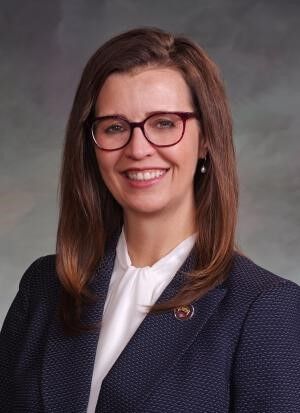
State Sen. Rachel Zenzinger, an Arvada Democrat, is Chair of the Joint Budget Committee.


Penny wise but foolish by pounds | Paula Noonan
Paula Noonan
paula-noonan@coloradopolitics.com
Updated 11 hours ago
Leadership of Colorado’s General Assembly introduced the Fiscal Year 2026-2027 Legislative Appropriation bill, HB26-1333, at $75.72 million. That will be the budget to run the state legislature next year. About $74 million comes out of the general fund and the...

Proposed evictions bill fails to improve housing stability while threatening higher rents | OPINION
Colorado Politics
colorado-politics@coloradopolitics.com
Updated 11 hours ago
No landlord wants to evict a tenant for non-payment of rent. That is true for large housing providers, small “mom-and-pop” owners and nonprofit housing rental providers alike. Evictions are financially and emotionally costly for everyone involved. But when rent goes unpaid, eviction...

Prevention works — invest in conflict prevention with wolves | FEEDBACK
Colorado Politics
colorado-politics@coloradopolitics.com
Updated 13 minutes ago
The recent reporting on Colorado’s wolf depredation payouts exceeding $700,000 highlights a critical problem with the current approach to wolf recovery: current mainstream systems focus on compensation and ineffective reactive non-lethals. These systems are not designed to prevent conflict but attempts...

Colorado’s clean-energy future must be affordable for older adults | PODIUM
Colorado Politics
colorado-politics@coloradopolitics.com
Updated 17 hours ago
By Jason DeaBueno Last winter, one of the older adults we serve at Silver Key shared something that has stayed with me. She begun turning her heat down at night — not because she wanted to, but because she was...

Why Denver should care about conservation easements — even if you’ve never set foot on a ranch | OPINION
Colorado Politics
colorado-politics@coloradopolitics.com
Updated 1 day ago
By Jason Swann I live in Denver. I drink tap water from my kitchen sink, hike close to home when I can, worry about wildfire smoke every summer, and try, like many families, to keep up with the rising cost...

Could it be the end of hunting as we’ve always known it in Colorado? | FEEDBACK
Colorado Politics
colorado-politics@coloradopolitics.com
Updated 17 hours ago
By Eric Washburn Recently, the Colorado Parks and Wildlife (CPW) Commission voted to ban the commercial sale of fur and reject CPW’s proposed daily bag limits of 15 per day per person (450 per person per month!!) for harvesting 17...

Want to talk to the Colorado legislature? Be nice | Hal Bidlack
Hal Bidlack
hal-bidlack@coloradopolitics.com
Updated 3 days ago
As I peruse Colorado Politics each week, in search of a topic upon which I can wax philosophic, I sometimes come across stories that seem, frankly, to be quite dull or even unimportant upon first glance. But when I dig...

Constituents still message DC — but are our reps even listening? | Miller Hudson
Miller Hudson
miller-hudson@coloradopolitics.com
Updated 3 days ago
Each time I visit the nation’s capital, it feels a bit like a homecoming — not that I would ever wish to return as a resident. Yet, I did grow up outside the city in Montgomery County, Maryland from 1956...

Access to earned wages increases retention, attendance, morale | OPINION
Colorado Politics
colorado-politics@coloradopolitics.com
Updated 3 days ago
By Diane Macheers Every payday, I’m reminded how much trust our team members place in us. They work hard, show up for our residents, and do everything they can to support themselves and their families. As an employer, we believe...

Why Colorado businesses should oppose SB26-134 | OPINION
Colorado Politics
colorado-politics@coloradopolitics.com
Updated 3 days ago
By Liliana Soto My family has spent the last 30 years building a small piece of Colorado’s food culture. My father founded Las Dos Americas Tortilleria three decades ago with a simple idea to make authentic flour and corn tortillas...
PREV
PREVIOUS
Election deniers aren't helping | Grand Junction Daily Sentinel
Like a bad penny, former Mesa County Clerk Tina Peters has turned up again, this time in a bid to chair the Colorado Republican Party. If the party wants any chance at winning in this state again any time soon, it needs to show her the door. Peters was highlighted in a recent Associated Press […]

More options needed to solve Colorado housing crisis | PODIUM
Obi Ezeadi For decades, local laws at the city and county level have dictated how, where and what kinds of homes can be built. This form of policymaking has provided for municipal autonomy but created a housing crisis absent of a regionally coordinated and regulated pathway toward inclusive, income-diverse housing options for our renters and […]