

GOP would dig hole deeper by dumping Colorado’s U’s | WADHAMS

Even in the aftermath of sweeping losses in the past three elections driven by hundreds of thousands of new unaffiliated voters who strongly rejected former President Donald Trump and his incessant stolen-election conspiracies, some Republicans still want to exclude them from participating in Colorado’s Republican primary elections despite the fact they represent nearly half of the state’s electorate.
Unaffiliated voters now account for a whopping 47% (1,748,320) with Democrats at 28% (1,053,588) and Republicans at only 25% (930,814) as of Feb. 2.
For the past three election cycles, unaffiliated voters have had the option to vote in one of the two major-party primaries. They get both primary ballots in the mail and must choose one. Attempting to vote in both primaries nullifies both ballots.
Though unaffiliated voters chose the Democratic primary ballot over the Republican ballot in 2018 by 177,000 to 105,000 and by 383,000 to 138,000 in 2020, Republicans had the clear advantage in 2022 by 231,00 to 162,000.
Though it is obvious a Republican cannot win a statewide election without unaffiliated voters, this is not a new phenomenon.
For several decades, the electorate was one-third unaffiliated, one-third Democratic and one-third Republican. Only after the infusion of more than 800,000 people into Colorado since 2010 did the number of unaffiliated voters explode to 47%.
There is often a misconception Colorado was at one time a solid “red state” and it was relatively easy for Republicans to win major statewide office for governor and U.S. senator.
Indeed, Republicans won seven consecutive major statewide elections from 1960 to 1970, but the Watergate scandal brought that streak to a screeching halt. Between 1972 and 1994 there were 14 elections for governor and senator and Republicans only won three, when U.S. Sen. Bill Armstrong won in 1978 and 1984 and U.S. Sen. Hank Brown won in 1990. Democrats won six consecutive elections for governor and five of eight elections for the Senate during that period.
There was a brief streak of five Republican wins from 1996 to 2002 with U.S. Sen. Wayne Allard (1996 and 2002), Gov. Bill Owens (1998 and 2002) and U.S. Sen. Ben Campbell (1998). But since 2002, Democrats have won 11 of 12 elections including five straight for governor and six out of seven for senator. U.S. Sen. Cory Gardner’s victory in 2014 over incumbent Democratic U.S. Sen. Mark Udall was the only Republican win.
The Allard and Owens wins, both of whom had tough primaries, are particularly instructive as to why Republicans should not shun unaffiliated voters from the GOP primary.
When Brown decided not to seek a second term in 1996, Democrats thought they could easily win the seat with the formidable Brown out of the way. A very competitive Republican primary to succeed Brown ensued when then-U.S. Rep. Allard beat a popular attorney general.
Underdog Allard never took his eye off the ultimate goal of winning the general election even while running in a conservative primary. He crafted a strong mainstream conservative agenda to pass a balanced budget constitutional amendment, to reduce the tax and regulatory burdens on families and small businesses, and to return power to state and local governments. This agenda appealed not only to Republican primary voters but to the unaffiliated voters who would determine the general election.
Then-State Treasurer Bill Owens faced a very competitive Republican gubernatorial primary in 1998 against a respected state Senate president. Just like Allard in 1996, Owens ran on a compelling mainstream conservative agenda to cut state taxes, reform education and improve transportation.
This agenda propelled him to the Republican nomination and ultimately he became the first Republican governor to be elected in 28 years, and he remains the only Republican governor to be elected in the past 52 years.
Allard and Owens are the only two Republicans in the past 42 years to win elections for senator and governor after having competitive primaries.
It is shortsighted and foolhardy to try to exclude 1.7 million unaffiliated voters from having the option to vote in the Republican primary while they would still get the Democratic primary ballot. Having unaffiliated voters voting in the Republican primary is a huge opportunity to build a campaign agenda that can go on to win the general election.
Rather than turning inward to somehow “purify” the Republican Party without regard for the ultimate goal of actually winning the general election, Republicans should embrace unaffiliated voters as a way to draw strong contrasts with the Democrats and their increasingly socialist drift.
Dick Wadhams is a Republican political consultant and a former Colorado Republican state chairman.


Threats inside and out loom for Colorado’s Republicans | Dick Wadhams
Dick Wadhams
dick-wadhams@coloradopolitics.com
Updated 1 day ago
Colorado Republicans made strides in 2024 despite an insidious state chairman who tried to defeat successful Republican candidates. Newly elected U.S. Reps. Gabe Evans, Jeff Hurd and Jeff Crank fought off unethical opposition from their own state party chairman, making...

Is it time for both parties to bail on Colorado’s political nominating system? | Miller Hudson
Miller Hudson
miller-hudson@coloradopolitics.com
Updated 1 day ago
Cracks are beginning to appear in Colorado’s political nominating system. Recently, Mario Nicolais, a formerly Republican-leaning pundit, and Doug Friednash, former Democratic legislator, have opined regarding the imminent demise of the caucus/assembly framework which controls partisan candidate selection. There has...
Recognizing the value of generational work | Rachel Gabel
Rachel Gabel
rachel-gabel@coloradopolitics.com
Updated 1 day ago
The Lesser Prairie Chicken habitat in southeastern Colorado is a swath of prairie that begins in Cheyenne and far-southeastern Lincoln counties and moves south and east into Kiowa, Prowers and Baca counties. This is cattle country where the short grass...

Why the controversy with mail-in ballots? | Cronin & Loevy
Tom Cronin Bob Loevy
tom-cronin-bob-loevy@coloradopolitics.com
Updated 1 day ago
Most Coloradans enjoy the right to vote “by mail” at election time. Most Americans favor this process. But U.S. President Donald Trump is trying to federalize (nationalize) this practice and shift the supervision of voting from county clerks to the...

Who are the kings being crowned here in Colorado? | Jon Caldara
Jon Caldara
jon-caldara@coloradopolitics.com
Updated 4 days ago
Though most of us celebrate “No Kings Day” on July 4, the Trump-deranged got a head start last weekend with rallies around the state. Attendees bravely fought oppression by blocking traffic for people with jobs. Rally-goers demanded freedom from tyranny,...
An April Fool’s Day to remember | Capitol M | Week of April 4, 2026
Marianne Goodland
marianne.goodland@coloradopolitics.com
Updated 2 hours ago
The lighter side of the Capitol, and if light were weight, the Capitol would have lifted off better than the Artemis II rocket on April Fool’s Day. There was a plethora of Fools at the Capitol for April Fool’s Day...
Democrats rebounding without learning necessary lessons | SONDERMANN
Eric Sondermann
eric-sondermann@coloradopolitics.com
Updated 2 days ago
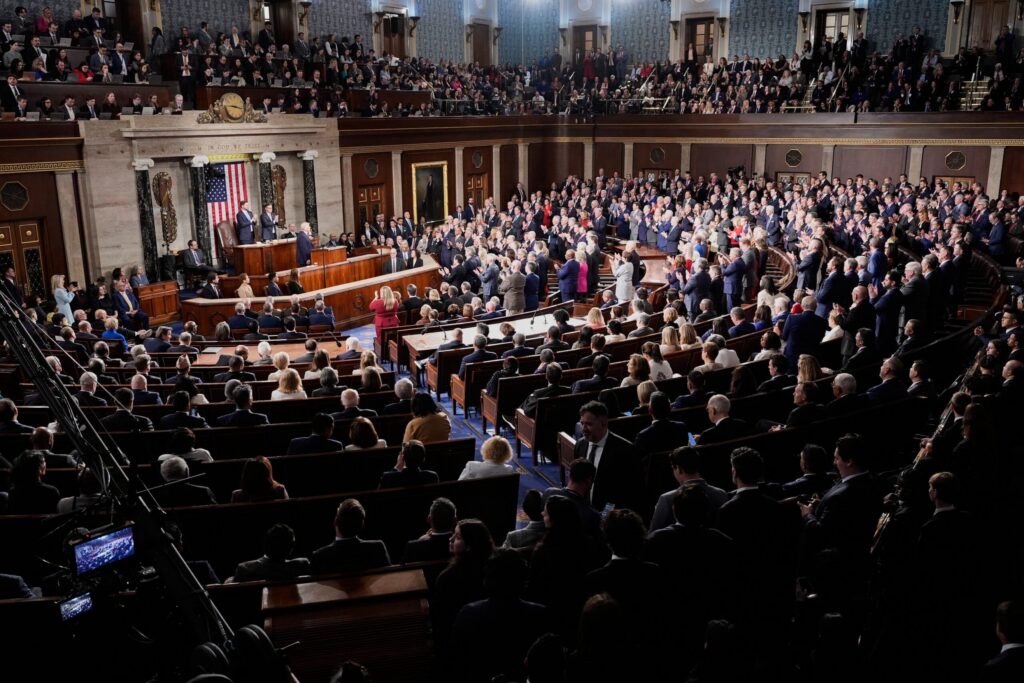
“When we fight, we win!” That, reportedly, was the chant heard over and over again at the Colorado Democratic Assembly a week ago. It suggests that pugilism has been the piece missing from the Democratic toolkit. Perhaps it was just...

The Centennial State’s nuclear energy opportunity | OPINION
Michael Hancock
michael-hancock@coloradopolitics.com
Updated 4 days ago
Colorado was given a clear opportunity earlier this year. On Jan. 28, the U.S. Department of Energy issued a Request for Information (RFI) seeking potential hosts for Nuclear Energy Innovation Campuses — an early-stage process designed to identify states serious...

More pain than gain in upending Colorado’s water-access laws | OPINION
Colorado Politics
colorado-politics@coloradopolitics.com
Updated 4 days ago
By Greg Walcher and Mike King Colorado’s long-standing balance between public recreation and private property along rivers is now under renewed pressure. But changing stream access law would impose significant fiscal and legal costs for relatively limited new recreational benefit....

Guardianship is not a homelessness policy | OPINION
Colorado Politics
colorado-politics@coloradopolitics.com
Updated 4 days ago
By Amelia McKeon The federal government’s proposal to expand guardianship for homeless veterans is being framed as compassionate. It is anything but. It is a dangerous shift toward using one of the most restrictive legal tools we have as a...
PREV
PREVIOUS
Biden has had 'it' all along | HUDSON
Miller Hudson Last summer I had an interesting conversation with a retired high school football coach who has launched a second career as a “quarterback whisperer.” He works with coaches at Florida’s elite football factories to identify those boys, soon to be men, who can successfully lead a team to the state championships. He told […]

Colorado stands up for TABOR | Denver Gazette
We welcomed the news late Friday that the IRS has agreed not to tax Coloradans’ TABOR refunds after all. And almost as much, we welcomed news earlier the same day that Colorado’s full Washington, D.C., delegation had told the agency to keep its mitts off of our taxpayers’ money. It was good to see Gov. […]