

What will state oil and gas commission protect? | NOONAN
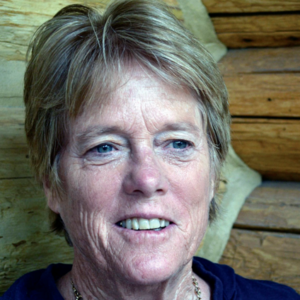
Jeff Robbins, chair of the Colorado Oil and Gas Conservation Commission, made a brave statement to the House Energy and Environment committee during his recent presentation on SB19-181, which protects people and the environment rather than promoting oil and gas drilling.
“Through your legislative action in 2019, Colorado now has the most protective regulatory regime in the nation, if not the world.” This statement nicely sums up the reasons the world is in such a precarious position for reaching its environmental and climate change goals.
As proof of the commission’s advances in protective regulation, Robbins cited the size of pre- and post-SB19-181 drilling applications. The industry used to put up 15-page requests. Now the applications are 300 pages. That fact should make us all wonder about the quality of decision-making related to more than 50,000 wells approved before SB19-181.
Robbins is especially proud of the transparency of the COGCC’s approval process in which citizens can provide written opinions about drilling applications and can also comment at hearings. A review of the recent PDC Energy application involving more than 400 wells revealed many negative comments the commission set aside. It based its approval on company pledges to use “best management practices” in their operations. If history is prelude, those practices won’t be enough to reduce methane and other dangerous chemicals from heating the atmosphere and creating air pollution along the Front Range.
Republican Rep. Kenneth DeGraaf of El Paso County asked COGCC executive director Julie Murphy specifically about the need to manage methane emissions. He “heard” methane breaks down over two weeks, implying it’s not such a terrible polluter. Murphy said she’s “not sure” about the atmospheric breakdown of methane. That’s startling.
According to the Intergovernmental Panel on Climate Change, methane is more than 80 times as potent as carbon dioxide at trapping heat in the atmosphere. The gas breaks down in the atmosphere over about 10 to 12 years, much faster than carbon dioxide. That’s why controlling methane emissions is so critical. The state can get a big heat-reduction bang fast by stopping gas flaring, venting and leaks.
Rep. Mike Weissman from Aurora noted businesses in general in Colorado will face severe conditions if our bad air quality isn’t brought into alignment with the Clean Air Act. He brought up the problem of approving many drilling applications without looking at their cumulative impact on air, water and land.
Murphy acknowledged the COGCC doesn’t currently “understand” cumulative pollution impacts across permitted drilling sites. The commission’s application decisions are based on estimates of emissions. Over the next couple of years, it will attempt to determine actual emissions to assess whether its estimates are in the ballpark. Even so, without these exact numbers, the COGCC has authorized thousands of wells since SB19-181 was signed.
Committee chair Cathy Kipp from Fort Collins asked about the implementation of SB19-181’s 2000-foot setback requirement. Robbins acknowledged a number of applications have wells inside that setback distance. He called the waivers “offramps.” So, for example, if a drilling operation can only access its mineral rights inside the setback, the operator can ask for drilling permission from affected property owners or tenants.
Robbins said these permissions only occur with informed consent. He asserted some residents “don’t take issue” with drilling closer than 2,000 feet. He didn’t mention, and no legislator asked, whether these accepting individuals received remuneration for their signature or, more importantly, understood the potential health consequences. Kipp asked about future residents and tenants and their protection. Robbins claimed the big problems with energy development occur in the drilling phase. Once the wells are producing, he said, pollution and other annoyances are minimal.
That’s why the COGCC authorized the large development on the eastern side of Aurora. The idea is drilling will occur before the homes are built. That way, future home, hospital and school setbacks may be as close as 500 feet because the 2,000-foot rule only applies to drilling, not subsequent development. That’s how Aurora will begin to look like Los Angeles where a well can be your next-door neighbor.
Rep. Meg Froelich of Arapahoe County inquired about orphan wells. Murphy offered Colorado’s orphan well problem wasn’t that bad and the COGCC is using federal money to cover the cost. She admitted the COGCC had already over-allocated the first $25 million from the feds.
This issue was also a question during public comment at the COGCC’s meeting held at the same time as the committee hearing. Public commenters questioned whether the state was requiring enough bonding to protect the public from future orphan well costs. As an example, Noble Energy will buy a $6.3 million bond, which will cost much less in an annual premium, to cover the closing of all 4,000 wells in its ownership. One commentator suggested the difference between the bond amount and the estimated cost of closing all Noble’s wells, an estimated $285 million, is the amount of risk the COGCC is asking the taxpayers to foot in this arrangement.
This brings up a basic question the committee will have to wrestle with: is the COGCC operating in a manner sufficiently protective of the environment, public health and the public purse as required by SB19-181?
Paula Noonan owns Colorado Capitol Watch, the state’s premier legislature tracking platform.


Colorado can’t forget the lessons of COVID | Jon Caldara
Jon Caldara
jon-caldara@coloradopolitics.com
Updated 3 days ago
We are finally getting a clearer picture of what happened during COVID. Not because the people who locked us up, masked our faces and forced unproven chemicals into our bodies have suddenly become transparent, but because Anthony Fauci’s COVID-era diary...

Historic preservation supporters organize to oppose Trump changes | Bob Loevy
Tom Cronin
tom-cronin@coloradopolitics.com
Updated 2 days ago
Historic preservation organizations in Colorado Springs, the remainder of Colorado and across the nation are organizing to resist a recent effort to relax and weaken historic preservation laws in the United States. In Washington, D.C., the Advisory Council on Historic...

The primary political reform and precondition for all others | SONDERMANN
Eric Sondermann
eric-sondermann@coloradopolitics.com
Updated 4 days ago
In its current state, the American political system has no end of ailments. Far too many factors accelerate polarization and work against moderation and narrowing the differences. Media, and the way so many citizens limit themselves to agreeable, reinforcing sources,...
Pueblo mayor, council concoct Trumpian Texas Two-Step | Dennis Maes
Dennis Maes
dennis-maes@coloradopolitics.com
Updated 3 days ago
Several weeks ago, an article was published positing Pueblo Mayor Heather Graham is a disciple of the calamitous Donald Trump school of governance — specifically as it related to questionable ethical practices and the misuse of public funds. Recently, Graham...

Colorado can’t afford to turn its back on proven public safety technology | GUEST COLUMN
Colorado Politics
colorado-politics@coloradopolitics.com
Updated 3 days ago
By Samuel G. Michael I recently saw a report that said Colorado is leading the way in artificial intelligence adoption for businesses. Across our state, more business owners and employees than ever before use AI for their everyday functions —...

As education conflicts abound across Colorado, who puts the kids first? | Paula Noonan
Paula Noonan
paula-noonan@coloradopolitics.com
Updated 4 days ago
Elected school boards and the Colorado Department of Education (CDE) have hit the headlines with fired superintendents, superintendent resignations, failures of oversight, and misdirected dollars. Cherry Creek School District’s superintendent was fired. Jefferson County Schools’ superintendent found a less stressful...

Clock is ticking on Colorado’s new AI rules | PODIUM
Colorado Politics
colorado-politics@coloradopolitics.com
Updated 4 days ago
By Aashis Luitel On Jan. 1, organizations using covered automated systems must begin complying with Senate Bill 26-189, Colorado’s new Automated Decision-Making Technology Act. They can identify those systems and start building the processes the statute clearly requires. What they...

Meghan Shay on recovery, responsibility and second chances | The OpEdge Podcast
Tony Olivero
tony.olivero@gazette.com
Updated 5 days ago
Step Denver and Step Springs CEO Meghan Shay joins The OpEdge to explore addiction recovery, homelessness, and the role of accountability in lasting change. Shay tells host and investigative columnist Jimmy Sengenberger why she believes recovery is built on personal...
The outrages mount | Hal Bidlack
Hal Bidlack
hal-bidlack@coloradopolitics.com
Updated 5 days ago
My kindly and forgiving editors understand that, from time to time, I can’t help myself from leaping atop my rickety soapbox to vent. And, like many other political commentators have already done, I could easily fill this entire missive with...

Rural Colorado deserves a tax holiday | GUEST COLUMN
Eric Mulder
jstooksberry@gmail.com
Updated 6 days ago
Spend enough time in Colorado’s Eastern Plains, the San Luis Valley, or the Western Slope, and you’ll see boarded-up storefronts, schools consolidating classrooms, and small rural communities stretching every dollar to keep basic services afloat. Once the backbone of Colorado’s...
PREV
PREVIOUS

The next step in simplifying the sales tax | OPINION
Paul Archer As is the norm, January is characterized by long nights, gray skies and chilly temperatures. This year is no different. Fittingly, the bleak winter months are well matched to the partisan bickering and political posturing that typically define the beginning of the state legislative session and Colorado politics in general. However, on occasion […]

Will Colorado’s legislature fix what it broke? | BRAUCHLER
George Brauchler Events reported in just the past few days remind us of how the “we know best” philosophy of criminal justice reform under the Gold Dome can work predictable injustices in the real world. On Aug. 5, 2020, 17-year-old Dillon Siebert and two other teenagers murdered a Senegalese family of five by burning them […]