

Party time | BIDLACK
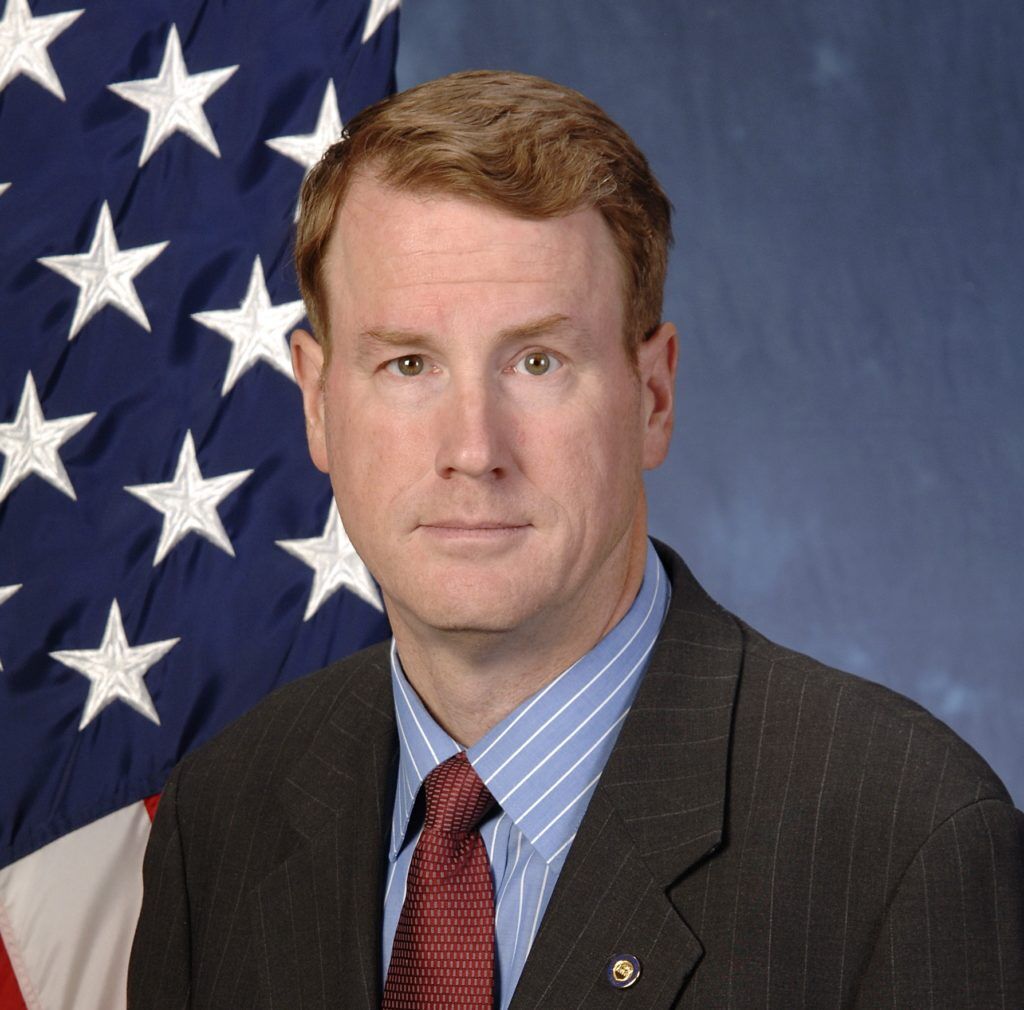
More than five years ago, when I was first asked to write for Colorado Politics, my kindly editor stated, as I remember it, that he wanted me for my wit, good looks, political background and that I was a former poli sci professor at the Air Force Academy (Editor: I remember it quite differently, but go on…).
And few things tend to kick me into “professor mode” quicker than the details and history of our political process. I love minutiae and particulars, and I love learning about how things work. Which is why a recent CoPo story caught my eye.
It seems we have a brand new official political party in Colorado. After turning in more than the minimum required number of signatures, the No Labels Colorado Party has arrived officially on the scene, after the Secretary of State’s Office formally validated 11,821 of the more than 18,000 signatures submitted. You always need to get a bunch more signatures than the minimum, because sometimes 6,179 or-so people will sign when they are not actually a registered voter. Or they put down a fake name just to get away from the person gathering signatures, and such. But the No Label Colorado folks got the job done.
So, what does that mean, really?
Not too much… At least not for a while…
The NLC party now becomes one of six minor parties in the Centennial State, joining the American Constitution Party, Approval Voting Party, Green Party of Colorado, the Libertarian Party of Colorado and the Unity Party of Colorado as officially recognized. I had not heard of the Approval Voting Party before, so a quick trip to their website educated me. They are apparently a single-issue organization, dedicated to changing how we vote to a ranked system, where you get to vote for more than one person, in order of preference. There are a number of locales around the nation experimenting with that system, which is argued to be fairer and more balanced, rather than the winner-take-all system we have had for the past 233 years or so.
Which actually brings me back to the NLC party, and all the minor parties. You all know, dear readers, of the various systems of government around the world. You likely also know that our presidential system is quite unusual around the globe. Most countries use a parliamentary system, or a version of it, in which the legislative branch creates the executive branch from within itself. The prime minister of England, for example, is the equivalent of a U.S. member of Congress, with a home district. The current PM, Rishi Sunak, represents a constituency in North Yorkshire.
And you may have also noticed that parliamentary systems tend to have lots more political parties than we do in the U.S.. England has three “major” parties. There are dozens in Israel, with five major parties and lots of smaller ones.
These parliamentary systems elect their members differently than we do. In our system for, say, a congressional seat in Colorado, the person who gets the most votes becomes the member of Congress, and the person who finished second (like I did back in 2008) gets nothing. Any minor third party is even less consequential. Back when I ran there was also a guy from the Constitution Party running, with one issue position: he was going to serve his entire term out of an office in Baghdad to end the Iraq war. He didn’t get too many votes. Why? Because in a winner-take-all system, finishing first is all that matters, and being part of one of two major parties gives you the best chance to win.
That is why in our system, we’ve seen parties ebb and flow, but a third party never really has much of a chance. That is why our parties have transformed rather than being replaced. The Whigs of the 19th century, for example, died out and became the Republicans. Lincoln started off as a Whig and became a GOPer when that transformation took place.
But in a non-winner-take-all system, like Israel, minor parties can, and do, get a few folks elected to the Knesset (their legislative body). Get 3% of the vote? You can get 3% of the seats. It’s not quite that simple, but that’s the basic idea.
In such systems, minor parties can become king-makers, if no major party can command a majority of the body. Thus, again in Israel, some small ultra-religious parties end up with disproportionate power, as a major party might need a handful of votes to get a majority, a handful that can be supplied by the aforementioned minor party, who are then owed important roles in the new government – often in the form of key ministerial appointments.
But in the U.S., almost everywhere, being in a third party is more of a statement of political passion than it is a strategy to win elections. It is certainly true that on some local levels, a third-party candidate might squeak through, but while we have a few independents in our congress, we don’t have any third-party folks. The last one that comes to mind is James Buckley, a one-term U.S. Senator from New York, who was elected as a Conservative Party member back in the early 1970s.
So what is the goal of the brand-new party in Colorado? Well, according to their website, the No Labels folks are all about declaring: “This moment demands American leaders and citizens alike declare their freedom from the anger and divisiveness that are ruining our politics and most importantly, our country. A United Front.” They seem to be trying to carve out the moderate center of the political spectrum, which is actually appealing.
Will they be able to peel off enough GOPers and Dems to become an actual force in Colorado politics? Though claiming to be nonpartisan centrists, back in 2014 they supported Cory Gardner over Mark Udall, which would seem to contradict the centrist part, as few were more centrist than Udall, and Gardner became quite the Trumper. So, I have my doubts.
So, with my poli sci professor’s hat firmly on my head, I look forward to seeing what the NLC folks try to do. Will they replace parts of the GOP and the Dems, as the Whigs were replaced? Only time will tell.
Stay tuned.
Hal Bidlack is a retired professor of political science and a retired Air Force lieutenant colonel who taught more than 17 years at the U.S. Air Force Academy in Colorado Springs.


Registered voters on the eve of the 2026 primaries | Cronin & Loevy
Tom Cronin Bob Loevy
tom-cronin-bob-loevy@coloradopolitics.com
Updated 1 day ago
The Colorado Secretary of State’s Office has published the latest voter registration figures for the state and its counties as of June. Colorado ranks among the highest states for independent, or unaffiliated, voters. Only Alaska and Massachusetts have more. New Hampshire, New Jersey, Maine and Oregon also rank highly. So here...

A room for Sundance, a reality check for big-government Boulder | Jon Caldara
Jon Caldara
jon-caldara@coloradopolitics.com
Updated 3 days ago
There are few things more satisfying to watch than socialists getting mugged by reality. The Sundance Film Festival is invading my hometown of Boulder early next year. Sundance drew 85,000 attendees last year in Park City, Utah. Boulder’s hotel room...
Rep. Jeff Crank thinks Democrats are too focused on Trump, not enough on Colorado Springs | Vince Bzdek
Vince Bzdek
vince.bzdek@gazette.com
Updated 9 hours ago
For U.S. Rep. Jeff Crank, who’s unopposed in the Republican primary for the 5th Congressional District but the main target of both candidates in the lively Democratic primary, the big question in the midterms is not who will stand up...
Does character matter anymore? | SONDERMANN
By Eric Sondermann
by-eric-sondermann@coloradopolitics.com
Updated 4 days ago
The last few weeks have been illuminating in the manner of a headlamp pointing the way to some deep, dark, murky netherworld. Graham Platner, a hero to the populist set on the Democratic side, became his party’s Senate nominee in...

Private equity has no place in health care | GUEST COLUMN
Colorado Politics
colorado-politics@coloradopolitics.com
Updated 3 days ago
By Miah Ntepp Of all the financial pressures placed on working people in this country, the skyrocketing costs of health care rank near the top. As families struggle under the cuts to Medicaid made by the Trump administration, they are...
Some pointed questions for the gubernatorial hopefuls | George Brauchler
George Brauchler
george-brauchler@gazette.com
Updated 4 days ago
Earlier this month, the Republican and Democratic candidates for governor participated in a televised interview moderated by well-known, left-leaning legacy media folks. Predictably, the questions asked of the GOP candidates were more aggressive, pointed, biographical and almost entirely disconnected from...
Chaotic funding throws monkey wrench into governor’s-race money madness | Paula Noonan
Paula Noonan
paula-noonan@coloradopolitics.com
Updated 4 days ago
Chaos Monkey, Inc., gave a trifle $20,000 donation to Rocky Mountain Way (RMW), the independent expenditure committee (IEC) supporting U.S. Sen. Michael Bennet for Colorado governor. But why, Coloradans should ask, would a guy who has assigned his contributor name...

Lindsay Datko on school safety, misconduct and transparency in Jeffco schools | The OpEdge Podcast
Tony Olivero
tony.olivero@gazette.com
Updated 6 days ago
Jeffco Kids First founder Lindsay Datko joins The OpEdge to explore concerns about school safety, staff misconduct and transparency in Jefferson County Schools. Datko tells host and investigative columnist Jimmy Sengenberger why she believes Colorado’s second-largest district has too often...

Candidate’s disturbing anti-animal agriculture history | Rachel Gabel
Rachel Gabel
rachel-gabel@coloradopolitics.com
Updated 1 week ago
Rep. Manny Rutinel has busted out a cowboy hat for campaign photos and has thrown it into the ring to represent Colorado’s 8th Congressional District in D.C. He is endorsed by U.S. Sen. Cory Booker, a New Jersey democrat who serves on the Committee...

Marx, Bottoms, a primary death wish for Colorado GOP | Dick Wadhams
Dick Wadhams
dick-wadhams@coloradopolitics.com
Updated 1 week ago
Colorado Republicans stand on the brink of total irrelevance and embarrassment if they nominate one of the two nonsensical, buffoonish candidates running for governor, Victor Marx and Scott Bottoms. Republicans are already in a very defensive, tenuous position as Democrats...
PREV
PREVIOUS

Ukrainian confusion | SLOAN
Kelly Sloan It took far too long to get it done, but Germany and the U.S. have finally seen fit to supply the beleaguered Ukrainians with the top-end tanks they begged for for weeks. The whole tank drama was a spectacle that illustrated disunity within NATO, the inability of German Chancellor Olaf Scholz to aptly […]

State Supreme Court's polygraph hypocrisy | MAES
Dennis Maes The reporting of the pay-for-silence scandal that rocked the Colorado Supreme Court in 2021 revealed the highest court and its administration was plagued by “dysfunction, toxic environment and (a) climate of fear” as reported by a legislator who was a member of the Interim Committee on Judicial Discipline investigating the fiasco. As a […]