

Kansas lawmakers face warning about vast aquifer’s decline | OUT WEST ROUNDUP
KANSAS
Warning about aquifer’s decline sets up big fight
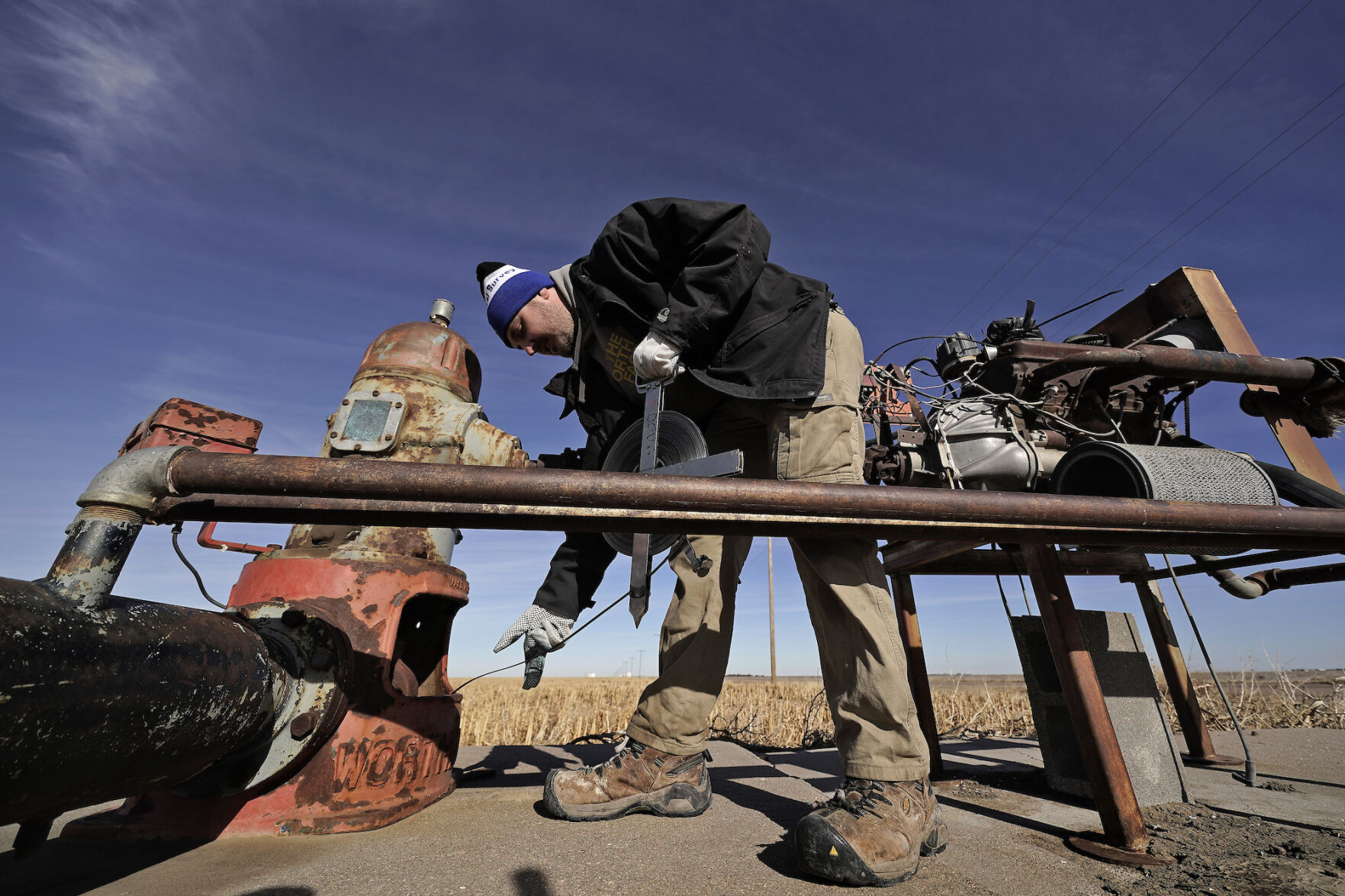
TOPEKA – Kansas water experts are sounding an alarm decades in the making: Farmers and ranchers in the state’s western half must stop pumping more water out of a vast aquifer than nature puts back each year or risk the economic collapse of a region important to the U.S. food supply.
The Kansas Water Authority is telling state lawmakers that Kansas needs to break sharply with its decadeslong policy of slowing depletion while still allowing water levels to drop in the Ogallala Aquifer. The aquifer covers roughly 175,000 square miles in the western and Great Plains states of Texas, New Mexico, Oklahoma, Kansas, Colorado, Nebraska, Wyoming and South Dakota.
Most of those states have areas where depletion is a problem, but the call in Kansas to “halt” the declines has farmers, ranchers and politically influential agriculture groups preparing to battle proposals that would give them less control over water and possibly could force them to cultivate fewer acres, buy expensive new equipment or turn on a dime to grow different crops.
Imposing the Water Authority’s policy means agribusinesses that drive the region’s economy would have to consume less water – perhaps as much as 30% less in some areas. Lawmakers also would have to decide whether local officials would keep driving conservation efforts or if the state would be in charge.
Kansas produces more than 20% of the nation’s wheat and has about 18% of the cattle being fed in the U.S.
The recommendation on the Ogallala from the water authority is a response to data showing that since widespread pumping began around 1940, much of the Ogallala has lost at least 30% of its available water and more than 60% in places in western Kansas.
WYOMING
Governor tells state to ‘make hay’ amid near-$1B surplus
CHEYENNE – Booming oil and gas revenue has put Wyoming back among states with big budget surpluses but Republican Gov. Mark Gordon cautioned lawmakers on Jan. 11 to save, not splurge, out of concern that tough times will eventually return.
“As a Wyoming rancher, I know the value of a good hay year. Because they do not always come around, it is important that we make hay when the conditions are right,” Gordon told a joint session of the Wyoming Legislature in his annual state of the state speech.
A year ago, Wyoming was still clawing back from a deficit that threatened to top $1 billion, amid struggles with low oil prices and the COVID-19 pandemic.
Now, Wyoming’s looking at a surplus approaching $1 billion, thanks to higher energy prices. Wyoming is a leading producer of oil and gas and the top U.S. producer of coal, an industry with fewer gyrations but in steady decline nonetheless.
Gordon cautioned against big spending, asking legislators who kicked off a two-month session on Jan. 10 to set aside half of Wyoming’s surplus in state savings accounts. Wyoming has a two-year budget.
He also outlined a few spending priorities in the speech. They include more raises for state employees including snowplow drivers, troopers, nurses and social workers; maintaining funding for the state economic development agency; and storing water amid pressure to send more down the Colorado River drainage.
Even if Gordon wanted, the state’s overwhelmingly Republican statehouse would be unlikely to bulk up a budget he described as the leanest in a decade, with an eye toward the state’s boom-and-bust economy eventually sliding back to bust.
NAVAJO NATION
Buu Nygren sworn in as tribe’s youngest-ever president
FORT DEFIANCE, Ariz. – Buu Nygren was sworn in on Jan. 10 as the next president of the vast Navajo Nation, a job that will test his ability to make good on promises to deliver water, electricity and broadband to tens of thousands of residents who don’t have it.
Nygren beat out incumbent President Jonathan Nez in the tribe’s general election by about 3,500 votes. Nygren, 36, took the oath of office during a ceremony that highlighted the challenges he grew up with and, later, academic and business successes that helped him ascend as the youngest person to hold the tribal presidency.
Nygren stood amid hand-woven Navajo rugs and blankets as he addressed the crowd in a mix of Navajo and English, saying his administration’s mission is simple: bring basic services to Navajo people so they can do more than survive.
The inauguration took place at an indoor arena in Fort Defiance, just north of the tribal capital of Window Rock, and featured an all-women color guard. Thousands attended the ceremony, many donning turquoise and silver jewelry, moccasins, crushed velvet or ribbon skirts, or business attire.
Nygren is half Vietnamese but never knew his father. He was raised on the Utah portion of the reservation in a home without electricity or running water, he said, and has a background in construction management.
NEW MEXICO
State lawmakers seek to prohibit local abortion bans
SANTA FE – Local governments across New Mexico would be prohibited from placing restrictions on abortion access under initiatives outlined by Democratic state legislators on Jan. 13.
A companion initiative aims to protect doctors who perform abortion and patients from harassment and investigations by out-of-state interests.
The two legislative proposals, still in the drafting stage, would shore up abortion rights across the Democratic-led state in the aftermath of the U.S. Supreme Court’s decision last year that overturned Roe v. Wade and left legalization up to the states.
In 2021, New Mexico lawmakers repealed a dormant 1969 statute that outlawed most abortion procedures. But the city of Hobbs in the state’s southeast has adopted an ordinance designed to block abortion clinics from operating, and at least one nearby county has approved an anti-abortion resolution.
The proposals build on an executive order from Gov. Michelle Lujan Grisham barring cooperation with other states that might interfere with abortion access in New Mexico, including any possible arrest warrants or requests for assistance and information in seeking sanctions against local abortion providers.
Lujan Grisham won reelection in November while casting herself as a staunch defender of abortion access and vowing to channel $10 million in public funding toward the construction of a reproductive health care clinic in southern New Mexico that will offer the procedure.
Republicans in New Mexico’s legislative minority have characterized as extremist state laws that protect access to abortion at all stages of pregnancy.
Feral cows face removal from national forest
ALBUQUERQUE – Federal authorities have a plan to remove feral cows that are roaming New Mexico’s Gila National Forest and causing damage by over-grazing and trampling stream banks.
The Albuquerque Journal reports feral cattle have inhabited the forest since the 1970s and the U.S. Forest Service began its efforts to remove them in the 1990s.
More than 700 cattle have been removed and the U.S. Forest Service estimates there still are 50 to 250 feral cows roaming the Gila.
The Forest Service used lethal methods to remove 65 cattle in one operation last February, according to the Journal.
The Forest Service’s proposed plan would make both lethal and non-lethal methods available to remove the remaining population of unbranded cattle, according to the Journal.
New Mexico Cattle Growers’ Association President Loren Patterson disagrees with the plan to use lethal on-site measures.
He said the carcasses are left in place and the meat is wasted as opposed to the cattle going to auction, and the practice poses a risk of giving predators a taste for cattle.

Colorado board permits state to appeal injunction against arthritis drug price cap
Marissa Ventrelli
marissa.ventrelli@coloradopolitics.com
Updated 9 hours ago
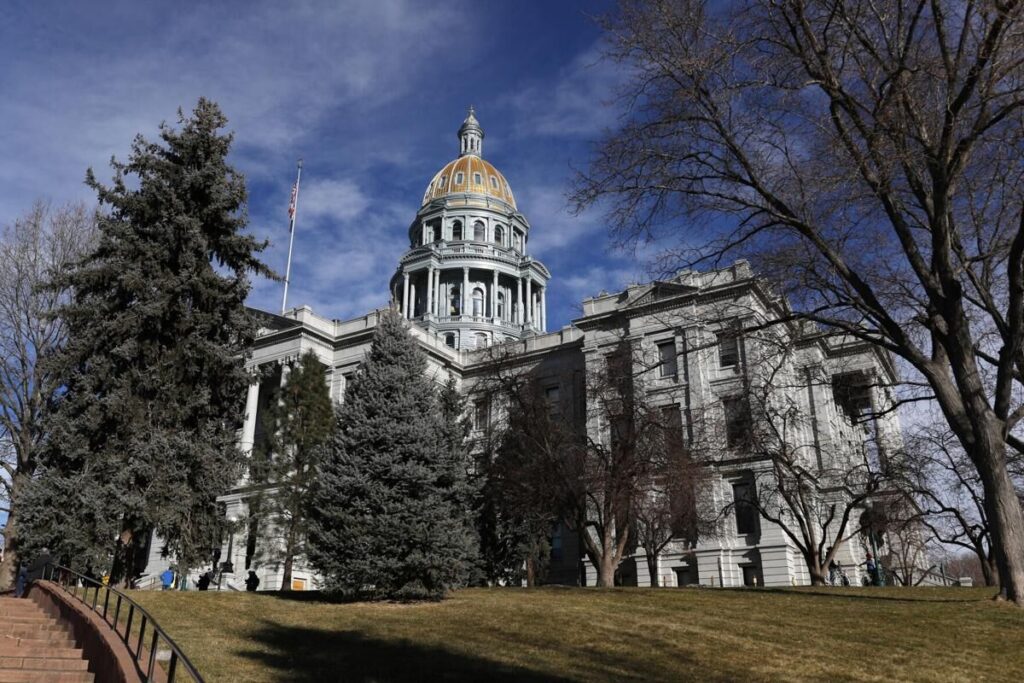
A Colorado board voted Friday to allow the Attorney General’s Office to fight an injunction against a price cap on a drug that treats arthritis. A U.S. district court judge had granted the company Amgen a preliminary injunction, temporarily blocking...

Federal judge rejects constitutional claims, ‘expressions of hatred’ by Club Q defendant
Michael Karlik
michael.karlik@coloradopolitics.com
Updated 9 hours ago
A federal judge rejected a defendant’s claims that he received constitutionally ineffective assistance of counsel while facing federal hate crime and firearms charges for murdering five people at a Colorado Springs LGBTQ nightclub in 2022. Anderson Lee Aldrich is serving...

Divided 10th Circuit upholds Colorado congestion fee on car rentals
Michael Karlik
michael.karlik@coloradopolitics.com
Updated 5 hours ago
The Denver-based federal appeals court concluded on Monday that a 2024 “congestion impact fee” that lawmakers imposed on short-term vehicle rentals did not conflict with a federal prohibition on certain airport-related charges. Beginning in the 1970s, Congress began limiting the...

Space Force should measure workforce needs as it prepares to double in size, GAO report says
Mary Shinn
mary-shinn@coloradopolitics.com
Updated 14 hours ago
The Space Force needs more people. It’s just not precisely sure how many more. A Government Accountability Office report released earlier this month found that the youngest and smallest military branch does not have a process to consistently or accurately...

Colorado schools receive $24 million for free meals program
Marissa Ventrelli
marissa.ventrelli@coloradopolitics.com
Updated 9 hours ago
The Colorado Department of Education is providing Colorado schools with nearly $24 million in grant funding to implement a free lunch program. Approved by voters in 2022, the Healthy School Meals for All provides free breakfast and lunch to all...

Secret Service agent placed on administrative leave after arrest for near-deadly hazing ritual
Claire Carter
claire.carter@washingtonexaminer.com
Updated 16 hours ago
A Miami Secret Service agent in Florida was placed on administrative leave following his arrest on Sunday in connection with a near-deadly hazing incident at a University of Miami fraternity. Marquez Christopher Pinder, 29, was arrested alongside two other individuals...
Forest fire west of Sedalia prompts evacuations in Douglas County
Nicholas Fogleman
nicholas.fogleman@denvergazette.com
Updated 18 hours ago
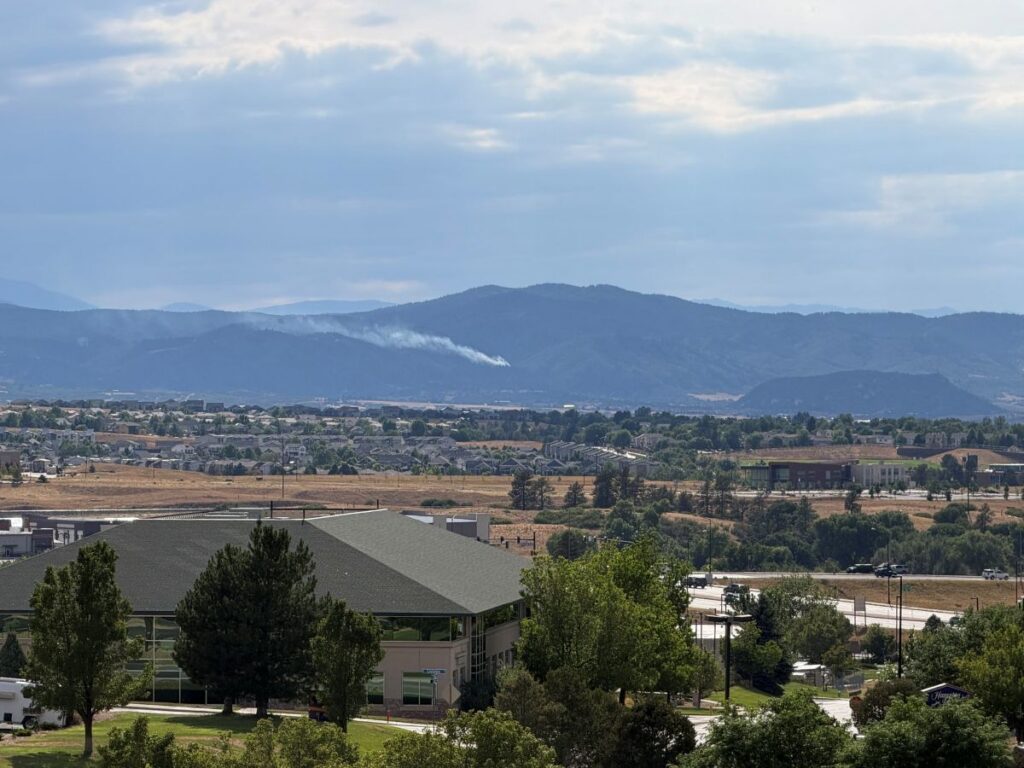
Emergency crews are responding to a forest fire burning west of Sedalia, prompting evacuation orders for nearby residents Sunday afternoon. At about 5 p.m. Sunday, the Douglas County Sheriff’s Office issued an evacuation order for residents within a 2-mile radius...

Airstrikes have paused and talks are pressing forward. But can the US and Iran take the off-ramp?
The Associated Press
the-associated-press@coloradopolitics.com
Updated 18 hours ago
WASHINGTON (AP) — The U.S. military has paused its airstrikes on Iran after nearly two weeks of intensifying bombing, while diplomatic efforts have pushed forward to try to avert a return to all-out war. But it remains to be seen...
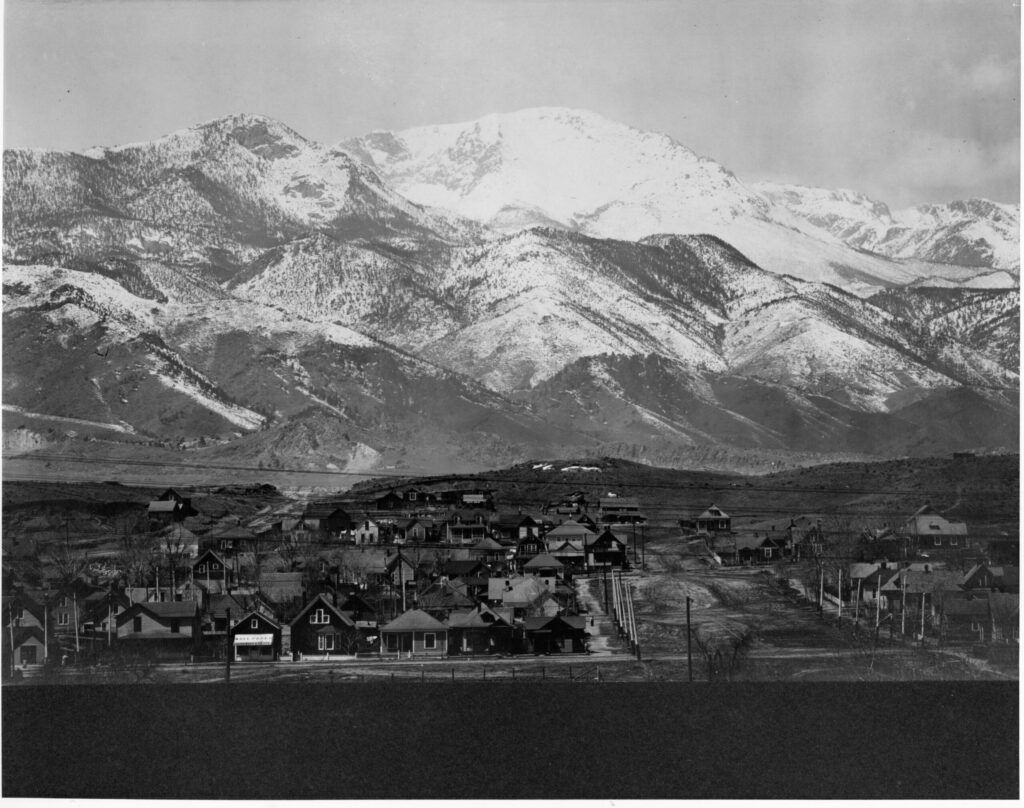
Penrose fortune paved the way for Colorado Springs to be a military, space and sports town
Mary Shinn
mary-shinn@coloradopolitics.com
Updated 18 hours ago
Colorado Springs is always working to catch the next big economic wave. “We’re always trying to figure out what the next thing is going to be,” explained Matt Mayberry, director of the Colorado Springs Pioneers Museum. In the early days,...

Colorado Politics Calendar July 27-Aug. 2
Rachael Wright, Special to Colorado Politics
rachael.wright@coloradopolitics.com
Updated 6 days ago
CoPo’s weekly political calendar will help you find political and public-policy events throughout Colorado. It includes candidate and issue campaign events, public policy meetings, court hearings, state and local party conventions, assemblies, debates, rallies, parades, speaking engagements, traveling dignitary appearances,...
PREV
PREVIOUS
National Western Stock Show junior livestock auction sets records
A record bid of $200,000 for a Grand Champion steer led off the highlights for Friday night’s National Western Stock Show Junior Livestock Auction. That the exhibitor – 18-year-old Justin Pfannebecker – is from LaSalle, Colorado, made it all the sweeter. Pfannebecker is the first teen from Colorado to win the title of the Grand […]
Appeals court reverses another Adams County conviction due to faulty analogy
Colorado’s second-highest court on Thursday reversed another defendant’s criminal conviction in Adams County because the trial judge explained the concept of reasonable doubt to jurors using an analogy that lowered the prosecution’s burden of proof. A three-judge panel for the Court of Appeals deemed it a “close question,” but ultimately ordered a new trial for Tylor […]