

Q&A with Jared Polis | Colorado’s governor starts his second term
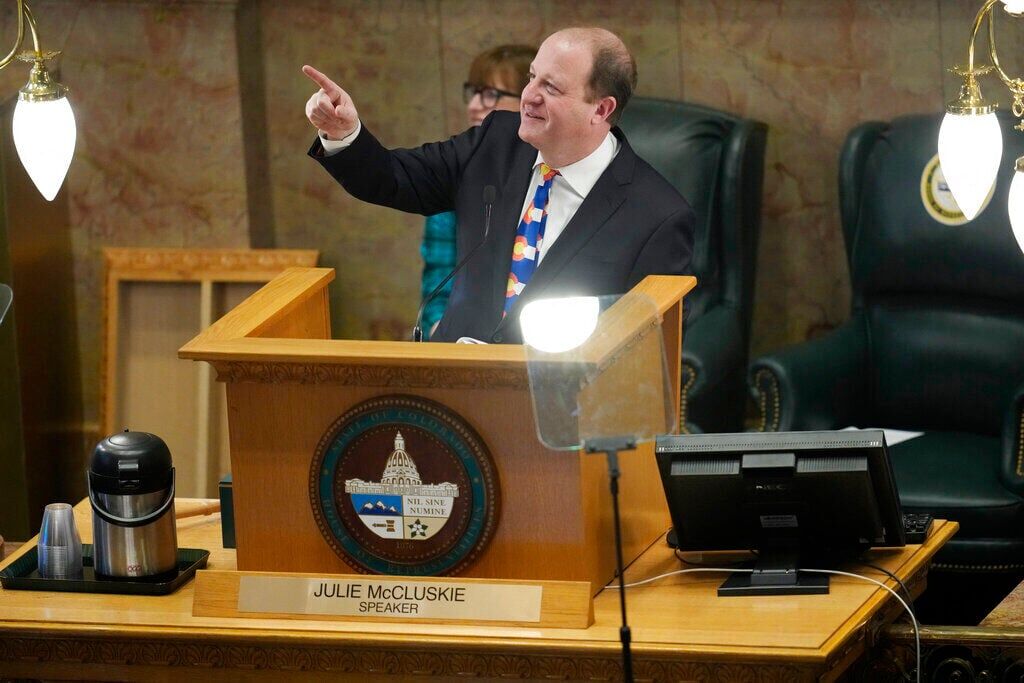
Jared Polis is Colorado’s 43rd governor, first elected in 2018 and reelected in 2022 as Democrats swept to victory in races across the state.
Following his fifth State of the State address on Jan. 17, he sat down with Colorado Politics to look ahead to his second term.
Editor’s note: This interview has been lightly edited for clarity and brevity.
FAST FACTS
Born: May 12, 1975, Boulder, Colorado
Family: Married to long-time partner Marlon Reis, September 2021. Two children, a son born in 2011 and a daughter in 2014.
Prior service: State board of education, 2001 to 2007. Elected to the U.S. House, representing the 2nd Congressional district in 2008. Held that seat for five terms until he ran for governor in 2018.
First congressman to accept Bitcoin for campaign donations in 2014. Nation’s first openly gay parent in Congress, and first openly gay governor.
Best advice you ever got from your parents? I’ve gotten a lot of great advice from my parents, to work hard and have the highest standards of ethics is really a strong lesson that they demonstrated in their own lives and that I’ve really focused on in mine.
Where did you learn to do that Yoda impression? I do it for the kids, our kids sometimes, but it was fun to be able to do that for a broader audience and say that we might need a small Jedi council in Colorado.
Have you taken on any new hobbies or pastimes in the past year, other than entertaining your kids with Yoda impressions?We do rock tumbling and we enjoy that. And with our son cooking, he loves cooking and I enjoy cooking too, but we’ve taken it to another level with him.
What’s your favorite game, whether a board game, video game? League of Legends video game.
When you play that with Marlon or with the kids who wins? We’re all on the same team on that one against others. We’d also play Scrabble where I usually win, but anybody could win.
What’s most important to you as a father? Raising my kids to have the right values and to demonstrate kindness, to be happy and fulfilled in their own lives.
Is kindness the most important value you want to impart to your kids? Kindness, happiness, strong work ethic.
Where’d you get that tie that you wore to the State of the State? I actually have several Colorado ties. I’ve collected ’em over the years because ties don’t really wear out. So I’ve had a tie rack full of ties, but I have at least three Colorado ties and then I have ties for most of the universities in our state. Some of the cities in our state have ties. So I have probably about 20 Colorado-themed ties.
How many pairs of blue sneakers have you gone through in your first term? I would say about two dozen in the pairs of blue sneakers. The original ones for my first campaign I donated to History Colorado. I still have one pair of those. I think I had three or four at the time. I have all different sneakers with Colorado insignias, blue ones, purple ones. I have them in also the colors of different universities. When I was at Mesa, I wore my sort of dark red ones there. Go Mavericks.
I have different sneakers I wear for different events in different parts of the state, but I’d say, say about two dozen sneakers in my first term. And I’m looking forward to wearing out another two dozen in my second term.
Colorado Politics: How’d you feel about the speech this morning?
Jared Polis: It’s kind of culmination of inauguration week, State of the State. So it’s exciting to kind of have it behind me so I can just focus on governing the state and moving forward. So it’s definitely a relief and excited to put the ideas out there that I was elected on so we can get some good work done to make Colorado more affordable.
CP: You mention an income tax cut in almost every State of the State. How do you cover the expenses of state government if taxes are cut?
JP: I’ve been very clear on this. The big difference in this election cycle: (Republican opponent) Heidi Ganahl wanted to cut or eliminate the income tax and not replace it with anything. That would slash funding for schools for law enforcement.
I’ve always said two things: Income tax cuts should be paid for by closing tax loopholes, and we did that for one of the income tax cuts passed by the voters.
The second is surplus funds. I have never supported an income tax cut that would’ve required any kind of reduction in general fund expenditures. I support income tax cuts that are paid for by closing loopholes and income tax cuts that come from surplus funds.
CP: Where do you see Colorado at the end of your second term? What’s your long term goal?
JP: That was really a big theme of my speech. It was really about where we want to be when we’re 150. That’s the year 2026 and that’ll be my final year as governor.
It’s really about how Colorado can tackle the challenges we face, which are largely around affordability and cost. How can housing be more affordable, close to where jobs are? How can we have cleaner air and less traffic? How can we have better schools and opportunities for lifelong learners to get the skills they need to thrive? How can we be one of the 10 safest states? So it really was looking at the next several years of the work we need to do to be the state that we aspire to be. And that’s really what I laid out in the speech today.
CP: It feels like these are problems that aren’t going to take just a year to solve, whether it’s making Colorado safer, the affordable housing issue, all these kinds of things and, and water in particular. These are all things that aren’t gonna be answered in one session.
JP: I think we need to get a lot of the solutions in the next session, but yes, they’re not solved next year.
So that’s why when I talked about making Colorado one of the 10 safest states over five years, that means showing progress each year, but you don’t go from 23rd to ninth in one year. That just doesn’t happen.
If you want to move in the right direction on housing, it takes time for projects to be built for housing to be successfully done. And obviously, prefab and modular housing can reduce that timeframe. We’ve talked about that today. But yeah, this is not something where there’s going to be a lot more housing in six months. It’s about setting up the right parameters, where four years from now we’re in a better place with more housing people can afford, rather than a worse place with less housing than people can’t afford and more traffic on the roads, because people have to live further from their jobs. So it’s really about setting up how we can be successful on our 150th anniversary. And a lot of those are issues that we need to make change the policy levers now and the payoff will be for years and decades to come.
CP: But the problem with the housing crisis is that people are experiencing it now. What if anything, can you do? Or is this something that local communities are just gonna have to deal with on their own to address the issue now because, because we have such a huge unmet need for housing, whether it’s addressing people who are homeless or people who just can’t afford to live in the communities that they work in.
JP: Housing, like infrastructure doesn’t materialize overnight, right? So you need a plan to deliver on it and you need to make it better over the course of several years rather than the status quo. Absent action, it will likely get worse.
I’ve seen California, cities with home prices above a million dollars, 16-lane freeways, bumper to bumper traffic. We don’t want that to be Colorado.
Let’s make the changes now so that we’re in a better place in five years rather than a worse place in immediate relief. We called for property tax reductions and you saw in our budget, we set aside $200 million for immediate relief. When people live in a home that’s appreciated, they shouldn’t be forced out of where they live just because the tax increase has exceeded their income increase. And so we hope to change that.
CP: What’s been your biggest challenge in the last year of your first term?
JP: Running for reelection while you have a full-time job is certainly a challenge. When I declared for office and ran again, we did 22 stops in three days. We called it 22 for 22 from Sterling to Grand Junction to Trinidad. I did 22 stops in three days, because it was the year 2022.
And I realized two things: One was that I was glad it was 2022 and not 2050! And the second was I’m not as young as I used to be because 22 stops at three days was exhausting. I’m really glad that I don’t have to run again and I can focus on governing because certainly balancing those two was a challenge.
Obviously it was only a year ago, December of last year, the catastrophic Marshall fires. We witnessed the Club Q shooting. Those are very emotional and powerful moments where it’s really important for a governor not only to govern, but also to mourn alongside those who’ve lost their loved ones or their homes.
CP: What’s your biggest challenge in working with this new legislature, particularly Democratic caucuses, that are kind of all over the map on a lot of things?
JP: There’s a hundred legislators, new Democrats, new Republicans, especially in the House. In the Senate, many of them had House experience, but some are new there too. We look forward to building the relationships we had with Republican and Democratic members, but also forming new ones and meeting some of the new folks who are dedicating their time and effort towards making our state better.
CP: Is there a line that you would draw with Democrats on any particular issue?
JP: We always look at what the bill is and is it good or bad for Colorado. One thing I said during the campaign, and I meant it, is I’ll always do what’s right for Colorado. Meaning I’m not here to do what’s right for Democrats, or for Republicans, or for special interests. So we’ll examine any bill through that lens and members of the legislature are welcome to engage the governor’s office early. The agencies want to play constructive roles in helping legislators meet their goals. And we look forward to moving forward with our agenda for the state that I outlined in the State of the State today.
CP: Are there Republicans that you’re looking forward to working with?
JP: There’s folks that we’ve worked a lot with in the past. We’re glad to see (Sens.) Perry Will and Janice Rich, I mentioned in the speech today. (Senate Minority Leader) Paul Lundeen, we’ve worked closely with, I mentioned him. Now (House Minority Leader) Mike Lynch has stepped up to lead the House Republicans, we look forward to working with him and, and others. There’s relationships we have because they’ve been in the building and they’ve gotten things done and worked across party lines. And then there’s a lot of new folks. So we look forward to establishing good working relationships.
And (Sen.) Cleave Simpson.
CP: As the informal head of the state party, what are your thoughts on the direction the party should take in the next couple of years as they’re going in and picking a new chair?
JP: I’ve really been focused on the business of governing the state and, and moving forward with the issues we need to address. I haven’t been too focused on that.
I think the Democratic Party needs to show that they are governing coalition, a governing majority, which means a broad coalition. I think that’s one of the areas that Democrats have succeeded at and Republicans have not. You need to make sure that you speak to the independents who make up a plurality of the voters in our state, and that you can form a responsible governing majority that works to get things done that improve the quality of life and reduce costs for everyday Coloradans.
CP: I want to talk about water a little bit here. You’ve talked a lot about protecting Colorado’s water rights, but of course we have to share our water with a lot of other state depending on compacts. How do you intend to protect those water rights and what does that look like?
JP: Working with Attorney General Phil Weiser, we have a budget request, basically gearing up with experts that we need to aggressively defend our rights. This is becoming a very hot topic and we want to make sure that we have the work done ahead of time to successfully prepare Colorado for any forthcoming litigation or inter-state disputes.
CP: Are you are anticipating Colorado getting sued over its water?
JP: What everyone expects is that the West has to contend with less water. Colorado and the upper basin states are in a stronger legal position. We’re also in a stronger position by nature of the possession of the water than the lower basin states. There’s no question that Arizona, Nevada, and California are gonna face more severe restrictions than cutbacks cause the water isn’t there. I want to make sure we’re at the table and we’re working towards solutions that work for Colorado and for the West.
CP: As you prepare for Colorado’s 150th, what role do you see agriculture playing in those celebrations?
JP: Ag communities are an important part of Colorado’s history. They’re a dynamic part of our economy today, and they’re a vibrant part of Colorado’s future. So it’s really celebrating the past, present and future of production agriculture in our state. I think that the new CSU Spur campus really pulls together well the legacy piece with the future oriented piece. It’s great to see farmers and ranchers, deploying drones and drip agriculture and satellite imagery to help optimize production and improve profits. And we’re very excited to celebrate who we are and to talk about what the future means for Colorado. Everything that makes Colorado special.


Colorado to get $615M from Meta child safety settlement
Thelma Grimes
thelma.grimes@coloradopolitics.com
Updated 1 hour ago
The parent company of Facebook and Instagram will pay hundreds of millions of dollars to Colorado, part of an $18 billion multistate deal, in which the company also agreed to adopt extensive child-safety changes to its operations. The settlement ended...

Colorado’s chief federal judge orders return of wrongfully deported man, second judge to explore ‘series’ of violations
Michael Karlik
michael.karlik@coloradopolitics.com
Updated 4 hours ago
Colorado’s chief federal judge took the extraordinary step of directing the government on Tuesday to do everything it can to return a man it deported in violation of his order. At the same time, Colorado’s chief magistrate judge has set...

Counties warn CPW that new comment limits sideline local governments
Marianne Goodland
marianne.goodland@coloradopolitics.com
Updated 2 hours ago
The September meeting of the Colorado Parks and Wildlife Commission will feature newly revised public‑comment rules — changes introduced by chair Jay Tutchton of Bent County, who announced them without first discussing the revisions publicly with the rest of the...

Controversial two-bag furbearer limit heads to CPW meeting under legal threat
Marianne Goodland
marianne.goodland@coloradopolitics.com
Updated 2 hours ago
Next week’s Colorado Parks and Wildlife Commission meeting in La Junta is likely to open under the cloud of threatened legal action. Safari Club International and the Sportsmen’s Alliance Foundation warned the commission this month that its July vote imposing...

Golden to pay $155,000 to fired city manager
Matt Kyle
matt.kyle@denvergazette.com
Updated 4 hours ago
The Golden City Council on Tuesday approved a roughly $155,000 severance payout to former city manager Scott Vargo, who was fired earlier this month following a “racist incident” at a city fire station. The payout is part of a separation...

Trump says the US doesn’t need Canada. America’s economy says otherwise.
The Associated Press
the-associated-press@coloradopolitics.com
Updated 5 hours ago
TORONTO (AP) — U.S. President Donald Trump says his country does not need Canada. But every day, roughly 4 million barrels of Canadian crude oil flow south, helping fuel American cars, trucks and airplanes and supply U.S. industry. And oil...
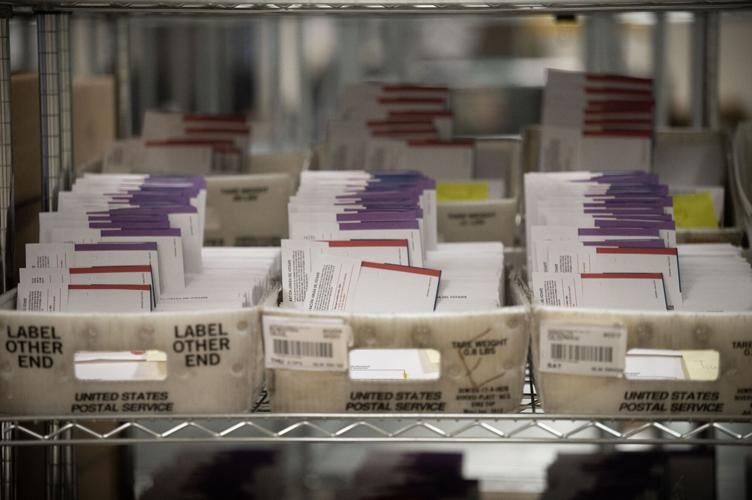
USPS ballot rule faces lawsuit from Colorado, other states
Thelma Grimes
thelma.grimes@coloradopolitics.com
Updated 3 hours ago
Colorado, along with 25 other states, filed a lawsuit against the U.S. Postal Service to challenge a new rule that seeks to restrict the mailing of ballots to American citizens in an eligible voters list. Colorado relies heavily on the...

FDA approves landmark pancreatic cancer drug that’s shown to improve survival
The Associated Press
the-associated-press@coloradopolitics.com
Updated 5 hours ago
WASHINGTON (AP) — The Food and Drug Administration on Wednesday approved a groundbreaking new drug for advanced pancreatic cancer, offering U.S. patients a more effective treatment against one of the deadliest types of cancer. FDA officials gave expedited approval to...
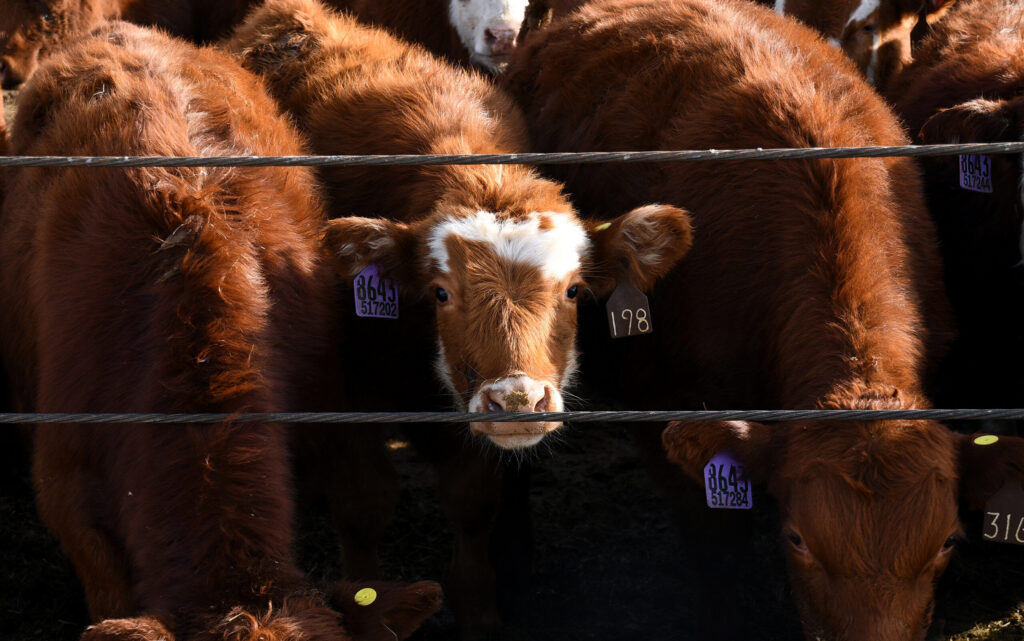
Trump defends pause on beef tariffs: Prices are ‘coming down very rapidly’
Naomi Lim
naomi-lim@coloradopolitics.com
Updated 7 hours ago
President Donald Trump defended his decision to pause tariffs on some beef imports, even as Republicans criticize the decision. “Prices are coming down very rapidly, and now beef is starting to come down,” Trump told The Glenn Beck Program on...
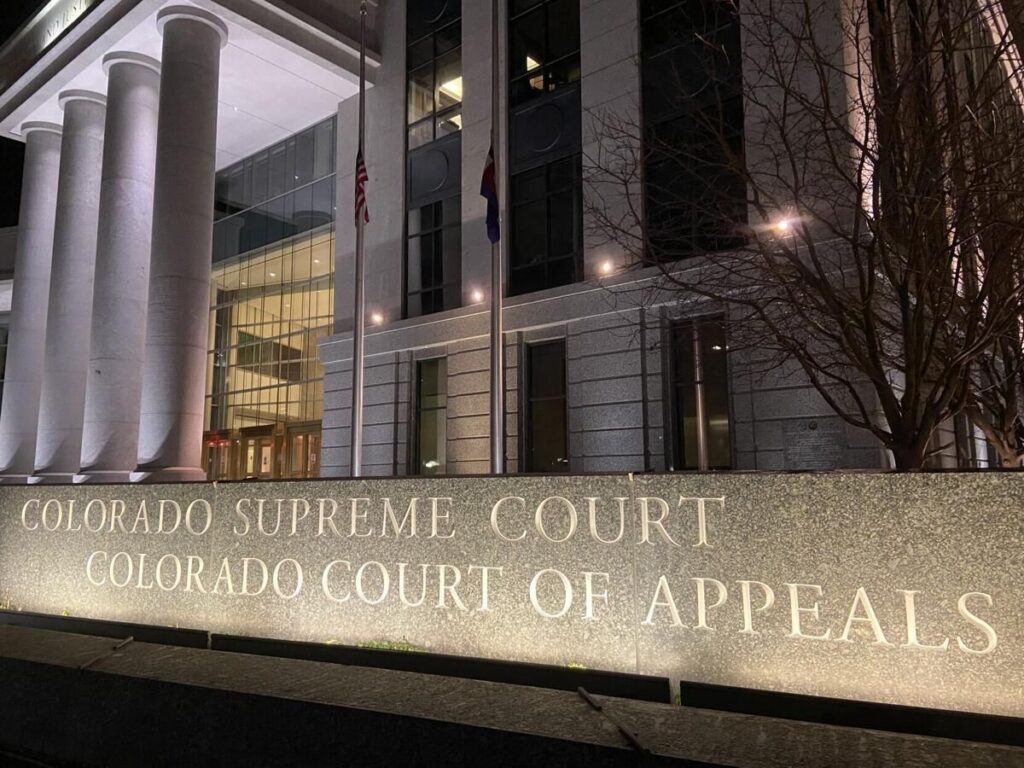
Denver murder, assault convictions reversed due to faulty jury instructions
Michael Karlik
michael.karlik@coloradopolitics.com
Updated 2 hours ago
Colorado’s second-highest court reversed a defendant’s convictions for murder and assault last week after concluding a Denver judge incorrectly omitted key jury instructions that could have affected the verdict and sentencing. Stephen C. Swainson fatally stabbed Israel Casillas in downtown...
PREV
PREVIOUS

Colorado’s private sector retirement program ‘SecureSavings’ portal now open
In an effort to save taxpayers money over the next 15 years and aid in retirement savings for employees in private sector businesses and gig workers, the Colorado SecureSavings Program began Wednesday. Colorado Department of Treasury officials launched the new website and it’s now open for applicants. The program will provide retirement plan access for […]

DPS enrollment dips, mirroring statewide drop in students
Enrollment in Denver Public Schools – Colorado’s largest school district – slightly dipped this school year, mirroring a statewide downward trend that began just after the pandemic upended people’s lives. DPS lost just over a thousand students, a change of 1.15% from the last school year, according to data from the Colorado Department of Education. Colorado […]