

Campaigns and elections in Movieland | CRONIN & LOEVY

One of the blessings, as well as the curses, of constitutional democracy is we keep on having to hold campaigns and elections.
The 2022 midterm elections are over. City elections in many communities will take place this April. And, ready or not, the 2024 presidential election is soon to enter what political analysts call “the invisible primary.”
Most of us are not planning to campaign for any office in 2023 or 2024. Yet, across Colorado and the United States, candidates and campaign staffers are preparing for forthcoming elections.
Would-be candidates have no spring training camp or Kaplan prep tutoring program to attend. Campaigning for public office is typically a do-it-yourself job with lots of on-the-job training and improvisation. The best way to prepare for campaigning is to have worked in someone else’s earlier campaign.
Another way is to binge on classic Hollywood campaign and election movies. It also helps to retrieve appropriate documentaries that have captured the essence of campaigning over the past several decades.
Here is a guide to a few of these instructive and, in many cases, entertaining movies. Hollywood films first:
The Last Hurrah (1958)
Based on Edwin O’Connor’s prize-winning 1956 novel of the same name, this film was directed and produced by the legendary John Ford and starred famous actor Spencer Tracy.
The film’s title is a reference to fictional Mayor Frank Skeffington’s last and unsuccessful run for mayor of a city like Boston. Skeffington is loosely but accurately based on Boston’s colorful rogue Mayor James Michael Curley, who held a number of political offices in Massachusetts for more than four decades.
This is a film about old-school ethnic and tribal campaigning. Patronage matters. Deals are made. Wards (political sections of the city) are organized. Wakes and funerals are important political events. Monetary kickbacks and graft are involved.
Both the joys and the underbelly of politics get described. Campaigns can be exciting but, as the film makes clear, politics is not for the thin-skinned, the timid, or the overly earnest.
The film is dated and slow-paced in places, yet it is a valuable initiation into the rites and rituals of big-city American politics.
The Best Man (1964)
Based on Gore Vidal’s hit Broadway play, this film is set in the final days of a national nominating convention for president of the United States.
Only a few candidates have survived to this point. It appears to be a showdown between a principled, idealistic secretary of state named William Russell (played by Henry Fonda) and a hard-charging, attractive U.S. senator, Joe Cantwell. The two are fictionalized composites, yet Russell has some of Adlai Stevenson’s characteristics while Cantwell shares some of Richard Nixon’s attributes.
Both candidates seek the endorsement of their political party’s incumbent president. But both candidates have a past. Russell has been a womanizer and has had a nervous breakdown. There is a rumor that the what-ever-it-takes-to-win Cantwell may have had a brief homosexual affair during military service.
The incumbent president wants to back a winning candidate, yet he has doubts about both leading contenders. The old president worries that Russell might be lacking in the backbone and political dexterity the job demands. But then the old president fears that Cantwell may be too ruthless.
It is a surprise when an exceptionally bland governor, Merwin, gets the nod and nomination. Viewers are left wondering if the “best man” got tossed aside amidst the frenzied last days of this exhilarating yet exhausting political convention. As the film ends, the convention delegates are chanting “Mer-Win, Mer-Win.”
This is a cynical, invaluable and timeless political movie.
The Candidate (1972)
This Hollywood classic stars Robert Redford as a handsome, idealistic and environmental lawyer running for the U.S. Senate in California. Young Bill McKay is the son of a former governor, yet he dislikes politics and all the platitudes and phoniness he associates with that profession.
Enterprising campaign consultants talk McKay into running against a longtime entrenched conservative incumbent. They persuade McKay that, though he will probably lose, this will be a good way to promote his “green” agenda. Meanwhile, the consultants know they can make lots of money managing the campaign of this novice and malleable candidate.
McKay allows himself to be groomed and packaged by his handlers. The attention of being in the spotlight mesmerizes McKay and flatters his ego. His handlers reshape him into being more centrist than he actually is.
Somewhere in the process our handsome knight becomes a “politician.” The film suggests candidates and their campaign managers will do a lot of trimming to triumph in an election.
Redford gives a first-rate performance. The movie is highly simplified – young good guy vs. old reactionary bad guy. We get no information on who is funding these campaigns. Films do a poor job of explaining campaign finance.
Yet the political lessons here are many. The young good guy wins, but at that point he is not certain what the race was really about. In a famous movie last line, McKay asks his campaign manager, “What do we do now?”
Primary Colors (1998)
Award-winning journalist Joe Klein wrote a fictional account of Bill Clinton’s 1991-92 campaign for the 1992 Democratic Party’s presidential nomination. It was made into a movie.
Clinton was an underdog but he had been governor of Arkansas for eleven years. He was an honors graduate of Georgetown University and a Rhodes Scholar at Oxford. He later graduated from Yale Law School.
Governor Jack Stanton is Klein’s fictional candidate. We watch him campaign in the New Hampshire presidential primary and in the Florida primary. He is bright and charming yet has considerable “political baggage.” Stanton is accused, like Clinton was, of having extra-marital sexual affairs and avoiding the military draft during the Vietnam War.
The value of this film is its close look at campaign operations, campaign debates, radio and television interviews and especially the interaction of campaign advisors with candidates. Jack Stanton appears to thrive on chaos yet somehow becomes a likeable rogue as he wrestles with policy issues, rival candidates, the media and the paradoxical life he has led.
Joe Klein had to imagine what happened behind closed doors, yet what he discusses seems mostly believable.
Actor John Travolta does a superb job of playing a Clinton lookalike. Actress Emma Thompson is equally convincing as an exasperated yet complicit political wife.
The movie captures the glory and the sleaze of modern political life. College students who watched this film with us were appalled by candidate Stanton yet admitted they probably would have voted for him, flaws and all.
The real candidate, Bill Clinton, caught many breaks in the 1992 presidential election campaign. His wife stood by him, and popular New York Governor Mario Cuomo decided not to run. In the general election, independent candidate Ross Perot, a billionaire, decided to run as a fiscal conservative. That meant there were essentially two Republicans running against Clinton in a three-way race. Despite his flaws, Clinton easily won the White House.
Ever since the 1950s, documentary filmmakers have covered presidential elections. Here are a few worthy of attention:
Primary 1960 (1961)
U.S. Sens. John F. Kennedy and Hubert Humphrey campaign against each other in the 1960 Wisconsin Democratic presidential primary. This is almost like a family home made video – yet it s useful.
The Making of the President 1960 (1963)
Portrays the extremely hard-fought and close race for president in 1960 between Kennedy and Nixon.
War Room (1993)
A clever documentary account of Bill Clinton’s senior campaign advisors and how they plotted their victorious strategies in the 1992 presidential election. Colorful strategist James Carville is featured along with communications director George Stephanopoulos. Both of them became popular television news commentators in subsequent years.
Mitt (2014)
This is a Mitt Romney-friendly documentary showcasing the former Massachusetts governor and current Utah U.S. senator and his family. It reveals Romney’s decision making in both his 2008 and 2012 presidential election campaigns (both unsuccessful). Romney and his father, a popular governor of Michigan in the 1960s, have been prominent traditional Republicans over the past 60 years.
Mayor Pete (2021)
South Bend, Indiana Mayor Pete Buttigieg ran as an improbable candidate for the Democratic presidential nomination in 2020. He ran against two billionaires and several well-known millionaires, and he came in first in the Iowa caucuses and second in the New Hampshire primary.
This is a pro-Pete Buttigieg film and shows why he captured a respectable following and a cabinet position (transportation) in the Joe Biden presidential administration.
Both this and the Romney documentary are instructive.
You will probably confirm that you are not running for any office after you watch these films. But you probably will respect those who have the courage to run. At least you will understand the enormously challenging obstacle course we force electoral candidates to endure.
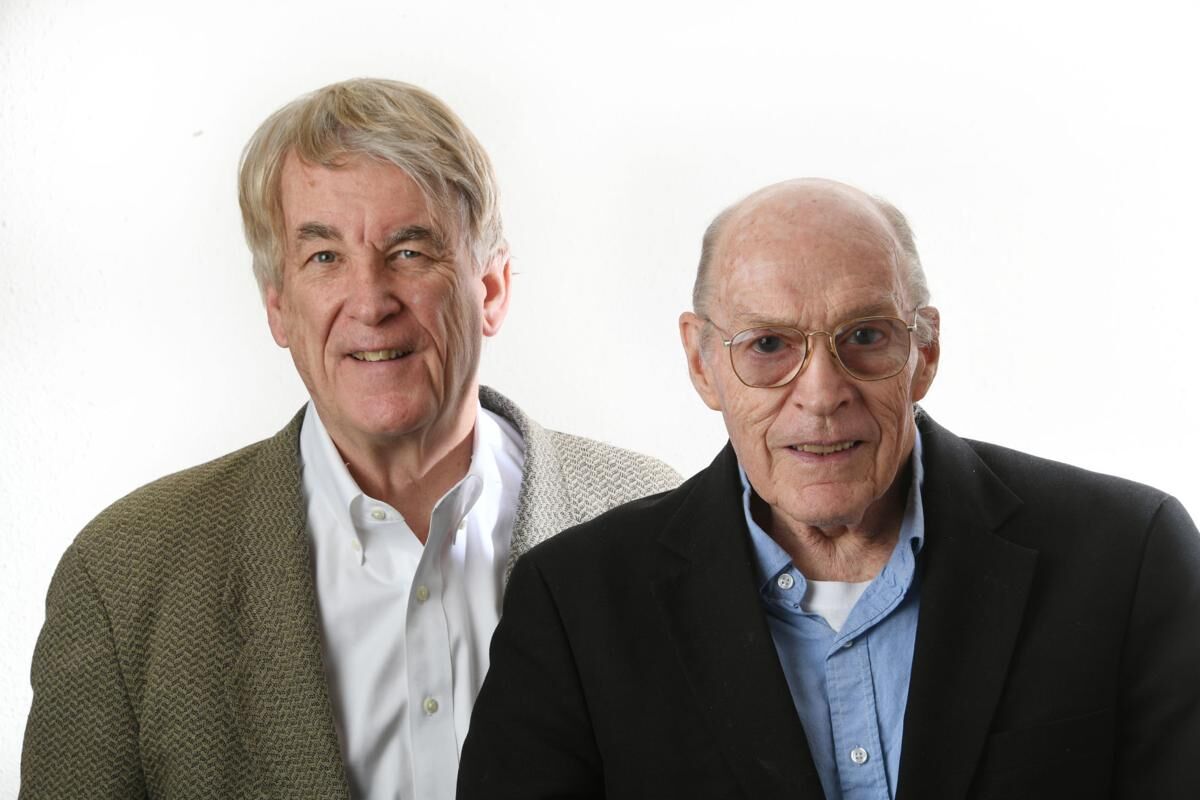
Tom Cronin and Bob Loevy write about Colorado and national politics.

Giving credit to Polis where credit is due | SONDERMANN
Eric Sondermann
eric-sondermann@coloradopolitics.com
Updated 3 days ago
It is an understatement to suggest that Gov. Jared Polis has had a tough couple of months. The bloom was already off the rose and Coloradans were paying far more attention to the choice of his replacement than they were...
Will one unqualified AG replace another? | George Brauchler
George Brauchler
george-brauchler@gazette.com
Updated 2 days ago
Colorado Democrats are poised to nominate another attorney general candidate with de minimis relevant credentials or experience. Far from disqualifying, Colorado’s recent voting history mirrors that of America in favoring biography over experience, partisanship over policy, and emphasizing what divides...
Pueblo’s mayor keeps stirring the pot | Dennis Maes
Dennis Maes
dennis-maes@coloradopolitics.com
Updated 2 days ago
Pueblo Mayor, Heather Graham, has clearly proven to be a disciple of the Donald Trump school of governance. And, like her mentor, she is experiencing the same catastrophic results. The format is to ignore what the electorate approved and expects...
The perils of Colorado’s unregulated abortions | GUEST COLUMN
Colorado Politics
colorado-politics@coloradopolitics.com
Updated 2 days ago
By Tom Perille How did the movement which grew out of a genuine concern for the health and safety of women become the same movement that undermines women’s health and safety today? Despite good intentions, it was a long route...
Sans seniors, what does Colorado’s uninterested early turnout say about our disengaged electorate? | Paula Noonan
Paula Noonan
paula-noonan@coloradopolitics.com
Updated 3 days ago
This primary election is poorly attended. Evidence is in the numbers. About 10% of active registered voters are deciding this year’s primaries with seven days to go. If that number triples by June 30, only 30% of voters will decide...

Who gets to decide Colorado’s economic future? | GUEST COLUMN
Colorado Politics
colorado-politics@coloradopolitics.com
Updated 3 days ago
By Sarah Blackhurst Colorado’s prosperity depends on industries that grow our food, build our future and power our homes. But today, these sectors face an invisible threat from 5,000 miles away: the European Union’s Corporate Sustainability Due Diligence Directive (CS3D)....

We have the chance to change Colorado’s cancer outcomes | PODIUM
Colorado Politics
colorado-politics@coloradopolitics.com
Updated 3 days ago
By Erika Hanson Brown Colorado ranks among the healthiest states in the nation by nearly every measure. Yet even here — amid the Rocky Mountains and our deeply rooted culture of health and activity — cancer casts a long and...

Colorado has a playbook for youth mental health — our next governor must use it | GUEST COLUMN
Colorado Politics
colorado-politics@coloradopolitics.com
Updated 5 days ago
By Karen Ron-Li Liaw From the rural communities on the western slope to the eastern plains, to the major urban regions on the Front Range, Colorado families are navigating an all-too-familiar crisis: kids are struggling, and Colorado’s mental health system...

Pigs engineered to fight alpha-gal syndrome | Rachel Gabel
Rachel Gabel
rachel-gabel@coloradopolitics.com
Updated 5 days ago
If I were an evil genius trying to hamstring animal agriculture, I would create a fly that eats livestock alive and a tick whose bite and spit causes some people to have an allergic reaction to meat. (Insert evil laugh...
Registered voters on the eve of the 2026 primaries | Cronin & Loevy
Tom Cronin Bob Loevy
tom-cronin-bob-loevy@coloradopolitics.com
Updated 1 week ago
The Colorado Secretary of State’s Office has published the latest voter registration figures for the state and its counties as of June. Colorado ranks among the highest states for independent, or unaffiliated, voters. Only Alaska and Massachusetts have more. New Hampshire, New Jersey, Maine and Oregon also rank highly. So here...
PREV
PREVIOUS
2023 the year for immigration solutions | Durango Herald
Texas Gov. Greg Abbott’s latest political stunt – free rides for migrants – may have backfired. Instead of slowing border crossings, Abbott likely incentivized migrants to cross over into Texas to catch a ride elsewhere in the United States. The governor’s Operation Lone Star initiative has effectively spread out migrants to Democrat-led sanctuary cities, costing […]

Bag ban Boulderizes the state | CALDARA
Jon Caldara People always ask me why I live in Boulder. Now that the whole state of Colorado has basically politically turned into the intolerant town of Boulder, you live there, too. The state’s new shopping bag tax, excuse me, “fee,” which turns into an outright bag ban in a year, is a fine example […]